
JIGSAW GENS
Hemingrebels — A Legacy of Gaiety & Opulence
The Lost Generation (“Distorters” or “Hemingrebels”) bathed themselves in passion and decadence
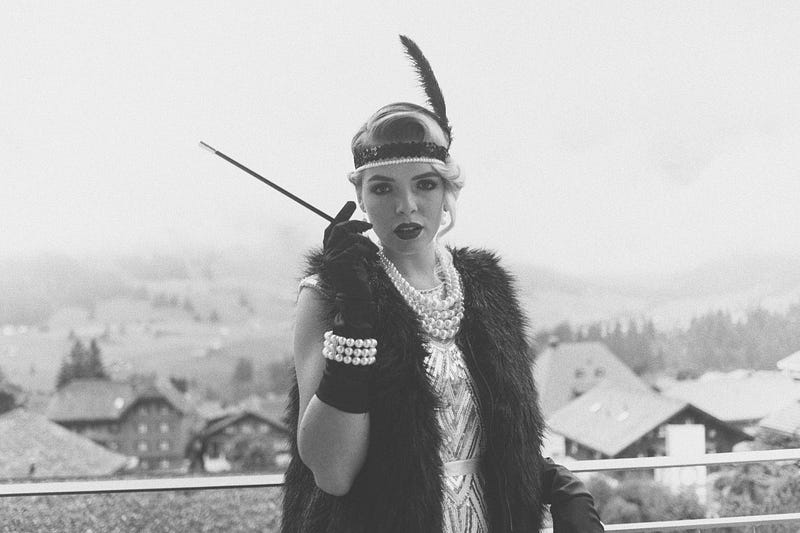
I first got the idea to produce a full Medium series on the history of America’s generational divides after actress Sarah Michelle Gellar (Buffy the Vampire Slayer) appeared on CBS’s The Talk in September 2022. When asked about how she relates to her own children, Gellar admitted — with refreshing authenticity — how she tends to mix up “the Gens.”
Appreciating Gellar’s modest and humble tone, I decided to make a positive effort in helping the general public distinguish why people from separate generations frequently view the world so differently.
Ted Scheinman of Smithsonian Magazine calls it “the Kids These Days effect.” He observes a tendency of older individuals with authoritarian tendencies to automatically brand America’s youth as stupid and disrespectful.
This pattern keeps repeating, from one generation to the next. UC-Santa Barbara’s John Protzko and Jonathan Schooler attribute this to “false memory.” At any given time, many folks from older generations will unfairly compare present-day young people to the young people of yesteryear who’d existed back when they themselves were either middle-aged parents or young adults.
By this metric, every upcoming younger generation will be destined to fail — at least, in the eyes of a certain segment of the older population during any given time period.
Ageism is a multidirectional street, of course. Many young people uniformly lash out at all older people. They assume that most elders whom they’ll encounter already harbor the “Get Off My Lawn!” mentality of that specific time period. History Hustle’s Joe Gillard documents how this animosity has evolved, over the years.
In an effort to foster more intergenerational empathy, I’m releasing “Jigsaw Gens” as a multi-part series exploring the named (and unnamed) generations throughout history.
First up: the “Hemingrebels” (aka “the Lost Generation”).
Who They Are
Hemingrebels were born approximately between 1884 to 1901 — give or take a few years on either end. As noted by ThoughtCo.’s Robert Longely, the term “Lost Generation” was coined after Gertrude Stein shared with Ernest Hemingway her account of a French garage owner telling a member of this cohort, “You are all a lost generation.”
I’ve coined the term “Hemingrebel” for them since Ernest Hemingway and his literary contemporaries portrayed this generation in their writings. Their rebellious nature led to the decadence of the Roaring Twenties.
Other nicknames for Hemingrebels could include: Hard Timers, based on them being on the frontlines of World War I and the 1918 Spanish Flu pandemic; Gatsbians, due to their love of flashiness characterized by F. Scott Fitzgerald’s novel The Great Gatsby; Distorters, since they came to view the “American Dream” concept through a distorted, skeptical lens; Edwardians, because King Edward VII ruled England during a large span of Hemingrebels’ youth; or Great Warriors, seeing how World War I was initially known as “the Great War” and Hemingrebels were a majority of the American soldiers who served.
All members of the Hemingrebel generational cohort, worldwide, are currently deceased.
What They Went Through
Writing for HowStuffWorks, Jill Jaracz discusses how this generation was often portrayed as “lost, aimless, and without purpose.” The male Hemingrebels who fought in (and survived) World War I came back home disillusioned by its brutality. This sentiment was also absorbed by the youngest Hemingrebels, who were legally too young to enlist.
Those who returned to the States as WWI veterans often became nomadic, migrating to urban communities or abroad. They had been born into a world where airplanes and gasoline-powered cars surged in popularity. Immigration from Europe peaked during their youth.
Glitz and gluttony of the Roaring Twenties became the Hemingrebels’ response to the dullness of life brought on by the 1918 Spanish Flu pandemic. The Harlem Renaissance and flapper culture permeated society, showing Americans how they could embrace style and defiance. By the time America entered World War II, most Hemingrebels were too old to serve in combat roles.
How They’re Misunderstood
As Jaracz outlines, Hemingrebels were skeptical of authority due to how their parents (who’d been born during, and immediately after, the Civil War) were the ones clamoring for Prohibition. Thus, the Roaring Twenties became their opportunity to rebel through the self-indulgence of speakeasies, street gangs, or luxurious dinner parties.
Many of them viewed President Woodrow Wilson as too much of an accommodationist. Indeed, most of the lawmakers who signed off on economic policies of that era had been born in the late-1850s up through the early-1870s — a good 10–30 years before the oldest Hemingrebels were conceived.
So, although it might be tempting for historians to blame Hemingrebels for creating the circumstances that led to the Great Depression, we can’t ignore the power players who’d enabled the structural inequities leading up to the 1929 stock market crash.
As I’d speculated when concocting an alternate universe scenario where the Internet and social media arose around the time of the Spanish Flu outbreak, a stigma (predated by the Spanish American War of 1898) intensified against people of Hispanic, Latine, and Chicano descent throughout the early-1900s. This was in addition to the Jim Crow laws already inflicted upon Black people, genocide unleashed against Indigenous people, and exile that the American government established to lock out people of Asian diasporas.
When The Great Depression hit, Hemingrebels were approaching middle age. Even many White members of their generation were gaining a much clearer awareness of racial injustices. But, in short order, America’s economic misery would take center stage.
Why They Matter
In her 2022 book Last Call at the Hotel Imperial, humanities professor Deborah Cohen profiles five journalists — John Gunther, Frances Fineman Gunther, Jimmy Sheean, Dorothy Parker, and Hubert Renfro Knickerbocker — known as “the inner circle,” who revolutionized Americans’ access to international news. Parker, in particular, blazed a significant trail for the escalation of editorial commentary in journalism.
The “inner circle,” as chronicled by Cohen, represented a shift toward no longer blindly accepting American foreign policy within our nation. Many American-based critics weighed in on how the U.S. government, in their view, mishandled the Treaty of Versailles. Their voices were amplified as the Lost Generation increased Americans’ connection with the rest of the world.
Hemingrebels were distinct from several of the generations that would succeed them in that they were more open to family planning and sexual fluidity. As they witnessed the Bolsheviks antagonize the Nazis and other Axis allies, more and more Americans delved into debating the merits and demerits of socialism or communism. This conflict would serve as a precursor to mid-century McCarthyism.
Competition created by immigration and the reality of war proved to harden the hearts of the Hemingrebel generation. They needed to blow off some steam, and their hedonistic lifestyles filled that void. Europe especially became a point of fascination — hearing about it from their immigrant peers, seeing it up close while serving tours of war, or reading about it in John Gunther’s nonfiction literature.
As with any generation, there was much diversity amongst Hemingrebels. Politics will create ideological divides within any cohort.
Some of them followed the leads of their parents and grandparents, hoping to prolong the mindsets of the mid-Nineteenth Century. This included the imperialistic excesses of American exceptionalism.
Others sought to design a more humane collaboration between the U.S. and its allies by challenging decisions of Congress and the White House. The women’s suffrage movement gradually built up momentum; that passion would ignite the resolve of progressives in later decades. Meanwhile, isolationists rejected American involvement in the European theatre, laying the groundwork for modern libertarianism.
The Hemingrebels loved to put on a show. Ultimately, though, their energy lingered within the zeitgeist by inspiring members of future generations to boldly challenge the status quo.
One final note: Americans born on the cusp of the youngest Missionaries and the oldest Hemingrebels could fall into a microgeneration merging together the imperialism of the Reconstruction period with the gluttony of the Twentieth Century’s first three decades. I’ve dubbed these cuspers as “New Wordsmiths” (born approximately between 1879 to 1883).
New Wordsmiths include Americans as iconic as Albert Einstein, Coco Chanel, Douglas MacArthur, Jeannette Rankin, and Will Rogers.
Similarly, those born on the cusp of the youngest Hemingrebels and the oldest GI-Gens would form a microgeneration that I have christened as the “Frugal Gatsbians” (born approximately between 1902 to 1906). They merged together the Greatest Generation’s frugality with the Lost Generation’s reverence for the finer things in life.
Frugal Gatsbians include such accomplished public figures as Bing Crosby, John Steinbeck, Ella Baker, Charles Lindbergh, and Greta Garbo.
Perhaps the most famous Hemingrebels serving as emblems of the Lost Generation were Ernest Hemingway, F. Scott Fitzgerald, Dwight Eisenhower, Babe Ruth, and Amelia Earhart.
But countless others contributed to their ranks.
A list of historical figures who belonged to the Hemingrebel generation:
Click here to subscribe to my stories.


