
Exciting Paleontological Discoveries You Probably Missed in September
Scientists from China claimed they have found potential remnants of dinosaur DNA…
Several fascinating paleontological discoveries are taking place each month. Scientists working in the field publish numerous studies, describe new prehistoric species, and propose exciting theories about the biology and behavior of many extinct animals.
This article will do a quick recap of the most important paleontological discoveries and updates from September 2021.
Before that, be sure to check the most memorable ones from August below:
Ready? Let’s go!
Tyrannosaurs tore into each other’s faces as part of vicious competitions for mates or territory
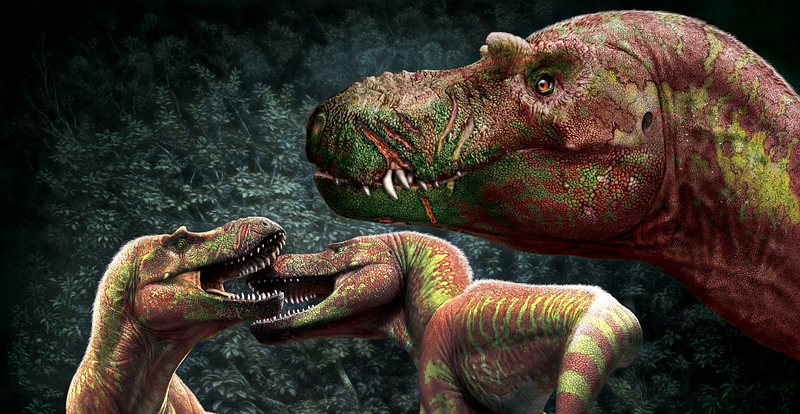
Starting off with an interesting study published by researchers at the Royal Tyrrell Museum in Alberta, Canada. After examining over 200 tyrannosaur skulls and finding elongated scars on their upper and lower jawbones, scientists discovered tyrannosaurs were biting each other on the face.
According to the study, the attacks were typically between animals of the same age and started after sexual maturity, showing that they were fighting over potential mates, or possibly to claim territory or to move up in the pecking order.
‘These animals are old enough to reproduce and are testing the waters to see how they rank compared to rivals or how they rate compared to potential mates,’ lead study author Caleb M. Brown said.
Paleontologists discover two new spinosaurid species in the UK
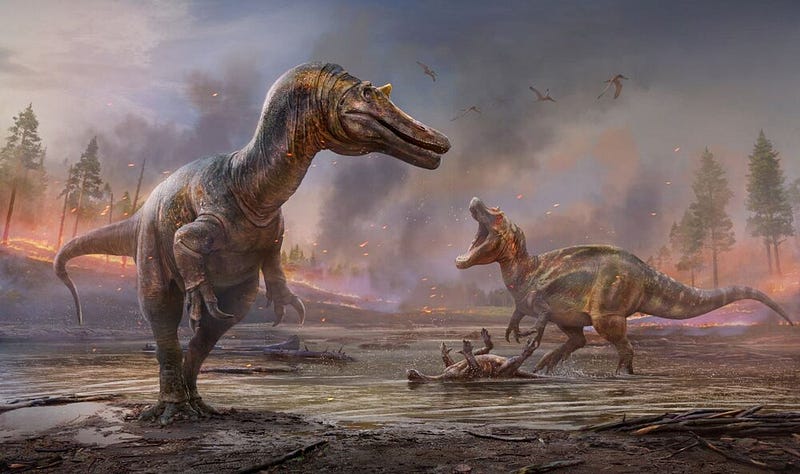
Also in September, paleontologists from the University of Southampton described new dinosaur specimens from the Wessex Formation of the Isle of Wight that pertain to two distinct and novel spinosaurid genera.
Spinosauridae is a family of predatory theropod dinosaurs that includes the giant Spinosaurus. These dinosaurs are known from the Early to Mid Cretaceous of Africa, Europe, South America, and Asia, and are among the most distinctive and yet poorly known of large-bodied theropod dinosaurs. What characterizes them, is an elongate laterally compressed snout, sub-conical dentition, and, in a subset of species, a long neural spine sail. Their unusual skull morphology is atypical of non-avian theropod dinosaurs, and multiple lines of evidence point to an ability to exploit semi-aquatic niches.
The newly identified spinosaurids, named Ceratosuchops inferodios and Riparovenator milnerae, lived during the Early Cretaceous epoch, some 125 million years ago. Ceratosuchops is known from just a few skull fragments, while Riparovenator from pieces of skull and some tailbones. Previously, only one type of spinosaurid had been found in the United Kingdom: the impressively clawed hunter Baryonyx.
The two new species likely stalked the waterways of an ancient floodplain, acting a bit like very large, toothy herons. They probably snapped up fish and terrestrial prey using their jaws, which were well suited to this style of hunting. Both species likely grew to about 9 meters (29.5 feet) long, based on the size of their skulls (1 m or 3.3 feet). The two species’ differing skull shapes suggest they could have had slightly different hunting styles, which may have allowed Baryonyx, Ceratosuchops, and Riparovenator to find plenty of food in a shared landscape.
“We’ve known for a couple of decades now that Baryonyx-like dinosaurs awaited discovery on the Isle of Wight, but finding the remains of two such animals in close succession was a huge surprise,” said study co-author Darren Naish.
World’s oldest ankylosaur discovered in Morocco
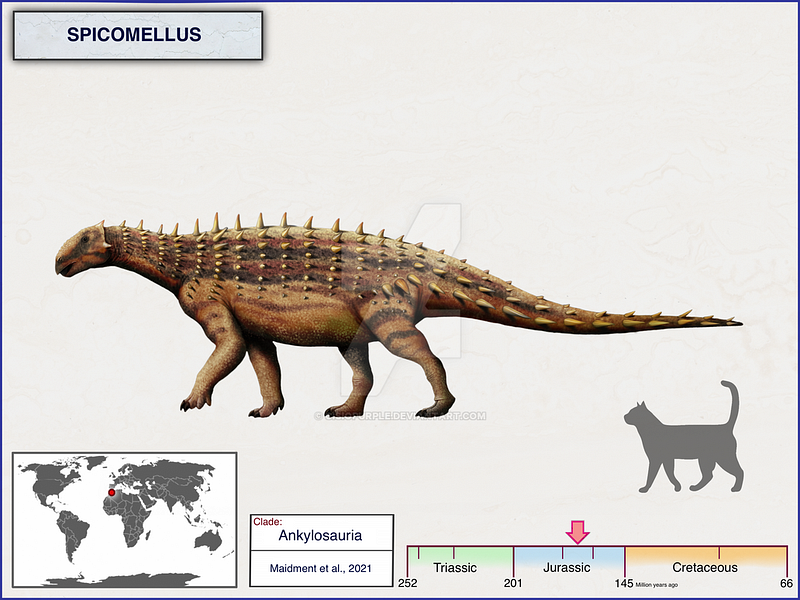
An equally important discovery took place in Morocco where paleontologists announced the description of the oldest ankylosaur ever found. Named Spicomellus afer, the 163-million-year-old specimen is also the first ankylosaur known from Africa.
Ankylosaurs were a group of dinosaurs typically known for the extraordinary bony armor that once covered their backs. In all known species of ankylosaurs, this armor would have been embedded in their skin, but, in Spicomellus’s case, the armor is physically fused to its bones.
‘Having armor fused to a rib is just totally bizarre,’ says Dr. Susannah Maidment, a dinosaur researcher at the Museum and an expert in armored dinosaurs. ‘It is totally unlike any extant or extinct vertebrate that we are aware of. We don’t see this phenomenon of an osteoderm fusing to a rib in any other vertebrate, living or dead.’
Discoveries from China
During September there were some really interesting things happening in China where scientists described two new dinosaur species and a new type of Mesozoic bird. In addition, researchers from the Chinese Academy of Sciences announced that they have found potential remnants of dinosaur DNA discovered in exquisitely preserved dinosaur cells!
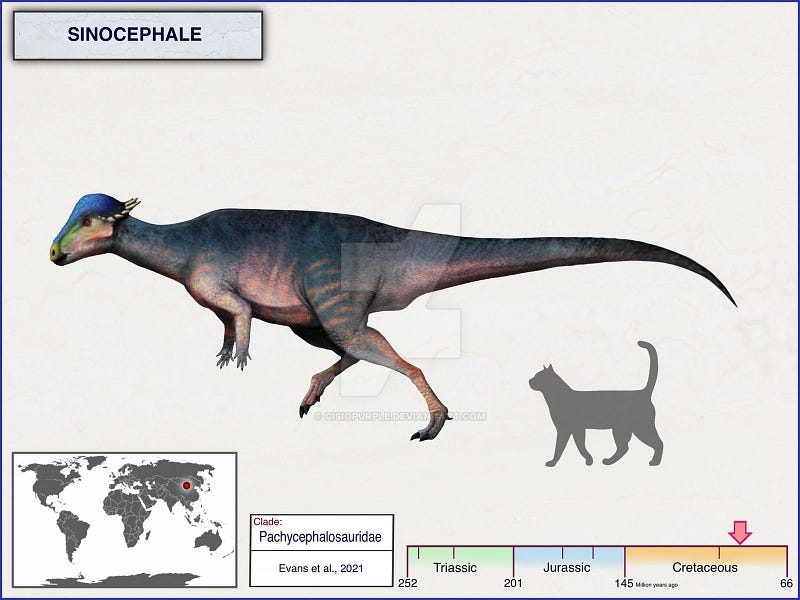
For a start, paleontologists re-evaluated a fossil originally found in 1953 as a new valid taxon of pachycephalosaurid. Pachecyphalosaurs were bipedal, herbivorous (and possibly omnivorous) animals with thick domed, flat, or wedge-shaped skulls. Scientists named the re-identified species Sinocephale bexelli or “Chinese head”. Sinocephale lived 92 million years ago, and it is potentially the oldest known pachycephalosaurid falling within the subset of the family called Pachycephalosaurinae.
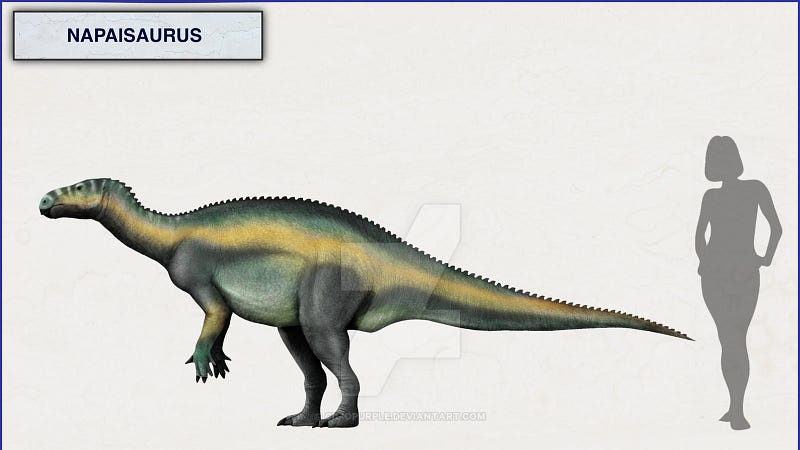
September also saw the description of the first-ever basal iguanodontian genus from Southern China. Iguanodontians were one of the first groups of dinosaurs to be found and among the most diverse and widespread herbivorous dinosaur groups of the Cretaceous Period. The latest specimen, named Napaisaurus guangxiensis, was found in the Xinlong Formation of Napai Basin and it provides crucial evidence for understanding the relationships of the Early Cretaceous dinosaur faunas between Napai Basin and Thailand, as well as those between Napai Basin and northern China.
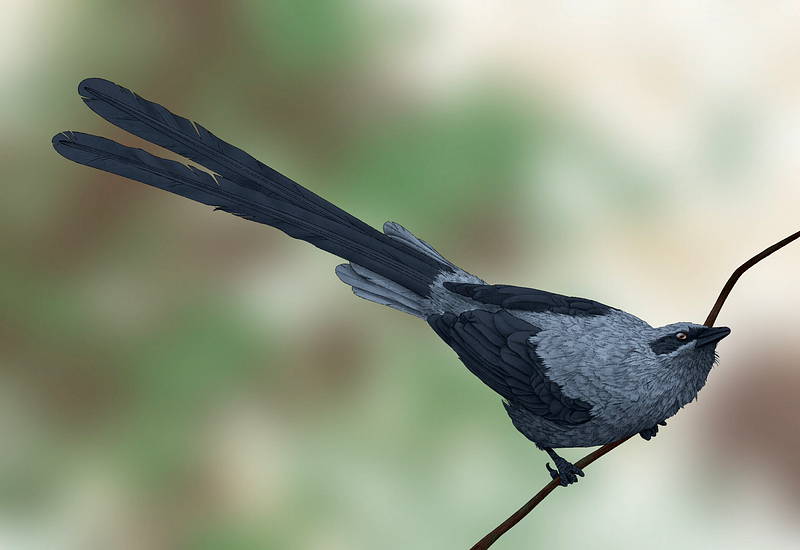
The description of a new genus of a Mesozoic bird that bore a pair of extremely elaborate tail feathers completes the series of new species discoveries. Named Yuanchuavis kompsosoura, it lived approximately 120 million years ago in what is now northeastern China and belonged to the enantiornithine group. Enantiornithes are the most successful group of Mesozoic birds, arguably representing the first global avian radiation. They are known exclusively from the Cretaceous Period, predominantly from fossils discovered in Asia, and commonly resolved as the sister to Ornithuromorpha, the group within which all living birds are nested. Yuanchuavis was a small bird, about the size of a bluejay, but its tail was more than 150% the length of its body. The latest discovery is the first documented occurrence of a pintail in Enantiornithes.
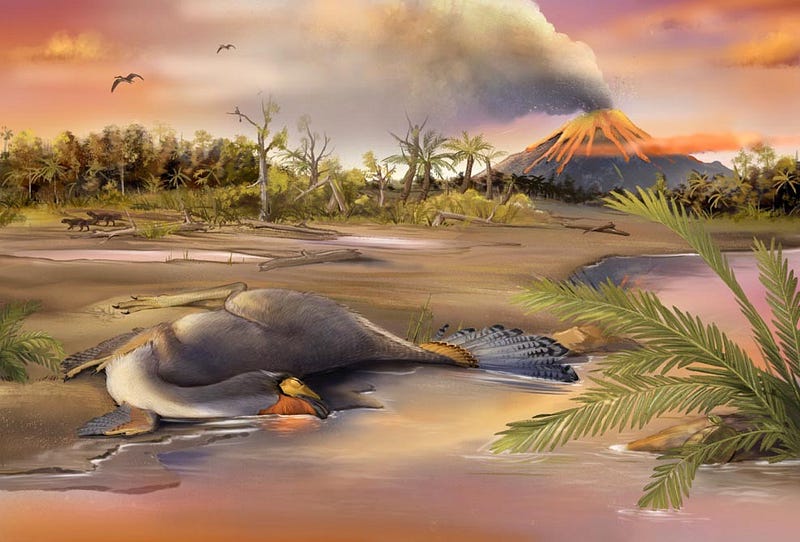
And finally, we have the exciting news release that came out from a team of researchers from the Institute of Vertebrate Paleontology and Paleoanthropology (IVPP) of the Chinese Academy of Sciences and from the Shandong Tianyu Museum of Nature (STM). The team claims to have isolated exquisitely preserved cartilage cells in a 125-million-year-old dinosaur from Northeast China that contain nuclei with remnants of organic molecules and chromatin.
The dinosaur, called Caudipteryx, was a small peacock-sized omnivore with long tail feathers. It roamed the shores of the shallow lakes of the Jehol Biota in Liaoning province during the Early Cretaceous Period.
The scientists extracted a piece of distal articular cartilage from the right femur of this specimen, decalcified it, and used different microscopy and chemical methods to analyze it. They realized that all the cells had been mineralized by silicification after the death of the animal. This silicification is most likely what allowed the excellent preservation of these cells.
The team insists they need to do many more analyses and even develop new methods to understand the processes that may allow biomolecule preservation in dinosaur cells because no one has ever successfully sequenced any dinosaur DNA. Even though more data must be collected, this study definitely shows that 125-million-year old fossil dinosaur cells cannot be considered 100% rock since they are not completely petrified. Instead, they still contain remnants of organic molecules. Now, it is vital to figure out precisely what these molecules are, whether they retain any biological information and remnants of DNA.
Snake diversity exploded after dinosaur extinction
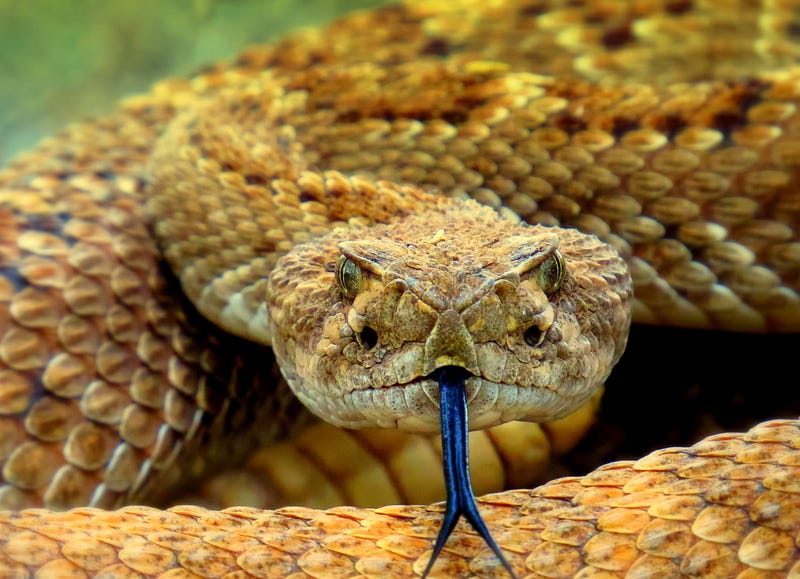
According to an interesting study published in September, snakes saw an explosion in diversity after the dinosaurs were wiped out by an asteroid some 66 million years ago. The study found that, following the Cretaceous-Paleogene mass extinction, snakes rapidly diversified from as few as six lineages to include many ancestors of the species we see today.
Among the survivors are burrowing snakes, who were able to find shelter underground, and those that lived in freshwater habitats. The newly emptied environments then allowed snakes to specialize in a range of roles, such as marine snakes, as well as taking over from dinosaurs and other now-extinct predators to target small prey. The snakes also expanded into new areas of the world, including Asia.
According to Dr. Nick Longrich, from the Milner Centre for Evolution at the University of Bath, ‘the latest research suggests that extinction acted as a form of “creative destruction”- by wiping out old species, it allowed survivors to exploit the gaps in the ecosystem, experimenting with new lifestyles and habitats.’
Dinosaurs wagged their tails when they ran
Another intriguing study published last month found that bipedal dinosaurs’ tails were more than just a counterbalance for their heads. According to a new 3D gait model, the tail had a more crucial and dynamic role -it would swing rhythmically as the dinosaurs walked and ran, similar to how people swing their arms while moving.
Peter Bishop of the Harvard Museum of Comparative Zoology in the United States and his colleagues created a 3D simulation incorporating CT scans of dinosaur fossils and digital models to understand how the skeleton would have fit together. They were also curious to know how Coelophysis bauri, a small, meat-eating dinosaur that relied on speed and agility to grab its food, could have moved depending on its physiology.
The study discovered that forcing the tail to wag out of rhythm with the legs required the dinosaur to squander “massively” more energy. This implies that the tail was also involved in the energy-efficient movement.
Discoveries from the US
In September, two new dinosaur species were described in the US — a small ornithopod from Nevada and an impressive ceratopsian from New Mexico.
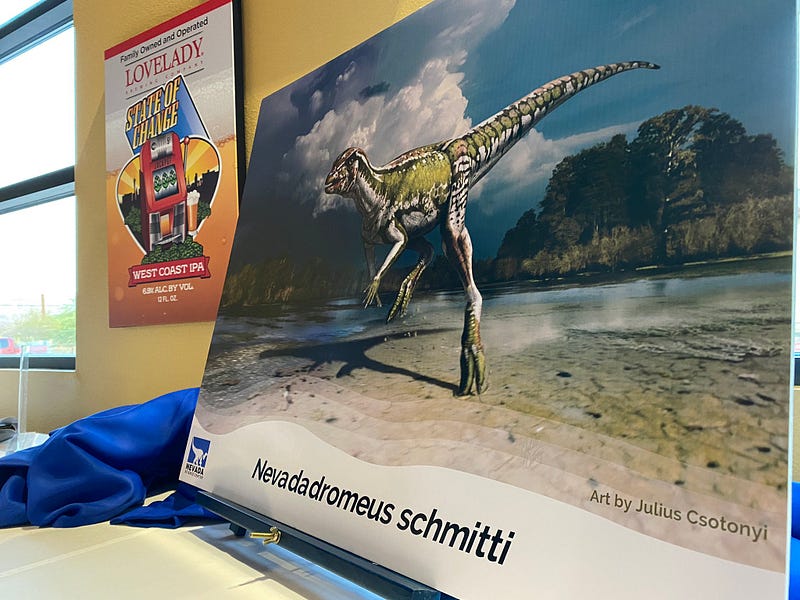
Although Nevada was home to a variety of dinosaurs during the Mesozoic Era, it had long been thought that none of those were unique to the state. This changed in September with the discovery of Nevadadromeus schmitti, a small ornithopod dinosaur the size of a large dog. Nevadadromeus walked on two legs and survived on plants that grew in Nevada’s then-lush landscape, which featured large rivers and prairies of ferns. Scientists speculated that the new dinosaur “was probably on the menu for every other type of predator” and used its speed to avoid becoming prey.
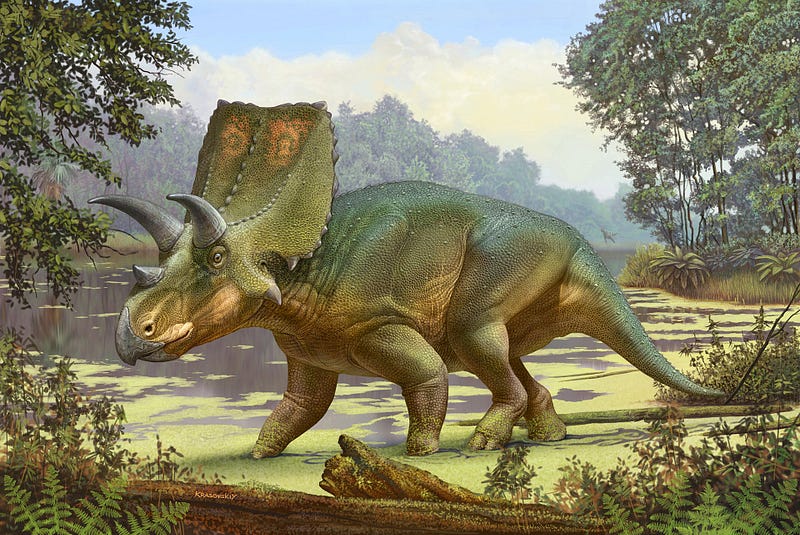
Also during the last month, scientists at the New Mexico Museum of Natural History & Science (NMMNHS) and other institutions have described a new species of ceratopsian that lived in New Mexico about 72 million years ago. Named Sierraceratops turneri, this animal is related to but predates the iconic Triceratops by six million years. Similar to its larger and well-known relative, it had an ornate frill, short but massive brow horns, and a 1.5-m (5-foot) long skull. It grew about 4.6 m (15 feet) in length.
Discoveries from South America
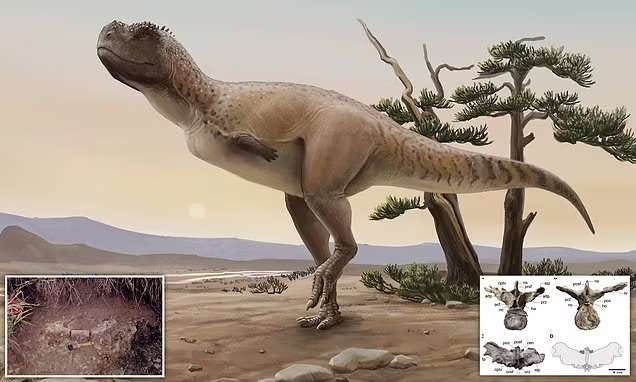
And finally, for this month, two new dinosaurs have been described from South America. The first is a new type of carnivorous dinosaur that roamed Brazil some 70 million years ago. Dubbed the Kurupi itaata, this bipedal predator is characterized by its strong legs and short arms. It was reportedly five meters (about 16 feet) long and belonged to the abelisaurid family, a group of carnivorous dinosaurs that ruled the Southern Hemisphere during the final stages of the Mesozoic Era.
In neighboring Argentina, a new sauropod assemblage containing a previously unknown species of titanosaur was described. Titanosaurs were the last surviving group of the long-necked sauropods and, the latest find, named Menucocelsior arriagadai, is one of the many species found so far from Patagonia.
Menucocelsior lived in the Allen Formation alongside a number of other titanosaurs, including the small saltasaurine Rocasaurus and indeterminate saltasaurines and aeolosaurins, known from both skeletal remains and differing morphotypes of osteoderms. Paleontologists note that such an assemblage of titanosaurs is not known anywhere else in the world; the titanosaurs’ differing body plans probably allowed them to occupy different ecological niches and thus limit competition.
Epilogue
To sum up, September was a remarkable month in the field of paleontology. Scientists learned more about the biology and behavior of a wide range of extinct animals and discovered exciting new species. Let’s hope October will bring even more amazing discoveries!
References
Brown, C., Currie, P., & Therrien, F. (2021). Intraspecific facial bite marks in tyrannosaurids provide insight into sexual maturity and evolution of bird-like intersexual display. Paleobiology, 1–32. doi:10.1017/pab.2021.29
Barker, C.T.; Hone, D.; Naish, D.; Cau, A.; Lockwood, J.; Foster, B.; Clarkin, C.; Schneider, P.; Gostling, N. (2021). “New spinosaurids from the Wessex Formation (Early Cretaceous, UK) and the European origins of Spinosauridae”. Scientific Reports. 11 (1): 19340. doi:10.1038/s41598–021–97870–8. PMID 34588472
Maidment, Susannah C. R.; Strachan, Sarah J.; Ouarhache, Driss; Scheyer, Torsten M.; Brown, Emily E.; Fernandez, Vincent; Johanson, Zerina; Raven, Thomas J.; Barrett, Paul M. (2021–09–23). “Bizarre dermal armour suggests the first African ankylosaur”. Nature Ecology & Evolution: 1–6. doi:10.1038/s41559–021–01553–6. ISSN 2397–334X
Klein, C.G., Pisani, D., Field, D.J. et al. Evolution and dispersal of snakes across the Cretaceous-Paleogene mass extinction. Nat Commun 12, 5335 (2021). https://doi.org/10.1038/s41467-021-25136-y
Bishop Peter J., Falisse Antoine, De Groote Friedl, Hutchinson Hohn R., “Predictive simulations of running gait reveal a critical dynamic role for the tail in bipedal dinosaur locomotion”, Science Advances (2021), https://www.science.org/doi/10.1126/sciadv.abi7348?_ga=2.62759340.102463112.1633277913-1475829511.1633277913
“Nuclear preservation in the cartilage of the Jehol dinosaur Caudipteryx” by Xiaoting Zheng, Alida M. Bailleul, Zhiheng Li, Xiaoli Wang and Zhonghe Zhou, 24 September 2021, Communications Biology. DOI: 10.1038/s42003–021–02627–8
Evans, David; Brown, Caleb M.; You, Hailu; Campione, Nicolás E. (2021) “Description and revised diagnosis of Asia’s first recorded pachycephalosaurid, Sinocephale bexelli gen. nov., from the Upper Cretaceous of Inner Mongolia, China”. Canadian Journal of Earth Sciences. e–First: 981–992. doi:10.1139/cjes-2020–0190
Ji S, Zhang P (2021). “First new genus and new species of basal iguanodontian dinosaur (Ornithischia: Ornithopoda) from southern China”. Acta Geoscientica Sinica. in press.
Wang M, O’Connor JK, Zhao T, Pan Y, Zheng X, Wang X, Zhou Z (2021–09–16). “An Early Cretaceous enantiornithine bird with a pintail”. Current Biology. doi:10.1016/j.cub.2021.08.044. ISSN 0960–9822.
Iori, F.V.; de Araújo-Júnior, H.I.; Simionato Tavares, S.A.; da Silva Marinho, T.; Martinelli, A.G. (2021). “New theropod dinosaur from the late Cretaceous of Brazil improves abelisaurid diversity”. Journal of South American Earth Sciences: 103551. doi:10.1016/j.jsames.2021.103551. ISSN 0895–9811
Rolando MA, Garcia Marsà JA, Agnolín FL, Motta MJ, Rodazilla S, Novas FE (2021–09–20). “The sauropod record of salitral ojo del agua: A upper cretaceous (Allen formation) fossiliferous locality from northern patagonia, Argentina”. Cretaceous Research: 105029. doi:10.1016/j.cretres.2021.105029. ISSN 0195–6671. Dalman, Sebastian G.; Lucas, Spencer G.; Jasinski, Steven E.; Longrich, Nicholas R. (2021–09–29). “Sierraceratops turneri, a new chasmosaurine ceratopsid from the Hall Lake Formation (Upper Cretaceous) of south-central New Mexico”. Cretaceous Research: 105034. doi:10.1016/j.cretres.2021.105034. ISSN 0195–6671


