
Exciting Paleontological Discoveries You Probably Missed in August
Scientists described in detail the integument of Carnotaurus…
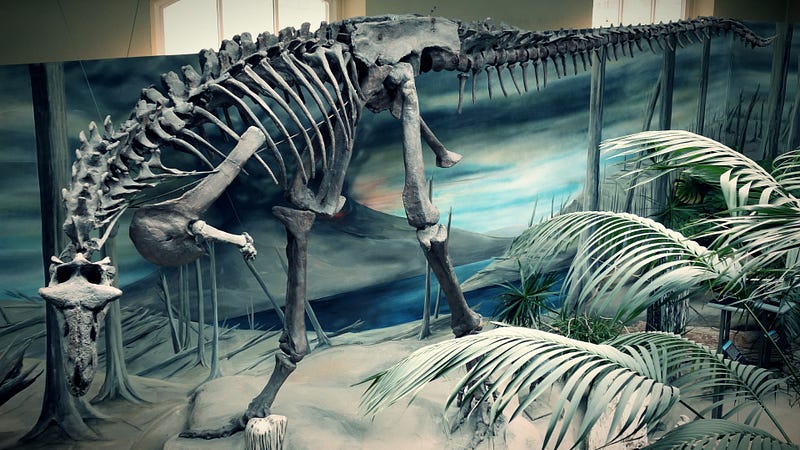
Several fascinating paleontological discoveries are taking place each month. Scientists working in the field publish numerous studies, describe new prehistoric species, and propose exciting theories about the biology and behavior of many extinct animals.
This article will do a quick recap of the most important paleontological discoveries and updates from August 2021.
Before that, be sure to check the most memorable ones from July below:
Ready? Let’s go!
A new pterosaur from Texas
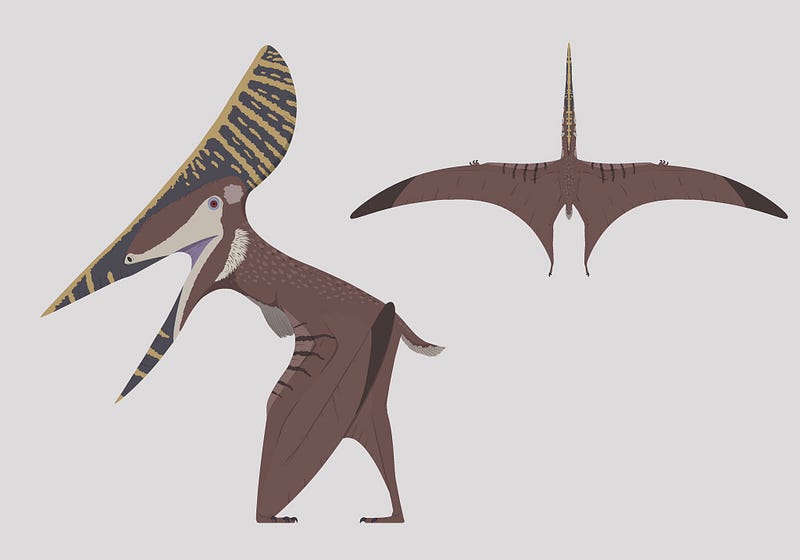
Starting off with the description and naming of a new pterosaur genus from Texas. Called Javelinadactylus sagebieli, the identification of this creature is based on a partial skull and mandible that comes from the fossiliferous Javelina Formation of Texas.
The fossils of this flying reptile had originally been found in 1986 but they weren’t properly studied until now. Researchers realized the bones belonged to a new type of tapejarid pterosaur that displays anatomy that led them to place it in the more inclusive group known as Thalassodrominae.
Up until the discovery of Javelinadactylus, thalassodromines included only two genera, both of which from Brazil. The newly described pterosaur is also the first tapejarid to be found in the Maastrichtian rocks of the Late Cretaceous North America suggesting that the group was still diversifying in the final stage of the Mesozoic Era.
Brain shape may explain how birds survived the dinosaur extinction
A unique brain shape may be why the ancestors of living birds survived the mass extinction that claimed all other known dinosaurs, according to research on a newly discovered bird fossil.
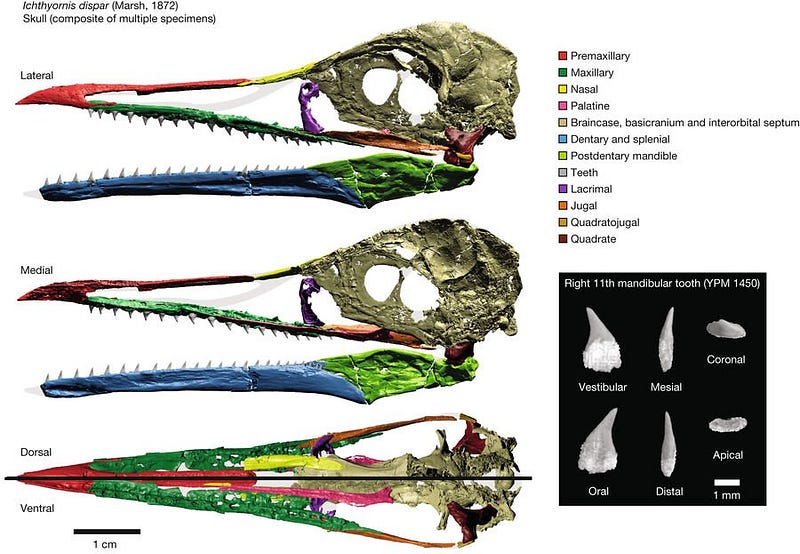
The fossil is a new specimen of a bird named Ichthyornis dispar, which went extinct 66 million years ago along with non-avian dinosaurs and lived in what is now Kansas during the late Cretaceous Period. Ichthyornis has a blend of avian and non-avian dinosaur-like characteristics — including jaws full of teeth but tipped with a beak. The nearly complete skull of Ichthyornis let scientists study its brain and test the idea that bird brains played a significant role in their survival.
With CT-imaging data, scientists used the skull like a mold to create a 3D replica of its brain called an endocast. Scientists then compared their endocast with ones created for living birds and more distant dinosaurian relatives.
The results showed that the brain of Ichthyornis had more similarities with non-avian dinosaurs than living birds. Living birds are specifically found to have much bigger cerebral hemispheres than in Ichthyornis. That pattern suggests these functions could be connected to surviving the mass extinction.
Lead investigator Christopher Torres, who conducted the research, said, “If a feature of the brain affected survivorship, we would expect it to be present in the survivors but absent in the casualties, like Ichthyornis. That’s exactly what we see here.”
The true skin of Carnotaurus
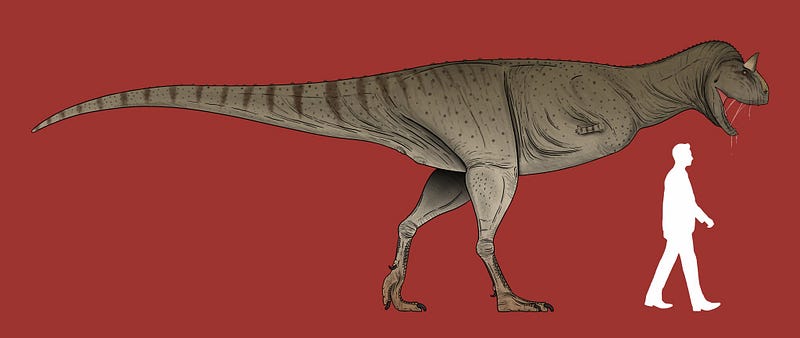
In August, paleontologists described in detail the integument of the famous abelisaurid theropod Carnotaurus sastrei, which is the most completely preserved of any theropod.
Carnotaurus was a carnivorous dinosaur from Argentina, measuring 7.5 to 9 m (24.6 to 29.5 ft) in length and weighing at least 1.35 metric tons (1.33 long tons; 1.49 short tons). It had thick horns above the eyes, and a very deep skull sitting on a muscular neck. Carnotaurus was further characterized by small, vestigial forelimbs and long, slender hind limbs.
According to the paper, the fossil containing the skin consists of medium to large (20–65 mm in diameter) conical feature scales surrounded by a network of low and small (<14 mm) basement scales separated by narrow interstitial tissue. Contrary to previous interpretations, the scales are randomly distributed, neither form discrete rows nor show progressive variations in their size along parts of the body and show little difference in morphology. Conversely, the basement scales vary from small and elongated, large and polygonal, and circular-to-lenticular in the thoracic, scapular, and tail regions, respectively.
Given the presumed active lifestyle of Carnotaurus and the necessity of shedding excess heat, scientists speculate that the skin may have played a vital role in thermoregulation; a role consistent with integument function in extant mammals and reptiles.
Australia’s largest pterosaur found in Queensland
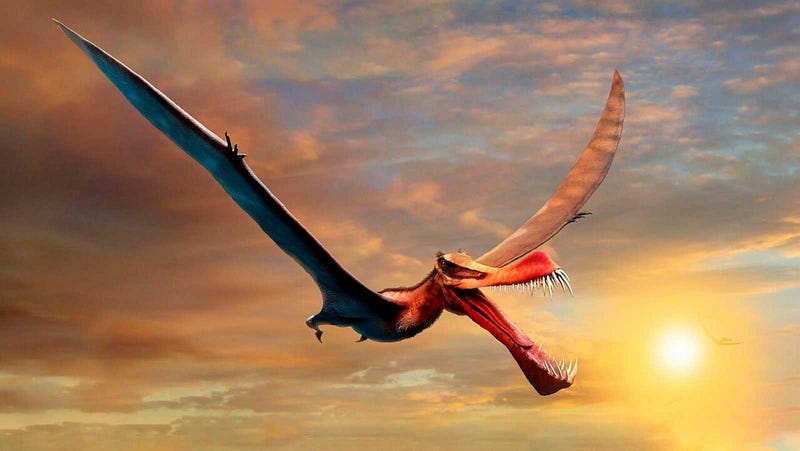
This month, Australia’s largest flying reptile — dubbed by scientists as the closest thing to a “real-life dragon” — was found in northwest Queensland.
Named Thapunngaka shawi, the new pterosaur was identified from a fossil consisting of the animal’s jaw, which contained around 40 teeth. Tim Richards, from the Dinosaur Lab at the University of Queensland’s School of Biological Sciences said the skull alone would have been just over one meter (3.2 ft) long and the pterosaur could reach a wingspan of around seven meters (23 ft). This makes it the largest flying reptile from the continent found so far.
The new species belonged to a group of pterosaurs known as anhanguerians, which inhabited every continent during the latter part of the Cretaceous Period. Thapunngaka is only the third species of anhanguerian pterosaur known from Australia, with all three species hailing from western Queensland.
“It’s quite amazing fossils of these animals exist at all,” Richards explains. “By world standards, the Australian pterosaur record is poor, but the discovery of Thapunngaka contributes greatly to our understanding of Australian pterosaur diversity,” says Richards.
Scientists discover two new giant sauropods from China
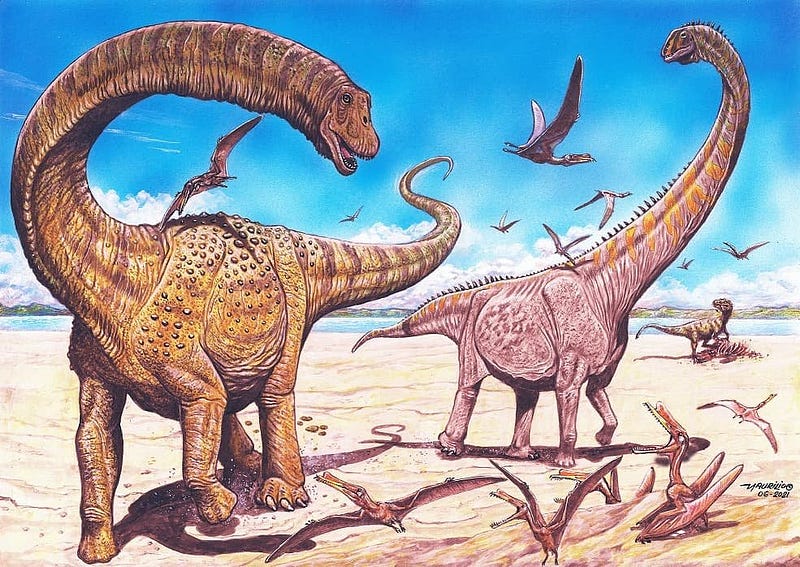
Also in August, scientists have confirmed the discovery of two massive new dinosaurs from China. The researchers have determined that the two specimens were from previously unknown species, which they have named Silutitan sinensis — “silu” meaning “Silk Road” in Mandarin — and Hamititan xinjiangensis, a nod to the region where it was found. Both incorporate the Greek word “titan,” which means “giant,” in reference to their size.
The Silutitan specimen is estimated to be over 20 meters (65.6 feet) long, while the Hamititan specimen was 17 meters (55.77 feet) long. The fossils date to the early Cretaceous Period, about 120 to 130 million years ago. Both new species belong to the titanosaur sauropod family, a group of plant-eating dinosaurs known for their signature long necks, and that were the largest animals to ever walk the earth.
43-million-year-old primitive whale discovered in Egypt
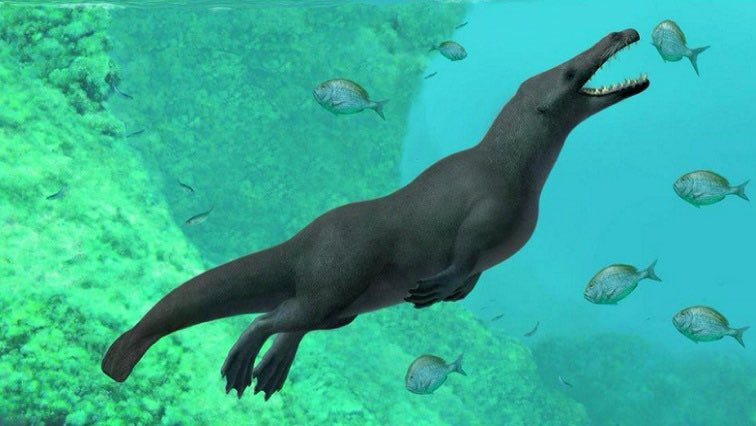
Scientists have discovered the 43 million-year-old fossil of a previously unknown amphibious four-legged whale in Egypt that helps trace the transition of whales from land to sea.
The newly discovered whale belongs to the Protocetidae, a group of extinct whales that falls in the middle of that transition. Its fossil was unearthed from middle Eocene rocks in the Fayum Depression in Egypt’s Western Desert — an area once covered by sea that has provided a rich seam of discoveries showing the evolution of whales.
The new species, named Phiomicetus anubis, had an estimated body length of three meters (10 feet), a body mass of about 1,300lb, and was likely a top predator, the researchers said. Its partial skeleton revealed it as the most primitive protocetid whale known from Africa.
T. Rex may have been a picky — not ‘brutish’ — eater
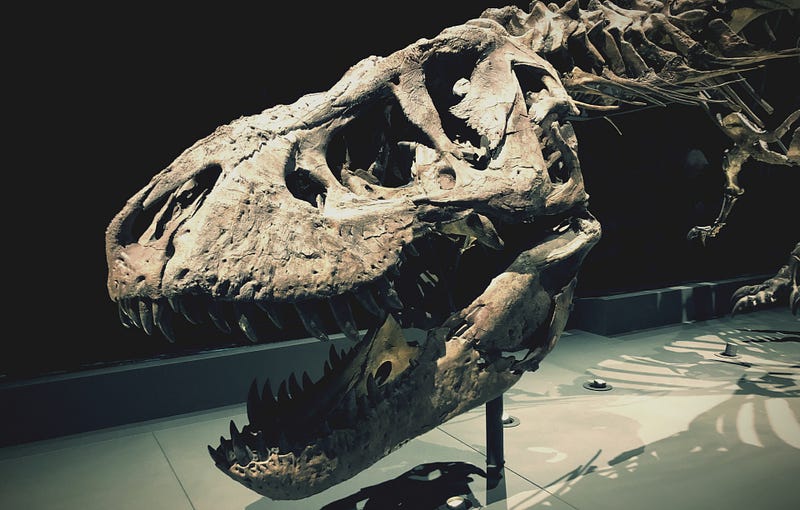
According to an interesting study published in August, Tyrannosaurus rex possessed a complex neurovascular system in its lower jaw which indicates the gargantuan theropod wasn’t just ripping through flesh and bone haphazardly, but rather it had a more discerning palate.
Scientists used computerized tomography scanning technology to analyze the inner structure of a T. rex’s lower jaw, focusing on the channels its nerves once passed through. Although the fearsome dinosaur was capable of biting with bone-crushing strength, its snout was covered in branching nerve endings that likely helped it decide when to go with a gentler chew. The findings, the researchers argue, indicate T. rex may have used its jaw for delicate tasks requiring more finesse, like carrying young or building a nest.
“This completely changes our perception of T. rex as a dinosaur that was insensitive around its mouth, putting everything and anything in biting at anything and everything including bones,” said lead author Dr. Soichiro Kawabe, from the Institute of Dinosaur Research at Fukui Prefectural University, in Japan.
Fossilized egg from prehistoric giant turtle reveals baby inside
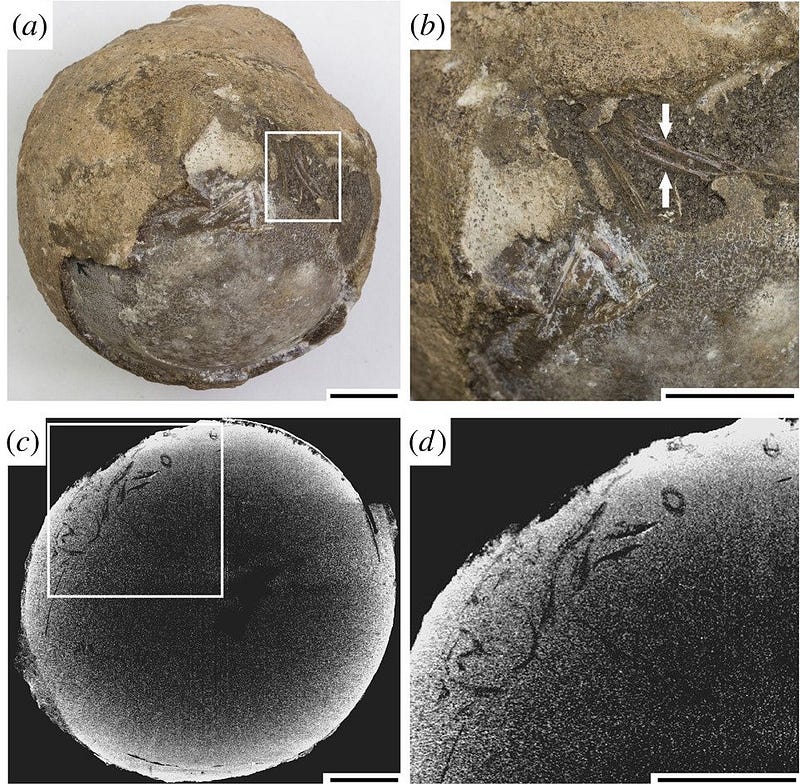
A fossilized egg discovered this month in a farmer’s home in China’s Henan Province revealed a great paleontological surprise inside. Entombed in the egg’s rocky confines lay the remains of a giant extinct turtle!
The newfound fossil belongs to an extinct group of land-dwelling turtles known as the nanhsiungchelyids. This group grew to momentous sizes and walked the Earth alongside the dinosaurs during the Cretaceous, a period that spanned from 145 to 66 million years ago. The turtle that laid the fossil egg — which is among the largest known from this time — was exceptionally big and likely sported a shell about as long as an average person is tall, the team estimates.
“These were not small turtles by any stretch,” says Darla Zelenitsky, an author of the new study and a paleontologist at the University of Calgary in Alberta, Canada.
The amazing discovery of the ancient turtle embryo is a promising hint that there are more waiting to be found, says Tyler Lyson, associate curator of vertebrate paleontology at the Denver Museum of Nature and Science, who was not part of the study team. “It’s only a matter of time”, he notes.
The first dromaeosaurid from Brazil
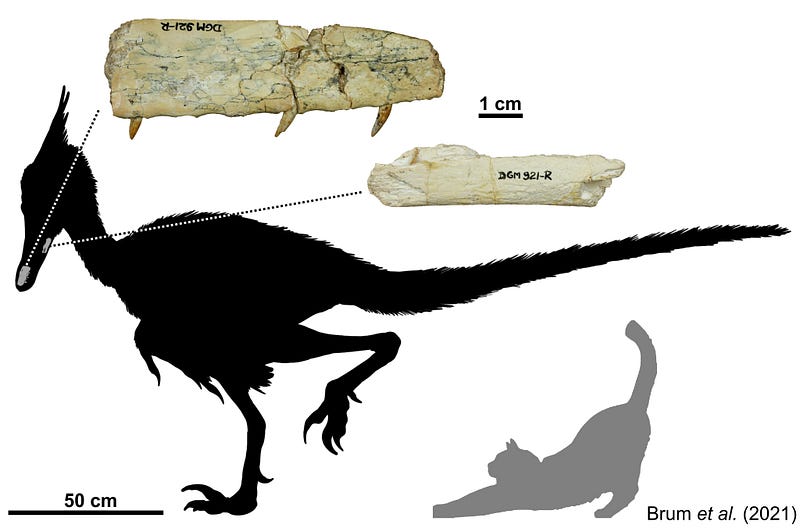
Ypupiara lopai is the latest dromaeosaurid to be named by scientists. The story behind this animal’s description is unique: the species is known solely from a specimen that was destroyed in 2018 when flames consumed much of Rio de Janeiro’s Museu Nacional.
Photographs of the holotype were taken shortly before Brazil’s oldest museum was heavily damaged in a fire on 2 September 2018. The paper naming and describing the holotype was due to be submitted around that time but was delayed because of the fire.
Ypupiara comes from the Late Cretaceous Marília Formation of Brazil. It was the first member of the Dromaeosauridae to be found in South America and the first member of the Unenlagiinae to be discovered, but not the first to be identified as such. Unenlagiines were an obscure group of dromaeosaurids, distinguished from their relatives by a tail stiffened by lengthy chevrons, a reduced second pedal ungual, a posteriorly oriented pubis, and very elongated snouts.
Based on the size of the preserved fossil material, Ypupiara is estimated to have been around 2–3 meters (6.6–9.8 ft) long when fully grown. It probably preyed on smaller animals including mammals, reptiles, and fish.
Primitive ungulates hint at rapid evolution of mammals after dinosaur extinction
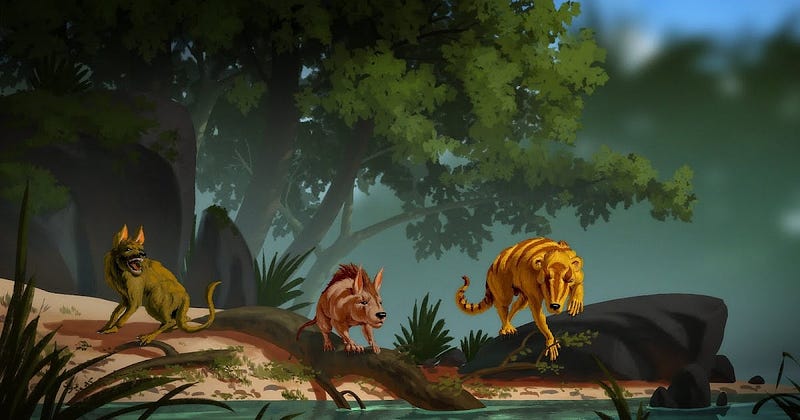
And finally, for this month, we have the discovery of three new species of ancient ungulates from the dawn of the age of modern mammals. Named Miniconus jeanninae, Conacodon hettingeri, and Beornus honeyi, they belong to a diverse collection of placental mammals called condylarths, which are the primitive ancestors of today’s hoofed mammals (horses, elephants, cows, hippos, etc).
These creatures differ in length with the largest of them, Beornus, growing up to the size of a modern house cat. This is much larger than the mostly mouse to rat-sized mammals that previously lived alongside the dinosaurs. Researchers suggest they may have been omnivores because they evolved teeth that would have allowed them to grind up plants as well as meat. However, this does not rule out them being exclusively herbivores.
Miniconus, Conacodon, and Beornus lived in North America between 66 and 63 million years ago, which is right after the Cretaceous-Paleogene mass extinction event that led to the disappearance of the non-avian dinosaurs. The reason the discovery of these archaic ungulates is so important is that it suggests early mammals became much more diverse much quicker than previously thought.
Epilogue
To sum up, August was a remarkable month in the field of paleontology. Scientists learned more about the biology and behavior of a wide range of extinct animals and discovered exciting new species.
Hungry for more paleontology news? Check out the top discoveries from September below:https://readmedium.com/exciting-paleontological-discoveries-you-probably-missed-in-september-85c2b27a7e38
References
Campos, H.B.N. A new azhdarchoid pterosaur from the Late Cretaceous Javelina Formation of Texas. Biologia (2021). https://doi.org/10.1007/s11756-021-00841-7
Christopher R. Torres et al. Bird neurocranial and body mass evolution across the end-Cretaceous mass extinction: The avian brain shape left other dinosaurs behind. DOI: 10.1126/sciadv.abg7099
Christophe Hendrickx, Phil R. Bell, The scaly skin of the abelisaurid Carnotaurus sastrei (Theropoda: Ceratosauria) from the Upper Cretaceous of Patagonia, Cretaceous Research, 2021,104994, ISSN 0195–6671, https://doi.org/10.1016/j.cretres.2021.104994.
Timothy M. Richards, Paul E. Stumkat & Steven W. Salisbury (2021) A new species of crested pterosaur (Pterodactyloidea, Anhangueridae) from the Lower Cretaceous (upper Albian) of Richmond, North West Queensland, Australia, Journal of Vertebrate Paleontology, DOI: 10.1080/02724634.2021.1946068
Wang X, Bandeira KL, Qiu R, Jiang S, Cheng X, Ma Y, Kellner AW (2021). “The first dinosaurs from the Early Cretaceous Hami Pterosaur Fauna, China”. Scientific Reports. 11 (1): Article number 14962. doi:10.1038/s41598–021–94273–7
Brum, Arthur Souza, Pêgas, Rodrigo Vargas, Bandeira, Kamila Luisa Nogueira, Souza, Lucy Gomes de, Campos, Diogenes de Almeida, & Kellner, Alexander Wilhelm Armin. (2021). A new Unenlagiinae (Theropoda: Dromaeosauridae) from the Late Cretaceous of Brazil. https://doi.org/10.1002/spp2.1375
Soichiro Kawabe, Soki Hattori. Complex neurovascular system in the dentary of Tyrannosaurus. Historical Biology, 2021; 1 DOI: 10.1080/08912963.2021.1965137
Ke Yuzheng, Wu Rui, Zelenitsky Darla K., Brinkman Don, Hu Jinfeng, Zhang Shukang, Jiang Haishui, Han Fenglu, 2021 A large and unusually thick-shelled turtle egg with embryonic remains from the Upper Cretaceous of ChinaProc. R. Soc. B.2882021123920211239http://doi.org/10.1098/rspb.2021.1239
Madelaine R. Atteberry & Jaelyn J. Eberle (2021) New earliest Paleocene (Puercan) periptychid ‘condylarths’ from the Great Divide Basin, Wyoming, USA, Journal of Systematic Palaeontology, DOI: 10.1080/14772019.2021.1924301
Gohar, Abdullah S.; Antar, Mohammed S.; Boessenecker, Robert W.; Sabry, Dalia A.; El-Sayed, Sanaa; Seiffert, Erik R.; Zalmout, Iyad. S.; Sallam, Hesham M. (25 August 2021). “A new protocetid whale offers clues to biogeography and feeding ecology in early cetacean evolution”. Proceedings of the Royal Society B: Biological Sciences. 288 (1957). doi:10.1098/rspb.2021.1368.


