
Exciting Paleontological Discoveries You Probably Missed in July
Ornithischians might have breathed differently from other dinosaurs….
Several fascinating paleontological discoveries are taking place each month. Scientists working in the field publish numerous studies, describe new prehistoric species, and propose exciting theories about the biology and behavior of many extinct animals.
This article will do a quick recap of the most important paleontological discoveries and updates from July 2021.
Before that, be sure to check the most memorable ones from June below:
Ready? Let’s go!
Exquisitely preserved fossil sheds light on how ornithischian dinosaurs breathed
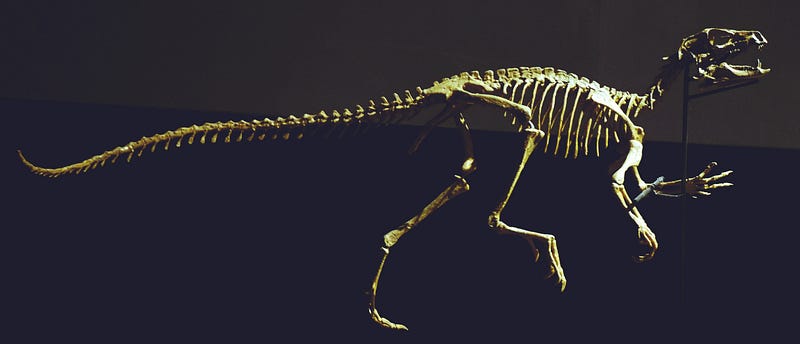
This month, scientists discovered that early members of ornithischian dinosaurs— the group that includes the duck-billed hadrosaurs, the frilled ceratopsians, and the armored dinosaurs, may have breathed differently than their relatives.
This conclusion came after examining the unusual rib and sternum bones in an exceptionally preserved skeleton of a turkey-sized ornithischian called Heterodontosaurus tucki. Heterodontosaurus measured about 1 meter (3ft)) from nose to tail and it’s one of the earliest species to be included in the ornithischian group. Hence, it can provide clues about the evolution of features that are common among ornithischians but differ from other dinosaurs.
Research showed that the 200-million-year-old dinosaur from South Africa would have inhaled air by inflating its belly and chest. This type of breathing resembles the respiration of certain reptiles; crocodiles breathe using their chests, bellies, “and truly weird muscles” in their bodies, while lizards breathe by expanding and contracting their entire bodies “and even the neck sometimes,” said lead study author Viktor Radermacher, a doctoral student in the Department of Earth and Environmental Sciences at the University of Minnesota in Minneapolis.
Prior to this discovery, some scientists suspected that ornithischians might have breathed differently from other dinosaurs; this well-preserved Heterodontosaurus specimen “was the missing piece of the puzzle” for confirming that hypothesis, Radermacher said.
Bizarre dinosaurs shrank in size to become ant-eaters
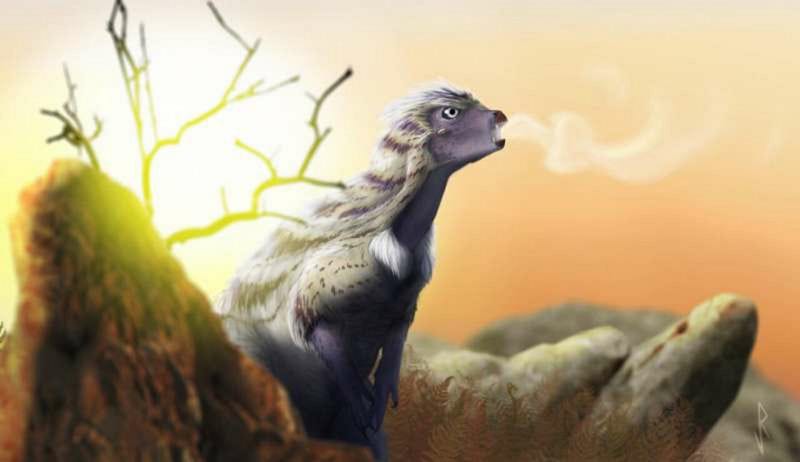
Roughly 100 million years ago, a bizarre group of bird-like dinosaurs, known as alvarezsaurids, began to transform from ostrich-sized predators to animals the size of chickens. According to a recent study published by the University of Bristol, the drive behind this shrinking happened for a surprising reason: a dietary change that included ants and termites.
Find out more about this peculiar evolutionary change below:
A new Iguanodon-like dinosaur from Spain
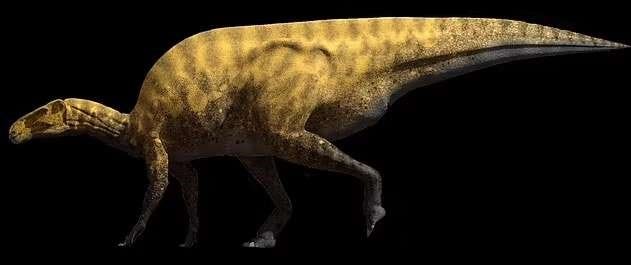
This month also saw the discovery of a new Iguanodon-like dinosaur from Spain. Iguanodons were typically large plant-eaters with hoof-like second, third and fourth digits, and in some cases, a specialized thumb spike and an opposable fifth digit. They lived in populous herds and were among the most diverse and widespread herbivores of the Cretaceous Period.
The new species, named Portellsaurus sosbaynati, was identified from a jawbone fossil found in the Maestrat Basin of the Iberian Range north of Castello de la Plana in eastern Spain. It was a 5.7–8 meter-long (19- to 26-ft) herbivore that lived roughly 130 million years ago during the Early Cretaceous Period.
Dinosaurs like Portellsaurus eventually gave rise to the highly successful duck-billed hadrosaurs, and paleontologists hope similar discoveries will shed new light on the origins and the evolution of this dinosaur group.
Dinosaur tracks in China named after famous Doraemon character
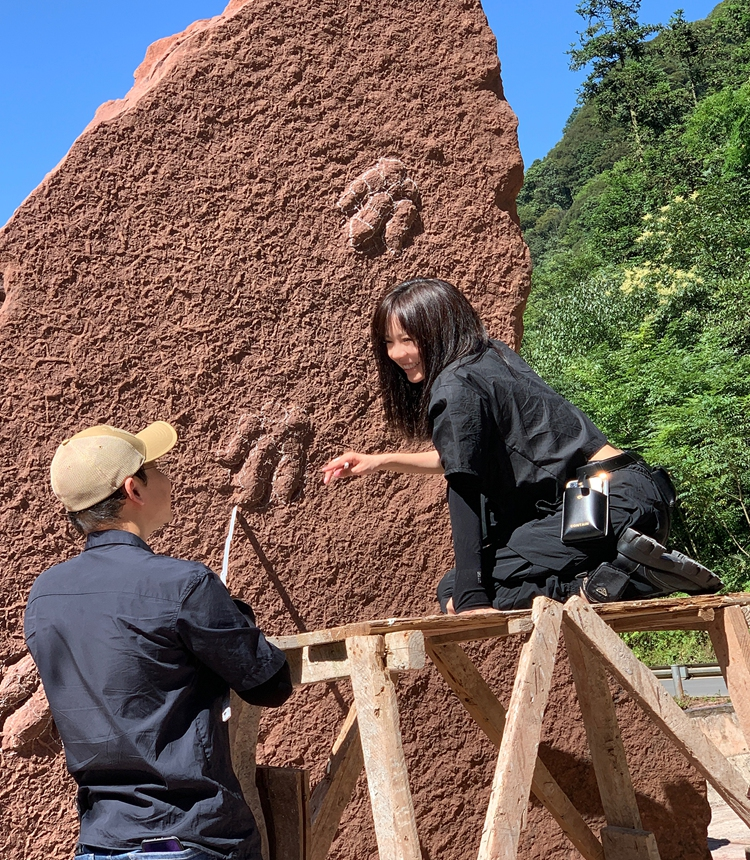
A set of footprints pertaining to a species of a carnivorous dinosaur found in China’s Sichuan Province have been named after the Japanese cartoon character Nobi Nobita from the popular Doraemon franchise.
The four footprints, each about 30 centimeters in size, belonged to a new species of Eubrontes that paleontologists named Eubrontes Nobitai after the Japanese schoolboy who is befriended by a robot cat from the future.
Xing Lida, a paleontologist with the China University of Geosciences, told that two animated films in the Doraemon franchise — Doraemon: Nobita’s Dinosaur (1980) and Doraemon: Nobita’s New Dinosaur (2020) — were the direct inspiration for the name as he feels they are “excellent dinosaur-themed movies” that have led to many young children to fall in love with dinosaurs.
“Dinosaurs discovered in China are also deeply loved by our Japanese friends. Dinosaurs from Sichuan Province have been exhibited in Japan many times, serving as a bridge of friendship between the people of the two countries,” Xing noted.
Paleontologists trace origins of dinosaur-killing asteroid
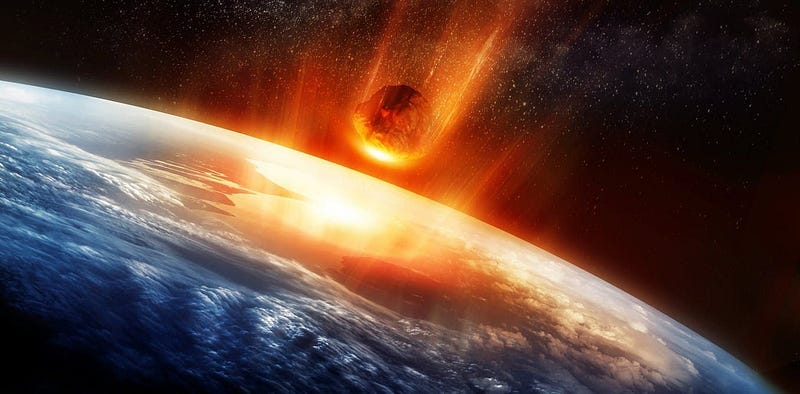
In their latest study, scientists from the Southwest Research Institute (SwRI) tried to identify the origins of the asteroid that struck the Earth 66 million years ago, triggering the wave of extinction that led to the disappearance of the non-avian dinosaurs.
The examination showed that the origins of the dinosaur-killing asteroid can be traced in the outer asteroid belt between Mars and Jupiter. While asteroids there are on fairly stable orbits and rarely dislodge and head towards Earth, thermal forces acting on them over millions of years can slowly jostle them around. Eventually, some of them reach regions that act like gravitational “escape hatches” where they can slip loose. From there, they can end up on orbits that potentially cross paths with Earth.
To find out how often this may occur, the team simulated a main asteroid belt of 130,000 virtual space rocks, and tracked them over hundreds of millions of years. And surprisingly, they discovered that asteroids of about the size of the one that killed off the dinosaurs strike Earth at least 10 times more often than was previously thought — an average of once every 250 million years!
Massive tsunami from dino-killing asteroid carved ‘megaripples’ into the ocean floor
The asteroid that killed off all non-avian dinosaurs made quite the splash when it hit the shallow waters of the Yucatan Peninsula of Mexico. A recent study led by geophysicist Gary Kinsland from the University of Louisiana at Lafayette, spotted the seafloor scars left from a tsunami of epic proportions, offering new insights into this catastrophic event.
The new paper documents a series of large-scale megaripples located nearly 1,500 meters (5,000 ft) beneath the surface. The studied layer dates back to the time of the impact, marking the “first time such buried, geologically old, tsunami megaripples have been imaged,” according to the study.
The ripples are separated by distances averaging nearly 600 meters (2,000 ft) and have an average height of 16 meters (52.5 ft), “making them the largest ripples documented on Earth,” as the scientists write in their study. Kinsland and his colleagues say the orientation of the megaripples is consistent with having originated at the site of the asteroid impact. These features formed at depths reaching around 200 feet (60 meters), as the gigantic waves from the tsunami surged northward.
This discovery means similar megaripples might be found elsewhere, and additional finds would further bolster our understanding of perhaps one of the most dramatic days in Earth’s history.

Pterosaurs could fly as babies
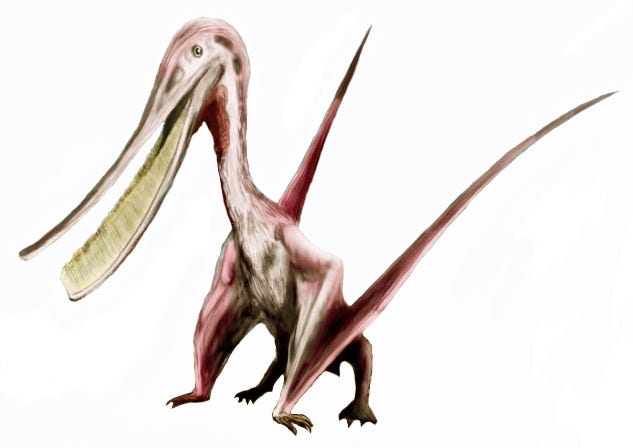
A new study has revealed that baby pterosaurs could most likely fly almost as soon as they hatched from their eggs. Pterosaurs were flying reptiles that lived at the same time as the dinosaurs, over 200 million years ago. They not only were the first flying vertebrates to appear on the planet but also the largest animals to ever develop that capacity.
The team of UK scientists who performed the study examined the fossilized bones of three young Pterodaustro guinazui and one young Sinopterus dongi, a pair of closely related pterosaur species. They checked the wing bones for strength and wingspan, making comparisons with the fossilized wing bones of 22 adult pterosaurs. Based on the results of this detailed anatomical study, they concluded newborn pterosaurs possessed wings that would have been well-prepared for immediate flight.
According to study co-author Darren Naish, an independent paleontologist, and public science educator, the idea that young pterosaurs could fly immediately after birth is not new. The latest study stands out, however, because it combines several different lines of evidence.
Cretaceous hadrosaur had foot and tail health problems
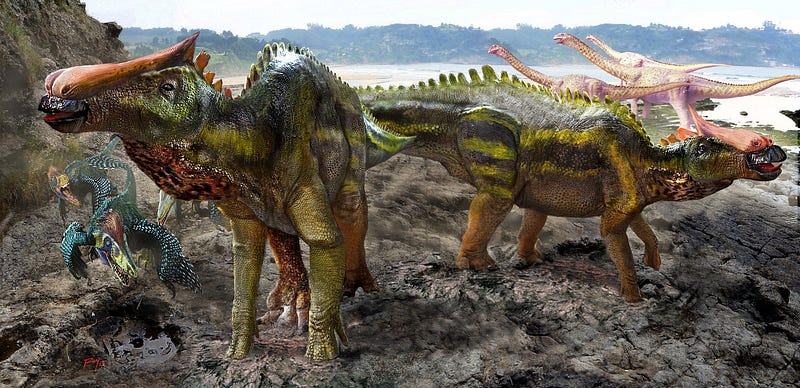
In a new study published in July, paleontologist Cruzado-Caballero and colleagues described the unique injuries recorded in a skeleton of the Late Cretaceous hadrosaur Bonapartesaurus rionegrensis.
After close examination, the paleontologist at the CONICET, the National University of Río Negro, and the University of La Laguna, found that the particular specimen of the Argentinian hadrosaur displayed three pathologies: two in the neural spines of the tail vertebrate and one in a left foot bone.
One of the vertebrae had a displaced fracture that had almost healed — probably related to an injury resulting from a strong blow. The other vertebra had an almost completely healed fracture also produced by a stress event, which did not lead to the displacement of the bone.
According to the researchers, these fractures must have been painful not only because of the blow but also because of the infections that could have impeded the mobility of the tail and caused this specimen a great deal of discomfort when it moved.
As for the injury at the foot bone, scientists noticed a reduction in bone density and several areas where cortical tissue had been destroyed. “We were probably looking at a cancer or a neoplasm, such as an osteosarcoma”, Professor Cruzado-Caballero said. Despite the large development of the cancer, it did not significantly affect the muscle insertion zone, so it may have not affected the locomotion of this Bonapartesaurus individual.
Studies like these can help us better understand how paleopathologies may have affected relationships between these organisms and other members of their species, as well as different dinosaur genera.
Retired science teacher finds 130-million-year-old dinosaur tracks in Australia
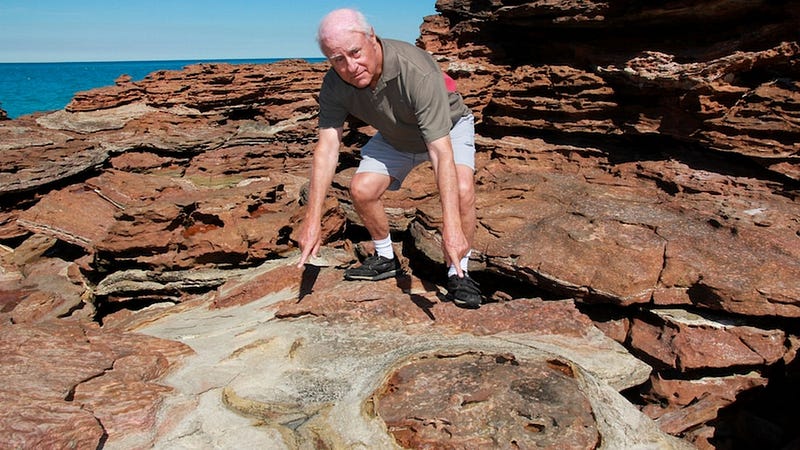
And finally, for this month, a retired science teacher discovered a pair of 130-million-year-old dinosaur tracks on the Dampier Peninsula of Northwestern Australia. The newly documented tracks, pertaining to a sauropod and a theropod dinosaur, are a welcome addition to the records of hundreds of others around Broome.
Steve Salisbury, a paleontologist at the University of Queensland, says this wealth of information is providing a rare opportunity to study how dinosaurs behaved and interacted with each other.
“We can actually start to piece together this whole ecology for a dinosaur community that existed in Broome 130 million years ago,” he said. “All these little pieces help us start to paint a very detailed diagram of life in this area during that time.”
The newly documented tracks add to the incredible wealth already recorded including the world’s largest dinosaur track and hint at what more may remain to be discovered in the Broome area.
Epilogue
To sum up, July was a remarkable month in the field of paleontology. Scientists learned more about the biology and behavior of a wide range of extinct animals and discovered exciting new species.
Hungry for more paleontology news? Check out the top discoveries from August below:
References
Viktor J Radermacher, Vincent Fernandez, Emma R Schachner, Richard J Butler, Emese M Bordy, Michael Naylor Hudgins, William J de Klerk, Kimberley EJ Chapelle, Jonah N Choiniere. A new Heterodontosaurus specimen elucidates the unique ventilatory macroevolution of ornithischian dinosaurs. eLife, 2021; 10 DOI: 10.7554/eLife.66036
Ben Collins, Retired science teacher finds 130-million-year-old dinosaur tracks next to Broome boat ramp, ABC News Australia, July 2021, Link: https://www.abc.net.au/news/2021-07-07/new-broome-dinosaur-tracks-show-rare-combination/100271580
Santos-Cubedo A, de Santisteban C, Poza B, Meseguer S (2021). “A new styracosternan hadrosauroid (Dinosauria: Ornithischia) from the Early Cretaceous of Portell, Spain”. PLOS ONE. 16 (7): e0253599. doi:10.1371/journal.pone.0253599.
Ji Yuqiao, New footprints of carnivorous dinosaur found in SW China named after famous Doraemon character, (2021), Global Times, Link: https://www.globaltimes.cn/page/202107/1228230.shtml
Penélope Cruzado-Caballero, Agustina Lecuona, Ignacio Cerda, Ignacio Díaz-Martínez, Osseous paleopathologies of Bonapartesaurus rionegrensis (Ornithopoda, Hadrosauridae) from Allen Formation (Upper Cretaceous) of Patagonia Argentina, Cretaceous Research, Volume 124, 2021, 104800, ISSN 0195–6671, https://doi.org/10.1016/j.cretres.2021.104800.
Naish, D., Witton, M.P. & Martin-Silverstone, E. Powered flight in hatchling pterosaurs: evidence from wing form and bone strength. Sci Rep 11, 13130 (2021). https://doi.org/10.1038/s41598-021-92499-z
David Nesvorný, William F. Bottke, Simone Marchi, Dark primitive asteroids account for a large share of K/Pg-scale impacts on the Earth, Icarus, Volume 368, 2021, 114621, ISSN 0019–1035, https://doi.org/10.1016/j.icarus.2021.114621.
Gary L. Kinsland, Kaare Egedahl, Martell Albert Strong, Robert Ivy, Chicxulub impact tsunami megaripples in the subsurface of Louisiana: Imaged in petroleum industry seismic data,Earth and Planetary Science Letters,Volume 570,2021,117063,ISSN 0012–821X, https://doi.org/10.1016/j.epsl.2021.117063.


