
Exciting Paleontological Discoveries You Probably Missed in June
Tetrapods conquered land later than previously thought…
Several fascinating paleontological discoveries are taking place each month. Scientists working in the field publish numerous studies, describe new prehistoric species, and propose exciting theories about the biology and behavior of many extinct animals.
This article will do a quick recap of the most important paleontological discoveries and updates from June 2021.
Before that, be sure to check the most memorable ones from May below:
Ready? Let’s go!
Scientists discover Australia’s largest dinosaur
Starting off with an amazing discovery from Australia. Paleontologists from the Queensland and Eromanga Natural History Museum discovered a new dinosaur that has been officially recognized as the largest ever found in the continent and among the biggest in the world.
Scientists estimate it could have grown to around 25–30 meters (82–98 ft) in length and could have easily reached the height of a two-story house. The new dinosaur, named Australotitan, could have weighed up to 74 tonnes — or about 9 African elephants!
Learn more about this remarkable discovery below:
Tetrapods conquered land later than previously thought
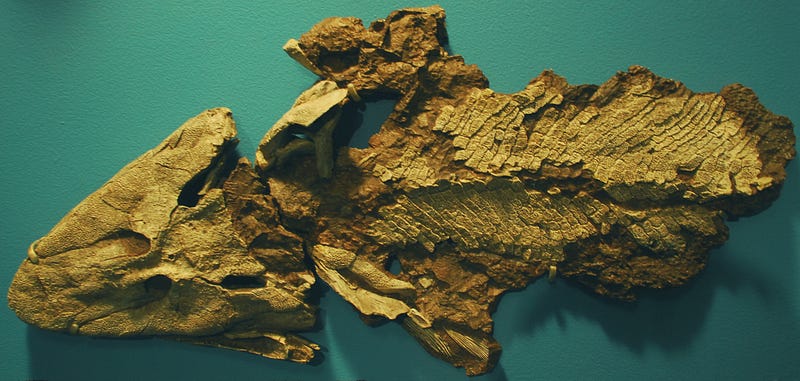
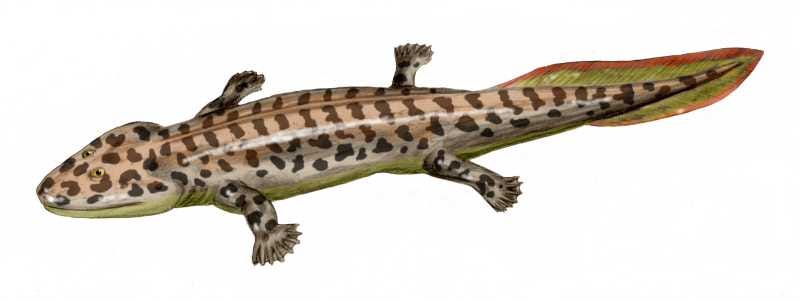
Also in May, a remarkable paper suggested that tetrapods might not have made it onto land as soon as previously thought.
The evidence for the transition onto land in our tetrapod ancestors is quite contradictory. Trace fossils considered being made by terrestrial tetrapods actually date long before the earliest body fossils of actual land vertebrates. According to the paper, late Devonian tetrapods (380–360 million years ago) were still likely obligatory aquatic with the first definitely terrestrial forms only appearing during the Early Carboniferous Period some 15 to 20 million years later.
The paper concludes that the mysterious trackways supposedly left by mid-Devonian terrestrial tetrapods should be carefully re-examined and call for more fossil sampling to be done so that scientists can better identify the first truly terrestrial forms.

Dinosaurs lived in a greenhouse climate with hot summers
A new study led by Niels de Winter (VUB-AMGC & Utrecht University) shows that dinosaurs had to deal with hotter summers than previously estimated.
Traditionally, paleontologists believed that when the global climate is warmer, as it was during the Cretaceous, the difference between the seasons would decrease. This is something we can observe in present-day tropics which experience less temperature difference between summer and winter. However, de Winter’s reconstructions showed that while the average temperature during the Cretaceous Period was on the rise, the temperature difference between summer and winter remained rather constant.
“This leads to hotter summers and warmer winters,” said de Winter.
The results of the study bring new insights into the dynamics of a warm climate, which can be used to improve both climate reconstructions and climate predictions. Moreover, they show that a warmer climate can also have extreme seasons.

New species of the largest land mammal found in China
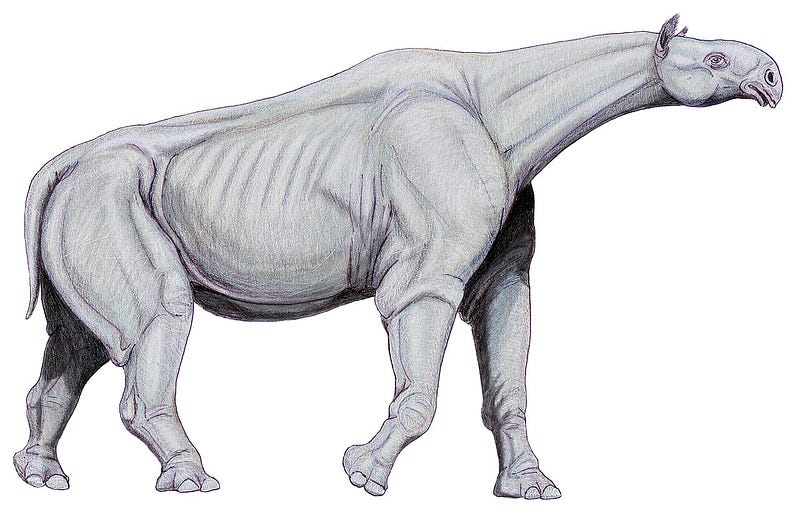
A new species of Paraceratherium, a prehistoric rhino that belongs to the genus of the largest land mammal ever to exist has been discovered in the Linxia Basin, a tectonic basin in northwest China’s Gansu province.
Paraceratherium was a hornless, long-necked herbivore living in open woodland, reaching an estimated weight of 20 tons — equal to several modern rhinos. It often stood over 6 meters (20 ft) tall, making it bigger than the largest mammoths. Fossils of this genus were found in China, Mongolia, Kazakhstan, and Pakistan.
The new species named Paraceratherium linxiaense lived over 26 million years ago and represents a “missing link” between various species of giant rhinos that once roamed Asia.
The evolution and westward migration of the various Paraceratherium species show that the Himalaya and the Tibetan region were not yet a barrier to the movement of large land mammals, implying that the modern mountains and high-elevation plateau only formed during the last 28 to 23 million years.

Dinosaurs not only lived in the Arctic but also nested there
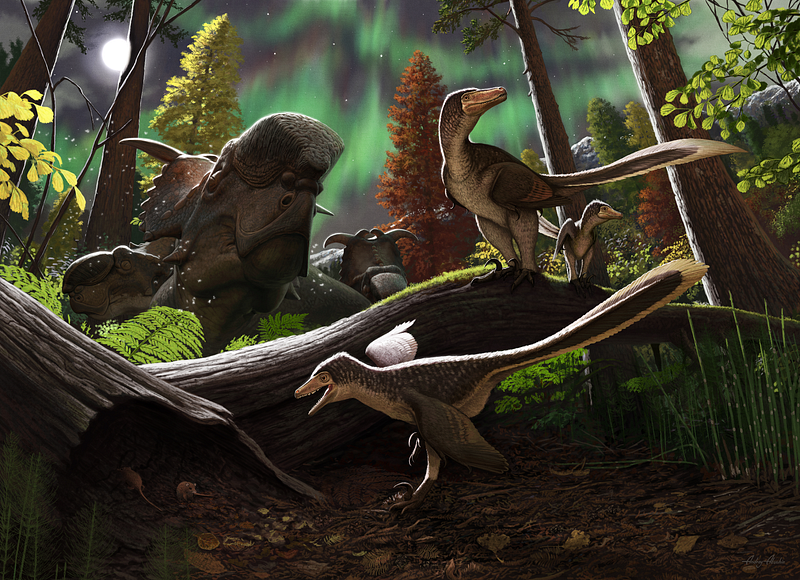
Fossils from at least seven types of baby dinosaurs discovered in northernmost Alaska offer firm evidence that they lived all-year-round in the Arctic.
The discovery site commonly known as the Prince Creek Formation is at latitude 70 and about 250 miles (400 km) north of the Arctic Circle. In the Cretaceous period, when North America was positioned differently, it was even farther north, at latitude 80 or 85. The region was much warmer then than it is today but hardly tropical. From remnants of ancient plants, scientists calculate the average annual temperature at about 6 degrees Celsius (42.8 Fahrenheit) meaning below-freezing winters with snow. Alaska’s North Slope endures two months of total winter darkness now, but during the Cretaceous period, it was in total darkness for up to four months a year.
“If they reproduced, then they over-wintered there. If they overwintered there, they had to deal with conditions that we don’t usually associate with dinosaurs, like freezing conditions and snow,” said lead author Pat Druckenmiller, director of the University of Alaska Museum of the North.
The discovery is crucial to the modern understanding of dinosaurs and offers more evidence that at least some genera had a degree of warm-bloodedness — an essential adaptation to survive dark Arctic winters.

A new ichthyosaur from Patagonia
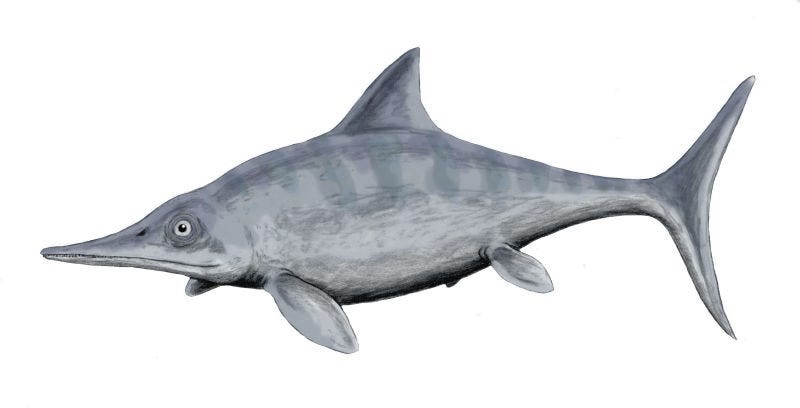
A remarkable animal in terms of ichthyosaur evolution has been described this month. Its name is Catutosaurus gaspariniae and was discovered in the Upper Jurassic rocks of Patagonia, in Argentina.
Catutosaurus is classified as a basal ophthalmosaurid, a successful and widespread family of ichthyosaurs. Ichthyosaurs were marine reptiles that had a porpoise-like head with a short neck and a long snout. Some species had a fin on their backs and a more or less vertical fin at the rear of a rather short tail.
What makes Catutosaurus unique is that its skull is similar to one grouping within the ophthalmosaur clade while its fore fin is more like the members of a different grouping. This suggests that the evolution of these skeleton parts occurred independently among ophthalmosaurids and not in a stepwise fashion as the group evolved.

Juvenile T.rex had stronger bite force than previously thought
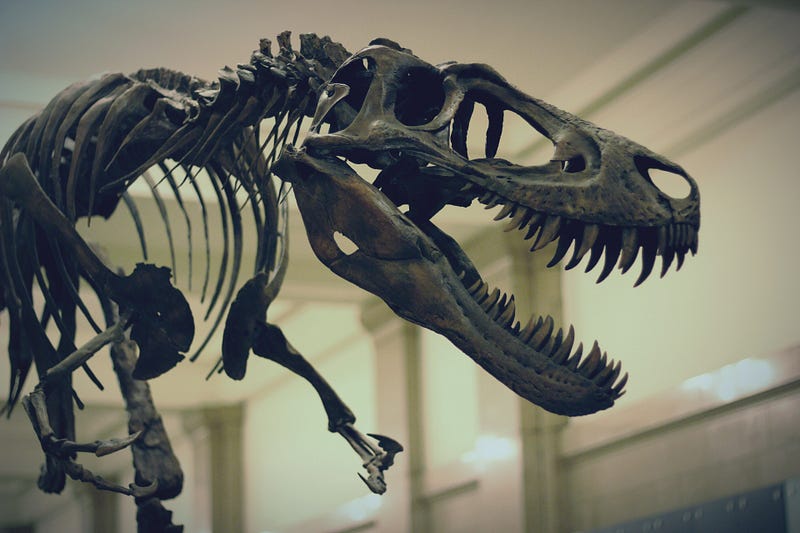
An interesting study looking at the bite force of juvenile Tyrannosaurs has been published this month.
Using mechanical tests involving 3D printing of a juvenile T.rex tooth and measuring the forces required to replicate similar-looking bite marks in bones, the researchers found young tyrannosaurs were capable of bite forces over 5,640 N.
This is higher than previously estimated and further illustrates the interesting implications for how these juvenile predators fed and the roles they played in their respective ecosystems.

Sharks almost went extinct 19 million years ago
An intriguing study published in June found the first evidence of a previously unknown extinction event that occurred roughly 19 million years ago and wiped out most of the shark species that lived in the open oceans.
This sudden drop in shark biodiversity during the Miocene was incredibly dramatic and may have wiped out nearly 90 percent of their population. Yet scientists remain unsure about what may have caused it.
Find out more about this remarkable study below:
Sharks Were Nearly Wiped Out from the Planet 19 Million Years Ago
And no one is sure why…
medium.com
Dinosaur footprints dating back to 110 million years discovered on UK cliffs
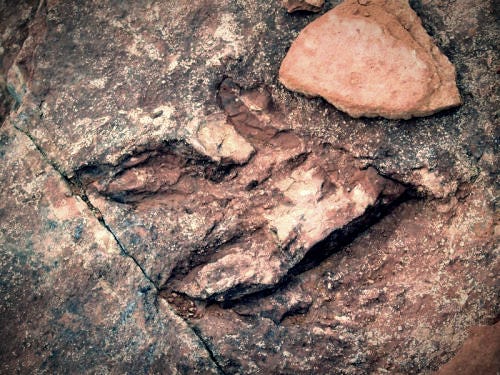
Footprints of at least six different species of dinosaurs dating from 110 million years ago have been found in Kent, in the United Kingdom.
The footprints were discovered in the cliffs and on the foreshore in Folkestone where stormy conditions affect the cliff and coastal waters and are constantly revealing new fossils. The footprints are from a variety of species, which shows there was a relatively high diversity of dinosaurs in southern England at the end of the Early Cretaceous period.
“This is the first time dinosaur footprints have been found in strata known as the Folkestone Formation and it’s quite an extraordinary discovery because these dinosaurs would have been the last to roam in this country before becoming extinct,” said David Martill, a Professor of Palaeobiology at the University of Portsmouth.
“To find such an array of species in one place is fascinating. These dinosaurs probably took advantage of the tidal exposures on coastal foreshores, perhaps foraging for food or taking advantage of clear migration routes,” explained Martill.

Scientists find Australia’s largest crocodilian
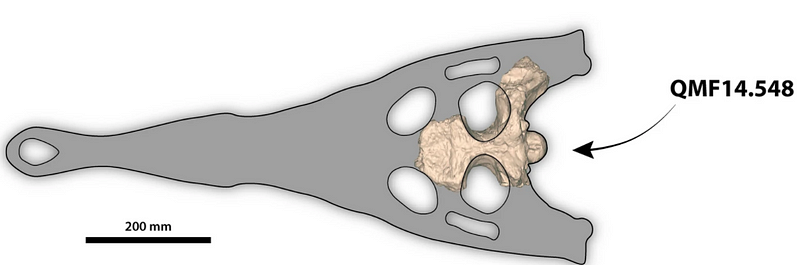
This month brought some fascinating paleontology news from Australia as scientists also described a new genus and species of a prehistoric crocodilian.
Named Gunggamarandu maunala, this is the biggest crocodilian known to have inhabited Australia. Paleontologists estimate it could have grown up to 7 meters (23 ft), making it larger than today’s saltwater crocodiles. Research showed Gunggamarandu was a member of the Tomistominae, the group of crocodilians with long and narrow snouts. The newly found species looked more like the closely related false gharial than to modern crocodile and alligator.
Gunggamarandu became the first tomistomine to be found in Australia and so far it is the southernmost occurrence of its lineage.

A new plesiosaur from Portugal
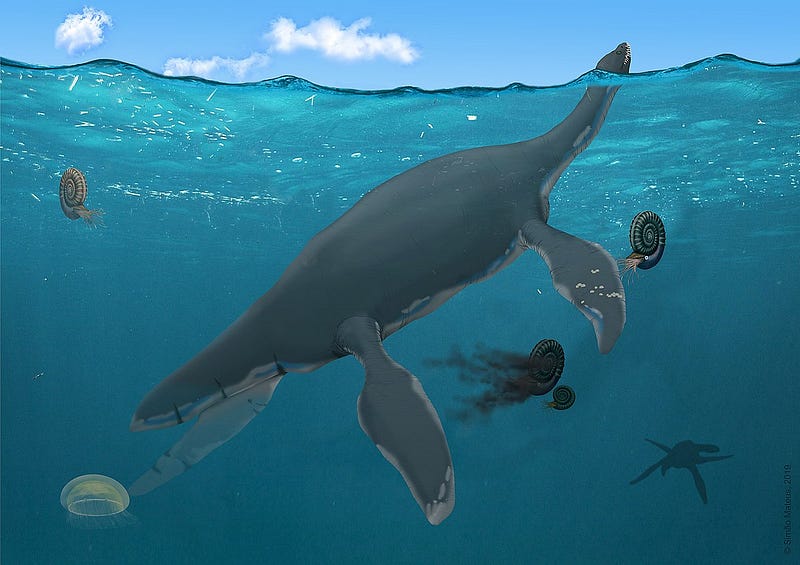
Also in June, paleontologists discovered a new and exciting plesiosaur species from Portugal. Plesiosaurs are an extinct clade of carnivorous marine reptiles with long necks and broad turtle-like bodies that are known from the Jurassic and Cretaceous periods.
The newest specimen is called Plesiopharos moelensis and dates from the Lower Jurassic rocks of central west Portugal. Phylogenetic analysis placed it near the base of the superfamily Plesiosauroidea based on its combination of unique skeletal characteristics.
Plesiopharos is the oldest and most complete plesiosaur species to be discovered so far in the Iberian peninsula and helps scientists better understand how marine reptiles spread into this region with the opening of the then newly formed proto-Atlantic ocean.

The ‘dragon man’ and other fascinating anthropological discoveries
June was a special month for anthropology too, since scientists discovered a previously unknown population of humans in Israel and mapped the order in which various human species appeared in the famous Denisova Cave. But, above all, June 2021 was marked by the discovery of the so-called ‘dragon man’, a possible new species of archaic human from China contemporary to us and Neanderthals.
To find out more about these exciting new discoveries that shed more light on the evolutionary history of us and our ancestors, read the article below:
Epilogue
To sum up, June was a remarkable month in the field of paleontology. Scientists learned more about the biology and behavior of a wide range of extinct animals and discovered exciting new species.
Hungry for more paleontology news? Check out the top discoveries from July below:
References
Vrije Universiteit Brussel. “Dinosaurs lived in greenhouse climate with hot summers, study shows: New climate reconstruction method provides precise picture of climate 78 million years ago.” ScienceDaily. ScienceDaily, 10 June 2021. <www.sciencedaily.com/releases/2021/06/210610135654.htm>.
Locomotory behaviour of early tetrapods from Blue Beach, Nova Scotia, revealed by novel microanatomical analysis, Kendra I. Lennie, Sarah L. Manske, Chris F. Mansky and Jason S. Anderson, Published: 26 May 2021 https://doi.org/10.1098/rsos.210281
Ristevski, J., Price, G.J., Weisbecker, V. et al. First record of a tomistomine crocodylian from Australia. Sci Rep 11, 12158 (2021). https://doi.org/10.1038/s41598-021-91717-y
Peterson JE, Tseng ZJ, Brink S. 2021. Bite force estimates in juvenile Tyrannosaurus rex based on simulated puncture marks. PeerJ 9:e11450 https://doi.org/10.7717/peerj.11450
Marta S. Fernández,Lisandro Campos,Erin E. Maxwell &Alberto C. Garrido Catutosaurus gaspariniae, gen. et sp. nov. (Ichthyosauria, Thunnosauria) of the Upper Jurassic of Patagonia and the evolution of the ophthalmosaurids Article: e1922427 Published online: 11 Jun 2021 https://www.tandfonline.com/doi/full/10.1080/02724634.2021.1922427
Eduardo Puértolas-Pascual, Miguel Marx, Octávio Mateus, André Saleiro, Alexandra E. Fernandes, João Marinheiro, Carla Tomás, and Simão Mateus A new plesiosaur from the Lower Jurassic of Portugal and the early radiation of Plesiosauroidea, Acta Palaeontologica Polonica in press available online 09 Jun 2021 doi:https://doi.org/10.4202/app.00815.2020
Philip T. Hadland, Steve Friedrich, Abdelouahed Lagnaoui, David M. Martill. The youngest dinosaur footprints from England and their palaeoenvironmental implications. Proceedings of the Geologists’ Association, 2021; DOI: 10.1016/j.pgeola.2021.04.005
Deng, T., Lu, X., Wang, S. et al. An Oligocene giant rhino provides insights into Paraceratherium evolution. Commun Biol 4, 639 (2021). https://doi.org/10.1038/s42003-021-02170-6
Patrick S. Druckenmiller, Gregory M. Erickson, Donald Brinkman, Caleb M. Brown, Jaelyn J. EberleJune 24, 2021, Nesting at extreme polar latitudes by non-avian dinosaurs, DOI: https://doi.org/10.1016/j.cub.2021.05.041