
Sharks Were Nearly Wiped Out from the Planet 19 Million Years Ago
And no one is sure why…
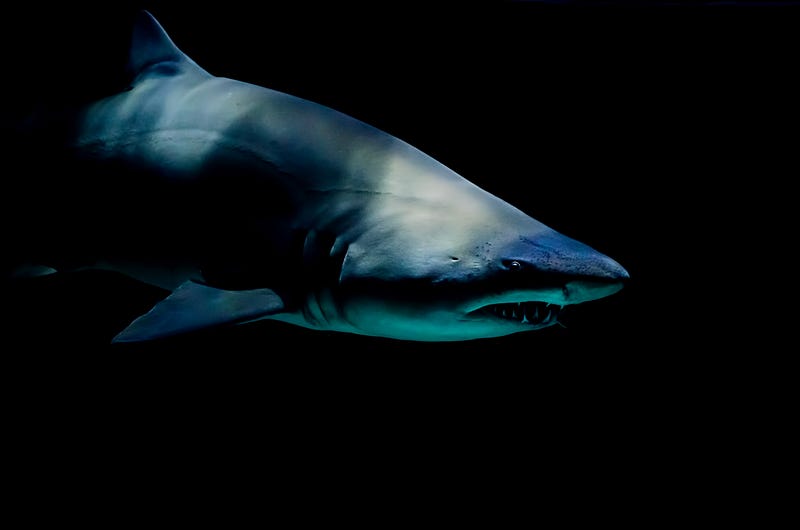
Sharks have existed on our planet for at least 420 million years and have survived several cataclysmic events that led to the extinction of many other groups of animal and plant life. The longevity of sharks is legendary but they may have come much closer to extinction than we once believed, according to a new study, published in the journal Science.
Elizabeth Sibert at Yale University and Leah Rubin at the State University of New York College of Environmental Science and Forestry found the first evidence of a previously unknown mass extinction event that occurred 19 million years ago and wiped out most of the shark species that lived in the open oceans.
The study
The team started by gathering and isolating microfossils of shark scales, called ichthyolith denticles from samples of mud taken from the seafloor in both the North and South Pacific Ocean. The mud samples come from the upper 15 meters of the seafloor and were deposited through the course of the last 40 million years. By analyzing the mud samples, which included more than 1260 fossilized denticles, Sibert and Rubin noticed a sudden drop in the abundance and diversity of shark scales during the period known as the Miocene.
Up until 19 million years ago, there was about one shark fossil for every five fish fossils preserved. This number suggests that sharks were about 20% as plentiful as fish. But after that, the ratio changed dramatically. Sibert could only find one shark denticle for every 100 fish teeth. Given that the cores came from sites separated by over 2,000 miles, the devastation likely hit sharks everywhere. The shark extinction seems to have been a global event.
“There seems to have been a major extinction event in the early Miocene, which knocked out about 90 percent of sharks in the open ocean,” says Sibert. This is more than twice the level of extinction that sharks experienced during the Cretaceous-Paleogene extinction 66 million years ago, which wiped out the non-avian dinosaurs.
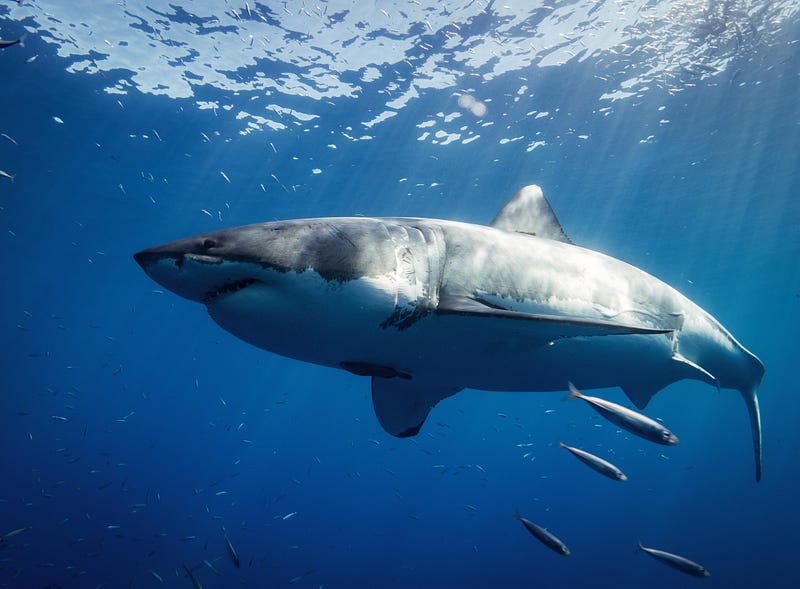
Further analysis of the preserved denticles offered insight into which types of shark species survived and which ones perished. Sharks like great whites that migrate long distances along coastlines have denticles with parallel ridges that help reduce drag as the animals glide through the water. Sharks like cookie cutters — which stick to the same patches of open ocean, preferring to ambush their prey — have geometric denticles with ridges that resemble a Jackson Pollock painting.
Sibert and Rubin found that fewer species with these geometric denticles made it through. That could explain why only 53 open-ocean shark species are alive today, compared to hundreds of coastal shark species.
A Miocene puzzle
The researchers are unsure why this mass extinction occurred. “There are no significant climate events during the early Miocene,” says Rubin.
The Miocene has been described as a “transition period” for our planet. Around 15 million years before the mysterious extinction event, Earth was slowly becoming an “ice house” planet with a permanent ice sheet growing over Antarctica. Despite this, the climate was still much warmer than it is today. The oceans back then weren’t all that different from the oceans of our times, though you wouldn’t find whales or dolphins which would take another two million years to evolve.
Could there have been an environmental driving force that caused the shark’s decline? It’s hard to say. Carbon and oxygen levels don’t show any unusual aberrations but scientists could use a lot more data around this time point.
“It seems that the extinction here is highly selective, as only sharks appear to be impacted, rather than pelagic groups more generally,” says Matt Friedman at the University of Michigan in Ann Arbor. Selective extinctions are known throughout the geological record, and although it is early to speculate, the mass extinction may have only affected the biology of sharks, says Friedman. Sibert even proposed a pathogen, like a virus, could be responsible for the decreasing numbers, though it would be much harder to show this was the case.
The team suggests the extinction occurred over a span of 100,000 years which is relatively abruptly in geological terms. What is also noteworthy is that the abundance and diversity of shark scales in the mud have remained at the same level from 19 million years ago to the present day. This points out that sharks don’t seem to have recovered following this extinction event.
Unanswered questions
Given that sharks have been around for 420 million years, surviving multiple mass extinction events, Sibert believes something really significant must have happened and the sharks may be a doorway to understanding bigger changes to the Earth system during the early Miocene.
Other scientists remain skeptical and some have even cast a doubt on the extinction event theory altogether. Charles Underwood at Birkbeck, University of London is one of them. Underwood argues that, unlike shark teeth, shark denticles have rarely been studied in detail and suggests that the change in shark denticle abundance and diversity could be related to a shift in denticle type instead. This means the fossil evidence may reflect a change in the preservation potential of shark remains rather than an extinction event.
Rubin admits that their latest paper “offers a ton more questions than it offers answers.” Future studies should focus on answering key questions including whether the extinction event occurred across all the world’s oceans and whether it affected other marine life as well. The examination of the situation in other bodies of water like lakes and of terrestrial life forms will help paint a clearer picture of how the Miocene Earth looked like. “There’s definitely more data waiting to be found,” adds Rubin.
Epilogue
By studying bits of shark skin, shed over the course of their lives and buried in the seafloor, scientists have discovered a previously unknown extinction event. This sudden drop in shark biodiversity roughly 19 million years ago was incredibly dramatic and may have wiped out nearly 90 percent of their population. Finding this history in the fossil record highlights the fragility of the marine environment and how difficult it can be for species to recover when they are pushed to the brink of extinction.
Today, there are over 400 species of shark left in the world’s oceans. However, oceanic sharks and rays have declined by over 71 percent during the last half-century. The remaining species are threatened with extinction as a result of human activities, including overfishing, plastic pollution, and illegal shark finning. The parallels between this ongoing crisis and the extinction of sharks during the Miocene may feel like déjà vu, except that this time, we know the culprit. Fortunately, we now have the power to prevent it.
Relevant Reads:
References
Catalina Pimiento, Nicholas D. Pyenson, Science 04 Jun 2021, When sharks nearly disappeared, Vol. 372, Issue 6546, pp. 1036–1037 DOI: 10.1126/science.abj2088
Yasemin Saplakoglu, 04 Jun 2021, Mysterious event nearly wiped out sharks 19 million years ago, Live Science, Link: https://www.livescience.com/mysterious-shark-extinction-19-million-years-ago.html


