
The ‘Dragon Man’ and Other Fascinating Anthropological Discoveries from June 2021
June 2021 was an exciting month for (paleo)anthropology…
June 2021 was an exciting month for paleontology. Scientists learned more about the biology and behavior of a wide range of extinct animals and discovered exciting new species, including the description of Australia’s largest dinosaur and crocodilian.
You may review the most important paleontological finds from the past month below:
Except for paleontology, June 2021 was a special month for (paleo) anthropology too.
During the past 30 days, scientists discovered a previously unknown population of humans in Israel and mapped the order in which various human species appeared in the famous Denisova Cave. But, above all, June 2021 was marked by the discovery of the so-called ‘dragon man’, a possible new species of archaic human from China that was contemporary to us and Neanderthals.
This article will present these exciting new discoveries and updates that shed more light on the evolutionary history of us and our ancestors.
The Nesher Ramla people
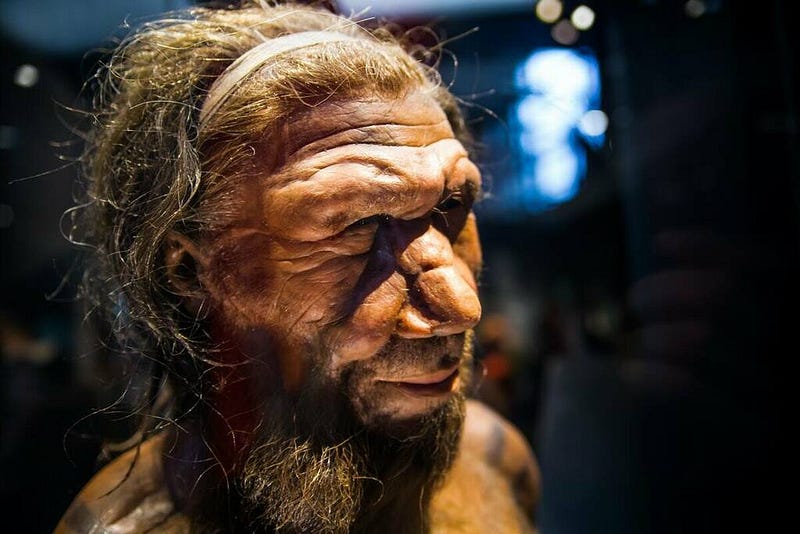
Starting off with some exciting news from the archaeological site of Nesher Ramla in Israel where some hominin bones associated with stone tools and animal bones have been discovered. What is unique about these bones is that they seem to belong to a previously unknown population of archaic humans.
Known as the Nesher Ramla Homo (named after the location of their discovery) they possessed a distinct combination of both Neanderthal and archaic human features but were also using tools that so far have been exclusively associated with Neanderthals and our own species.
The Nesher Ramla people lived during the Late Middle Pleistocene, between 74,000 and 130,000 years ago, and their discovery challenges the prevailing hypothesis that Neanderthals originated in Europe.
“Before these new findings, most researchers believed Neanderthals to be a European story, in which small groups of Neanderthals were forced to migrate southwards to escape the spreading glaciers, with some arriving in the Land of Israel about 70,000 years ago,” Professor Israel Hershkovitz, a researcher in the Department of Anatomy and Anthropology and the Shmunis Family Anthropology Institute at Tel Aviv University said.
The newly described fossils tell a different story: they suggest that the ancestors of European Neanderthals lived in the Levant as early as 400,000 years ago, repeatedly migrating westward to Europe and eastward to Asia. They even imply that the Neanderthals of Western Europe are only the remnants of a much larger population that lived in the Levant — and not the other way around.
The authors of the study propose that at a later stage, small groups of the Nesher Ramla Homo may have migrated to Europe, where they evolved into the classic Neanderthals that we are familiar with, and also to Asia, where they became archaic populations with Neanderthal-like features.
“We think that there was much more lateral exchange in Eurasia, and that the Levant is geographically a crucial starting point, or at least a bridgehead, for this process” added Professor Gerhard Weber, a researcher in the Department of Evolutionary Anthropology and the Core Facility for Micro-Computed Tomography at the University of Vienna.
The researchers did not attribute the Nesher Ramla fossils to a new species of Homo. Rather, they grouped them together with earlier fossils from several sites in the Middle East — such as from Tabun Cave (160,000 years old), Zuttiyeh Cave (250,000 years old), and Qesem Cave (400,000 years old) — that have been difficult to classify and considered all of them to represent a local population of humans that occupied the region between about 420,000 and 120,000 years ago.
The tale of a cave
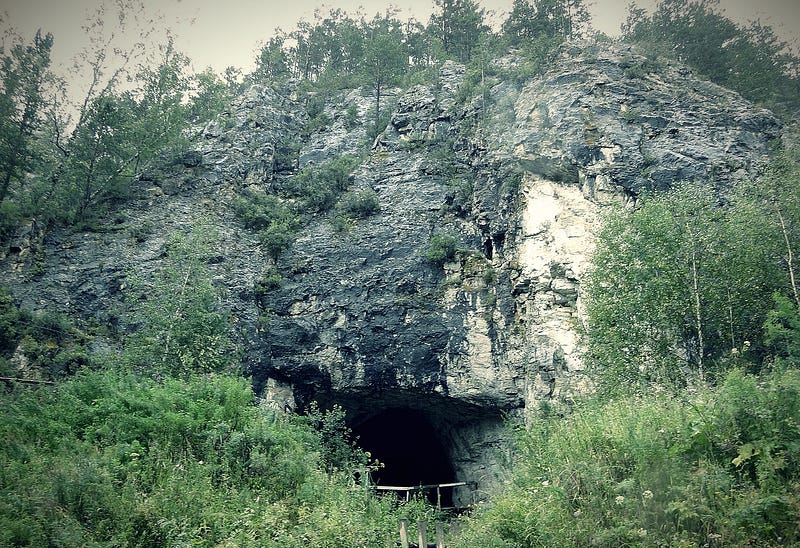
Continuing with a fascinating study that examined the sediments from the famous Denisova Cave in southern Siberia to determine the timing and history of its occupation by archaic and modern humans.
The cave is the type locality of the Denisovans, an archaic hominin group related to Neanderthals, and consists of three chambers (designated Main, East, and South Chambers) that contain deposits from the Middle Pleistocene to the Holocene epoch [1].
The latest study focused on determining the order in which hominin groups appeared at the site, the timing and environmental context of hominin occupation, and the association of particular hominin groups with archaeological finds.
To do this, Professor Zenobia Jacobs, an Australian Research Council (ARC) Future Fellow with the University of Wollongong in Australia, and colleagues extracted and sequenced small traces of ancient human and animal (such as cave-dwelling bears, hyenas, and wolves) mitochondrial DNA (mtDNA) from 728 sediment samples [2]. By matching the DNA profiles with the ages of the layers, the researchers could for the first time tell the story of the occupation of the Denisova Cave.
According to the evidence, the first humans to visit the site were Denisovans about 250,000 years ago, followed by Neanderthals about 200,000 years ago. Between 130,000 and 80,000 years ago, only Neanderthal DNA was found in the cave sediments. Then Denisovans came back, but this time carried a different mtDNA to Denisovans who were there earlier, suggesting that a different population had arrived in the region.
The ancient DNA of anatomically modern Homo sapiens first shows up in layers deposited between about 60,000 and 45,000 years ago and includes pendants and other ornaments made from animal bones and teeth, mammoth ivory, ostrich eggshell, marble, and gemstones.
The scientists also found animal DNA in nearly all samples and identified two time periods when changes occurred in both animal and human populations. The first happened around 190,000 years ago and coincided with a shift from relatively warm to relatively cold conditions. During this time, hyena and bear populations changed and Neanderthals first appeared in the cave. The second major change occurred between 130,000 and 100,000 years ago, along with a shift in climate from relatively cold to relatively warm conditions.
There is still so much information hidden in the Denisovan Cave sediments that will keep anthropologists and many other geneticists busy for a long time. The latest study though illustrates that the coincidence of the population turnovers with climatic transitions suggests environmental factors played a key role in shaping the human and faunal history of the region.
The ‘dragon man’
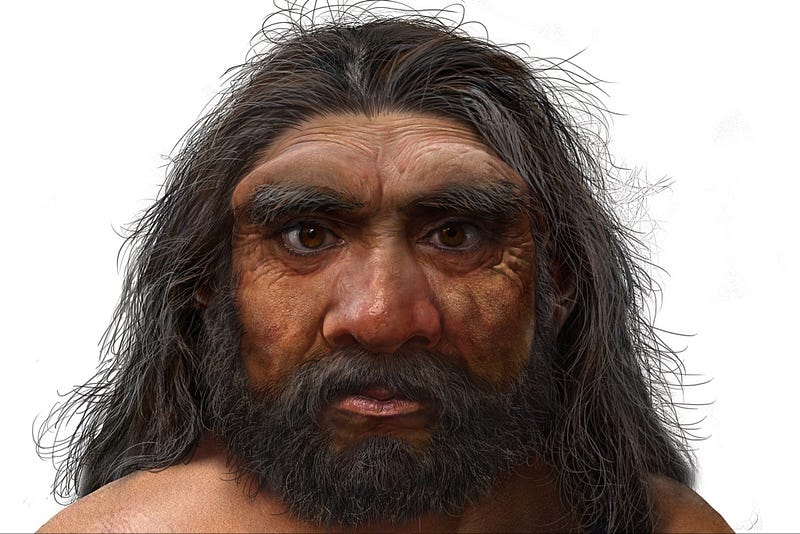
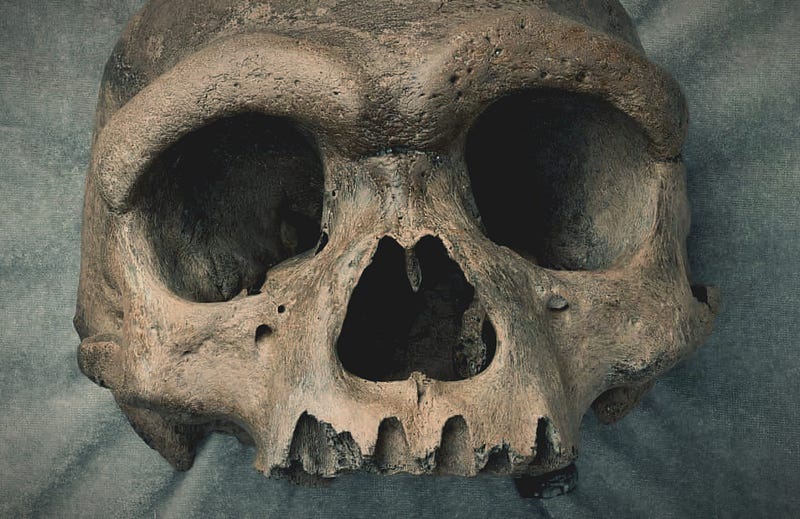
Perhaps the discovery that attracted the most attention recently is the finding of an extremely well-preserved ancient hominin skull that scientists attributed to a possible new species of human. Dubbed as the ‘dragon man’, the fossil was reportedly discovered when a bridge was built over the Songhua River in the Heilongjiang province, China.
According to the scientists involved in the discovery, the newly found skull is one of the most complete human cranial fossils in the world and preserves many morphological details that are critical for understanding the evolution of the genus Homo and the origin of our species.
The skull is massive in size, larger than all other known-archaic humans. It is also relatively long and low and lacks the globularity of the modern human braincase. It has larger, almost square eye sockets, thick brow ridges, a wide mouth, and oversized teeth. Its shape and characteristics are so distinct that the researchers have suggested classifying the cranium as a new species of human — namely Homo longi. The name is derived from Long Jiang, a common geographical usage for the Heilongjiang province that literally translates to ‘dragon river.’
The authors believe Homo longi’s skull came from a 50-year-old male living at least 146,000 years ago in a forested, floodplain environment as part of a small community. Scientists estimate the fossil dates from the Pleistocene epoch which was a dynamic period of human species migration. According to the evidence, Homo longi coexisted with other human species such as us (Homo sapiens), Homo neanderthalensis, and the Denisovans.
The paper finds that the particular skull as well as other fossils from China actually represent a new east Asian lineage that is possibly even more closely related to us than Neanderthals are, suggesting that the diversification of our genus possibly happened even further back in time than we previously thought.
“It is widely believed that the Neanderthal belongs to an extinct lineage that is the closest relative of our own species. However, our discovery suggests that the new lineage we identified that includes Homo longi is the actual sister group of Homo sapiens”, Professor Xijun Ni, a paleoanthropologist at Hebei GEO University, and the Chinese Academy of Sciences said.
“The divergence time between Homo sapiens and the Neanderthals may be even deeper in evolutionary history than generally believed, over one million years,” Professor Ni added. “If true, we likely diverged from Neanderthals roughly 400,000 years earlier than scientists had thought.”
Other scientists warned it was unwise to classify the remains as a new species, as it’s likely there may not be a real distinction between the ‘dragon man’ the Neanderthals, and ourselves because of the constant interbreeding that occurred during this time. Other researchers proposed the ‘dragon man’ to be a representative of the Denisovans. In any case, the taxonomy of the skull is likely to get very complicated and chances are we haven’t yet heard the last event regarding this fascinating discovery.
Epilogue
To sum up, June was a remarkable month in the field of anthropology. Scientists learned more about the biology and behavior of our ancestors and discovered previously unknown human populations — perhaps even a new human species.
The implications of these discoveries are yet to be fully understood but scientists are confident finds like these will help shed more light on our arduous and little-known evolutionary journey.
Notes
[1] The Denisovans or Denisova hominins are an extinct species or subspecies of archaic human that ranged across Asia during the Lower and Middle Paleolithic. Denisovans are known from few remains, and, consequently, most of what is known about them comes from DNA evidence. No formal species name has been erected pending more complete fossil material.
[2] Mitochondrial DNA (mtDNA or mDNA)is the DNA located in mitochondria, cellular organelles within eukaryotic cells that convert chemical energy from food into a form that cells can use, adenosine triphosphate (ATP). Mitochondrial DNA is only a small portion of the DNA in a eukaryotic cell; most of the DNA can be found in the cell nucleus and, in plants and algae, also in plastids such as chloroplasts.
Relevant Reads:
References
Israel Hershkovitz et al. 2021. A Middle Pleistocene Homo from Nesher Ramla, Israel. Science 372 (6549): 1424–1428; doi: 10.1126/science.abh3169
E.I. Zavala et al. Pleistocene sediment DNA reveals hominin and faunal turnovers at Denisova Cave. Nature, published online June 23, 2021; doi: 10.1038/s41586–021–03675–0
Qingfeng Shao et al. Geochemical provenancing and direct dating of the Harbin archaic human cranium. Innovation, published online June 25, 2021; doi: 10.1016/j.xinn.2021.100131
Ji, Qiang; Wu, Wensheng; Ji, Yannan; Li, Qiang; Ni, Xijun (2021–06–25). “Late Middle Pleistocene Harbin cranium represents a new Homo species”. The Innovation. 0. doi:10.1016/j.xinn.2021.100132 (inactive 2021–06–25). ISSN 2666–6758


