
Ants Drove Bizarre Group of Dinosaurs to Rapid Miniaturization
The alvarezsaurids drastically shrank around 100 million years ago…
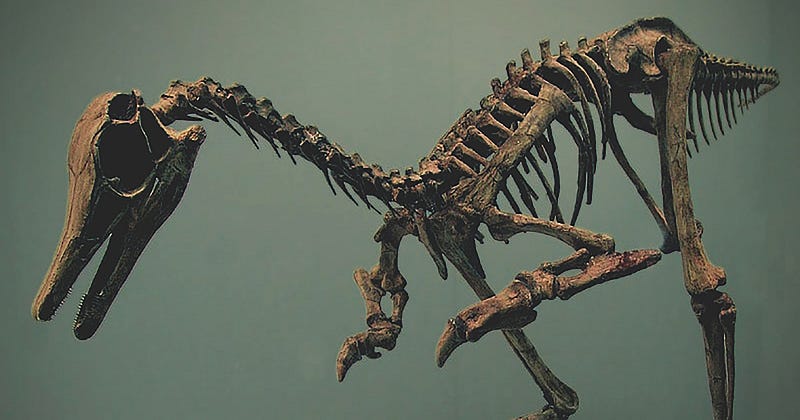
Roughly 100 million years ago, a bizarre group of bird-like dinosaurs, known as alvarezsaurids, began to transform from ostrich-sized predators to animals the size of chickens. According to a recent study published by the University of Bristol, the drive behind this shrinking happened for a surprising reason: a dietary change that included ants and termites.
‘Alvarez’s lizards’
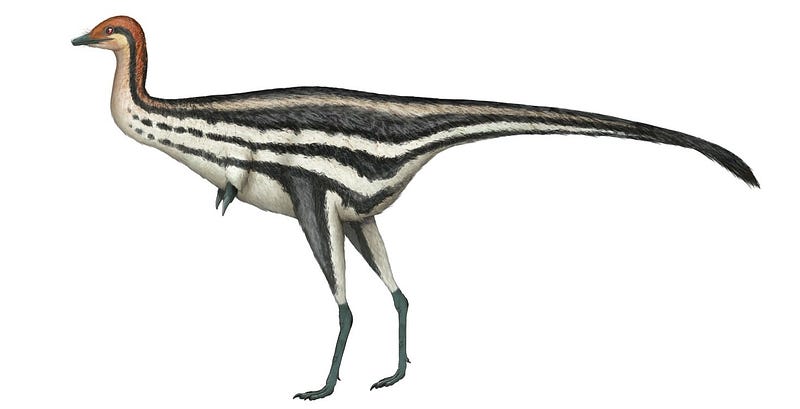
Alvarezsaurids literally translates to ‘Alvarez’s lizards’ in honor of the Argentinian historian Don Gregorio Alvarez. These animals were slender theropods — a diverse group of two-legged dinosaurs with hollow bones and three-toed limbs— that may have been fully feathered in real life. There over 20 confirmed species of alvarezsaurids discovered in China, the Americas, and Europe dating from between 160 to 66 million years ago.
Scientists have long been baffled by the remarkable size differences within the various alvarezsaurid species. The largest genus, Bonapartenykus ultimus, is over 460 times heavier than the smallest one, Parvicursor remotus.
The study
To figure out the reasons behind these extreme size variations, the researchers compared the size and age of adult alvarezsaurid specimens, while taking into account data from previous studies as well. The examination indicated that between 110 and 85 million years ago, all members of the alvarezsaurid family began to shrink in size. The results revealed a threefold decrease in the average body size of alvarezsaurids over a period of around 25 million years, which is a “quick jump” in terms of evolutionary time.
“Size reduction is very uncommon in Cretaceous theropod dinosaurs,” lead author Zichuan Qin, a doctoral student at the University of Bristol in the U.K. and the Institute of Vertebrate Paleontology and Paleoanthropology in China, said. During this time, most other dinosaurs were getting bigger, and the only other group to decrease in size was the theropod lineage that eventually evolved into modern-day birds, he added.
Changing climate — new opportunities
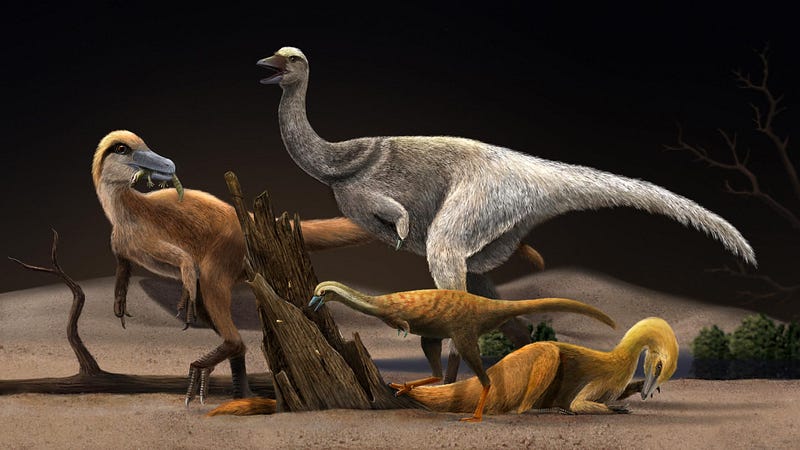
Around the time alvarezsaurids started shrinking, our planet experienced a massive increase in the diversity and abundance of flowering plants. With such a boom in these plants, social insects like ants, termites, and bees would have flourished, creating a new ecological niche that was most likely exploited by alvarezsaurids that shrunk down to take advantage of the new food. This new ecological niche also led to the emergence of more alvarezsaurid species than ever before, he added.
As alvarezsaurids got smaller, their growth rate significantly decreased, meaning they would have taken longer to reach maximum size, Qin said. These creatures also displayed physiological changes, the most notable of which was that their arms became much shorter and they lost all but one of their fingers.
This arm change was likely the result of their dietary change. Bigger species had long arms with fingers and claws that would have allowed them to grab at prey they were chasing, while smaller species would have been perfectly suited to jabbing and poking at social insects, such as ants and termites, inside their mounds.
Epilogue
A significant shift in global ecosystems during the Late Cretaceous Period was probably behind the alvarezsaurids’ shift in diet and rapid miniaturization. Alvarezsaurids thrived during the closing stages of the Mesozoic Era by evolving — uniquely among dinosaurs — the habit of consuming colonial insects, like ants and termites.
The course of the alvarezsaurid evolution proves that dinosaurs were even weirder and more diverse than we ever dared to imagine. Unfortunately, most people still hold an old-fashioned perception of these animals associating them with nothing but failure and obsolescence. The cultural interpretation of the word “dinosaur” seems to be greatly misunderstood.
To find out more about the subject, check the article below:
Relevant Read
References
Growth and miniaturization of Alvarezsaurus dinosaurs, Zichuan Qin, Qi Zhao, Jonah N. Choiniere, James M. Clark, Michael J. Benton, Xing Xu. Current biology, 2021.Provided by University of Bristol


