avatarSadie Seroxcat

Free AI web copilot to create summaries, insights and extended knowledge, download it at here

8288

Abstract

y 1960s (morphing into the hippies of the late ‘60s&’70s) loved Reich’s theories regarding sexual freedom and the power of the orgasm. The new love of marijuana, existentialism and Reich’s morality, appealed to many. From <b>Beatniks</b> to <b>Hippies</b>, the liberated extreme political left were enjoying ‘free love’, orgies and naked frolics in public places.</p><p id="af70">Popular with icons of counterculture: <b>Mailer, Salinger, The Beats (Kerouac, Ginsberg, Burroughs), Sean Connery!!</b></p><blockquote id="0015"><p>“To bohemians, the orgone box was celebrated as a liberation machine, the wardrobe that would lead to utopia, while to conservatives it was Pandora’s box, out of which escaped the Freudian plague — the corrupting influence of anarchism and promiscuous sex. Reich’s eccentric device can be seen as a prism through which to look at the conflicts and controversies of his era, which witnessed an unprecedented politicisation of sex. When I first came across a reference to the accumulator, I was puzzled and fascinated: why on earth would a generation seek to shed its sexual repressions by climbing <i>into</i> a closet? And why were others so threatened by it? What does it tell us about the ironies of the sexual revolution that its symbol of liberation was a claustrophobic metal-lined box?” — <a href="https://www.theguardian.com/books/2011/jul/08/wilhelm-reich-free-love-orgasmatron"><b>Wilhelm Reich: the man who invented free love | Books | The Guardian</b></a></p></blockquote><p id="3332"><b>Woody Allen</b> parodied Reich’s famous closet/box as an ‘<i>Orgasmatron’</i> in his film ‘<b><i>Sleeper’</i></b> (1973).</p><p id="8ae1">In 1954 the American FDA obtained a court ordered ruling to stop Reich selling or hiring his boxes. They also burned all the boxes he had left in stock, plus copies of his studies and books in blatant echoes of the acts of fascists he’d fled Germany in fear of; because of his unsubstantiated claim that orgone energy could cure not only world drought and the like, but also (crucially for the case brought against him) medical mysteries like cancer. Reich was sentenced to two years in prison — and he died of a heart attack in 1957 while still in the state penitentiary.</p><p id="a9e4">Laing talks about physical confinement in the orgone box and in prison cells. Bringing in another of my favourite writers <b>Oscar Wilde</b>, she considers his experience and continuing creativity whilst incarcerated. This was time he of course spent writing ‘<b><i>The Ballad of Reading Gaol</i></b>’, one of his most famous works.</p><p id="668e">Before his imprisonment, Reich (by then known to be suffering from paranoia) had also begun to make ‘<b>cloudbusters</b>’ — intended to be a kind of energy gun which could alter weather patterns…. and also protect against aliens!</p><p id="b376">In Olivia Laing’s book ‘<b><i>Everybody</i></b>’, she tells us Reich’s son later reported that his father frequently took him out into dessert ‘<b>cloudbusting</b>’.</p><p id="89d1"><b>Kate Bush </b>wrote a song titled ‘<b><i>Cloudbusting</i></b>’ for her 1985 album ‘<b><i>Hounds of Love</i></b>’. The music video (below), the conceptual plan for which was conceived with <b>Terry Gilliam</b>, shows Kate with actor <b>Donald Sutherland</b>, playing the parts of Reich and his young son Peter. They drag a covered machine to the top of a hill where it is set to work with the aim of producing rain:</p> <figure id="bde4"> <div> <div> <img class="ratio" src="http://placehold.it/16x9"> <iframe class="" src="https://cdn.embedly.com/widgets/media.html?src=https%3A%2F%2Fwww.youtube.com%2Fembed%2FpllRW9wETzw%3Ffeature%3Doembed&amp;display_name=YouTube&amp;url=https%3A%2F%2Fwww.youtube.com%2Fwatch%3Fv%3DpllRW9wETzw&amp;image=https%3A%2F%2Fi.ytimg.com%2Fvi%2FpllRW9wETzw%2Fhqdefault.jpg&amp;key=a19fcc184b9711e1b4764040d3dc5c07&amp;type=text%2Fhtml&amp;schema=youtube" allowfullscreen="" frameborder="0" height="480" width="480"> </div> </div> </figure></iframe></div></div></figure><p id="9201">Also included in this book of interconnected biographical essays we find many other interesting names. Colourful characters representing both science and art, among whom are:</p><ul><li><b>Susan Sontag</b></li></ul><p id="2628">Laing writes among these other stories about Sontag, her opinions on sexual violence, then her cancer, and writings on the subject of ill-heath in ‘<b><i>Illness As Metaphor</i></b>’ and later ‘<b><i>AIDS and Its Metaphors’.</i></b></p><blockquote id="b1b6"><p>“Reich led me first to illness, the experience that makes us most forcibly aware of our bodily nature. the ways we are both permeable and mortal, a revelation that the Covid-19 outbreak would soon forcibly bring home across the world. One of Reich’s more controversial theories is that illness is meaningful. This was Sontag’s criticism of him in ‘<b>Illness As Metaphor</b>’, and yet the more I discovered about her own experiences of breast cancer, the more it seemed that the reality of illness in our lives is far more personal and complicated than she might have been willing to admit in print. As she put in her hospital diary: ‘<b>My body is talking louder, more plainly than I ever could.</b>’” — ‘<b>Everybody: A Book About Freedom’, Olivia Laing, chapter one, page 13.</b></p></blockquote><p id="58f3">I, like Laing, part company with Reich at the point where he expresses the belief that the energy of orgasms in and of itself could be powerful enough to destroy the patriarchy or stop fascism in it’s tracks. Yet, like Susan Sontag, my own experiences with chronic illness, pain and fatigue do lead me to fully understand the same things Olivia Laing considered; that as with the title of the excellent book <a href="undefined">Natasha MH</a> wrote so well about in the recent essay below, ‘<b><i>The Body Keeps Score</i></b>’:</p><div id="0fe4" class="link-block"> <a href="https://readmedium.com/the-body-keeps-the-score-ca277599af5d"> <div> <div> <h2>The Body Keeps The Score</h2> <div><h3>A look on trauma and why it is about you</h3></div> <div><p>medium.com</p></div> </div> <div> <div style="background-image: url(https://miro.readmedium.com/v2/resize:fit:320/0*CNKX7Ybqg1bYLgJo)"></div> </div> </div> </a> </div><ul><li><b>Ana Mendieta</b></li></ul><p id="40d9">While Ana Mendieta was at university, a fellow student named Sara Ann Ottens was brutally raped and murdered.</p><blockquote id="b3c4"><p>“In response to the incident, and as a vehicle to express the horror of male sexual violence, Mendieta staged a poignant and shocking performance.</p></blockquote><blockquote id="60a2"><p>She invited students and professors to stop by her apartment at a given time. As soon as the unsuspecting visitors walked through her door, they encountered Mendieta’s bloody, naked form tied to the living room table. Mendieta had carefully recreated the scene of Ottens’ murder as was reported by the police.” — <a href="http://www.theartstory.org/artist/mendieta-ana"><b>www.theartstory.org/artist/mendieta-ana</b></a></p></blockquote><ul><li><b>Kathy Acker</b></li></ul><p id="bb48">I’ll leave discussion of Acker until I write about Laing’s novel I mentioned earlier (‘<b><i>Crudo</i></b>’). Suffice to say, among the other feminists, writers and artists I’m mentioning here, Kathy Acker’s life and work supports Olivia Laing’s musing on the body, sexuality and freedom.</p><ul><li><b>Agnes Martin</b></li></ul><blockquote id="8010"><p>“While nature inspired Martin — she spent much of her life in the American West’s open spaces — she focused on the transcendent experience that can be achieved within nature. As Martin explained, “Nature is like parting a curtain, you go into it. I want to draw a certain response like this. Not a specific response but that quality of response from people when they leave themselves behind, often experienced in nature — an experience of simple joy, this simple, direct going into a field of vision as you would cross an empty be

Options

ach to look at the ocean” — <b>A. Martin, quoted in Agnes Martin, New York, 1993, p. 109</b></p></blockquote> <figure id="c999"> <div> <div> <img class="ratio" src="http://placehold.it/16x9"> <iframe class="" src="https://cdn.embedly.com/widgets/media.html?src=https%3A%2F%2Fwww.youtube.com%2Fembed%2F902YXjchQsk%3Ffeature%3Doembed&amp;display_name=YouTube&amp;url=https%3A%2F%2Fwww.youtube.com%2Fwatch%3Fv%3D902YXjchQsk&amp;image=https%3A%2F%2Fi.ytimg.com%2Fvi%2F902YXjchQsk%2Fhqdefault.jpg&amp;key=a19fcc184b9711e1b4764040d3dc5c07&amp;type=text%2Fhtml&amp;schema=youtube" allowfullscreen="" frameborder="0" height="480" width="854"> </div> </div> </figure></iframe></div></div></figure><ul><li><b>Andrea Dworkin</b></li></ul><p id="1c30">In 1983, Dworkin addressed an anti-sexist men’s organisation and delivered a now famous speech, part of which is recreated below:</p><blockquote id="7ff9"><p>“The power exercised by men, day to day, in life is power that is institutionalised. It is protected by law. It is protected by religion and religious practice. It is protected by universities, which are strongholds of male supremacy. It is protected by a police force. It is protected by those whom Shelley called “the unacknowledged legislators of the world”: the poets, the artists. Against that power, we have silence.” —<b> <a href="http://www.nostatusquo.com/ACLU/dworkin/WarZoneChaptIIIE.html">I Want a Twenty-Four-Hour Truce During Which There Is No Rape (nostatusquo.com</a></b><a href="http://www.nostatusquo.com/ACLU/dworkin/WarZoneChaptIIIE.html">)</a></p></blockquote><p id="3d5f"><a href="https://www.theguardian.com/lifeandstyle/2019/apr/16/why-andrea-dworkin-is-the-radical-visionary-feminist-we-need-in-our-terrible-times">https://www.theguardian.com/lifeandstyle/2019/apr/16/why-andrea-dworkin-is-the-radical-visionary-feminist-we-need-in-our-terrible-times</a></p><p id="fb80">Possibly the world’s best known feminist activist, Dworkin was known for campaigning fiercely against pornography, oppression and sexual violence against women, tirelessly and entirely uncompromisingly.</p><p id="c12f">Her last piece of writing was for <b>The Guardian</b> shortly before she died, entitled ‘<a href="https://www.theguardian.com/books/2005/apr/23/features.weekend"><b><i>Through The Pain Barrier</i></b></a>’, which again drew my attention because of my own personal situation.</p><ul><li><b>Angela Carter</b></li></ul><p id="ffe4">Author of, among many other marvellous books and stories, the most commonly known of which being ‘<a href="https://www.goodreads.com/book/show/49011.The_Bloody_Chamber_and_Other_Stories?from_search=true&amp;from_srp=true&amp;qid=06htUgM0YP&amp;rank=2"><b><i>The Bloody Chamber</i></b></a>’, <b>Carter</b> wrote ‘<b><i>The Sadeian Woman</i></b>’ in which she:</p><blockquote id="2d2e"><p>“Draws on de Sade’s embodiments of women’s two roles, Justine and Juliette, and on more contemporary models to argue that sexuality is a mode of power politics as well as a vital way to advance relationships admitting of neither conqueror nor conquered.” — <a href="https://www.goodreads.com/book/show/276751.The_Sadeian_Woman?from_search=true&amp;from_srp=true&amp;qid=06htUgM0YP&amp;rank=18"><b>The Sadeian Woman: And the Ideology of Pornography by Angela Carter | Goodreads</b></a></p></blockquote><p id="a1fc">Angela Carter disagreed with Andrea Dworkin about <b>Sade’s Libertarianism</b> and even about her campaign against pornography.</p><p id="c1d8">For more information about this, have a look at another piece hosted by <b>Counter Arts</b>, written by <a href="undefined">Laura Halls</a>:</p><div id="c8ea" class="link-block"> <a href="https://readmedium.com/the-gruesome-ideas-of-the-marquis-de-sade-9e2a79517e5f"> <div> <div> <h2>The Gruesome Ideas of The Marquis De Sade</h2> <div><h3>Delving into the world of sadism</h3></div> <div><p>medium.com</p></div> </div> <div> <div style="background-image: url(https://miro.readmedium.com/v2/resize:fit:320/0*79EryVGDaSnf3OX6.jpg)"></div> </div> </div> </a> </div><p id="7f84">On the whole, this fairly short text of just over three hundred pages is a gripping, entertaining, informative and thoroughly excellent read. I would definitely recommend you read ‘<b><i>Everybody: A Book About Freedom</i></b>’ by Olivia Laing — and then, if you like her writing, continue on to one of her other brilliant nonfiction books:</p><ul><li><a href="https://www.goodreads.com/book/show/9711556-to-the-river?from_search=true&amp;from_srp=true&amp;qid=RCxPYE4oCB&amp;rank=6">To The River</a></li><li><a href="https://www.goodreads.com/book/show/17924465-the-trip-to-echo-spring?from_search=true&amp;from_srp=true&amp;qid=RCxPYE4oCB&amp;rank=4">The Trip to Echo Spring</a></li><li><a href="https://www.goodreads.com/book/show/25667449-the-lonely-city?from_search=true&amp;from_srp=true&amp;qid=RCxPYE4oCB&amp;rank=1">The Lonely City</a></li><li><a href="https://www.goodreads.com/book/show/50755102-funny-weather?from_search=true&amp;from_srp=true&amp;qid=RCxPYE4oCB&amp;rank=2">Funny Weather</a></li></ul><p id="8735">Thank you for reading this <b>Counter Arts Book Club</b> review. Next will be <b>April’</b>s book (I’m still catching up), ‘<a href="https://www.goodreads.com/book/show/50269354-at-night-all-blood-is-black"><b><i>At Night All Blood Is Black</i></b></a><b><i></i></b> by David Diop. More information about our book club can be found via the link at the top of this essay.</p><p id="64c4">For more of my writing about books and illness, you could try one of the links below, or have perhaps have a look at <b>Counter Arts’</b> new <a href="https://medium.com/counterarts/literature/home"><b>Literature</b></a> section for essays and reviews from all of our writers.</p><div id="089e" class="link-block"> <a href="https://readmedium.com/the-barbellion-prize-feb1552b2b60"> <div> <div> <h2>The Barbellion Prize</h2> <div><h3>Celebrating disability narratives</h3></div> <div><p>medium.com</p></div> </div> <div> <div style="background-image: url(https://miro.readmedium.com/v2/resize:fit:320/0*ackwvgR5A7oFrY65)"></div> </div> </div> </a> </div><div id="c6c4" class="link-block"> <a href="https://readmedium.com/on-earth-were-briefly-gorgeous-ocean-vuong-7e3035a6a72a"> <div> <div> <h2>‘On Earth We’re Briefly Gorgeous’ — Ocean Vuong</h2> <div><h3>Counter Arts Book Club — October</h3></div> <div><p>medium.com</p></div> </div> <div> <div style="background-image: url(https://miro.readmedium.com/v2/resize:fit:320/0*Odtx869kL6_GKBSo.jpg)"></div> </div> </div> </a> </div><div id="3325" class="link-block"> <a href="https://readmedium.com/the-art-of-living-with-persistent-pain-c2304f03dcac"> <div> <div> <h2>The Art of Living With Persistent Pain</h2> <div><h3>Never a simple prospect, in no small part because it seems like a ‘Groundhog Day’ situation from which there’s no…</h3></div> <div><p>medium.com</p></div> </div> <div> <div style="background-image: url(https://miro.readmedium.com/v2/resize:fit:320/0*19_bDizGzl2iulJt)"></div> </div> </div> </a> </div><p id="3fb8">To contribute a few coins towards buying books, hit the ‘<b>Tip</b>’ button below, which will take you to my <b>Ko-fi</b> page. I’d be so grateful.</p><p id="ca5a">As ever, stay safe, stay well, keep reading. With love — Sadie</p><p id="724e"><a href="https://uk.bookshop.org/wishlists/87fbee352d78413641231bd368ec4713b00b888a">https://uk.bookshop.org/wishlists/87fbee352d78413641231bd368ec4713b00b888a</a></p></article></body>

‘Everybody: A Book About Freedom’ — Olivia Laing

A Counter Arts Book Club review
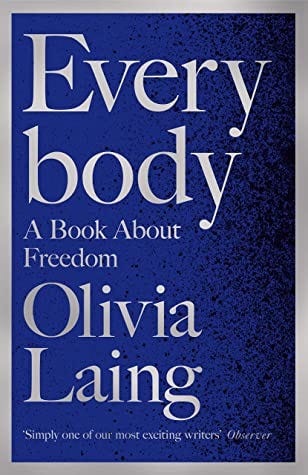
Everybody: A Book about Freedom by Olivia Laing (goodreads.com)

I confess, I am a huge fan of Olivia Laing’s books of essays, so took the opportunity to add one to the list I was compiling for the Counter Arts Book Club (2023):

I would really recommend reading anything she has written (including the short novel ‘Crudo’ which I read just recently and hope to write about soon); but I chose this particular example of Laing’s work because it seems so appropriate for the moment in which we are living, given the way we have seen rights over both general liberty and bodily autonomy specifically being stripped away — even (especially) in America, supposedly ‘The Land of the Free’.

Take for example the repealing of Roe v Wade; the widespread removal of material regarding race, gender and sexuality from schools and public libraries; or the passing of Ron DeSantis’ appalling ‘Don’t Say Gay’ bill in Florida.

Everybody: A Book About Freedom’

This title was our Counter Arts Book Club read for March. (Apologies for having fallen behind with my review essays, my health has been problematic recently).

Olivia Laing grew up in what she herself calls a “gay family” in England during the 1980s — the era of Section 28 (which I wrote about myself, here). In the first chapter of this book she says:

“I’d grown up in a gay family in the 1980s, under the malign rule of Section 28, a homophobic law that forbade schools from teaching ‘the acceptability of homosexuality as a pretended family relationship. [*author’s note: see America? Been there, done that, got rid of it!*] To know that this is how the state regarded your own family was to receive a powerful education in how bodies are positioned in a hierarchy of value, their freedoms privileged or curtailed according to more or less inescapable attributes, from skin colour to sexuality.” — Chapter One: The Liberation Machine, page 5, ‘Everybody: A Book About Freedom’, Olivia Laing (2021)

We go on to learn a little more about her early life, her decision to drop out of university to be an environmental activist, living in a tree for a time until she felt burnt out and also began to feel keenly the threat posed to her liberty by increasingly forceful police and legal systems.

Later, in therapy, Laing discussed and explored the importance of liberty and bodily autonomy; how feeling hers constantly questioned and threatened contributed to her mental stress and physical exhaustion. Her psychologist’s recommendation was a form of physical therapy which involved energy manipulation.

It was her interest in understanding this form of energy work which led her to discover it originated with someone named William Reich and from there onwards she delved further into one of the main avenues of research which led to this book.

On putting together everything she has included in ‘Everybody’ Laing says:

“Over the previous few years the body had become a battlefield once again. Two issues in particular had come to a head: the refugee crisis and the Black Lives Matter movement. Refugees travelled to Europe on leaking boats from regions that had been graphically destroyed, and other people expressed the belief that they were scroungers and crooks, followed by the hope that they would drown….. ….The demonstrations that took place in Ferguson, Los Angeles, New York, Oakland, Baltimore and across the nation [USA] seemed as if they must bring change, but on 8 November 2016 enough people voted for Donald Trump, a barely disguised white supremacist, that he became the 45th President….” — ‘Everybody: A Book About Freedom’, Olivia Laing (2021), chapter one, page 10.

Further into ‘Everybody’ I found one of my favourite authors, Christopher Isherwood getting a mention, linking to the Berlin Institute for Sexual Science (opened 1919, closed by Nazis in 1933) and it’s founder Magnus Hirschfeld (1868–1935) sexologist & sexual reformer.

Germany was actually extremely progressive during the Weimar period between World Wars (see Isherwood’s Berlin based novels) and the Institute became well established for scientific research work and also as offering those living in sexually liberated Berlin a clinic to come to with both physical and psychological woes.

A writer for Counter Arts, C.S. Voll, recently sent us this relevant work:

(Also: magnus-hirschfeld.de/ausstellungen/institute)

Wilhelm Reich (mentioned earlier) had studied with Freud, and spent time with Hirschfeld at the Berlin Institute. Books and research papers written by this powerful triumvirate of scientists were burned by the fascists during Hitler’s rise to power.

After fleeing through Denmark, Sweden and Norway, Reich arrived in the USA and began researching his belief the thing which was to be his lifetime’s passion: orgone energy, which he claimed was orgasmic energy and could heal the world. (see his study: ‘The Function of the Orgasm’(1927) for more in-depth information about his reasoning)

He invented the Orgone Energy Accumulator — essentially a wooden cupboard, lined with metal and insulated with steel wool. Fellow colleagues in psychoanalysis began to wonder about his mental health and his clinical, scientific reputation became somewhat tarnished; yet the box became extremely well received in popular culture of the 40s/50s era of sexual liberation.

The original ‘Hipsters’ of the 1950s and early 1960s (morphing into the hippies of the late ‘60s&’70s) loved Reich’s theories regarding sexual freedom and the power of the orgasm. The new love of marijuana, existentialism and Reich’s morality, appealed to many. From Beatniks to Hippies, the liberated extreme political left were enjoying ‘free love’, orgies and naked frolics in public places.

Popular with icons of counterculture: Mailer, Salinger, The Beats (Kerouac, Ginsberg, Burroughs), Sean Connery!!

“To bohemians, the orgone box was celebrated as a liberation machine, the wardrobe that would lead to utopia, while to conservatives it was Pandora’s box, out of which escaped the Freudian plague — the corrupting influence of anarchism and promiscuous sex. Reich’s eccentric device can be seen as a prism through which to look at the conflicts and controversies of his era, which witnessed an unprecedented politicisation of sex. When I first came across a reference to the accumulator, I was puzzled and fascinated: why on earth would a generation seek to shed its sexual repressions by climbing into a closet? And why were others so threatened by it? What does it tell us about the ironies of the sexual revolution that its symbol of liberation was a claustrophobic metal-lined box?” — Wilhelm Reich: the man who invented free love | Books | The Guardian

Woody Allen parodied Reich’s famous closet/box as an ‘Orgasmatron’ in his film ‘Sleeper’ (1973).

In 1954 the American FDA obtained a court ordered ruling to stop Reich selling or hiring his boxes. They also burned all the boxes he had left in stock, plus copies of his studies and books in blatant echoes of the acts of fascists he’d fled Germany in fear of; because of his unsubstantiated claim that orgone energy could cure not only world drought and the like, but also (crucially for the case brought against him) medical mysteries like cancer. Reich was sentenced to two years in prison — and he died of a heart attack in 1957 while still in the state penitentiary.

Laing talks about physical confinement in the orgone box and in prison cells. Bringing in another of my favourite writers Oscar Wilde, she considers his experience and continuing creativity whilst incarcerated. This was time he of course spent writing ‘The Ballad of Reading Gaol’, one of his most famous works.

Before his imprisonment, Reich (by then known to be suffering from paranoia) had also begun to make ‘cloudbusters’ — intended to be a kind of energy gun which could alter weather patterns…. and also protect against aliens!

In Olivia Laing’s book ‘Everybody’, she tells us Reich’s son later reported that his father frequently took him out into dessert ‘cloudbusting’.

Kate Bush wrote a song titled ‘Cloudbusting’ for her 1985 album ‘Hounds of Love’. The music video (below), the conceptual plan for which was conceived with Terry Gilliam, shows Kate with actor Donald Sutherland, playing the parts of Reich and his young son Peter. They drag a covered machine to the top of a hill where it is set to work with the aim of producing rain:

Also included in this book of interconnected biographical essays we find many other interesting names. Colourful characters representing both science and art, among whom are:

  • Susan Sontag

Laing writes among these other stories about Sontag, her opinions on sexual violence, then her cancer, and writings on the subject of ill-heath in ‘Illness As Metaphor’ and later ‘AIDS and Its Metaphors’.

“Reich led me first to illness, the experience that makes us most forcibly aware of our bodily nature. the ways we are both permeable and mortal, a revelation that the Covid-19 outbreak would soon forcibly bring home across the world. One of Reich’s more controversial theories is that illness is meaningful. This was Sontag’s criticism of him in ‘Illness As Metaphor’, and yet the more I discovered about her own experiences of breast cancer, the more it seemed that the reality of illness in our lives is far more personal and complicated than she might have been willing to admit in print. As she put in her hospital diary: ‘My body is talking louder, more plainly than I ever could.’” — ‘Everybody: A Book About Freedom’, Olivia Laing, chapter one, page 13.

I, like Laing, part company with Reich at the point where he expresses the belief that the energy of orgasms in and of itself could be powerful enough to destroy the patriarchy or stop fascism in it’s tracks. Yet, like Susan Sontag, my own experiences with chronic illness, pain and fatigue do lead me to fully understand the same things Olivia Laing considered; that as with the title of the excellent book Natasha MH wrote so well about in the recent essay below, ‘The Body Keeps Score’:

  • Ana Mendieta

While Ana Mendieta was at university, a fellow student named Sara Ann Ottens was brutally raped and murdered.

“In response to the incident, and as a vehicle to express the horror of male sexual violence, Mendieta staged a poignant and shocking performance.

She invited students and professors to stop by her apartment at a given time. As soon as the unsuspecting visitors walked through her door, they encountered Mendieta’s bloody, naked form tied to the living room table. Mendieta had carefully recreated the scene of Ottens’ murder as was reported by the police.” — www.theartstory.org/artist/mendieta-ana

  • Kathy Acker

I’ll leave discussion of Acker until I write about Laing’s novel I mentioned earlier (‘Crudo’). Suffice to say, among the other feminists, writers and artists I’m mentioning here, Kathy Acker’s life and work supports Olivia Laing’s musing on the body, sexuality and freedom.

  • Agnes Martin

“While nature inspired Martin — she spent much of her life in the American West’s open spaces — she focused on the transcendent experience that can be achieved within nature. As Martin explained, “Nature is like parting a curtain, you go into it. I want to draw a certain response like this. Not a specific response but that quality of response from people when they leave themselves behind, often experienced in nature — an experience of simple joy, this simple, direct going into a field of vision as you would cross an empty beach to look at the ocean” — A. Martin, quoted in Agnes Martin, New York, 1993, p. 109

  • Andrea Dworkin

In 1983, Dworkin addressed an anti-sexist men’s organisation and delivered a now famous speech, part of which is recreated below:

“The power exercised by men, day to day, in life is power that is institutionalised. It is protected by law. It is protected by religion and religious practice. It is protected by universities, which are strongholds of male supremacy. It is protected by a police force. It is protected by those whom Shelley called “the unacknowledged legislators of the world”: the poets, the artists. Against that power, we have silence.” — I Want a Twenty-Four-Hour Truce During Which There Is No Rape (nostatusquo.com)

https://www.theguardian.com/lifeandstyle/2019/apr/16/why-andrea-dworkin-is-the-radical-visionary-feminist-we-need-in-our-terrible-times

Possibly the world’s best known feminist activist, Dworkin was known for campaigning fiercely against pornography, oppression and sexual violence against women, tirelessly and entirely uncompromisingly.

Her last piece of writing was for The Guardian shortly before she died, entitled ‘Through The Pain Barrier’, which again drew my attention because of my own personal situation.

  • Angela Carter

Author of, among many other marvellous books and stories, the most commonly known of which being ‘The Bloody Chamber’, Carter wrote ‘The Sadeian Woman’ in which she:

“Draws on de Sade’s embodiments of women’s two roles, Justine and Juliette, and on more contemporary models to argue that sexuality is a mode of power politics as well as a vital way to advance relationships admitting of neither conqueror nor conquered.” — The Sadeian Woman: And the Ideology of Pornography by Angela Carter | Goodreads

Angela Carter disagreed with Andrea Dworkin about Sade’s Libertarianism and even about her campaign against pornography.

For more information about this, have a look at another piece hosted by Counter Arts, written by Laura Halls:

On the whole, this fairly short text of just over three hundred pages is a gripping, entertaining, informative and thoroughly excellent read. I would definitely recommend you read ‘Everybody: A Book About Freedom’ by Olivia Laing — and then, if you like her writing, continue on to one of her other brilliant nonfiction books:

Thank you for reading this Counter Arts Book Club review. Next will be April’s book (I’m still catching up), ‘At Night All Blood Is Black by David Diop. More information about our book club can be found via the link at the top of this essay.

For more of my writing about books and illness, you could try one of the links below, or have perhaps have a look at Counter Arts’ new Literature section for essays and reviews from all of our writers.

To contribute a few coins towards buying books, hit the ‘Tip’ button below, which will take you to my Ko-fi page. I’d be so grateful.

As ever, stay safe, stay well, keep reading. With love — Sadie

https://uk.bookshop.org/wishlists/87fbee352d78413641231bd368ec4713b00b888a

Nonfiction
Literature
Book Club
Book Review
Olivia Laing
Recommended from ReadMedium
avatarJohn Welford
John Welford

1952 to 2024

2 min read