
Magnus Hirschfeld Founded the First Transgender Clinic
The institution proposed new ways to view gender, sex, and relationships
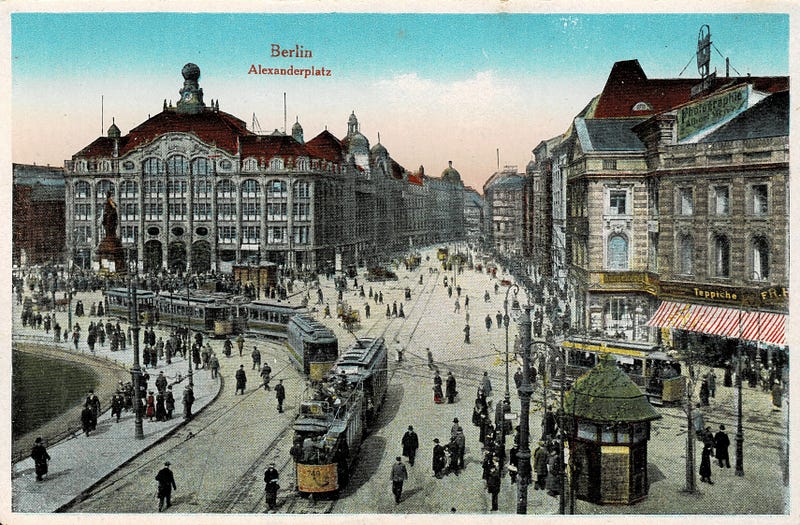
Humans often see history as a distant, brutal realm. Its inhabitants are mute strangers to them. With a keen eye, though, one can see how much the past churns with the same life force as the present. Nowhere was it more apparent than in Wilhelmine and Weimar Germany. In this era, the devastation of defeat exposed a society to different philosophies, styles, and approaches. The Institute for Sexual Sciences (Institut für Sexualwissenschaft) was one of the boldest breakaways.
A first step
Magnus Hirschfeld was the new son of a Prussian Jewish family on 14 May 1868. Growing up, an idealistic spirit developed in his mind. These thoughts perhaps encouraged his decision to become a physician. One night, a soldier came to his practice, not for treatment, but to confess he was gay. Afterwards, the soldier took his own life.
The incident shocked Magnus Hirschfeld. In 1897, he established the Scientific-Humanitarian Committee, which would become one of the world’s first gay activist groups. Hirschfeld himself was a gay man, so the issues he tackled also had personal implications.
One of his longest battles was against Germany’s Paragraph 175. The country had, with this section of the Reich Penal Code of 1871, made homosexual relationships illegal. Blackmailers used the threat of punishment to extract funds out of victims. In 1899, the Scientific-Humanitarian Committee’s first major text, Yearbook for Sexual Intermediaries, in fact included a petition to repeal Paragraph 175 (the provision would remain in place until 1994, however).
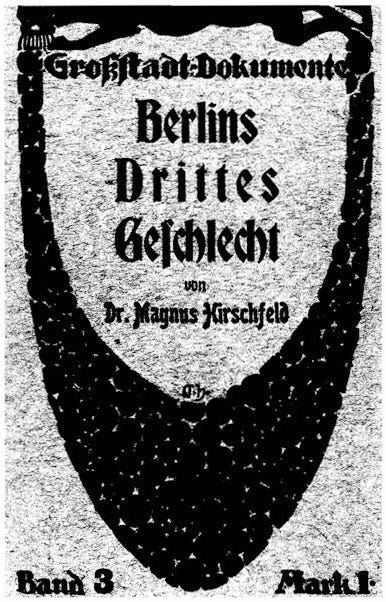
He raised awareness of Berlin’s LGBTQIA communities with the book Berlin’s Third Sex (1904). Hirschfeld’s connections allowed him access to a café full of lesbian chess players, venues where drag performances referenced pop culture, a tavern that facilitated hook-ups between soldiers and civilians, and more social centers. He also described the challenges these people face in their lives:
Many think about their shattered hopes, what they could have achieved if old prejudices had not hindered their progress, and others in respectable positions ponder the heavy lie they must live. Many think about their parents who are dead — or for whom they are dead — and all in deepest sorrow think of the woman they loved most of all and who loved them most of all — their mother.
The Berlin’s Third Sex might have been some German readers’ first introduction to these individuals. They might have been their neighbor, but the fear of prosecution had made these worlds take refuge in hidden realms.
Projects grow further
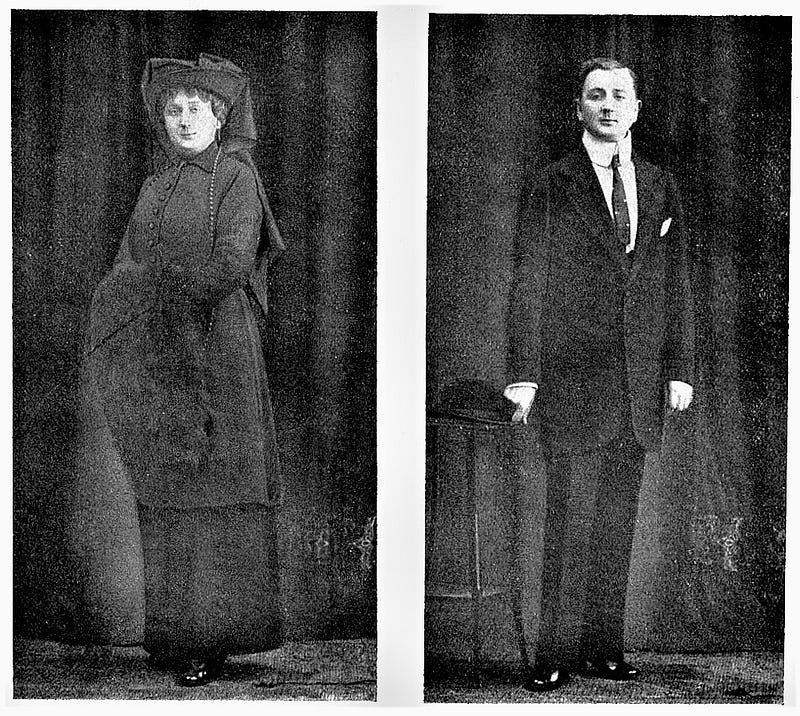
In 1910, Magnus Hirschfeld released Transvestites: The Erotic Drive to Cross-dress. This book coined the term transvestite (at the time, this referenced transgender individuals and cross-dressers). He explored the way cross-dressing had influenced people’s lives in the text, in order to remove long-held misconceptions about the practice.
His activities continued after the First World War. He co-wrote the film Different from the Others (Anders als die Andern) in 1919, which featured the first sympathetic portrayal of gay characters in an on-screen story. Magnus Hirschfeld plays a fictionalized version of himself in the movie. The doctor says to the parents of Paul, the homosexual protagonist:
You must not think poorly of your son because he is a homosexual. He is not at all to blame for his orientation. It is neither a vice, nor a crime. Indeed, not even an illness….Your son suffers not from his condition, but rather from the false judgement of it.
The Institute for Sexual Sciences came to being in the former Berlin villa of the ambassador to France. Magnus Hirschfeld, who had purchased the building after the war, established his institute in July 1919. The Magnus Hirschfeld Foundation raised funds for the sexology institution through anonymous donations.
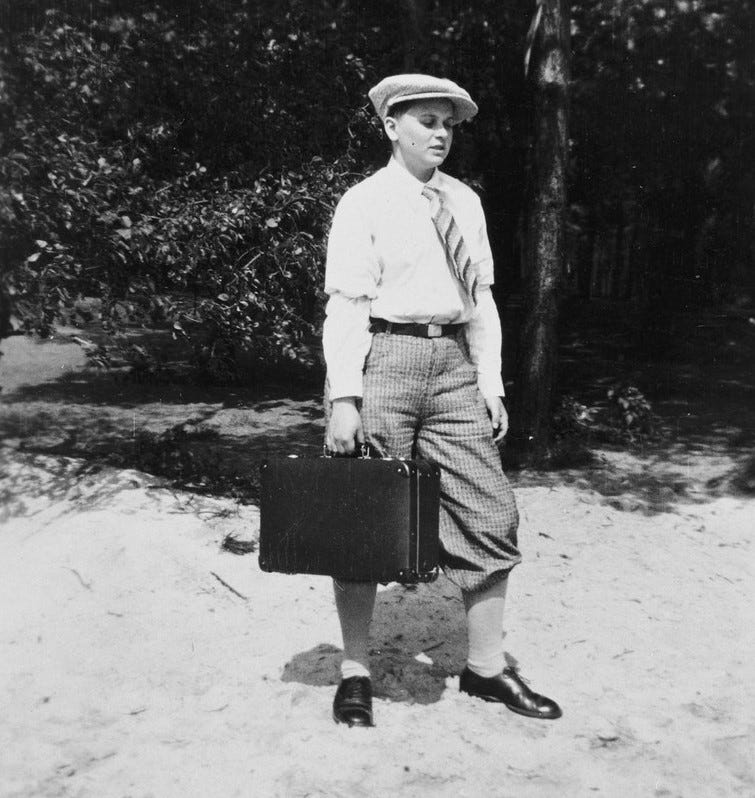
The funds supported various activities. Sex reform journals, marriage counselling services, psychological therapy, a sexual health clinic, and more operated under the umbrella of this institute. Hirschfeld and Bernhard Schapiro soon patented the Titus Pearl, a popular treatment for male impotence. Hirschfeld also provided work spaces for feminist activists. By this time, he had in fact supported feminists, such as Helene Stöcker, over many years.
Backlashes and bounces
Prominence often attracts contempt. In 1920, right-wing ruffians attacked Magnus Hirschfeld. The physical assault was so violent that certain outlets reported his death. He had in fact sustained severe injuries, but he was not dead. That he believed sexuality was a continuum, not binary, drew the ire of certain people.
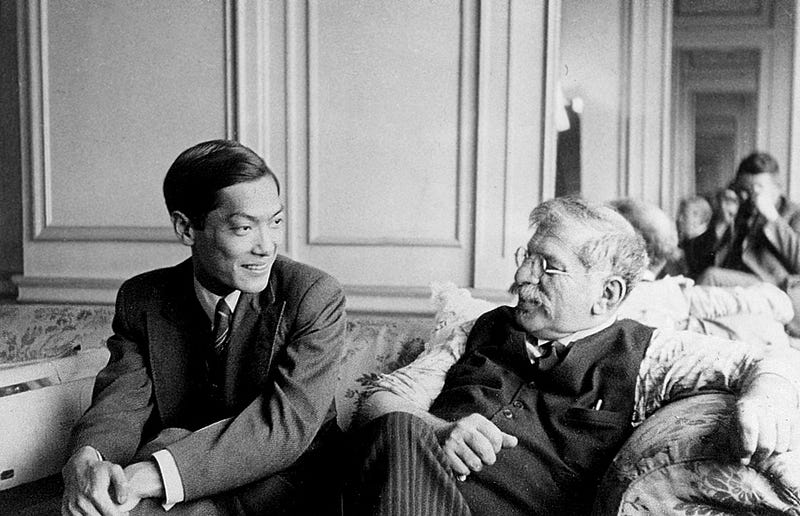
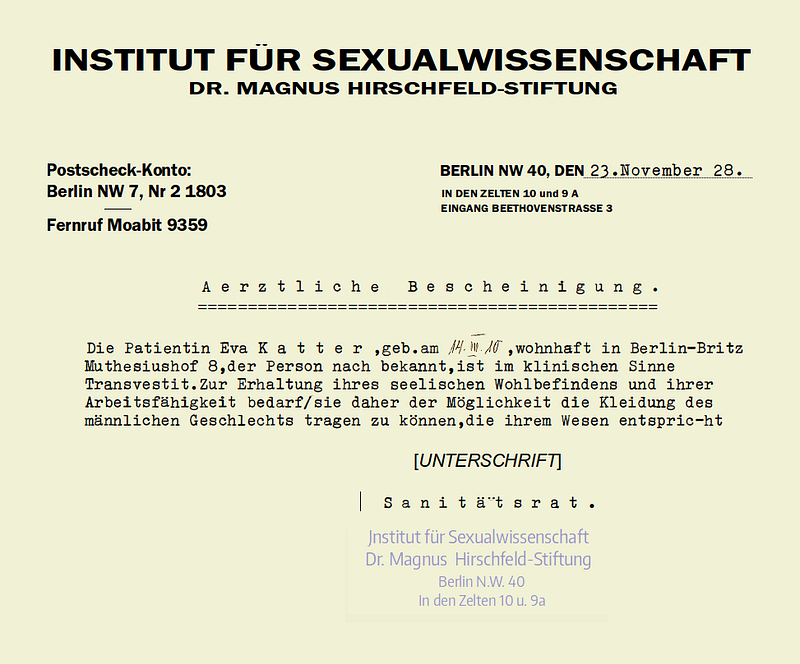
Erwin Gohrbandt (a surgeon) and Ludwig Levy-Lenz (a gynecologist) performed some of the first gender confirmation surgeries. Transgender women also received hormonal therapy at the institute. If a trans woman could not find a job, Hirschfeld often hired her to work at the institute. Furthermore, he also procured official identity cards for patients, so that the authorities would not arrest them in public because of their clothing.
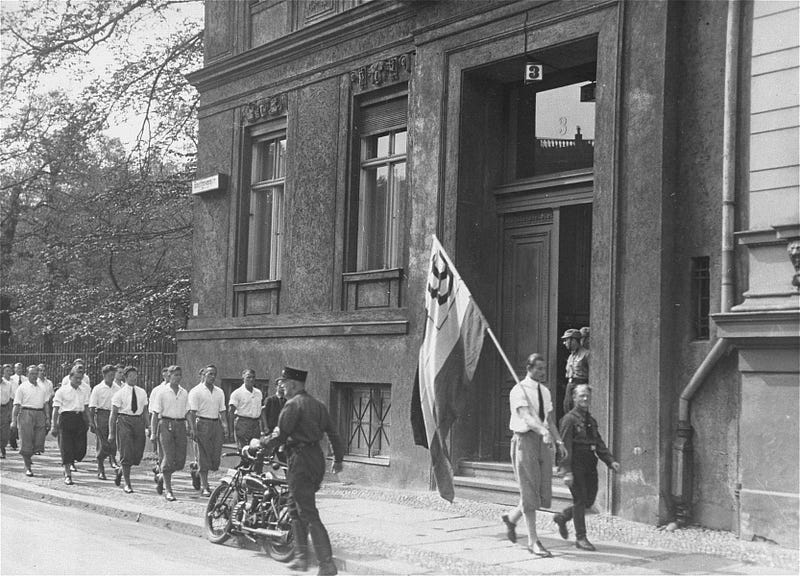
Adolf Hitler became Germany’s chancellor in 1933. The Institute for Sexual Sciences was one of the early targets of the Nazi party. On 6 May, when Hirschfeld was in France, Nazi-linked individuals stormed the Institute’s building.
Later, the SA (Sturmabteilung) threw much of the organization’s archive into a pyre in Opernplatz. They also hurled Magnus Hirschfeld’s bronze bust into the fire, but it survived the night, after which a street cleaner took it to his home. It made its way to the Berlin Academy of Arts after the Second World War.

While in exile, Magnus Hirschfeld worked on the book Racism. He died on his 67th birthday, on 14 May 1935, while he was in Nice, France. The text he had worked on saw the light of day in 1938. In it, he interrogates the usefulness of the category of race. He concludes racial categories can harm lives. Humanism could bridge religious, national, sexual, or political differences. Worldwide unity based on the recognition of everyone’s common humanity was the promise of this vision.
Sources:
Amidon, K.S. 2017. Per Scientiam ad Justitiam: Magnus Hirschfeld’s Episteme of Biological Publicity. In Taylor, M.T. & Timm, A. & Herrn, R. (eds.). Not Straight from Germany: Sexual Publics and Sexual Citizenship since Magnus Hirschfeld (Social History, Popular Culture, And Politics In Germany. Ann Arbor: The University of Michigan Press. 191–211.
Baer, M.D. 2020. German, Jew, Muslim, Gay: The Life and Times of Hugo Marcus. Religion, Culture, and Public Life 42. Engelke, M. (series ed.). New York: Columbia University Press.
Bauer, Heike. 2014. Burning sexual subjects: books, homophobia and the Nazi destruction of the Institute of Sexual Sciences in Berlin. In Partington, G. & Smyth, A. (eds.). Book Destruction from the Medieval to the Contemporary. Basingstoke: Palgrave Macmillan. 17–33.
Birkhold, M.H. 2019. “A Lost Piece of Trans History” in The Paris Review.
Conway, J.J. 2022. “Out on the Town: Magnus Hirschfeld and Berlin’s Third Sex” in The Public Domain Review.
Fürstenau, M. 2023. “LGBTQ People: Germany’s long-forgotten victims of the Nazis” in Deutsche Welle.
Mathieson, S. 2022. “Hirschfeld and early rights activism” in The Irish Times.
Schillace, B. 2021. “The Forgotten History of the World’s First Trans Clinic” in Scientific American.
Swett, P.E. 2017. Advertising and Magnus Hirschfeld’s Commercial Legacy in Nazi Germany. In Taylor, M.T. & Timm, A. & Herrn, R. (eds.). Not Straight from Germany: Sexual Publics and Sexual Citizenship since Magnus Hirschfeld (Social History, Popular Culture, And Politics In Germany. Ann Arbor: The University of Michigan Press. 306–331.


.jpg)


