avatarSadie Seroxcat

Free AI web copilot to create summaries, insights and extended knowledge, download it at here

5665

Abstract

r message in a given work… but more so a greater visibility for, and a genuine illustration of, life with illness, disease, impairment, or disability</i></b></a>.”</p><p id="f027">The framework they use is to ‘longlist’ eight titles (in December), ‘shortlist’ four (January), from which the winner is decided and announced in February. Currently, being new and funded by donations, there is a winning prize of £1000, but there are plans for extending prizes as the pot (hopefully) grows.</p><p id="331e">The three Barbellion Prize Winners so far have been:</p><h1 id="511d">2020 ‘Golem Girl’ (Riva Lehrer)</h1><figure id="72bd"><img src="https://cdn-images-1.readmedium.com/v2/resize:fit:800/0*CrgSS48OVB0Gb6aW.jpg"><figcaption><a href="https://www.goodreads.com/book/show/53906621-golem-girl?from_search=true&amp;from_srp=true&amp;qid=B4La7vdKWz&amp;rank=1">Golem Girl: A Memoir by Riva Lehrer | Goodreads</a></figcaption></figure><p id="3e32">In ‘<b><i>Golem Girl</i></b>’ we learn that the author, <b>Rivka Lehrer</b>, born in 1958 with spina bifida, had a childhood filled with medical procedures and was surrounded by people who were focused on ‘fixing’ her. Which understandably <b>internalised the message that she wasn’t whole, wasn’t enough.</b></p><blockquote id="5a87"><p>“Everything changes when, as an adult, Riva is invited to join a group of artists, writers, and performers who are building Disability Culture. Their work is daring, edgy, funny, and dark — it rejects tropes that define disabled people as pathetic, frightening, or worthless. They insist that disability is an opportunity for creativity and resistance. Emboldened, Riva asks if she can paint their portraits — inventing an intimate and collaborative process that will transform the way she sees herself, others, and the world. Each portrait story begins to transform the myths she’s been told her whole life about her body, her sexuality, and other measures of normal.”</p></blockquote><blockquote id="3f52"><p><a href="https://www.goodreads.com/book/show/53906621-golem-girl?from_search=true&amp;from_srp=true&amp;qid=B4La7vdKWz&amp;rank=1">Golem Girl: A Memoir by Riva Lehrer | Goodreads</a></p></blockquote><h1 id="c426">2021 ‘What Willow Says’ (Lyn Buckle)</h1><figure id="0015"><img src="https://cdn-images-1.readmedium.com/v2/resize:fit:800/0*b0PYAsy_ki8fXAOU.jpg"><figcaption><a href="https://www.goodreads.com/book/show/57184923-what-willow-says?ref=nav_sb_ss_1_16">What Willow Says by Lynn Buckle | Goodreads</a></figcaption></figure><p id="a0cc">The author of the 2021 winner, <b>Lyn Buckle</b>, was born deaf. In juxtaposition with the winner from the year before, Buckle was raised in an atmosphere of acceptance; and not only that — as told in this memoir, ‘<b><i>What Willow Says</i></b>’. during her childhood Buckle and her grandmother played with the use of sign language to create poetic stories centred around trees.</p><blockquote id="405b"><p>“Sharing stories of myths, legends and ancient bogs, a deaf child and her grandmother experiment with the lyrical beauty of sign language. Learning to communicate through their shared love of trees they find solace in the shapes and susurrations of leaves in the wind.”</p></blockquote><blockquote id="3be1"><p><a href="https://www.goodreads.com/book/show/57184923-what-willow-says?ref=nav_sb_ss_1_16">What Willow Says by Lynn Buckle | Goodreads</a></p></blockquote><p id="52e9"><b>This is a book I have got to get hold of. ‘<i>What Willow Says</i>’ seems to perfectly fit the kind of writing I will love!</b></p><h1 id="f78b">2022 ‘Book of Hours’ (Letty McHugh)</h1><figure id="785c"><img src="https://cdn-images-1.readmedium.com/v2/resize:fit:800/0*V6_FPUskPS-pUmxW.jpg"><figcaption><a href="https://www.goodreads.com/book/show/73344584-book-of-hours?from_search=true&amp;from_srp=true&amp;qid=coJFMozQLq&amp;rank=1">Book of Hours by Letty McHugh | Goodreads</a></figcaption></figure><p id="14d6">The latest winner of <b>The Barbellion Prize</b> is self-published with help from <a href="https://disabilityarts.online/#main"><b>Disability Arts Online</b></a>.</p><p id="6d33">Of her winning work, the author says:</p><blockquote id="10c6"><p>“Over the course of the pandemic, a complication with my chronic illness left me alone in a darkened room for three weeks. I drew comfort from an imagined Book of Hours<b>.</b> Half Almanac, half prayer book, medieval Books of Hours<b> </b>offered guidance for every situation and every day of the year. As I recovered I started to wonder, where was the spiritual guidebook for people like me; lost, sick, artists who watch too much reality TV? I couldn’t find one, so I made my own. Borrowing wisdom from Anglo-Saxon hermits, contemporary artists, and The Real Housewives of Beverly Hills.<b><i></i>Book of Hours’</b> is a collection of lyric essay and poetry exploring what it means to have faith, why we chase suffering and how to take solace in small joys.”</p></blockquote><blockquote id="79b4"><p><a href="http://www.lettymchugh.co.uk/">http://www.lettymchugh.co.uk</a></p></blockquote><p id="d59a">I’d also be <b><i>very interested</i></b> in getting a proper look at this book.</p><p id="9a21">As someone who lives with multiple chronic health issues, both physical and mental health related (and who cares for a partner who also has chronic health issues), I often find myself thinking of the saying used for encouraging people to just ‘manage’ our lives “<i>one day at a time</i>”.</p><p id="465d">For me, that’s sometimes just too big a timescale, to be painfully honest. So for myself and also when talking to others who are similarly struggling, I will

Options

more often consider taking things one hour, (or even one minute!) at a time. Put one foot in front of the other, look to one task at a time — and <b>make that task a ‘small’ one; because what would seem small to others can be a whole massive energy sucking, pain inducing performance for us</b>!</p><p id="eb9a"><b>For example</b>: For my partner (P), getting dressed, with shoes and coat on to go for a doctors/hospital appointment and walking (slowly, with a stick and support from myself) down our short garden path, then getting the car at the end of that path, is the best he can manage <b><i>on a good day</i></b>. Once painfully bumped about in the car (the roads, not my driving), he needs a lot of help getting back out and then has to be in a wheelchair (pushed by yours truly) for the remainder of the trip out. Once returned home, P needs to be able to stay in bed for two or three days, extra medicated, in order to ‘recover’ back to his plateaued base-line of pain and fatigue — and once that is reached he can spend a certain number of hours each day out of bed and in his ‘assisted’ recliner chair in our living room. This is his ‘normal’. I’m caring for him on top of living with my own host of issues. No need to say I don’t suppose, but that means my ‘normal’ is also pretty bad. It’s just that it’s better than P’s.</p><p id="4077">Of course there is <i>always</i> someone at a hospital or doctors surgery who, in a pleasantly meant attempt at small talk, will ask “<i>What do you have planned for the rest of the day?”</i> <b>At which point my spirits just sink. Other people go for an appointment, then they’re off shopping, swimming, to see friends — at the very least. We can’t even manage these extremely ‘normal’ activities on days which don’t also contain medical appointments.</b></p><p id="b076">All of which is to illustrate why this book — full title ‘<b><i>Book of Hours: An Almanac for the Seasons of the Soul</i></b>’ — might appeal to someone like me.</p><p id="8a9d"><b>For more information on the titles listed for all three years of The Barbellion Prize mentioned above, please see here</b>:</p><p id="b3c2"><a href="https://www.thebarbellionprize.com/winners-shortlists-longlists">Winners, Shortlists, & Longlists | The Barbellion Prize</a></p><p id="1d62">As for me, I’ve just picked up a digital copy of a book called ‘<b><i>Poor Little Sick Girls: A love letter to unacceptable women’, </i></b>written by Ione Gamble, so I’m off to start reading that!</p><p id="e995">For more of the pieces we have published on <b>Counter Arts</b> recently regarding disability, illness and equality, you could perhaps try one of the following and support our writers:</p><div id="9d1a" class="link-block"> <a href="https://readmedium.com/review-nubs-abled-80f03702f364"> <div> <div> <h2>Review: NUBS — Abled</h2> <div><h3>NUBS’ debut album is largely mediocre, but not without strong moments.</h3></div> <div><p>medium.com</p></div> </div> <div> <div style="background-image: url(https://miro.readmedium.com/v2/resize:fit:320/0*RUF2qtaW72U_1rB0.jpg)"></div> </div> </div> </a> </div><div id="cdde" class="link-block"> <a href="https://readmedium.com/discovering-authentic-disability-culture-1e7f83c7ed5b"> <div> <div> <h2>Discovering “Authentic Disability Culture”</h2> <div><h3>Meet the author</h3></div> <div><p>medium.com</p></div> </div> <div> <div style="background-image: url(https://miro.readmedium.com/v2/resize:fit:320/1*9iwt-vSsKPUgIlVybALa6w.jpeg)"></div> </div> </div> </a> </div><div id="ce0c" class="link-block"> <a href="https://readmedium.com/there-needs-to-be-a-wheelchair-user-on-high-school-musical-the-musical-the-series-6ee3aa6a9f81"> <div> <div> <h2>There Needs to be a Wheelchair User on High School Musical: The Musical: The Series</h2> <div><h3>Depicting the unique experience of a disabled student in high school theater.</h3></div> <div><p>medium.com</p></div> </div> <div> <div style="background-image: url(https://miro.readmedium.com/v2/resize:fit:320/1*B_70uzCPjMVCNvSkBEPP9Q.jpeg)"></div> </div> </div> </a> </div><p id="a2a4">Or, for more on books;</p><div id="3c24" class="link-block"> <a href="https://readmedium.com/counter-arts-book-club-2023-b1d0ed00c83d"> <div> <div> <h2>Counter Arts Book Club 2023</h2> <div><h3>To be updated throughout the year, with links to any essays and reviews about the books on our list. ***Last added to…</h3></div> <div><p>medium.com</p></div> </div> <div> <div style="background-image: url(https://miro.readmedium.com/v2/resize:fit:320/0*qVZcIumPt6_880o5)"></div> </div> </div> </a> </div><p id="4c26">If you enjoy my writing, you might consider leaving a ‘Tip’, or signing up for Medium membership through <a href="https://sadieseroxcat.medium.com/membership">my referral link here.</a></p><p id="1479">Thank you for reading, you are always much appreciated. Take care of yourselves — stay safe, stay warm, stay well and keep on writing. With love — Sadie</p></article></body>

The Barbellion Prize

Celebrating disability narratives

Photo by Jakub Pabis on Unsplash

The Barbellion Prize was founded in 2020 by Jake Goldsmith, himself the author of a memoir, ‘Neither Weak Nor Obtuse’, who says: “the expression of a phenomenology of illness is perhaps capable of being our most laudable and essential literature. It deserves a much greater audience”.

Given the number of our greatly renowned authors (John Milton, Herman Melville, Robert Louis Stevenson, Christy Brown) who are known to have suffered from lifelong illness and/or disability, it is obvious that writing talent prevails regardless of physical limitations. Perhaps those issues necessarily confined them to a home setting, or to bed (especially for those living in eras with less medical advancement); which can actually (as I often say myself) be a double-sided blessing/curse. The blessing, for a writer or other artist, being that they are presented with an abundance of time to concentrate upon their work, without the distraction of going out to other paid employment. Of course, the curse (aside from any associated directly with the medical issues themselves) is that there is significantly more pressure to produce saleable work in order to earn money on which to live.

I have a personal interest in this genre of writing, because I have begun searching out and reading collections of essays and memoirs about being ill and/or disabled or caring for someone who is, written about an authors’ own experiences.

Some I’ve read so far include:

Pain Woman Takes Her Keys’ — Sonya Huber ‘Ask Me About My Uterus’ — Abby Norman ‘Bodies of Truth’ — ed. Dinty Moore ‘Unwell Women’ — Elinor Cleghorn ‘All The Young Men’ — Ruth Coker Burks ‘The Wounded Storyteller’ — Arthur W. Frank ‘Invisible’ — Michele Lent Hirsch

Anyone paying close attention here (or who has read my work before) might notice a bias toward female reproductive issues in my reading choices — obviously because some of my health issues are gynaecological in nature. I’ve also read quite a few narrative (often diaristic) works written by people suffering from M.E./Chronic Fatigue Syndrome, as this too affects my life.

It would seem there are an even greater number of books written by (and about) authors experiencing life with mental health problems , though these aren’t usually considered for The Barbellion Prize at this point in time.

“The Barbellion Prize is intended mostly for people with chronic, life-long conditions — whether congenital, or acquired as adults. It’s never easy to define exactly who’s in, and who’s out — as disability is dynamic and complex. There are already prizes specifically for people with cancer or people with mental health conditions, and this prize is not intended to duplicate or overlap with those. It is also true that literature on the subjects of cancer or depression and mental illness exists in a far greater quantity than literature on other varieties of disability. While this is a consideration for us when we look at submissions, this does not mean we will reject them — and we will still consider any submissions. The Barbellion Prize is neither intended for those with disabilities that do not much affect their participation in society. Many, but not all of those eligible will live shortened lifespans, due to CF, MD, MS, and various other conditions. But this is not a prize simply about ill-health or medicine. It is a prize which celebrates and recognises alternative ways of living and finding meaning.”

FAQs | The Barbellion Prize

In my opinion it’s well past time that more attention was paid to the work which falls under this umbrella. The Barbellion Prize entries don’t have to centre around a character or situation where illness and disability are spotlighted, but the author themselves has to qualify. Thus, the achievement of the author is applauded, while also recognising that their physical issues do not necessarily dominate their lives, minds or writing.

There are other awards which will encompass personal narrative and more scientific enquiry into specific conditions, eg. The Wellcome Book Prize, like The Barbellion Prize a British Trust run annual award — though The Wellcome seems to be ‘on pause’ (as they themselves put it) at the moment/since the outbreak of the Covid pandemic. The titles listed for the year 2019, the last it was given, can be found here, should you be interested in looking further.

So I was thrilled to discover The Barbellion Prize when it started out, stating “What is important to us is not just any particular moral or message in a given work… but more so a greater visibility for, and a genuine illustration of, life with illness, disease, impairment, or disability.”

The framework they use is to ‘longlist’ eight titles (in December), ‘shortlist’ four (January), from which the winner is decided and announced in February. Currently, being new and funded by donations, there is a winning prize of £1000, but there are plans for extending prizes as the pot (hopefully) grows.

The three Barbellion Prize Winners so far have been:

2020 ‘Golem Girl’ (Riva Lehrer)
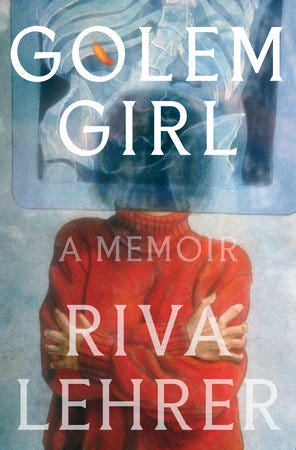
Golem Girl: A Memoir by Riva Lehrer | Goodreads

In ‘Golem Girl’ we learn that the author, Rivka Lehrer, born in 1958 with spina bifida, had a childhood filled with medical procedures and was surrounded by people who were focused on ‘fixing’ her. Which understandably internalised the message that she wasn’t whole, wasn’t enough.

“Everything changes when, as an adult, Riva is invited to join a group of artists, writers, and performers who are building Disability Culture. Their work is daring, edgy, funny, and dark — it rejects tropes that define disabled people as pathetic, frightening, or worthless. They insist that disability is an opportunity for creativity and resistance. Emboldened, Riva asks if she can paint their portraits — inventing an intimate and collaborative process that will transform the way she sees herself, others, and the world. Each portrait story begins to transform the myths she’s been told her whole life about her body, her sexuality, and other measures of normal.”

Golem Girl: A Memoir by Riva Lehrer | Goodreads

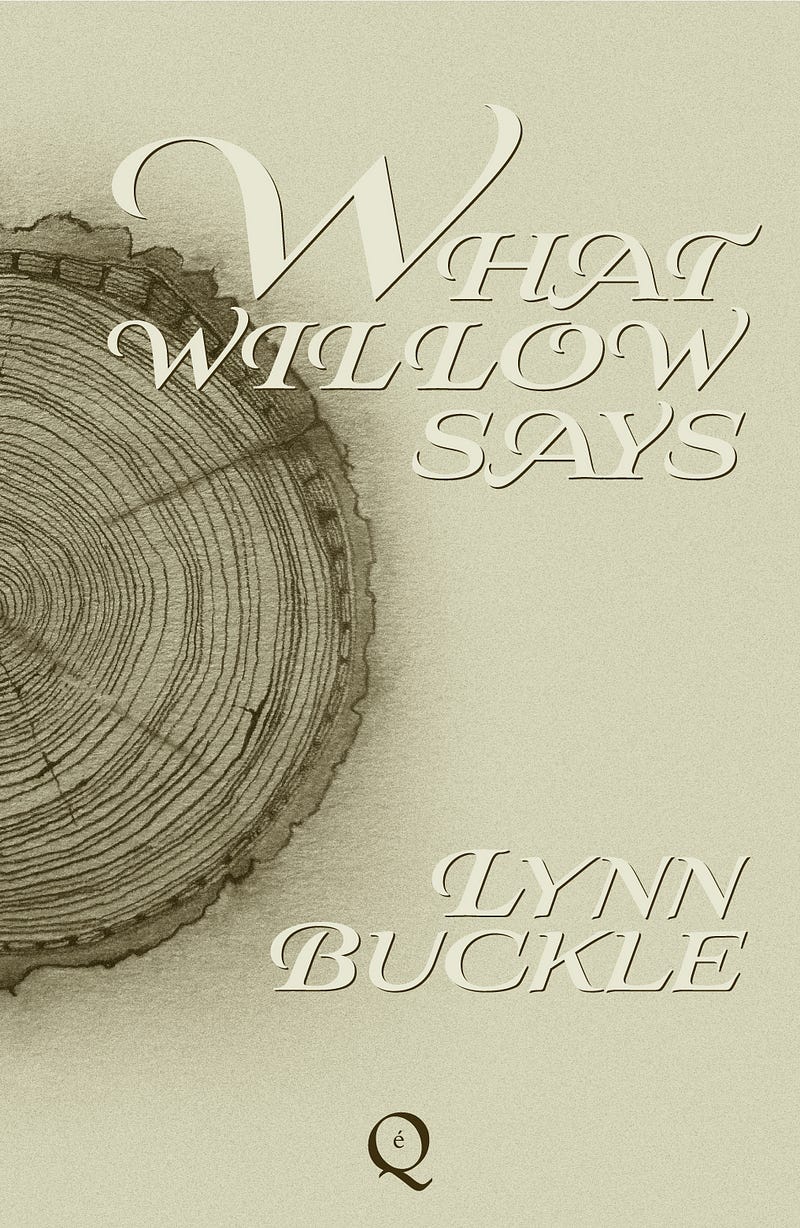
2021 ‘What Willow Says’ (Lyn Buckle)

What Willow Says by Lynn Buckle | Goodreads

The author of the 2021 winner, Lyn Buckle, was born deaf. In juxtaposition with the winner from the year before, Buckle was raised in an atmosphere of acceptance; and not only that — as told in this memoir, ‘What Willow Says’. during her childhood Buckle and her grandmother played with the use of sign language to create poetic stories centred around trees.

“Sharing stories of myths, legends and ancient bogs, a deaf child and her grandmother experiment with the lyrical beauty of sign language. Learning to communicate through their shared love of trees they find solace in the shapes and susurrations of leaves in the wind.”

What Willow Says by Lynn Buckle | Goodreads

This is a book I have got to get hold of. ‘What Willow Says’ seems to perfectly fit the kind of writing I will love!

2022 ‘Book of Hours’ (Letty McHugh)
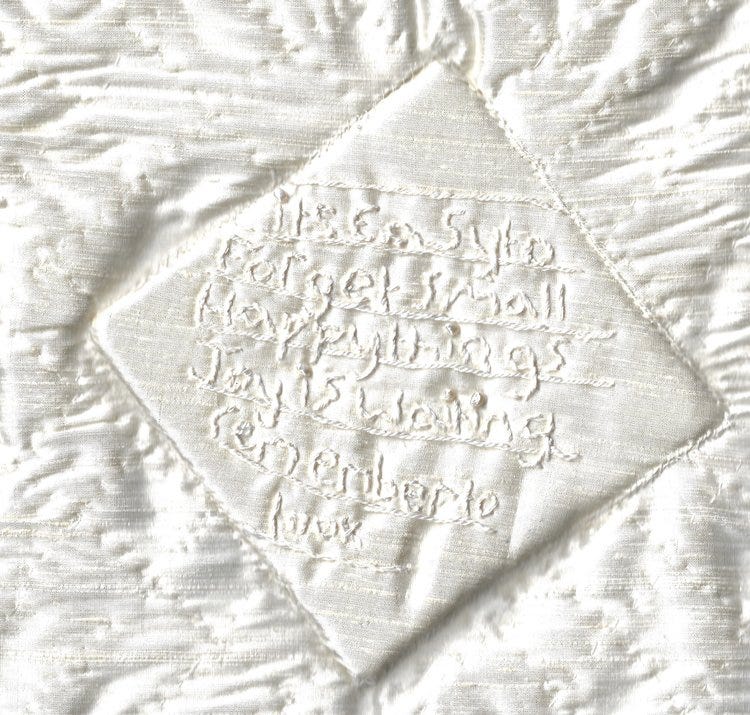
Book of Hours by Letty McHugh | Goodreads

The latest winner of The Barbellion Prize is self-published with help from Disability Arts Online.

Of her winning work, the author says:

“Over the course of the pandemic, a complication with my chronic illness left me alone in a darkened room for three weeks. I drew comfort from an imagined Book of Hours. Half Almanac, half prayer book, medieval Books of Hours offered guidance for every situation and every day of the year. As I recovered I started to wonder, where was the spiritual guidebook for people like me; lost, sick, artists who watch too much reality TV? I couldn’t find one, so I made my own. Borrowing wisdom from Anglo-Saxon hermits, contemporary artists, and The Real Housewives of Beverly Hills.Book of Hours’ is a collection of lyric essay and poetry exploring what it means to have faith, why we chase suffering and how to take solace in small joys.”

http://www.lettymchugh.co.uk

I’d also be very interested in getting a proper look at this book.

As someone who lives with multiple chronic health issues, both physical and mental health related (and who cares for a partner who also has chronic health issues), I often find myself thinking of the saying used for encouraging people to just ‘manage’ our lives “one day at a time”.

For me, that’s sometimes just too big a timescale, to be painfully honest. So for myself and also when talking to others who are similarly struggling, I will more often consider taking things one hour, (or even one minute!) at a time. Put one foot in front of the other, look to one task at a time — and make that task a ‘small’ one; because what would seem small to others can be a whole massive energy sucking, pain inducing performance for us!

For example: For my partner (P), getting dressed, with shoes and coat on to go for a doctors/hospital appointment and walking (slowly, with a stick and support from myself) down our short garden path, then getting the car at the end of that path, is the best he can manage on a good day. Once painfully bumped about in the car (the roads, not my driving), he needs a lot of help getting back out and then has to be in a wheelchair (pushed by yours truly) for the remainder of the trip out. Once returned home, P needs to be able to stay in bed for two or three days, extra medicated, in order to ‘recover’ back to his plateaued base-line of pain and fatigue — and once that is reached he can spend a certain number of hours each day out of bed and in his ‘assisted’ recliner chair in our living room. This is his ‘normal’. I’m caring for him on top of living with my own host of issues. No need to say I don’t suppose, but that means my ‘normal’ is also pretty bad. It’s just that it’s better than P’s.

Of course there is always someone at a hospital or doctors surgery who, in a pleasantly meant attempt at small talk, will ask “What do you have planned for the rest of the day?” At which point my spirits just sink. Other people go for an appointment, then they’re off shopping, swimming, to see friends — at the very least. We can’t even manage these extremely ‘normal’ activities on days which don’t also contain medical appointments.

All of which is to illustrate why this book — full title ‘Book of Hours: An Almanac for the Seasons of the Soul’ — might appeal to someone like me.

For more information on the titles listed for all three years of The Barbellion Prize mentioned above, please see here:

Winners, Shortlists, & Longlists | The Barbellion Prize

As for me, I’ve just picked up a digital copy of a book called ‘Poor Little Sick Girls: A love letter to unacceptable women’, written by Ione Gamble, so I’m off to start reading that!

For more of the pieces we have published on Counter Arts recently regarding disability, illness and equality, you could perhaps try one of the following and support our writers:

Or, for more on books;

If you enjoy my writing, you might consider leaving a ‘Tip’, or signing up for Medium membership through my referral link here.

Thank you for reading, you are always much appreciated. Take care of yourselves — stay safe, stay warm, stay well and keep on writing. With love — Sadie

Nonfiction
Literature
Equality
Disability
Books
Recommended from ReadMedium