
‘On Earth We’re Briefly Gorgeous’ — Ocean Vuong
Counter Arts Book Club — October
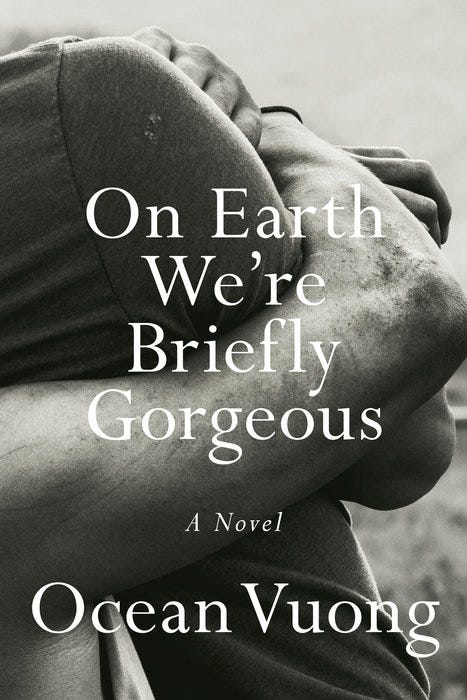
What is gorgeous is this novel. I read it when it was first published and adored it, so when I signed on for Book Club and saw this novel was included, I was thrilled. Put it this way, I’ve never before looked forward to October this much!
‘On Earth We’re Briefly Gorgeous’ (first published, in hardback, 2019) is Ocean Vuong’s first novel, having previously published award-winning poetry in ‘Night Sky With Exit Wounds’ (2016). Vuong also has a new poetry collection ‘Time Is A Mother’ (2022); along with less well-known earlier collections in chapbooks, ‘Burning’ (2011) and ‘No’ (2013).
Ocean Vuong has written a fragmented and yet exquisitely cohesive novel here. His language drips and flows like the fluid which makes up the Ocean he is named for. At once bildungsroman, epic poem and memoir, all wrapped up in a relatively short book.
There is so much to say about this novel that I’m genuinely struggling to decide on a place to start, in order to do justice to both the book and my experience of reading it — and there’s a distinct possibility that you might find it ends up being published in two parts. Or as one really long one, in which case please bear with me!
Some reviewers have written that ‘On Earth We’re Briefly Gorgeous’ is just too dense, too polished and ultimately, feels lacking a clear story path among the fragments and recollections which join together to make the whole.
“There are so many lines that gutted me or exhilarated me or stunned me. I wanted to sit with each line and just feel it as deeply as I could. The intimacy of the novel as a letter between a son and mother was poignant. That said, I just didn’t fall in love with this book. The prose was, perhaps, too beautiful, too resonant, without enough story behind it. That is a personal preference, the desire for story. As I got deeper into the novel, I kept wanting a clearer sense of where the story was going, I wanted to feel like there was more substance to hold all that style.” — Roxane Gay (the author), writes in her review for GoodReads
However, presumptuous as it feels given Ms. Gay’s own credentials, I disagree. The reasons for which will come a little later on.
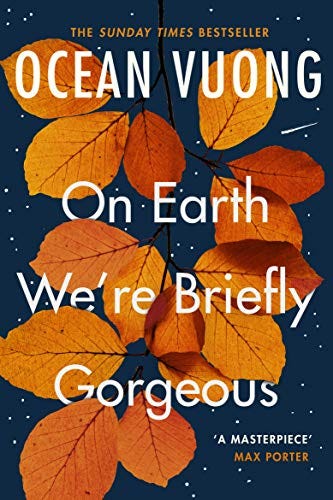
Another reviewer had an opinion more in line with my own:
“…brutal and yet also tender beauty of the poetics, the intimacy between bodies, the weight of the heart suspended inside longing. This is a book that multiplies meanings, but at the center is a queer coming-of-age story as well as a bicultural family history. The shadow of a mother-son relationship and the shadow of the America-Vietnam relationship haunts the story. I fell in love with the narrator a hundred times over. I also felt suspended between the atomized mother who cannot fully understand the language of her son, a son’s attempt to both inhabit as well as break free from his own family history, and the force of nature it takes to wrestle the gap…” — Lidia Yuknavitch (author), for ‘Vogue’ magazine.
However, I must say that in this comparative disparity I find an echo of something I’ve observed before.
In this case two successful and well-known writers, Roxane Gay and Lidia Yuknavitch, have opposing views of a novel. I like and admire the writing of each of these women, but (from what I have read of each) it is obvious that they do have markedly different styles.
Lidia Yuknavitch writes in beautifully descriptive prose, whereas Roxane Gay is rather more inclined towards the sparser, shorter, more direct style which she seems to wish Ocean Vuong would produce. She writes storyline for comic books — the ‘Black Panther/Wakanda’ series for example — and has written some excellent and interesting autobiographical nonfiction, ‘Hunger’ is a book I would recommend to everyone.
Lidia Yuknavitch has also published some autobiographical work — a particular favourite of mine is ‘The Chronology of Water’. Her novel ‘The Book of Joan’ was my introduction to this author and I adored this too; but it does seem to be a somewhat ‘Marmite’ work which people either love, or well — really don’t love.
My point here, is that Gay prefers to read a similar style to her own, with shorter sentences giving more concrete information. Yuknavitch on the other hand, likes longer, descriptive and symbolism heavy work, which is how she writes herself. In other words, people seem to like to read things written in a similar style to that in which they themselves write.
This stunning novel (contrary to Ms. Gay’s opinion stated above) tells a really full story. Actually, it tells a handful of stories if we’re fair, which are woven in and out through what seems, when first beginning to read, to be a series of disjointed vignettes.
In part, this novel tells the story of three generations. It’s disjointed yes: like the mind of a person with PTSD; like the shrapnel from an explosion, random gunfire, people scattering, running away from an armed enemy; a people fleeing their homeland, in boats stacked high with desperate humans going in all directions in search of refuge in many different countries; and like the life of the central character, Little Dog, made up of an array of different cultural experiences, which somehow mesh together into some kind of cohesive whole.
The two hundred and forty pages of the novel contain numerous, entire lives; a variety of cultures; two whole countries; descriptions of a sea (an ocean) of emotions and experiences. I can’t help but feel that, were all of this to be dealt with fully, chronologically it would have been an incredible tome of a book; too long to be read by many, a modern-day comparison to Tolstoy’s epic ‘War and Peace’.
Little Dog, his life, his family, his very existence, is the product of war — and of a jigsaw worth of mis-matched pieces of identity. So, the form Vuong uses for telling his story in ‘On Earth We’re Briefly Gorgeous’ is, to me, entirely fitting.
The Vietnam War was an early version of the proxy war which has raged for decades now, between the USA (plus allies) and the USSR/Russia (plus China), in which vast numbers of civilians and military personnel from all sides were killed, all ultimately for nothing.
“(1954–75), a protracted conflict that pitted the communist government of North Vietnam and its allies in South Vietnam, known as the Viet Cong, against the government of South Vietnam and its principal ally, the United States. Called the “American War” in Vietnam (or, in full, the “War Against the Americans to Save the Nation”), the war was also part of a larger regional conflict (see Indochina wars) and a manifestation of the Cold War between the United States and the Soviet Union and their respective allies.”
— Vietnam War | Facts, Summary, Years, Timeline, Casualties, Combatants, & Facts | Britannica
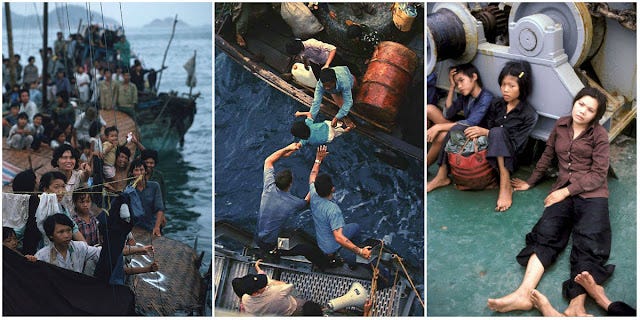
I have clear memories from my childhood and teens of watching news reports showing ‘Vietnamese boat people’ pleading to be taken in, or to be taken on board (as shown in the photos above and others on the website linked.). Then, as we are seeing again now from different parts of the world, boat loads of people were rescued; taken to refugee camps, (or turned away when the camps were so full that they said they could take no more); risking lives on the water trying to reach the Philippines, Hong Kong, US Naval ships and others belonging to aid agencies such as Medicins du Monde (Doctors of the World).
“Between 1975 to 1992, almost two million Vietnamese risked their lives to flee oppression and hardship after the Vietnam War, in one of the largest mass exoduses in modern history. Escaping by boat, many found freedom in foreign land, many were captured and brutally punished, and many did not survive the journey. This population of people are known as the ‘Vietnamese Boat People’…”
— Vietnamese Boat People | Home | Stories of Vietnamese Refugees
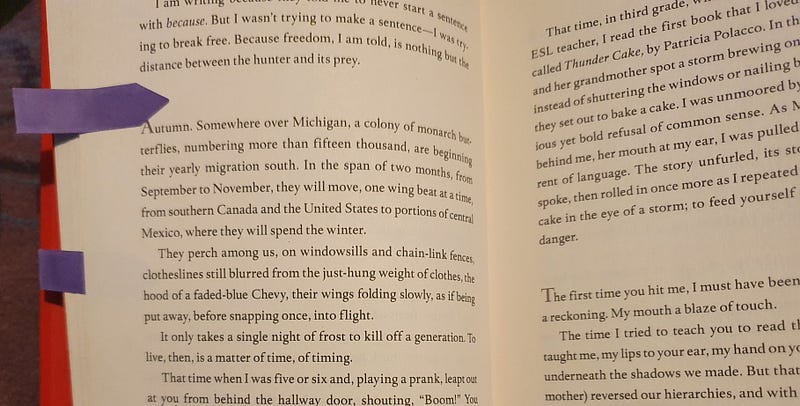
“Autumn. Somewhere over Michigan, a colony of monarch butterflies, numbering more than fifteen thousand, are beginning their yearly migration south. In the span of two months, from September to November, they will move, one wingbeat at a time, from southern Canada and the United States to portions of central Mexico, where they will spend the winter. They perch among us, on windowsills and chain-link fences, clotheslines still blurred from the just-hung weight of clothes, the hood of a faded blue Chevy, their wings folding slowly, as if being put away, before snapping once, into flight. It only takes a single night of frost to kill off a generation. To live, then. is a matter of time, of timing.”
— ‘On Earth We’re Briefly Gorgeous’, Ocean Vuong, page four.
In this novel, Ocean Vuong writes about his main character ‘Little Dog’, but also tells something of the stories of his mother ‘Rose’ and grandmother ‘Lan’. Refugees from another country, fleeing violence and mistreatment; safer where they land, yet not completely free from victimisation or prejudice.
“Eldrick ‘Tiger’ Woods, one of the greatest golfers in the world is, like you, Ma, a direct product of the war in Vietnam.” — Little Dog
A prominent theme in the author’s work is the notion that many people, particularly children of American soldiers, would not have been born if there had been no war in Vietnam. This quote highlights two of these people: Tiger Woods and Little Dog’s mother. It also highlights that the uncanny tenor of war produced something other than destruction.
— On Earth We’re Briefly Gorgeous Quotes and Analysis | GradeSaver
Lan suffers PTSD from her youth in Vietnam during the war. Vuong treats us to some snippets of her experience, some of which are quite graphic and detailed. We also see examples of how her post-traumatic stress manifests, when she has a flashback to a mortar attack when fireworks go off outside their home in Connecticut:
“She was on her knees, scratching wildly at the blankets. Before I could ask what was wrong, her hand, cold and wet, grabbed my mouth. She placed her finger over her lips. ‘Shhh. If you scream,’ I heard her say, ‘the mortars will know where we are.’”
— ‘On Earth We’re Briefly Gorgeous’, Ocean Vuong (2019) page 17.
Her daughter, Little Dog’s mother Rose, is illiterate as a direct result of a napalm attack which destroyed her school in Vietnam. Yet the whole of this novel is couched as a letter, written by a son to his mother who cannot read it.
The pathos of the inter-generational trauma here is palpable. Rose treats Little Dog cruelly, at times, but given her own challenges and upbringing we can see that she is perhaps unable to fathom a better way, that her own entire make up is so tainted by violence that it has become an integral part of her and will inevitably show up in her behaviour.
“The first time you hit me, I must have been four. A hand, a flash, a reckoning. My mouth a blaze of touch.”
— ‘On Earth We’re Briefly Gorgeous’, Ocean Vuong. page five.
When Vuong writes about this, introducing the times Rose was physically violent towards Little Dog as a young child very early on in the first few pages of the novel, he intersperses the times she hit him with descriptions of other times — times when his behaviour frightened her, times when she was gentle and they did something which formed a good memory, small snippets of anecdote which show her in a different light (colouring for one example, looking after Lan, dying and after death, for another).
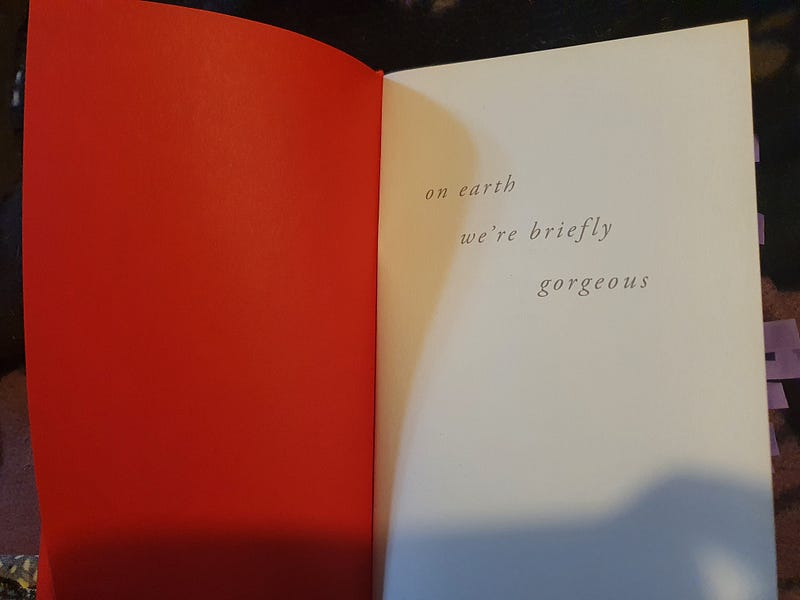
‘On Earth We’re Briefly Gorgeous’ is semi-autobiographical. Ocean Vuong is Vietnamese-American. His family are refugees; he was brought up by mother, grandmother and aunt; he has struggled all of his life against racism and homophobia; and drug use has been a prevalent issue in his life as well.
“Ocean Vuong (born Vinh Quoc Vuong) is a Vietnamese-American poet and novelist, born on a farm outside Saigon in 1988.
His maternal grandfather was an American soldier in Vietnam, and his grandmother was — as relayed in the poem “Notebook Fragments” — a local “Vietnamese farmgirl.” When Saigon fell in 1975, however, his grandfather was in the United States visiting family, and his grandmother feared that she and her children would be targeted as collaborators. As a result, she separated her three children — Ocean’s mother among them — and placed them in separate orphanages so that they would not be evacuated from Vietnam or exploited by dissidents looking to leave the country with “family.” Ocean’s mother remained separated from her family into her adulthood. When she was 18 years old, Ocean was born. Later, however, while she was working in a salon in Saigon, a police officer discovered that Ocean’s mother was mixed race and thus working illegally under the country’s laws. As a result, Ocean’s family evacuated to the Philippines while waiting for their asylum request to be processed in the United States….
…When Ocean was 11, he learned to read, the first person in his family to be able to do so. At 13, Ocean and his family moved to Glastonbury, where he attended a prestigious public school but struggled in the face of racial prejudice, homophobia, suspected dyslexia, and classroom politics that Ocean later claims “literally erased” him and his identity. Moreover, as an adolescent, Ocean’s life was defined by a series of low-paying jobs and drug issues, and Ocean knew many people who overdosed or similarly struggled during Connecticut’s burgeoning opioid crisis.”
— Ocean Vuong Biography | List of Works, Study Guides & Essays | GradeSaver
Anyone who has read the novel will recognise all the elements of Vuong’s real life which are echoed in his novel.
The themes he uses include:
- Intergenerational trauma as a result of war
Covered above, but also here:
“That time when I was five or six and, playing a prank, leapt out at you from behind the hallway door, shouting, “Boom!”. You screamed, face raked and twisted, then burst into sobs, clutched your chest as you leaned against the door, gasping. I stood bewildered, my toy army helmet tilted on my head. I was an American boy parroting what I saw on TV. I didn’t know that the war was still inside you, that there was a war to begin with, that once it enters you it never leaves — but merely echoes, a sound forming the face of your own son. Boom.”
— ‘On Earth We’re Briefly Gorgeous’, Ocean Vuong, page four.
- The power of naming/names
Ocean Vuong’s own name was changed:
One day, while Ocean’s mother was working at a nail salon as a manicurist, she was telling a customer about how much she wanted to go to the beach. When the customer pointed out that her pronunciation of “beach” sounded more like “bitch,” however, the customer offered a substitute: Ocean’s mother could say she was planning to go to the ocean. Upon finding that an “ocean” is a large body of water that links multiple countries, Ocean’s mother appreciated the metaphorical idea that her son could be the link between America and Vietnam, and renamed him from Vinh to Ocean.
-Ocean Vuong Biography | List of Works, Study Guides & Essays | GradeSaver
Little Dog also had another name, given to him at birth by the local shaman, designed to please his father. It was the name of the Vietnamese leader, which after the beginning of the war didn’t seem so advantageous.
Lan, which means Lily, is the name she decided on for herself, because her own mother had simply called her Seven, her number in birth order.
- Confession and audience
Does it matter that his mother will be unable to read his letter/the novel? Does it still count that his confessions, his memories will be written, recorded there anyway?
(I feel a connection to this question myself, as I’m writing openly about my life here on Medium, but under a pseudonym).
“Dear Ma, I am writing to reach you — even if each word I put down is one word further from where you are.”
— ‘On Earth We Are Briefly Gorgeous’, Ocean Vuong, page three.
- Language barriers
This is touched upon above, but also there are many instances were Vuong highlights this difficulty. For example, when we read about a very young Little Dog speaking English for his mother when he only knows a very few words and phrases himself.
Even within the United States, there are such differences in language used in different areas.
Little Dog grows up in Hartford, Connecticut:
Growing up in Hartford, locals greeted each other with “What’s good” — not “Hello” or “How are you?” Little Dog says, but “What’s good.” It is Hartford’s very own “lexicon,” and it reflects the people living there. Many of Hartford’s population are poor and working class people, and they know all about hunger and addiction. To ask another “What’s good?” Little Dog says, is to immediately skip all the pain and move to the good in life.
— On Earth We’re Briefly Gorgeous Part 3 Summary & Analysis | LitCharts
Another thing I found very noticeable was the way the workers at the nail salon, like Rose, make use of the word “sorry” in an all-purpose way, often just to indicate, or apologise for, their mere presence. (Something else I can also personally relate to, despite my own more proficient command of the English language).
Vuong comments upon the English language from a place of outside observation, writing about commonly used metaphors and cultural context which, from his perspective (and thus Little Dog’s), did not make as much sense as they did to native speaking Americans; and which (like the imagery constantly used which portrays guns, death etc. in normal everyday speech) can seem nonsensical and inappropriate.
- Memory
“Ma. I don’t know if you’ve made it this far into this letter — or if you’ve made it here at all. You always tell me it’s too late for you to read, with your poor liver, your exhausted bones, that after everything you’ve been through, you’d just like to rest now. That reading is a privilege you made possible for me with what you lost. I know you believe in reincarnation. I don’t know if I do but I hope it’s real. Because then maybe you’ll come back here next time around. Maybe you’ll be a girl and maybe your name will be Rose again, and you’ll have a room full of books with parents who will read you bedtime stories in a country not touched by war. Maybe then, in that life and in this future, you’ll find this book and you’ll know what happened to us. And you’ll remember me. Maybe.”
— ‘On Earth We’re Briefly Gorgeous’, Ocean Vuong, page 240.
The above is not quite the last paragraph of the book, but it’s not far off. There’s a lot to say about this theme of memory, but I want to just leave you with that quotation because, while it doesn’t give anything away to the point it would spoil a fresh reading, I think on its own and of itself this short section is very beautiful and says so much.
- Beauty
Vuong makes much use of describing small, natural things like the wild violets Little Dog picks for Lan (which also feed into the theme of Memory); and the monarch butterflies in the quote used earlier in this essay.
He also sees the beauty in human connection — family, companionship, love — Trevor.
Then there are moments of brief enjoyment, such as a trip to the mall, dressed up, where all Rose would buy was a small bag of ‘fancy’ Godiva chocolate:
“…five or six squares of chocolate we had picked at random. This was often all we bought at the mall. Then we’d walk, passing one back and forth until our fingers shone inky and sweet. “This is how you enjoy your life,” you’d say, sucking your fingers…”
— ‘On Earth We’re Briefly Gorgeous’, Ocean Vuong, page seven.
Yet his discussion of beauty is always paired with, and tainted by, death. Death always finds us, and this is why we are only briefly gorgeous.
It is 10:00 in the morning when Lan begins to die. Mai points to Lan’s feet, which have turned a deep purple color. The feet go first, Mai says. Little Dog remembers back to years earlier, when Lan lifted him up over the chain-link fence that surrounded the highway to pick the purple flowers that bloomed near the shoulder of the road. As Little Dog picked the flowers, traffic whipped by him, and Lan was in the background yelling at him to hurry up and be careful. Beauty, Little Dog says, is what we risk ourselves for.
— On Earth We’re Briefly Gorgeous Part 3 Summary & Analysis | LitCharts
- Homophobia
“Trevor rusted pickup and no license.
Trevor sixteen; blue jeans streaked with deer blood.
Trevor too fast and not enough.”
— ‘On Earth We’re Briefly Gorgeous’, Ocean Vuong, p.153
Another, large, part of this novel centres around Trevor. The boy, two years older than Little Dog, who represents so much of the American experience encapsulated within this book. Trevor is a white American boy, but lives in a trailer with his violent, drunken father — more privileged by skin colour and virtue of birth, yet still also not, held back by poverty, by family and by addiction. He is the one who’s early death by overdose Vuong focuses in on.
“Trevor was put on Oxycontin after breaking his ankle doing dirt bike jumps in the woods a year before I met him. He was fifteen…
…After a month on the Oxy, Trevor’s ankle healed, but he was a full-blown addict.”
— ‘On Earth We’re Briefly Gorgeous’, Ocean Vuong, pages 174 & 175
Trevor is the boy with whom Little Dog engages in sexual experimentation. He is certainly also his first love.
Often, we hear/read the slur ‘fag/faggot’ (as in red paint across the door of Little Dog’s home). Trevor weeps with fear over the thought of ‘always being like this’. While he carries an amount of internalised homophobia and refuses to contemplate his homosexual inclinations lasting beyond a couple of years, Little Dog seems more accepting that this (gay, submissive) is who/what he is, even though this comes with difficulties and prejudices (again echoing the author’s own experience I suspect).
“on your steps in the grey dawn. His face in his arms. I don’t wanna, he said. His panting. His shaking hair. The blur of it Please tell me I am not, he said, I am not.
a faggot. Am I? Am I? Are you?
Trevor the hunter. Trevor the carnivore, the redneck, not
a pansy, shotgunner, sharpshooter, not fruit or fairy.”
— ‘On Earth We’re Briefly Gorgeous’, Ocean Vuong (2019), page 155
However, we also learn about homophobia in Vietnam. The other side of Vuong and Little Dog’s cultural make-up.
“A few months before our talk at Dunkin’ Donuts, a fourteen-year-old boy in rural Vietnam had acid thrown in his face after he slipped a love letter into another boy’s locker. Last summer, twenty-eight-year-old Florida native Omar Mateen walked into an Orlando nightclub, raised his automatic rifle, and opened fire. Forty-nine people were killed. It was a gay club and the boys, because that’s who they were — sons, teenagers — looked like me: a colored thing born of one mother, rummaging the dark, each other, for happiness.”
— ‘On Earth We’re Briefly Gorgeous’, Ocean Vuong, page 137
Bigotry and violence are alive and well the world over my dear readers.
- Drug use, addiction and overdose
Little Dog and Trevor dabble in drug use together from practically the moment they meet. In Hartford, Connecticut, it is ‘normal’, just something to do, entertainment in this rural town. Part of the letter (novel) is written as Little Dog travels back to attend Trevor’s funeral.
“Trevor was a boy who had a name, who wanted to go to community college to study physical therapy. Trevor was alone when he died, surrounded by posters of Led Zeppelin. Trevor was twenty-two. Trevor was.
The official cause of death, I would learn later, was an overdose from heroin laced with fentanyl.”
— ‘On Earth We’re Briefly Gorgeous’, Ocean Vuong, page 178
We learn that five of Little Dog’s other friends and acquaintances had also fatally overdosed before he even left to attend college in New York; that this was one of the things which made him want to leave before he went the same way.
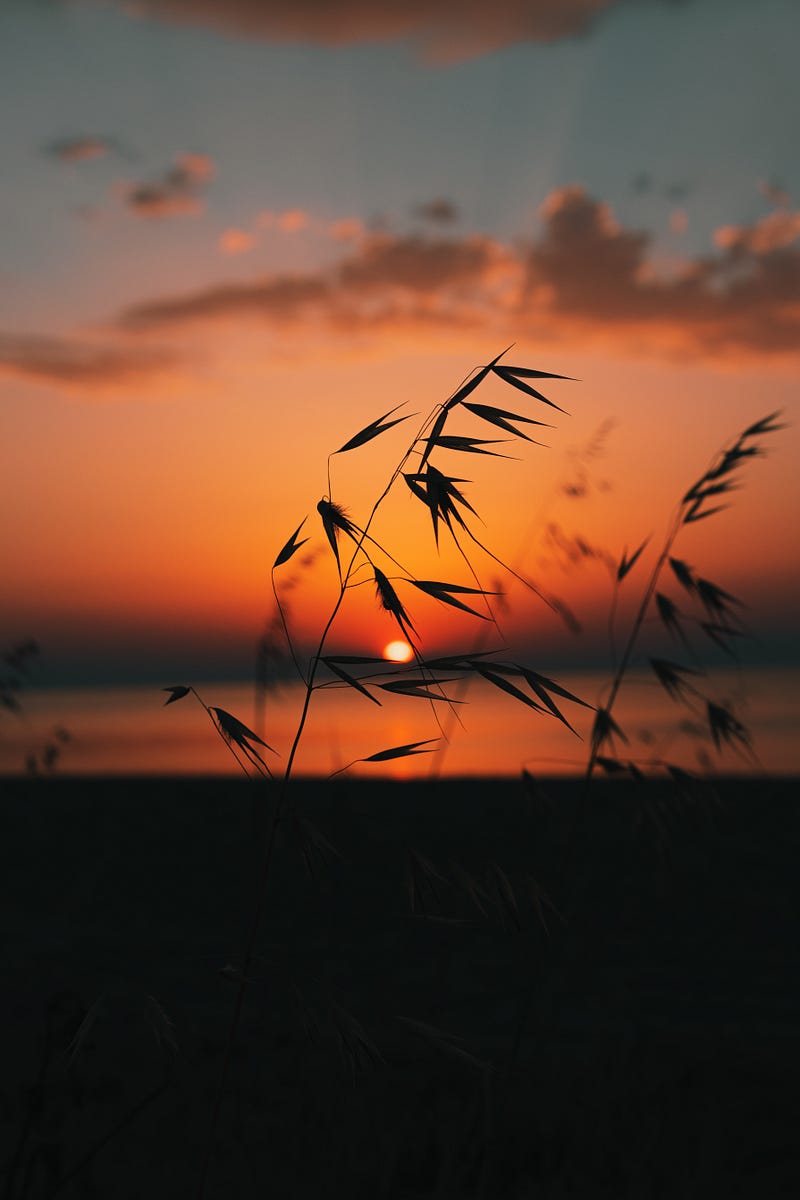
“I am thinking of beauty again, how some things are hunted because we have deemed them beautiful. If, relative to the history of our planet, an individual life is so short, a blink of an eye, as they say, then to be gorgeous, even from the day you are born to the day you die, is to be gorgeous only briefly. Like right now, how the sun is coming on, low behind the elms, and I can’t tell the difference between sunset and sunrise. The world, reddening, appears the same to me — and I lose track of east and west. The colors this morning have the frayed tint of something already leaving. I think of the time Trev and I sat on the toolshed roof, watching the sun sink. I wasn’t so much surprised by its effect — how, in a few crushed minutes, it changes the way things are seen, including ourselves — but that it was ever mine to see. Because the sunset, like survival, exists only on the verge of its own disappearing. To be gorgeous, you must first be seen, but to be seen allows you to be hunted.”
— ‘On Earth We’re Briefly Gorgeous’, Ocean Vuong, 2019, page 238.
Named a Best Book of the Year by: GQ, Kirkus Reviews, Booklist, Library Journal, TIME, Esquire, The Washington Post, Apple, Good Housekeeping, The New Yorker, The New York Public Library, Elle.com, The Guardian, The A.V. Club, NPR, Lithub, Entertainment Weekly, Vogue.com, The San Francisco Chronicle, Mother Jones, Vanity Fair, The Wall Street Journal Magazine and more!
“Ocean Vuong’s devastatingly beautiful first novel, as evocative as its title, is a painful but extraordinary coming-of-age story about surviving the aftermath of trauma…Vuong’s language soars as he writes of beauty, survival, and freedom, which sometimes isn’t freedom at all, but ‘simply the cage widening far away from you, the bars abstracted with distance but still there’… The title says it: Gorgeous.” — Heller McAlpin, NPR.org
“Vuong is masterly at creating indelible, impressionistic images…Vuong beautifully evokes [Trevor’s] seductive power over Little Dog: This is some of the most moving writing I’ve read about two boys experimenting together…The book is brilliant in the way it pays attention not to what our thoughts make us feel, but to what our feelings make us think. To what kinds of truth does feeling lead? Oscar Wilde famously quipped that sentimentalism is wanting to have an emotion without paying for it, but Little Dog has paid and paid, and the truths arrived at in this book are valuable precisely because they are steeped in feeling.” — Justin Torres, The New York Times Book Review
This author also speaks as he writes: beautifully, lyrically, with a soft touch, honesty and poetry. See the interview here for an example:
Thank you for reading!
If you’ve enjoyed this review, perhaps you would like to read some more of the work I’ve put together for the Counter Arts publication’s Book Club, all of which are collected for you below:
If you have a few coins to spare and would like to pass them my way to help support my writing life, you could use the Medium ‘Tip’ button below (which is linked to my Ko-fi account). Alternatively, if you are not yet a member of this site, you could consider joining using my referral link here. This would give you full access to the work of thousands of writers worldwide — and a portion of your fees would then be paid to my account. Either way, much gratitude will be coming your way.


