
CULTURE + PSYCHOLOGY
The Body Keeps The Score
A look on trauma and why it is about you

“Trauma robs you of the feeling that you are in charge of yourself, of what I will call self-leadership. The challenge of recovery is to re-establish ownership of your body and your mind — of yourself. This means feeling free to know what you know and to feel what you feel without becoming overwhelmed, enraged, ashamed, or collapsed.” — The Body Keeps The Score by Bessel Van Der Kolk, M.D.
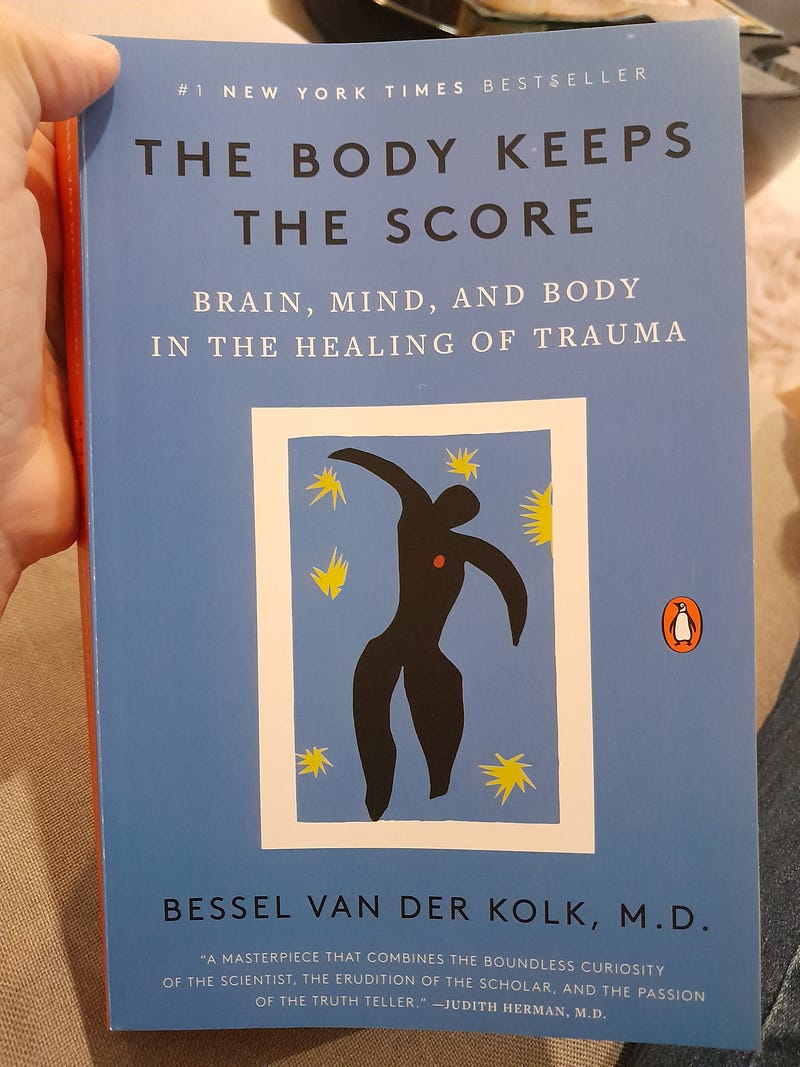
If there is one book I’d recommend to everyone (literally, everyone of all walks of life) to read at least once in a lifetime, it is “The Body Keeps The Score, Brain Mind and Body in the Healing of Trauma” by Bessel Van Der Kolk (MD). With mental health and well-being being the soup du jour, this book is the most comprehensive and relevant vehicle available that can help us heal and improve the quality of our lives.
If you’re past 25, this book makes sense because by then you’d come to realize what a mess you are, some days worse than others. Mid-thirties to forties, you’ve tried a few things but they didn’t work out. You repeated obvious mistakes, gravitate toward certain type of people. No one else, it seems, in whatever form, shape or size, can make you happy other than yourself (an insight that may kick in later in life).
The book will help explain why.
Mention trauma and immediately, thoughts of war, molestation, rape and accidents come to mind. You’re not wrong. But you’re half right.
The fascination with trauma began with the soldiers and prisoners who returned from battlefields after World War I. Families of the wounded and surviving soldiers felt their loved ones returned as different people.
They presented unusual and life-threatening behavior that affected the dynamics of relationships with the people around them. This happened again after the second world war. Patterns of behavior were identified. Some were alarming, even leading to death. Initially described as shell-shock, it was later named post-traumatic stress disorder (PTSD).
Post-World War II was a turning point for doctors as they grew fascinated with the human brain. They realized while humans have ostensibly evolved in terms of skills and intellect shaping economies and technologies, we remain in the dark when it comes to what influenced, affected, hindered and destroyed the inner workings of the human brain. Suddenly, the human brain was like a stranger in our house.
Over time, experts discovered that people showed identical PTSD symptoms in other areas of life, far from the battlefields: domestic violence, toxic workplace environments, bullying in schools, child raising to romantic relationships.
Trauma isn’t new. Our understanding and dealing with traumatic experiences is. Some of us are willing to admit our traumas, while most are unaware. Some are ashamed, some are in denial.
Anger, control, loathing and fear are the four horsemen of the trauma apocalypse.
“Nobody can ‘treat’ a war, abuse, rape, molestation or any other horrendous event for that matter; what has happened cannot be undone. But what can be dealt with are the imprints of the trauma on body, mind, and soul: the crushing sensations in your chest that you may label as anxiety or depression: the fear of losing control always being on alert for danger or rejection; the self loathing; the nightmares and flashbacks; the fog that keeps you from staying on task and from engaging fully in what you are doing; being unable to fully open your heart to another human being.” — The Body Keeps The Score by Bessel Van Der Kolk, M.D.
Human life, it is now realized, is traumatic. To be precise, one that is filled with a series of traumatic events — some more serious than others. “Intergenerational trauma”, “unresolved trauma”, “the unhealed child” these are the modern terms that have expanded from the battlefield.
A divorce can be traumatic. A refugee fleeing a country is a traumatic experience. So is childbirth, losing and burying a loved one, becoming new parents. When an unexpected event occurs that pulls the rug from underneath your feet, causing emotional distress, that can be traumatic.
The brain waits for signals from other parts of the body to correlate thought to response and impulses, like a smoke detector and a watchtower. When faced with new challenges, especially painful ones, the human body reacts as a form of survival. Often people shut down even linguistically. This happens when our emotions become too great, we fail to find the words to describe it.
In trauma, there is a disconnection. The bridges have collapsed, the synapses over-sparked, muted. In the confusion, emotions go into freeze-mode. Or, go totally out of whack.
The state of emotional, cognitive and visual (modern imaging allows this to be seen in the limbic brain and visual cortex area) and linguistic (speech in the Broca area) confusion puts us in disarray and depression sets in.
Prolonged depression leads to a shrinkage of the brain. The shrinkage presses on the vital parts such as the medial prefrontal cortex where all our sensemaking, decisions and emotional reasoning take place. Our emotional bearing becomes compromised.
But the human brain is a live organ constantly trying to communicate with other parts of our body. We can suppress, we can push things aside to try and forget, but life will present episodes and situations where we will be triggered to remember.
This is because the body wants to heal. It knows it needs to heal in order to function and to survive. Until then, it keeps a score of all the trauma you carry as what we often call, baggage.
“For most people this involves finding a way to become calmed and focused, learning to maintain that calm in response to images, thoughts, sounds, or physical sensations that reminds you of the past, finding a way to be fully alive in the present and engaged with the people around you, not having to keep secrets from yourself including secrets about the ways that you have managed to survive.” — The Body Keeps The Score by Bessel Van Der Kolk, M.D.
The book is a good place to start. Or all that you need to understand your underlying pain and struggles, the how, why, and heal.
Sequel: A reality with trauma:


