avatarLucianoSphere (Luciano Abriata, PhD)

Free AI web copilot to create summaries, insights and extended knowledge, download it at here

4459

Abstract

esize:fit:320/1*7jW4KB2mfZ9_NCs9ywf34A.png)"></div> </div> </div> </a> </div><div id="2f0f" class="link-block"> <a href="https://readmedium.com/edibles-from-the-forest-rosehip-jam-3ff9c755da3f"> <div> <div> <h2>Edibles from the Forest: Rosehip Jam</h2> <div><h3>Especially tasty and I cannot find it easily around here, so I prepare it myself with fruits from the forest</h3></div> <div><p>medium.com</p></div> </div> <div> <div style="background-image: url(https://miro.readmedium.com/v2/resize:fit:320/1*sSqrF9bTpzLmW9josE6dLQ.png)"></div> </div> </div> </a> </div><p id="8480">Let me briefly walk you through the recipe I use, but:</p><h2 id="d8ac">Some important notes first!</h2><p id="8dcf">There are a couple of plants that can visually be confused with wild garlic, one a bit toxic and other very toxic. So better be careful.</p><p id="310b">Although there are some clear differences in the leaves, the best way to avoid collecting the toxic plants is by smelling them. Only wild garlic smells like garlic! However even this trick has a flaw: after you’ve collected some wild garlic leaves, your hands will smell like them. So then every time you sniff your hands, you’ll smell garlic…</p><p id="a6f3">The <b>best way to avoid the toxic look-alike plants</b> is to harvest the wild garlic leaves right when they sprout. The good plant pops up first, a few weeks, perhaps a month, earlier than the toxic ones. For me, here, this year, this means I should hurry up and harvest my last wild garlic leaves this week, the next one the latest. Well into April it might be too late; and besides the issue with the toxic plants that look alike, older wild garlic plants that are about to bloom are too strong for my taste.</p><h2 id="01c8">Recipe time</h2><p id="b809">First, wash the leaves carefully! This is very important because the recipe doesn’t include any cooking, and animals walking around the forests might have diseases. Indeed, foxes around here are known to carry some diseases that can be deposited in their feces and urine.</p><p id="173d">So here I’m washing a large amount of leaves. This is enough to easily make half to one kilogram of pesto:</p><figure id="ac7f"><img src="https://cdn-images-1.readmedium.com/v2/resize:fit:800/1*3LscssKoMfIBrzKd7mTacg.jpeg"><figcaption></figcaption></figure><figure id="96f4"><img src="https://cdn-images-1.readmedium.com/v2/resize:fit:800/1*ywsb9wqaYy5PHSeU-jBa6w.png"><figcaption></figcaption></figure><p id="b365">Second step: dry and chop the leaves. It is important to remove all the water:</p><figure id="1641"><img src="https://cdn-images-1.readmedium.com/v2/resize:fit:800/1*HhdhWKIcMnO6o9RmoPCMPA.png"><figcaption></figcaption></figure><p id="8ffb">For the next step you’ll need olive oil and “pinoli” (<a href="https://en.wikipedia.org/wiki/Pine_nut">pine nuts</a>) which are the seeds of a special kind of pine tree. You’ll find them in the supermarket by that name, or maybe as “pine nuts”. Some good cheese could be good at this point, too; as well as some pepper and salt (I only use pepper):</p><figure id="27b4"><img src="https://cdn-images-1.readmedium.com/v2/resize:fit:800/1*-4vgdGSVZL0_usfEjZ10-g.png"><figcaption></figcaption></figure><p id="5b30">Nest step: put leaves, pinoli, olive oil, etc. in a blonder and crush it. Here I’m halfway into the preparation:</p><figure id="9185"><img src="https://cdn-images-1.readmedium.com/v2/resize:fit:800/1*wnODxlAC4LQpiEx8TIgxTw.png"><figcaption></figcaption></figure><p id="a7ca">Here’s the final produce, in a round where I added the pinoli at a later stage so that it wouldn’t be too grounded. I like it better this way!</p><figure id="014e"><img src="https://cdn-images-1.readmedium.com/v2/resize:fit:800/1*DRZ8Y0AbWeVNLWyqCuBDYQ.jpeg"><figcaption></figcaption></figure><p id="fdec">Next, split into aliquots. I store some in the fridge for quick use in the following days, and most of it frozen for consumption later on. This way I can have pesto a l’ail des ours whenever I feel like!</p><figure id="73c1"><img src="https://cdn-images-1.readmedium.com/v2/resize:fit:800/1*jLeD7xrFUt7ragCePUfy_A.png"><figcaption></figcaption></figure><p id="9e3a">The produce:</p><figure id="f4a3"><img src="https://cdn-images-1.readmed

Options

ium.com/v2/resize:fit:800/1*aP6eykJPbQflsp1uooifHA.png"><figcaption></figcaption></figure><p id="7b94">Here some frozen aliquots, that I store in the freezer for around a year:</p><figure id="a9bf"><img src="https://cdn-images-1.readmedium.com/v2/resize:fit:800/1*JAmOQVVqEc8U_X35kAIsow.jpeg"><figcaption></figcaption></figure><p id="d42c">And here’s a summary of it all:</p><figure id="cdc2"><img src="https://cdn-images-1.readmedium.com/v2/resize:fit:800/1*KVBpUU-ImKqWCx2SZ0YU1g.png"><figcaption></figcaption></figure><h1 id="99c2">Penne a l’ail des ours</h1><p id="ebdf">It doesn’t really take much. Just cook the pasta and when it’s ready add a good amount of the pesto. Stir if you want, and bon appetit!</p><figure id="e850"><img src="https://cdn-images-1.readmedium.com/v2/resize:fit:800/1*IXPW21Oi9PrJgO1Dkt_D0g.jpeg"><figcaption></figcaption></figure><figure id="d6be"><img src="https://cdn-images-1.readmedium.com/v2/resize:fit:800/1*O25CjDWvOcxsfWHGwUMOaw.jpeg"><figcaption></figcaption></figure><h1 id="2263">More spring</h1><div id="452a" class="link-block"> <a href="https://readmedium.com/ready-steady-leaves-704eaa9e27bd"> <div> <div> <h2>Ready, steady, … leaves!</h2> <div><h3>All around, leaf and flower buds are ready to burst. When photographed they seem to be frozen in time.</h3></div> <div><p>medium.com</p></div> </div> <div> <div style="background-image: url(https://miro.readmedium.com/v2/resize:fit:320/1*7xoUQJvCd-10tr0psVrDGw.png)"></div> </div> </div> </a> </div><div id="564f" class="link-block"> <a href="https://readmedium.com/ready-steady-flowers-1257f531eab3"> <div> <div> <h2>Ready, steady, … flowers!</h2> <div><h3>All around, buds are ready to burst. I focus here on flower buds. Learn about the pigments that confer flowers their…</h3></div> <div><p>medium.com</p></div> </div> <div> <div style="background-image: url(https://miro.readmedium.com/v2/resize:fit:320/1*k7c4F6uNHVN-lLir4wCvjw.jpeg)"></div> </div> </div> </a> </div><div id="e0f4" class="link-block"> <a href="https://readmedium.com/primrose-power-bdd52120d6e8"> <div> <div> <h2>Primrose power</h2> <div><h3>I’m a fan of “power plants", by which I don’t mean electrical power plants but mother nature’s creatures that paint…</h3></div> <div><p>medium.com</p></div> </div> <div> <div style="background-image: url(https://miro.readmedium.com/v2/resize:fit:320/1*a6jjuNshX8NBI1v0L_fV6w.png)"></div> </div> </div> </a> </div><div id="4f36" class="link-block"> <a href="https://readmedium.com/focusing-on-small-flowers-with-magnifying-glasses-75249f45ea0f"> <div> <div> <h2>Focusing on small flowers with magnifying glasses</h2> <div><h3>Among the first flowers of the season, I noticed that many are small. Possibly because the weather might still bring…</h3></div> <div><p>medium.com</p></div> </div> <div> <div style="background-image: url(https://miro.readmedium.com/v2/resize:fit:320/1*gN_NShHytXzRo1nETERuuw.png)"></div> </div> </div> </a> </div><p id="7a7b"><a href="https://www.lucianoabriata.com/"><b><i>www.lucianoabriata.com</i></b></a><i> I write and photoshoot about everything that lies in my broad sphere of interests: nature, science, technology, programming, etc. <a href="https://lucianosphere.medium.com/membership"><b>Become a Medium member</b></a> to access all its stories (affiliate links of the platform for which I get small revenues without cost to you) and <a href="https://lucianosphere.medium.com/subscribe"><b>subscribe to get my new stories</b></a><b> by email</b>. To <b>consult about small jobs</b> check my <a href="https://lucianoabriata.altervista.org/services/index.html"><b>services page here</b></a>. You can <a href="https://lucianoabriata.altervista.org/office/contact.html"><b>contact me here</b></a><b>.</b></i></p></article></body>

These and all other photographs by author Luciano Abriata.

Edibles from the forest: Pesto made with “wild” a.k.a. “bears’ garlic”

This wild plant, among the first to burst and cover the forests in green, has edible leaves that smell and taste like garlic. Read on to know more about the “bears’ garlic” and discover a recipe to make pesto with it.

With the end of the winter and the first days of spring not only flowers pop up, but also this plant that is among the first to cover the grounds of the forests in green, especially nearby rivers:
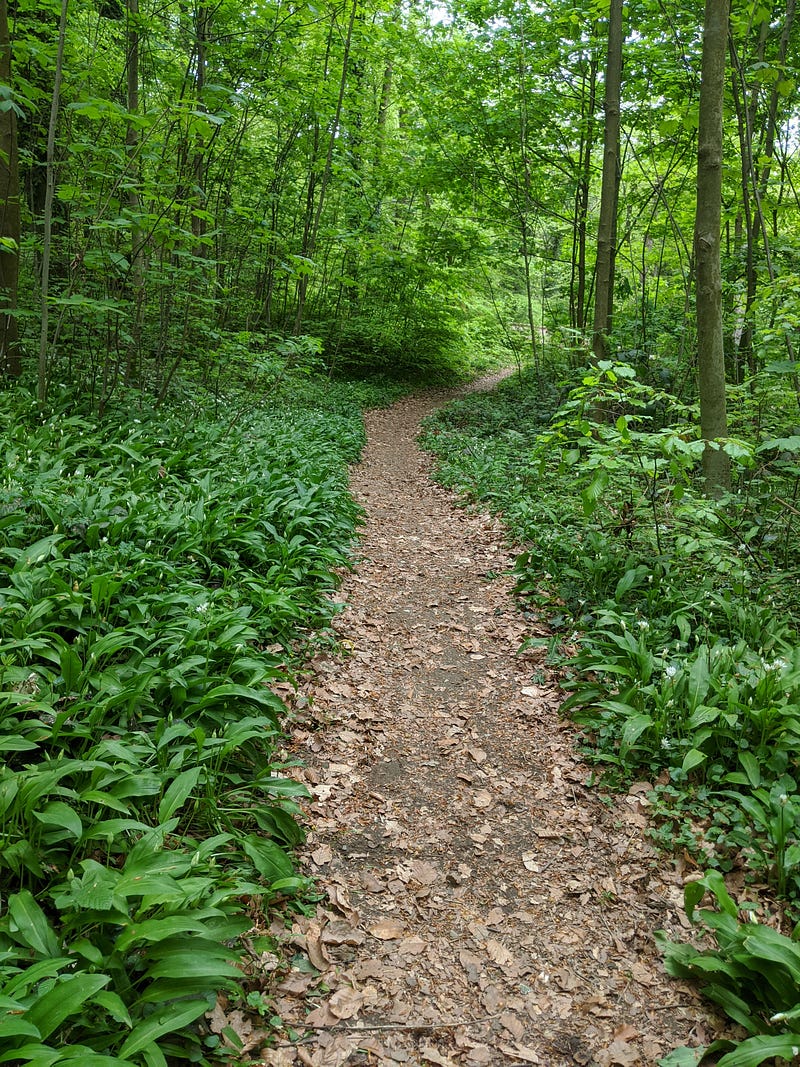
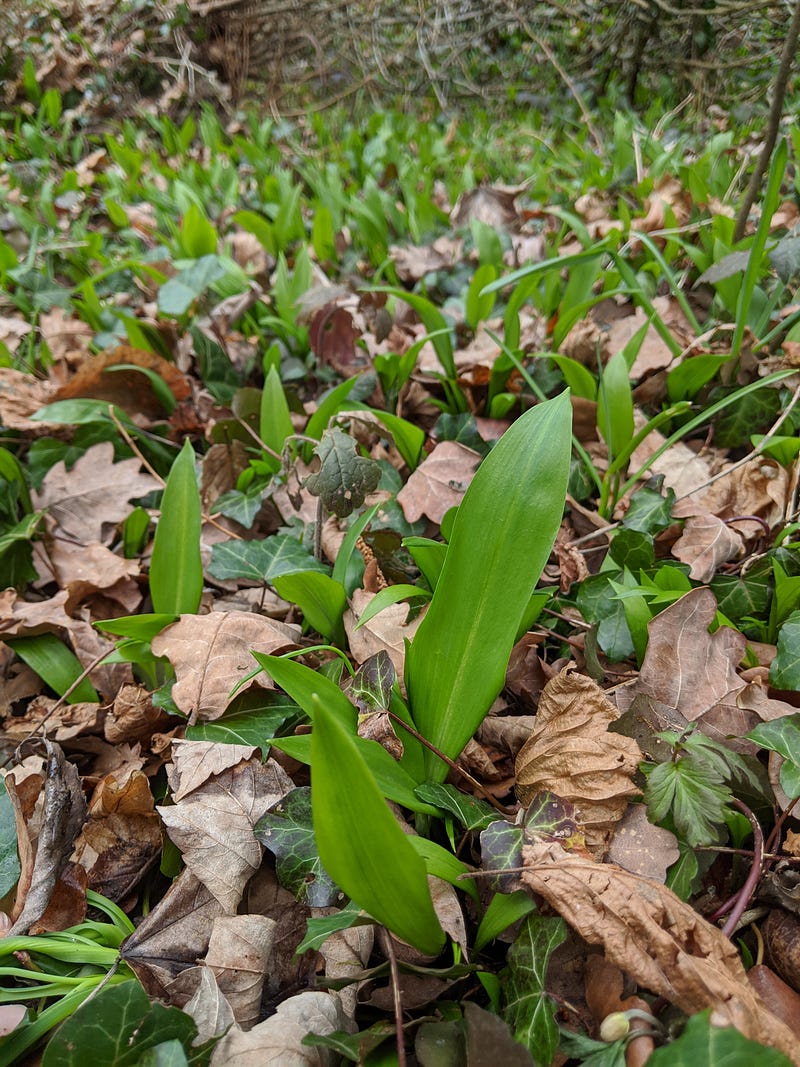
Around here they call this plant “ail des ours”, which translated literally from French to English means “bears’ garlic”. In German they use two names for this: “wilder Knoblauch”, which translates literally to “wild garlic” and “Bärlach Knoblauch” which, again, means “bears’ garlic”. I guess because “bears are wild”?

As you correctly guessed, the plant smells like garlic. All of it, including its leaves which are edible. And as I will show you here, you can make a quite good pesto with them!

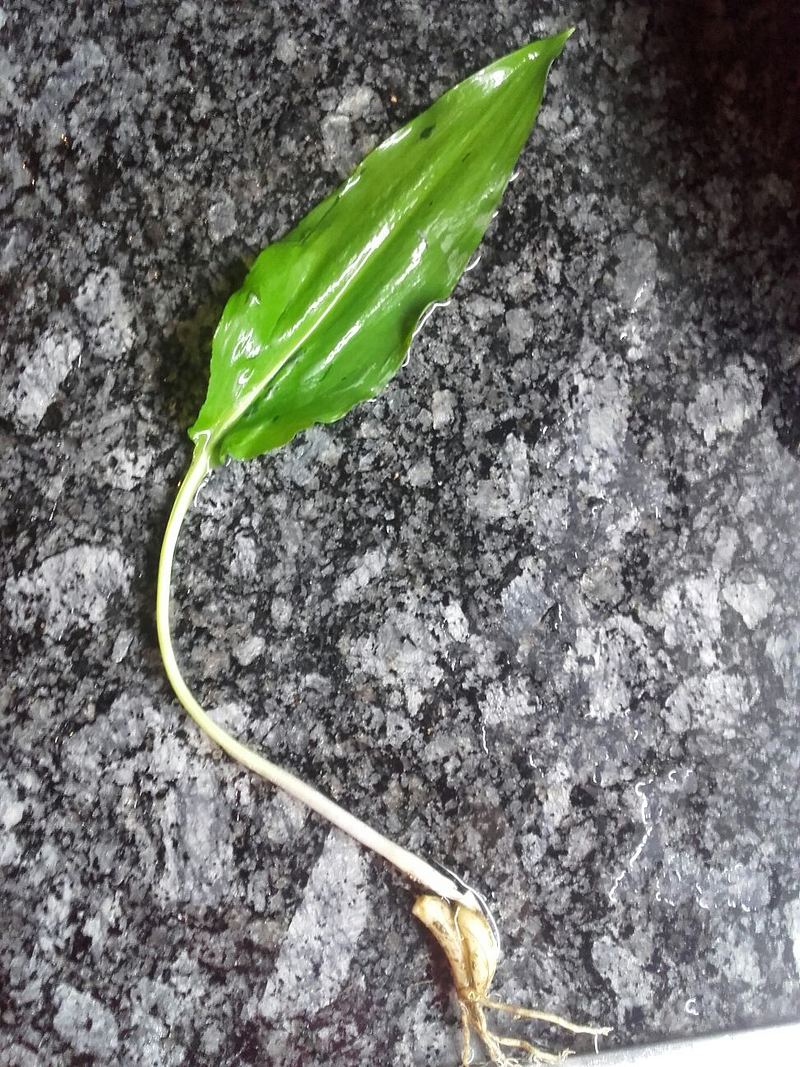
Here’s a full plant, that I accidentally took entirely off the soil -but don’t do this, we only need the leaves and it’s best to leave the bulb alive for it to sprout next spring:
Deep greens

The plant is very green, very rich in chlorophyll. In fact I used some leaves for some recent experiments:

Edibles from the forest

There are a couple of things I learned in these forests, that I now repeat regularly. Such as preparing jams from wild fruits, juice with flowers (coming up next May-June), cooking stingy nettles (maybe coming up next summer?), and as you see here, preparing wild pesto -that I then freeze and enjoy all the year.

Some examples here:

Let me briefly walk you through the recipe I use, but:

Some important notes first!

There are a couple of plants that can visually be confused with wild garlic, one a bit toxic and other very toxic. So better be careful.

Although there are some clear differences in the leaves, the best way to avoid collecting the toxic plants is by smelling them. Only wild garlic smells like garlic! However even this trick has a flaw: after you’ve collected some wild garlic leaves, your hands will smell like them. So then every time you sniff your hands, you’ll smell garlic…

The best way to avoid the toxic look-alike plants is to harvest the wild garlic leaves right when they sprout. The good plant pops up first, a few weeks, perhaps a month, earlier than the toxic ones. For me, here, this year, this means I should hurry up and harvest my last wild garlic leaves this week, the next one the latest. Well into April it might be too late; and besides the issue with the toxic plants that look alike, older wild garlic plants that are about to bloom are too strong for my taste.

Recipe time

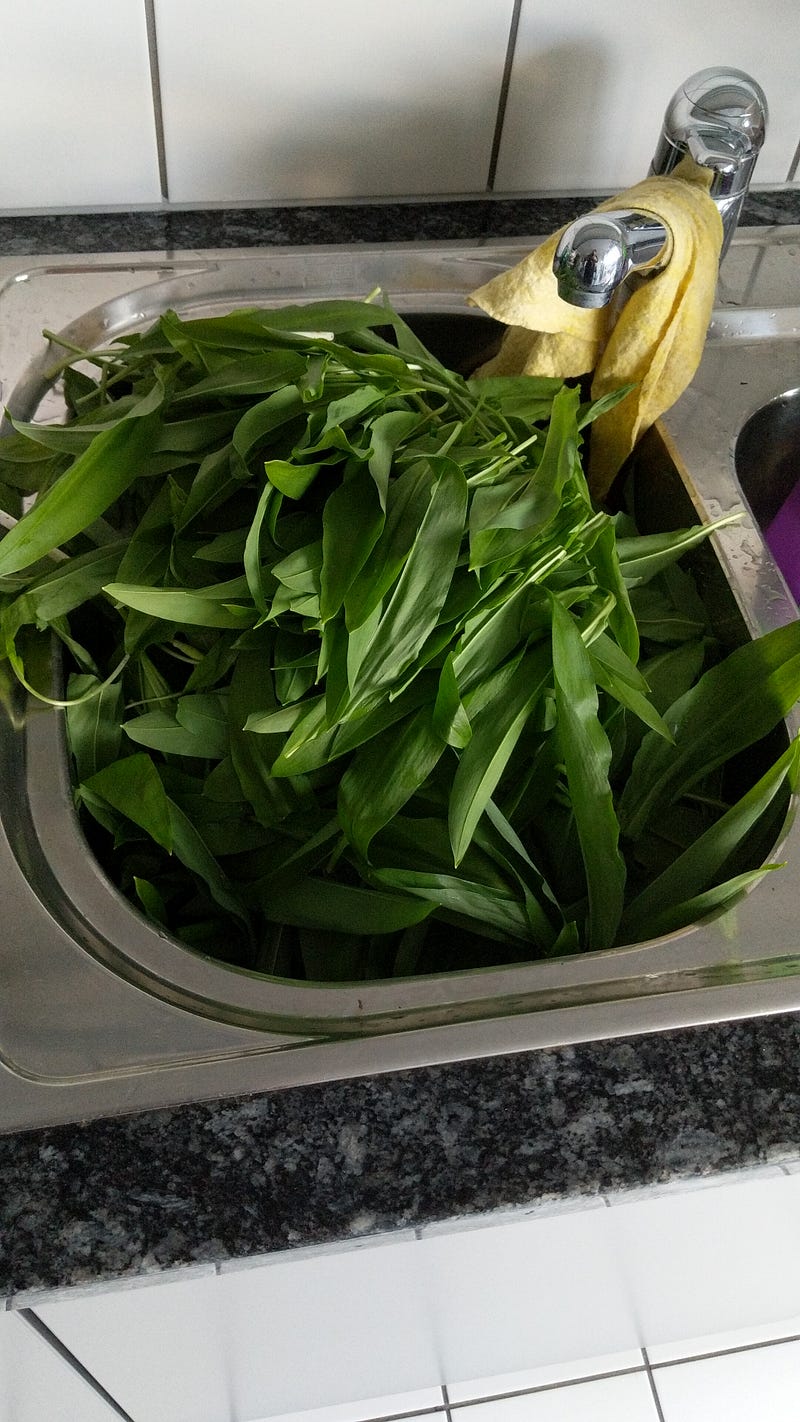
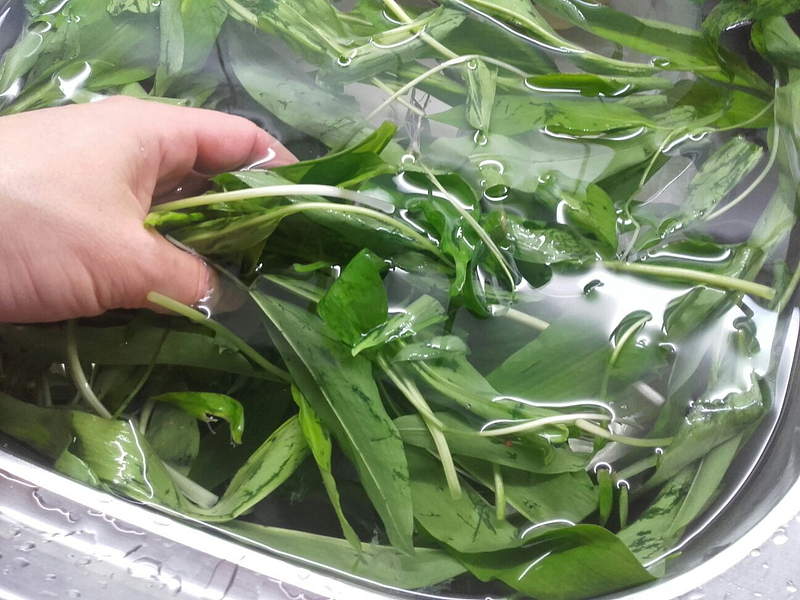
First, wash the leaves carefully! This is very important because the recipe doesn’t include any cooking, and animals walking around the forests might have diseases. Indeed, foxes around here are known to carry some diseases that can be deposited in their feces and urine.

So here I’m washing a large amount of leaves. This is enough to easily make half to one kilogram of pesto:
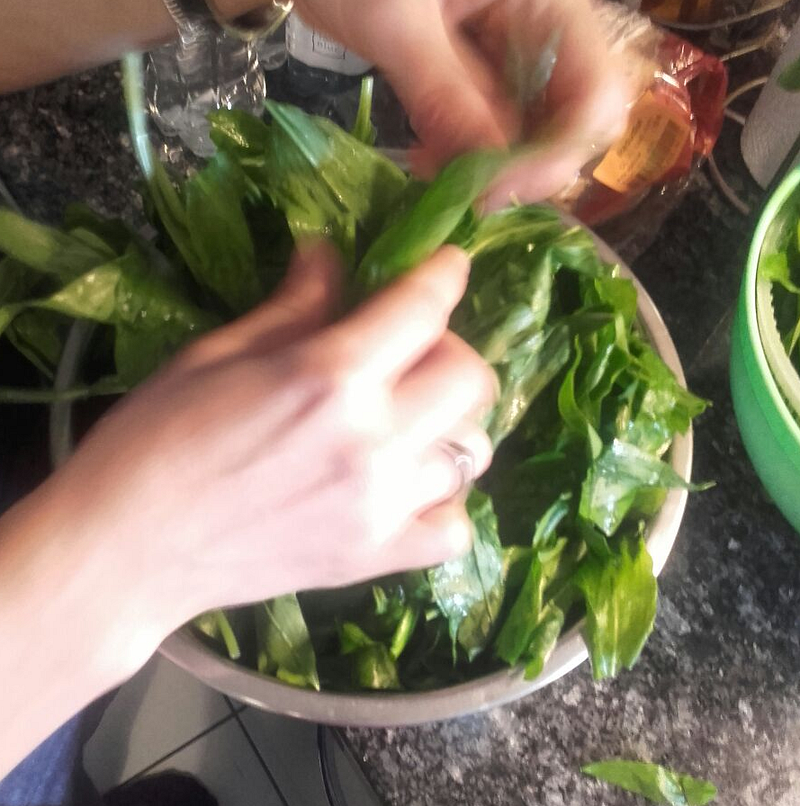
Second step: dry and chop the leaves. It is important to remove all the water:
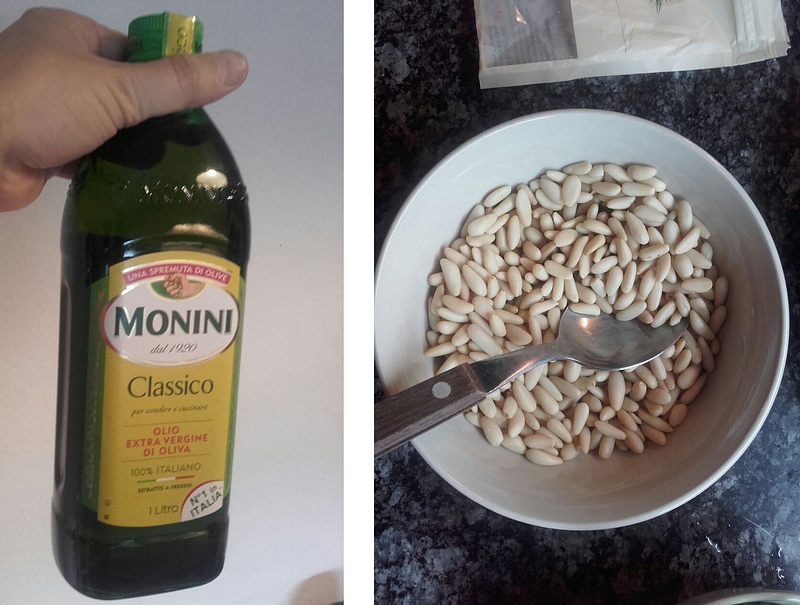
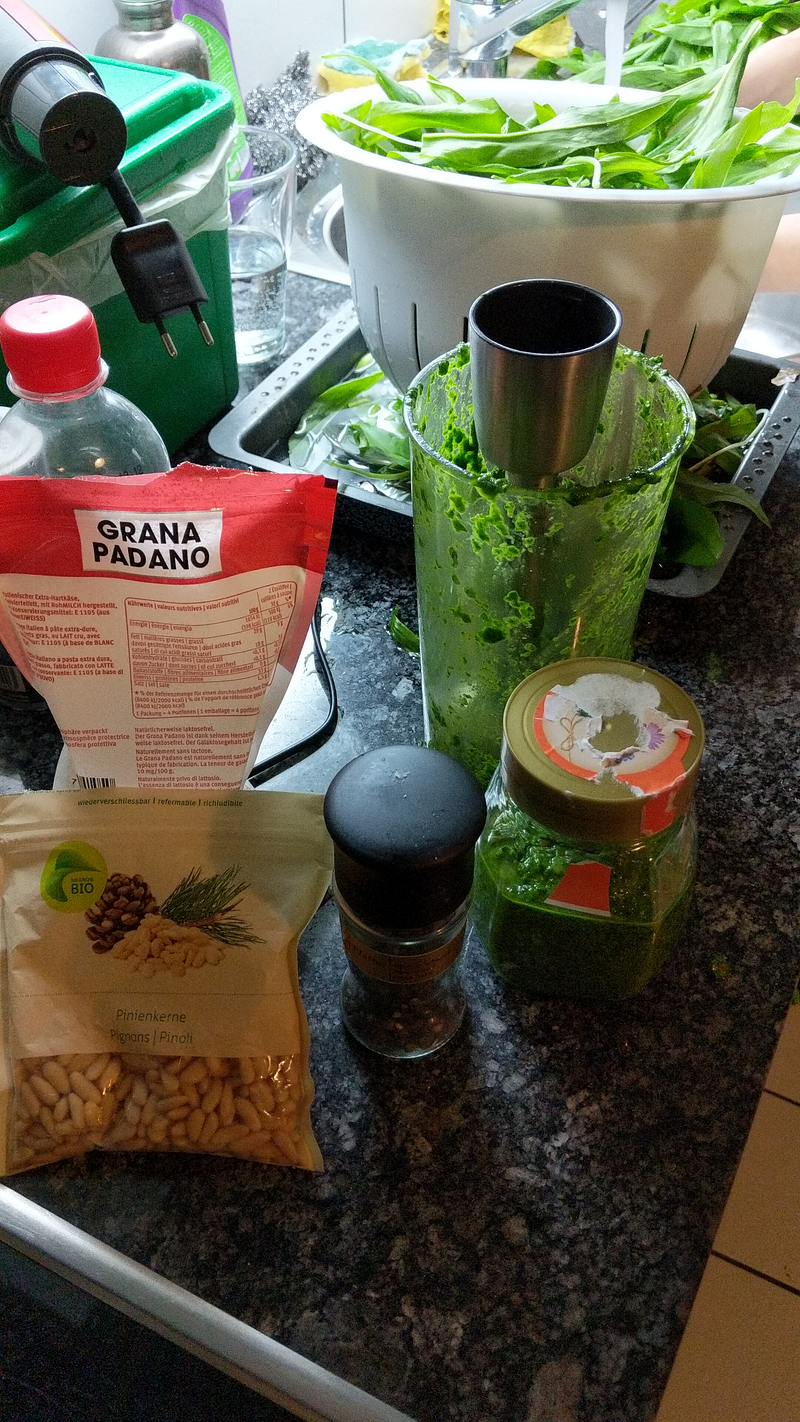
For the next step you’ll need olive oil and “pinoli” (pine nuts) which are the seeds of a special kind of pine tree. You’ll find them in the supermarket by that name, or maybe as “pine nuts”. Some good cheese could be good at this point, too; as well as some pepper and salt (I only use pepper):
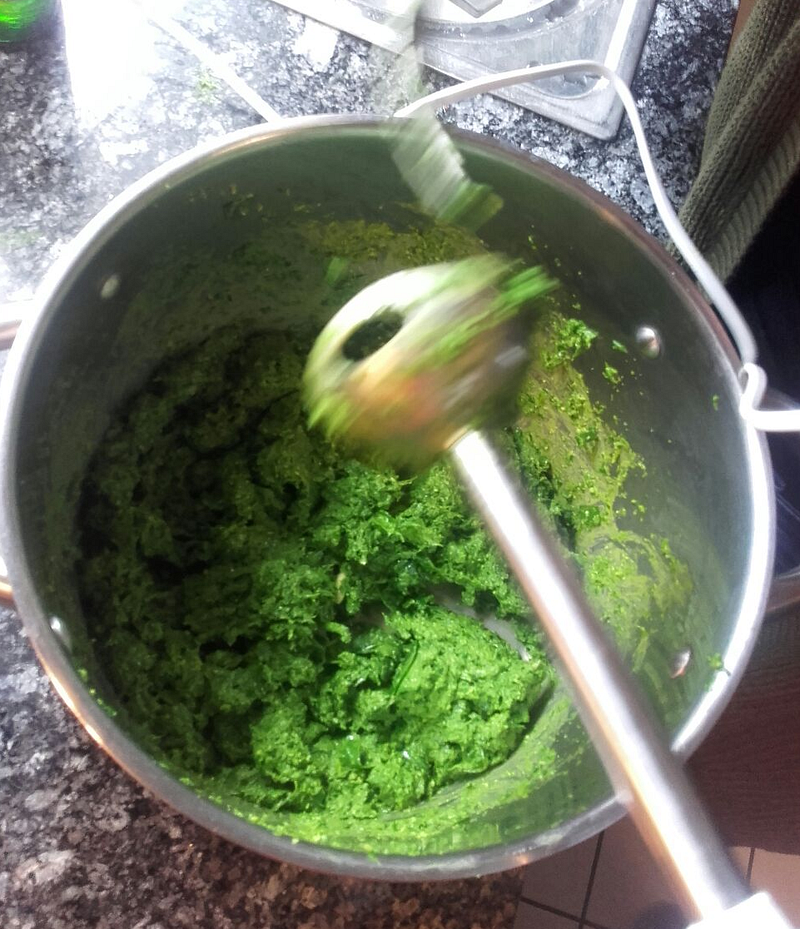
Nest step: put leaves, pinoli, olive oil, etc. in a blonder and crush it. Here I’m halfway into the preparation:
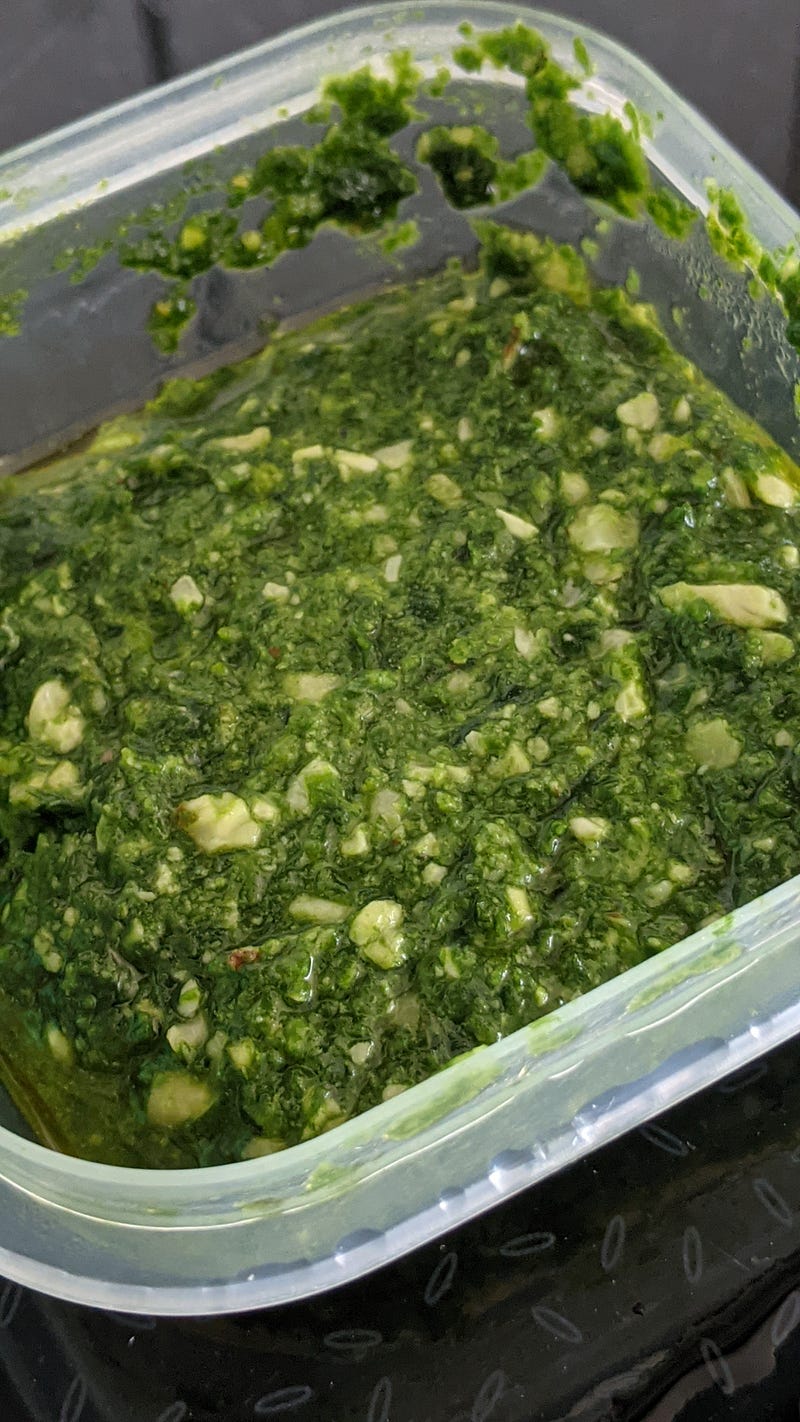
Here’s the final produce, in a round where I added the pinoli at a later stage so that it wouldn’t be too grounded. I like it better this way!
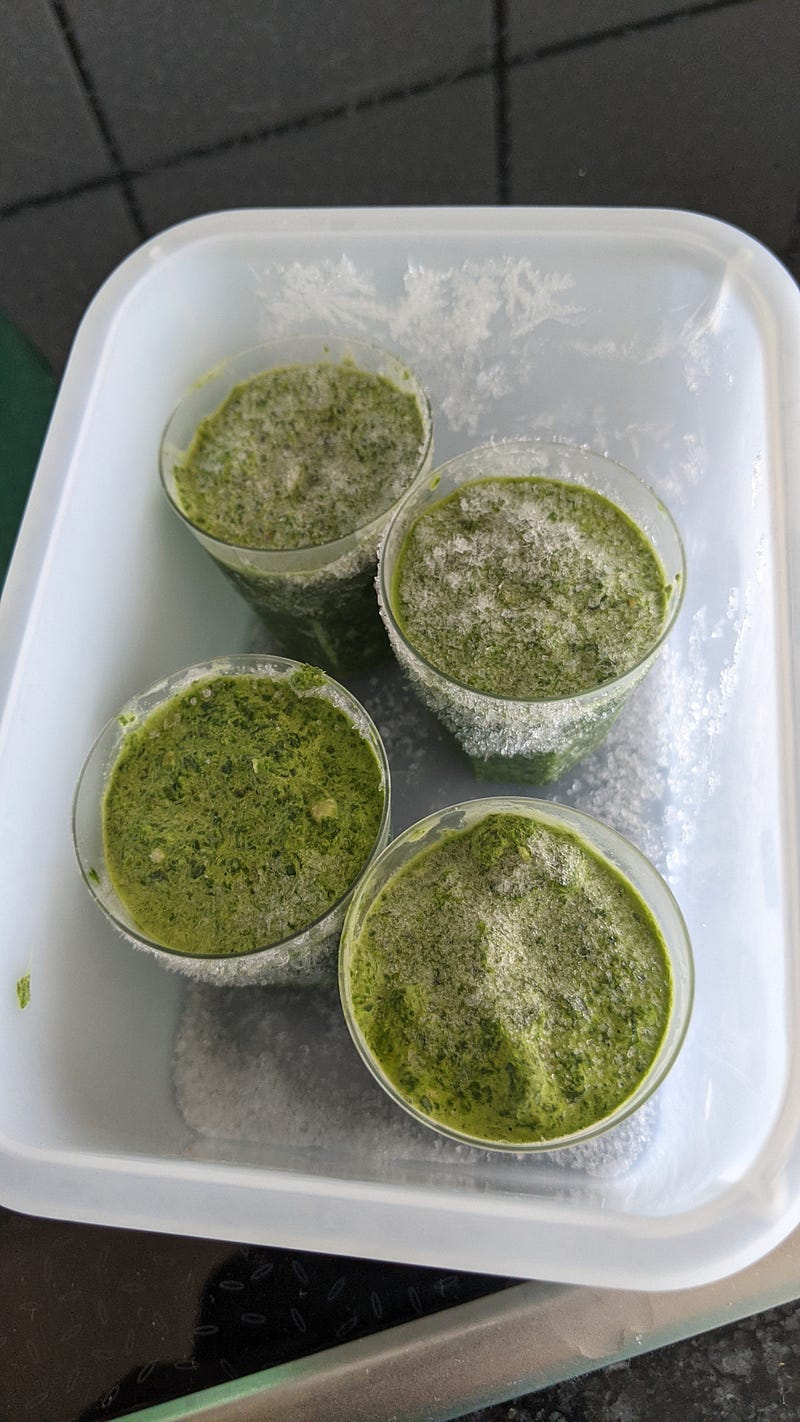
Next, split into aliquots. I store some in the fridge for quick use in the following days, and most of it frozen for consumption later on. This way I can have pesto a l’ail des ours whenever I feel like!
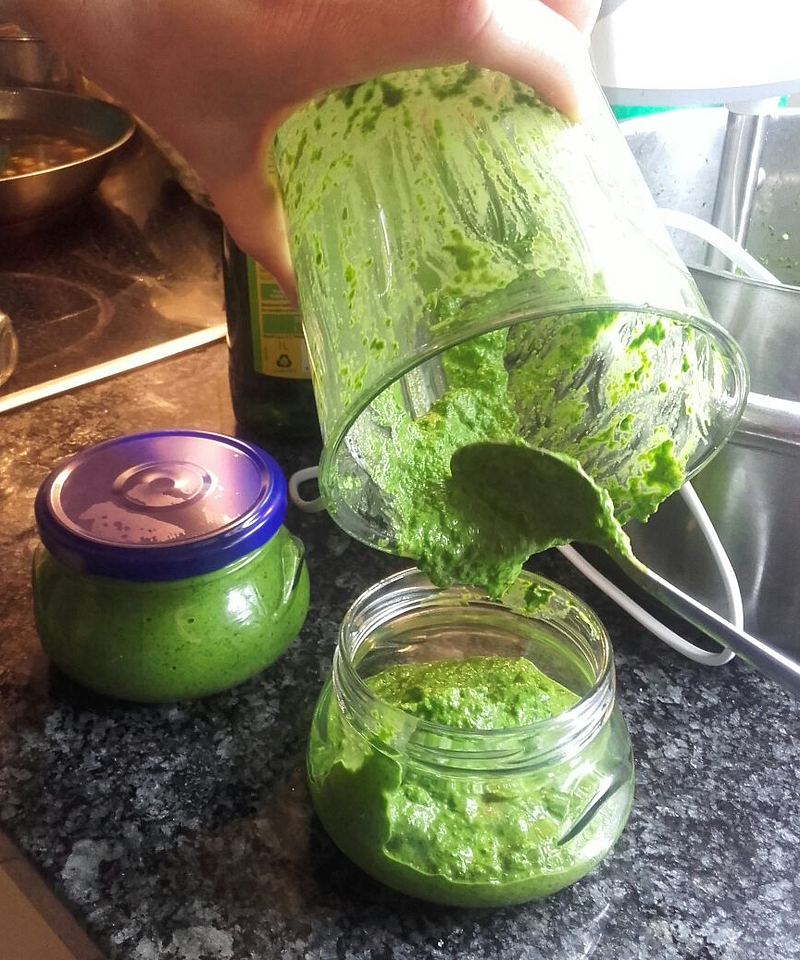
The produce:
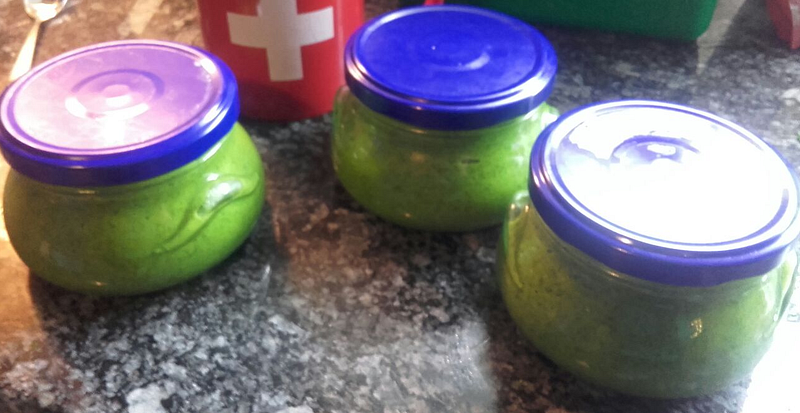
Here some frozen aliquots, that I store in the freezer for around a year:
And here’s a summary of it all:
Penne a l’ail des ours

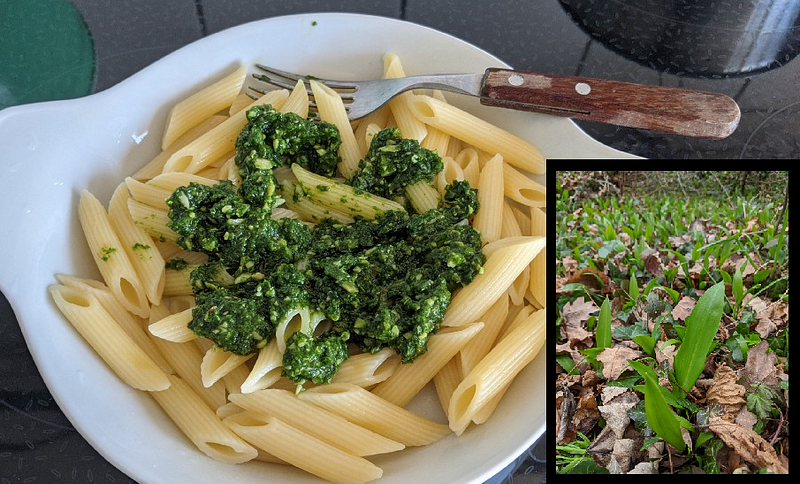
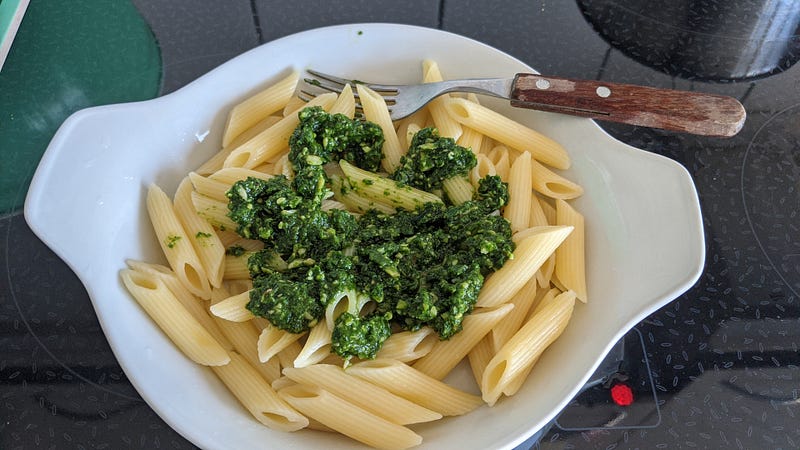
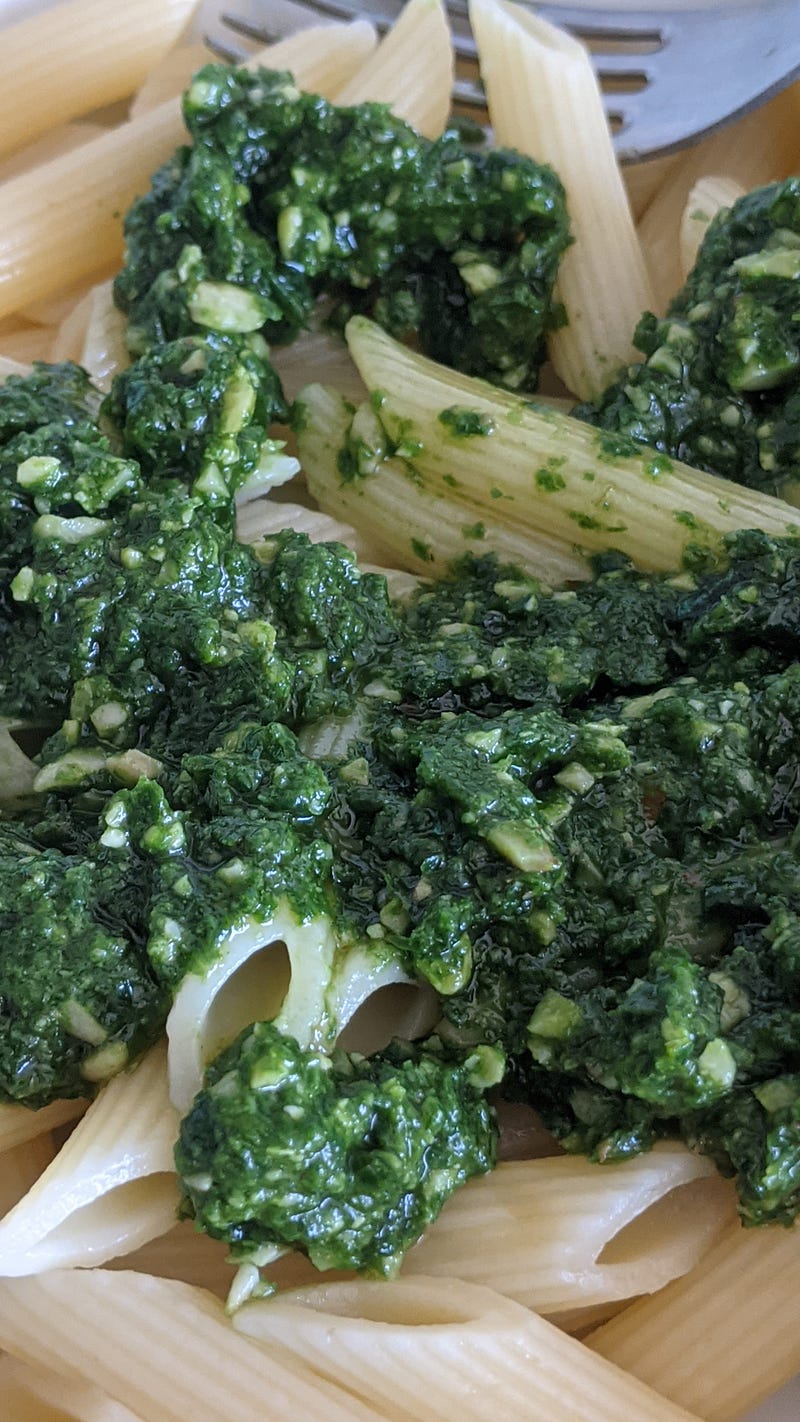
It doesn’t really take much. Just cook the pasta and when it’s ready add a good amount of the pesto. Stir if you want, and bon appetit!
More spring

www.lucianoabriata.com I write and photoshoot about everything that lies in my broad sphere of interests: nature, science, technology, programming, etc. Become a Medium member to access all its stories (affiliate links of the platform for which I get small revenues without cost to you) and subscribe to get my new stories by email. To consult about small jobs check my services page here. You can contact me here.

Nature
Cooking
Recipe
Photography
Life
Recommended from ReadMedium