
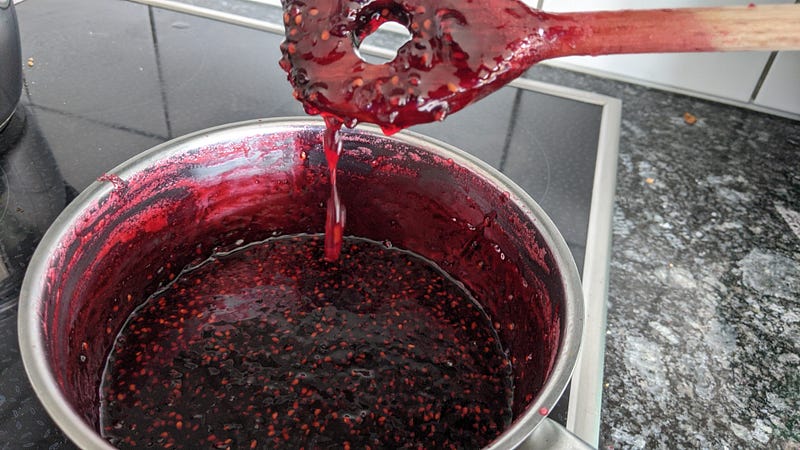
Edibles from the forest: wild raspberry and wild blackberry jams
With these fruits, highly abundant in the wild European forests, I prepare every summer a good amount of jam that we then enjoy throughout the year mixed with yogurt or ice cream, or used as a filling for cakes.
Raspberries and blackberries grow wild and fructify very well in the European forests. In Switzerland, they ripen from late June in the sunniest parts till around mid-august. I already know the best places where to get fruit around me, which are essentially open parts of the forest facing South -thus getting more sunlight. Every summer I visit these spots 2 or 3 times and collect around half to one kilo of blackberries, which are very abundant, and a quarter to half a kilo of raspberries, which are more picky and sensitive. Although I eat part of this fresh, it is often too much; and these kinds of fruits spoil very quickly, especially raspberries. Therefore I prepare jam following a recipe that is very easy but whose success depends on a couple of important hints that I will share here.
Tips for harvesting the wild fruits
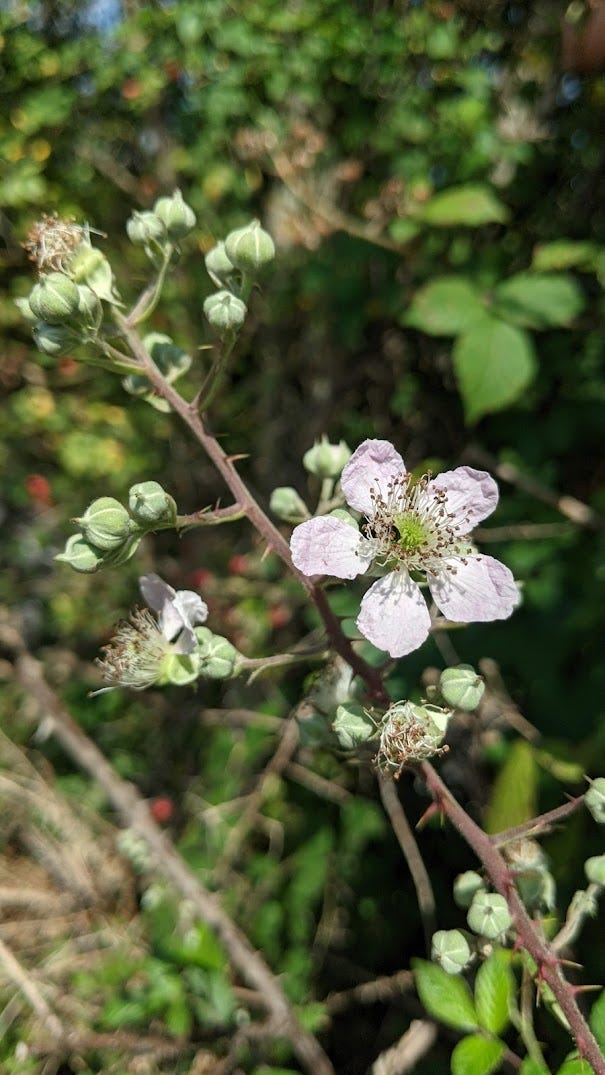
Here’s a photo of a typical plant containing a high density of blackberries, in an open sunbathed area of the forest. Sun is important for ripening into good-quality, palatable fruits. You will notice that fruits ripened in more shady areas will not taste much. In fact, wild blackberries get sweeter and sweeter as you move South in Europe; and this is not much due to the different varieties of plants but to the actual exposure to the sun.
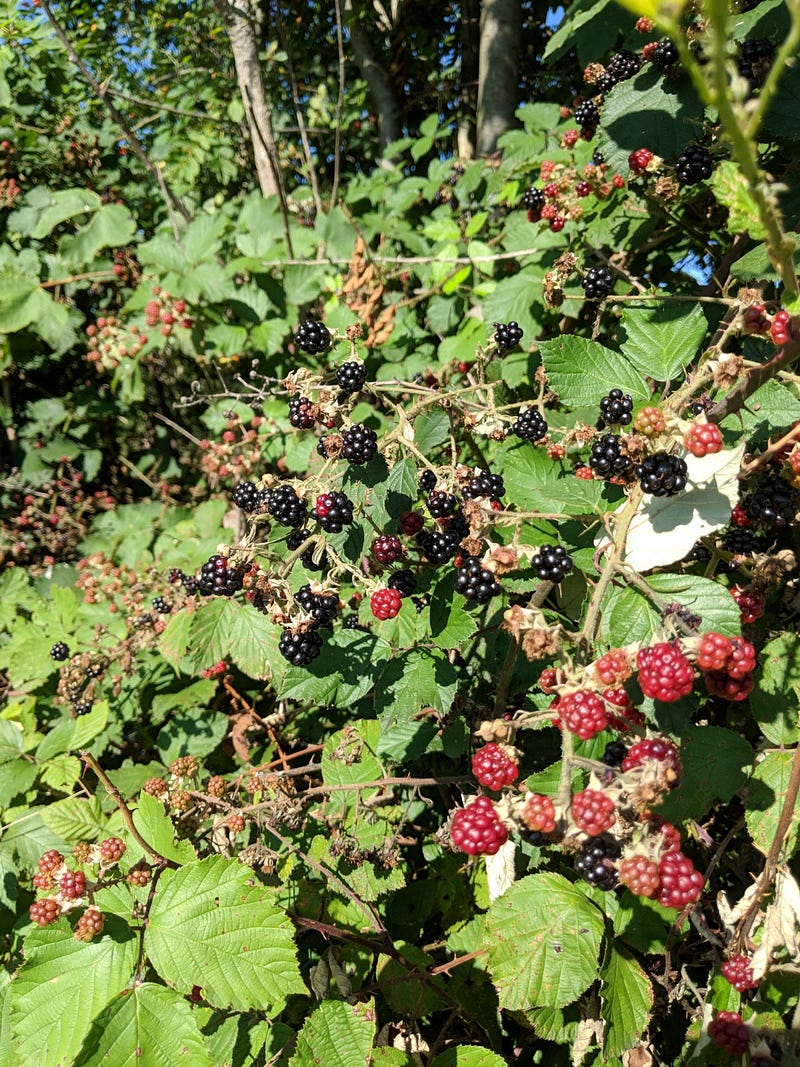
It is best to collect fruits during the afternoon or early evening of a sunny day far from the last rain so that the fruits are sweeter.
Only collect good fruits, excluding those that seem spoiled, have mold, etc. It is ok to include a small fraction of fruits that aren’t yet very ripened because anyway, the jam will have a high amount of sugar.
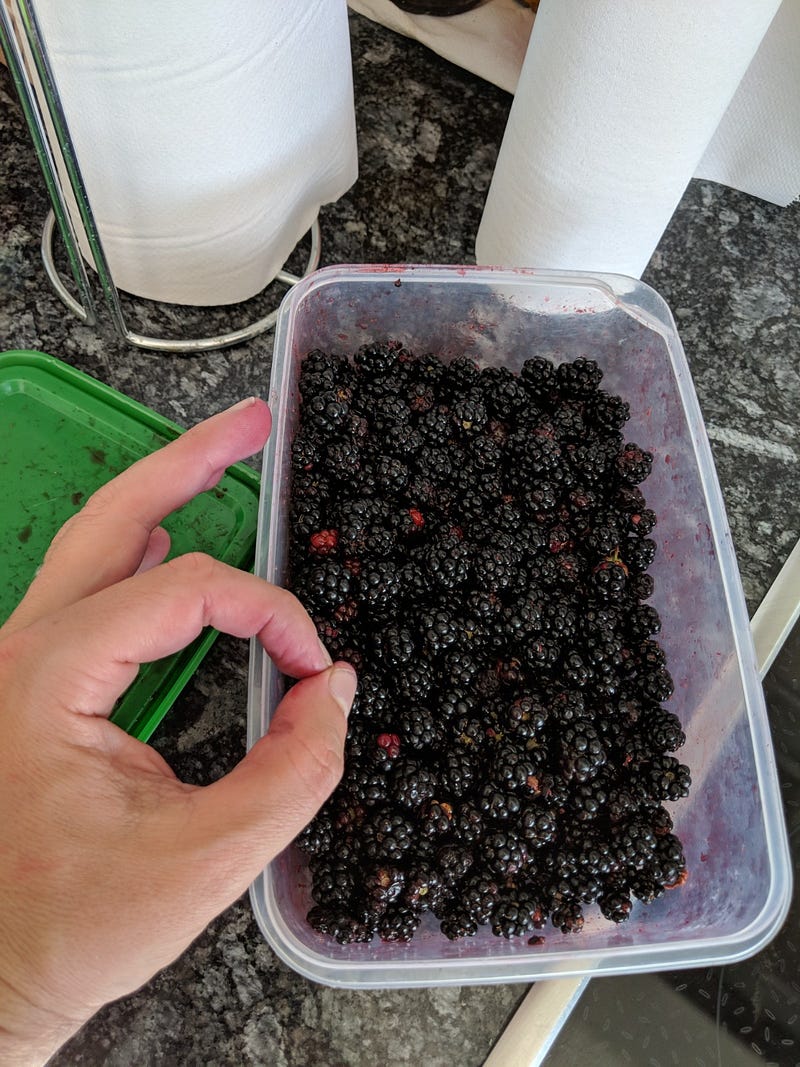
As you collect the fruit, put it in a clean box where they don’t get smashed. In my case, for example, I go to the forest by bike to collect fruit; I collect the fruit in a Tupperware box that I carry in my bike’s basket. Then when I get home I open it up, clean out the bad fruits, and weigh how much fruit I have.
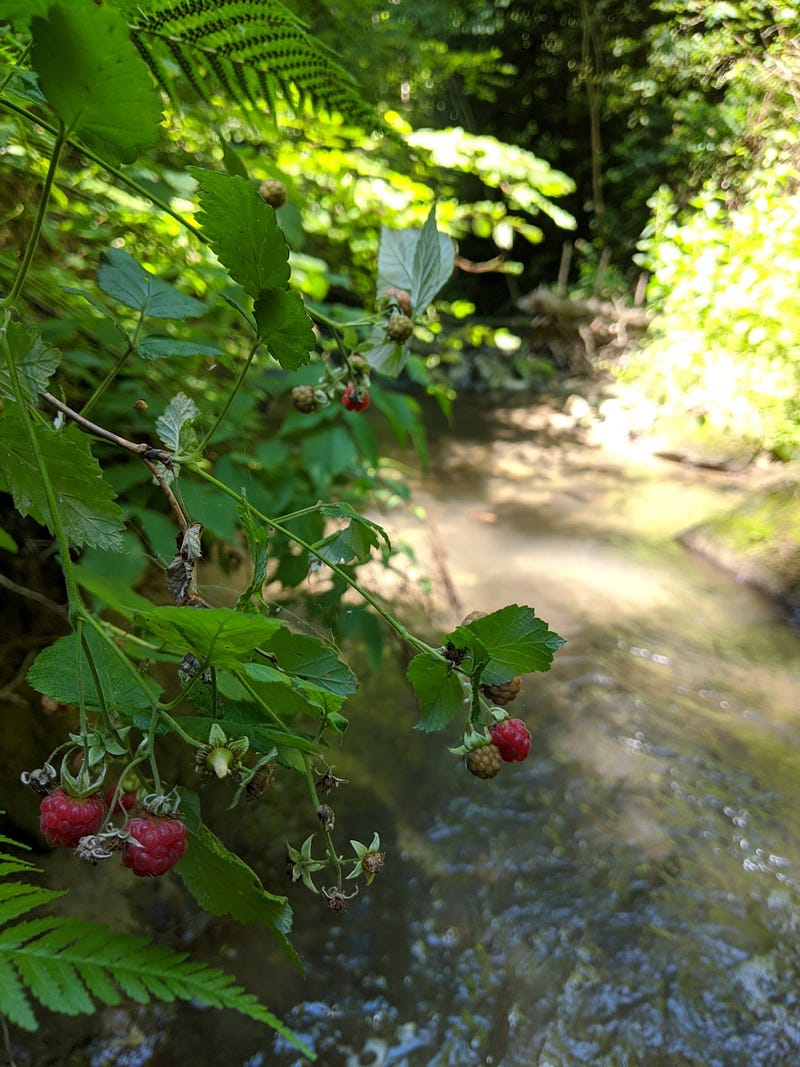
Raspberries are a bit harder to find in high abundance and good quality. I usually find it associated with more humid places as compared to blackberries. For example, I know of a small river whose margins are densely populated with raspberry plants that give quite nice fruit to harvest:
Now, yes, the recipe
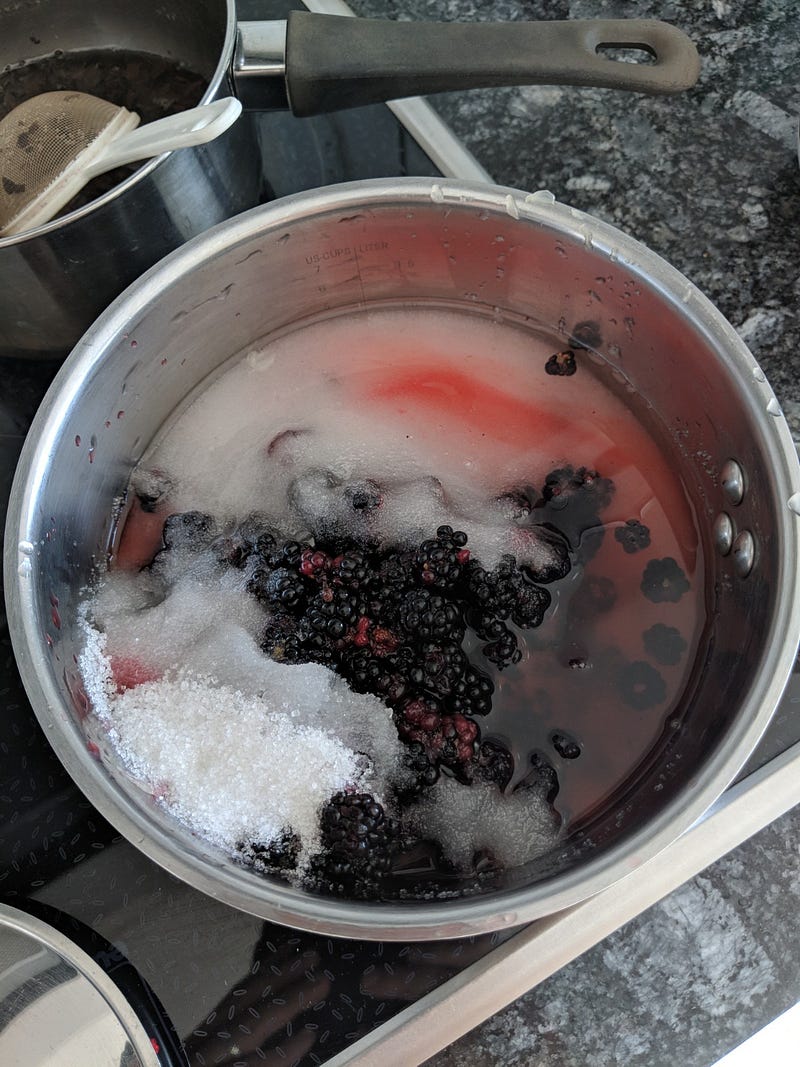
The basic recipe for jam is the same as for most acidic fruits: mix 1 part of fruit with 1 part of sugar and some lemon juice, and boil with stirring until you get the desired consistency.
My main hints:
- Wash the fruit well, remove leaves, any insects, tips, etc. Then dry the fruits quickly, and do not add any water to the preparation. These fruits already contain enough water inside.
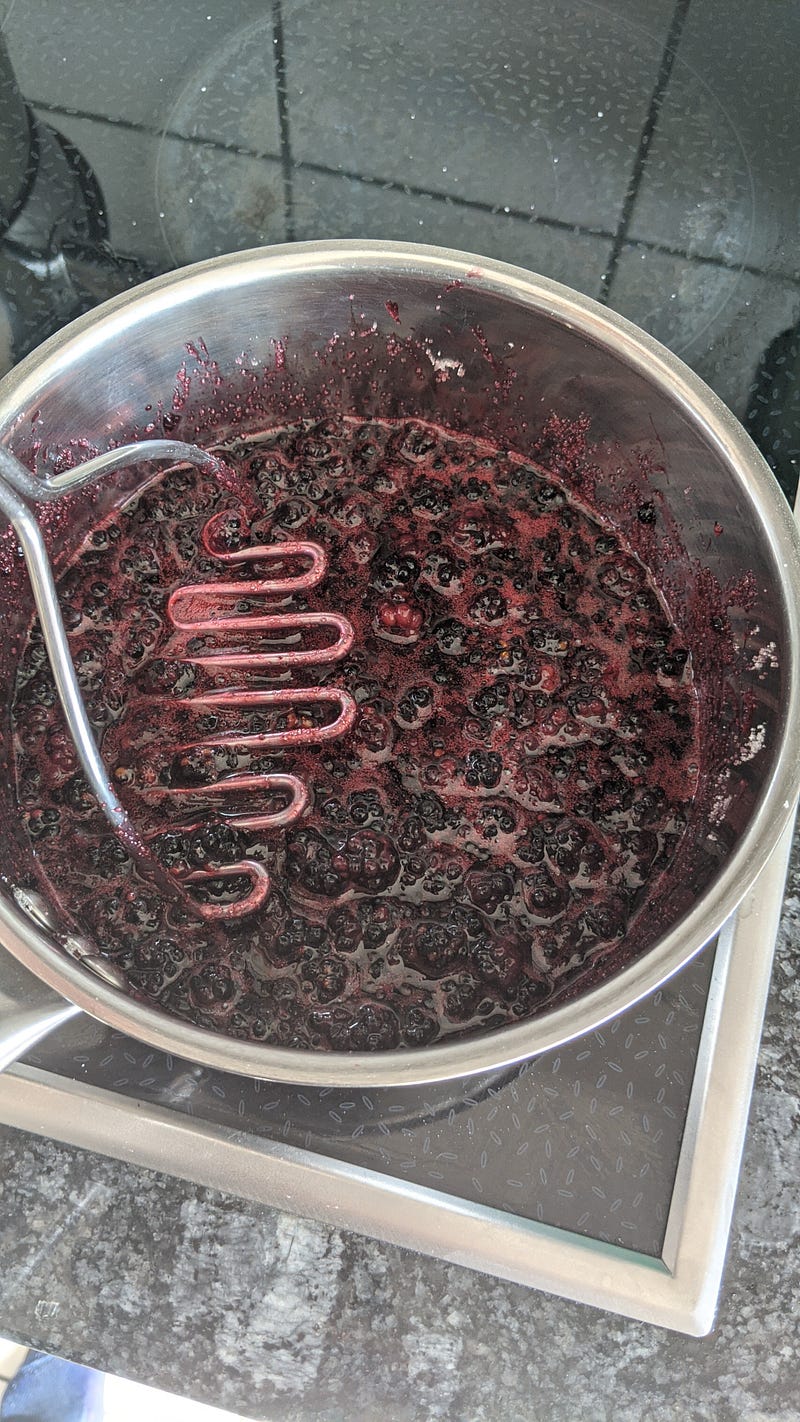
- Decide whether you want to pre-process the fruit. Personally, I don’t like to do that because then you lose the pieces of fruit that give structure to a good jam. The taste itself will however not change, and pre-processing may help to triturate seeds and stuff.
- Mix 1:1 fruit:sugar by mass, for example, half a kilo of each. Some people use less sugar, I’ve heard some reaching ratios of 1:0.25. I think that’s a bit too much, but 1:0.5 may be good if you want to reduce your sugar intake.
- Remember to include the juice of one lemon per kilo of fruit. I don’t know what this exactly does, but I’m sure that the few times I didn’t include it the jam was not as good as other jams prepared with lemon juice.
- Boil with low, constant heating.
- When boiling, never stop stirring, especially when you are close to the end of the procedure.
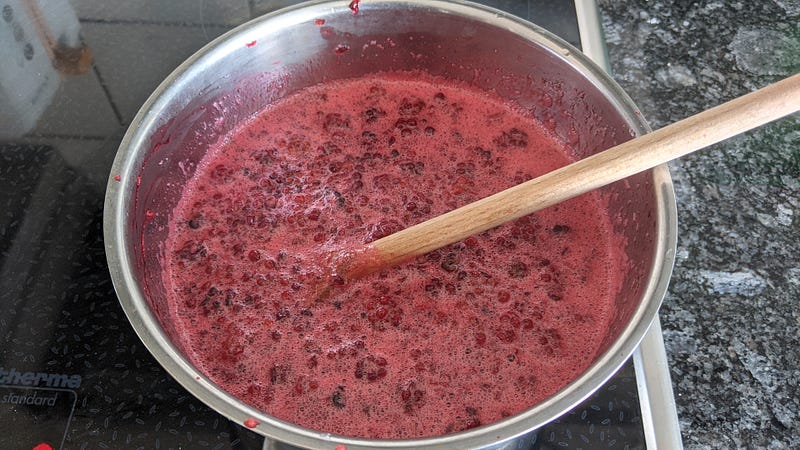
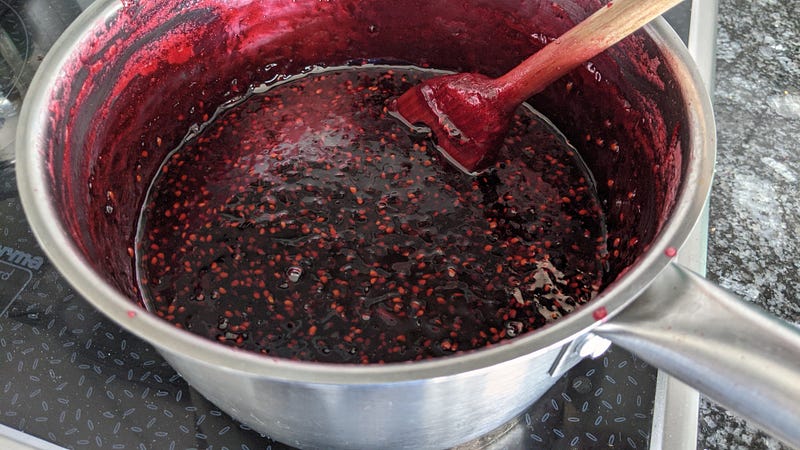
- Regarding when to finish cooking: as you boil and stir you will notice that the jam becomes more viscous and denser. Just chose the consistency you prefer; but take into account that once you remove the preparation from the heating and it begins to cool down, the final product at room temperature will keep getting more viscous and dense. This means that you should stop cooking before you like the consistency! Unfortunately, the only way to time you right is that you practice…
Check out these photos taken when I was just mixing the ingredients and then at a few times of boiling:
Checking if it’s ready:
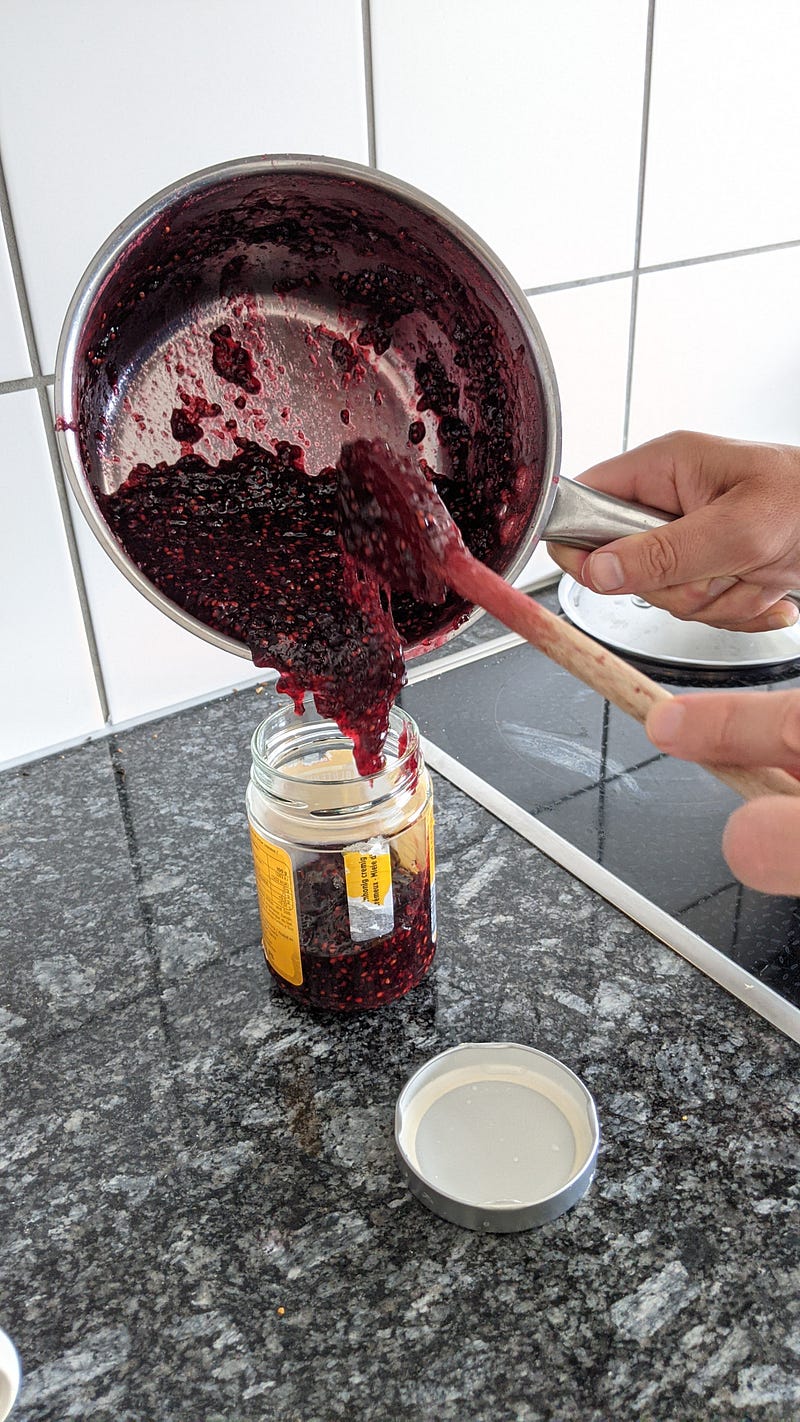
And finally loading it in jars for storage:
Tips for storage and consumption
- I store my jams inside 200–250 ml jars that I just freeze at -20 degrees. You might want to sterilize the jars and their caps for 20–30 min in boiling water before pouring the jam inside.
- At -20 degrees the jam should last long, several months in my experience -and probably around a year.
- Once I open each jar I store it in the fridge and try to consume it within a few weeks. The high amount of sugar should in principle stop any bacteria or infective agents from growing, but you never know.
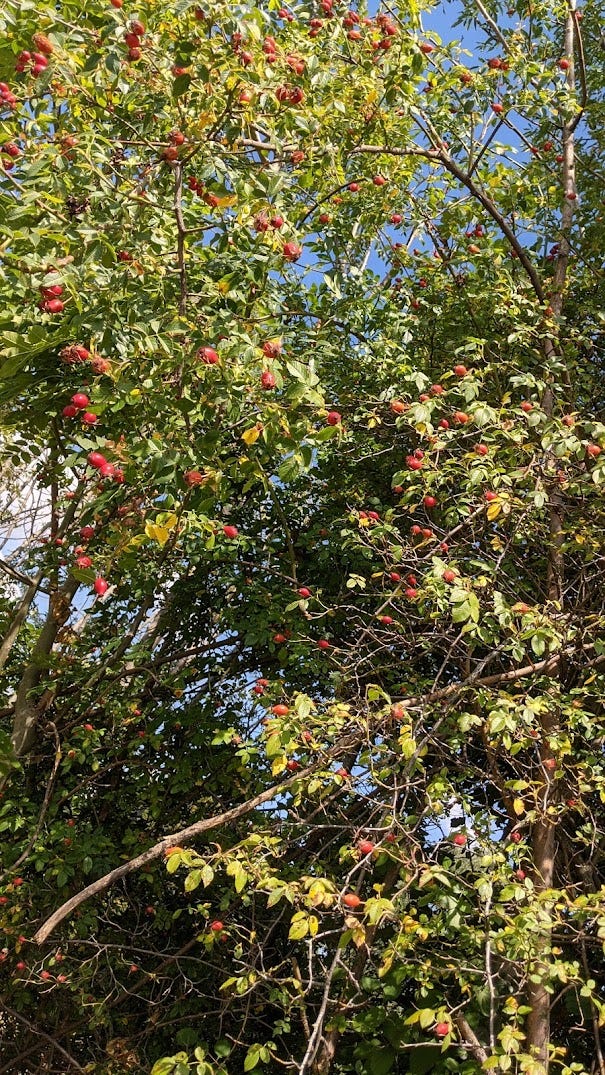
More related stuff, communicated as photos
I am a nature, science, technology, programming, and DIY enthusiast. Biotechnologist and chemist, in the wet lab and in computers. I write about everything that lies within my broad sphere of interests. Check out my lists for more stories. Become a Medium member to access all stories by me and other writers, and subscribe to get my new stories by email (original affiliate links of the platform).


