avatarLucianoSphere (Luciano Abriata, PhD)

Free AI web copilot to create summaries, insights and extended knowledge, download it at here

2424

Abstract

t:800/1*5dvECP7d-6yR2OwsnHK1nw.jpeg"><figcaption>Some hundreds of euros here! Photo by author Luciano Abriata.</figcaption></figure><p id="00eb"><b>First some key points</b></p><p id="2775">As I said above, this recipe will work best if you can secure some big specimens, fresh and with white, tender flesh. Make sure you don’t expose them to warm air and to direct sunlight. And avoid moisture. In fact, avoid contact with water by all means!</p><p id="a71f">Do not wash the mushrooms. To clean them, use a brush to remove rests of soil, maybe a wet tissue in some small complicated areas, and simply remove superficial crusts of dry dirt.</p><p id="fce4"><b>Now the recipe</b></p><p id="f3f1">The recipe is quite simple and takes no more than 15 minutes. First, put some olive oil in a pan (or grill) and heat it up. In the meantime, cut the mushrooms into 1–2 cm thick slices. Embed these pieces in olive oil with parsley, and optionally just a bit of garlic (although personally, I prefer no garlic for this). Do not add any salt or pepper yet!</p><figure id="cdf0"><img src="https://cdn-images-1.readmedium.com/v2/resize:fit:800/1*usBxsc8_GT8e9rdqze70BA.png"><figcaption>One of my mushrooms, open and sliced, ready to be coated with olive oil and parsil. In the top part you see the cap, which you may keep untouched if it’s not too thick; in the bottom you see the stem, here cut longitudinally in two. Photo by author Luciano Abriata.</figcaption></figure><p id="46ab">When the olive oil in the pan is hot, place the slices of mushroom and cook them for 3–5 minutes on each side. Cook strongly but avoid burning. After the first 2–3 minutes I cover the mushroom with a cap, but making sure that the cap doesn’t close the whole pan, because we don’t want to retain much water.</p><figure id="4f17"><img src="https://cdn-images-1.readmedium.com/v2/resize:fit:800/1*faj4EFZ3wVsQ8zG4mAOKuA.png"><figcaption></figcaption></figure><figure id="c2b8"><img src="https://cdn-images-1.readmedium.com/v2/resize:fit:800/1*7jW4KB2mfZ9_NCs9ywf34A.png"><figcaption></figcaption></figure><figure id="e0e9"><img src="https://cdn-images-1.readmedium.com/v2/resize:fit:800/1*8RzRHS2yTdO2HNggzjuE5g.png"><figcaption>Starting to cook, first open and then partially covered. Photo by author Luciano Abriata.</figcaption></figure><p id="48ab">Once the two sides are cooked, remove from the heat source and now yes, you can add some more olive

Options

oil together with some salt and pepper (I recommend not much of any). And ready to enjoy still warm!</p><figure id="8ba5"><img src="https://cdn-images-1.readmedium.com/v2/resize:fit:800/0*EsPC0zQYxLxA6biY"><figcaption>The one on the right is too burnt, the others are perfect. Photo by author Luciano Abriata.</figcaption></figure><p id="1628">Here’s the other mushroom, which I cooked the following day being more careful with the cooking time and keeping slices thicker:</p><figure id="8ff0"><img src="https://cdn-images-1.readmedium.com/v2/resize:fit:800/1*VlUyx1G9FvNizga1tiqTxQ.jpeg"><figcaption>Just started cooking. Photo by author Luciano Abriata.</figcaption></figure><figure id="9440"><img src="https://cdn-images-1.readmedium.com/v2/resize:fit:800/1*VmCml2NXQrnj_-xvbPMsuQ.png"><figcaption>Enjoying it now! See this one came out better, particularly not burnt at all. Photo by author Luciano Abriata.</figcaption></figure><p id="8443"><b>Further reading</b></p><p id="b393">An ode to this mushroom, by <a href="undefined">Aspen Blue</a>:</p><div id="669b" class="link-block"> <a href="https://readmedium.com/porcini-appetency-4bb25d60e4f1"> <div> <div> <h2>Porcini Appetency</h2> <div><h3>Ode to a most coveted fungi</h3></div> <div><p>medium.com</p></div> </div> <div> <div style="background-image: url(https://miro.readmedium.com/v2/resize:fit:320/1*fXsna9PNre7gnPf2mYhe8w.jpeg)"></div> </div> </div> </a> </div><p id="bd7a">Facts about Funghi porcini from <a href="undefined">Wikipedia</a> in <a href="https://it.wikipedia.org/wiki/Porcino">Italian</a> and in <a href="https://en.wikipedia.org/wiki/Boletus_edulis">English</a>.</p><p id="a3c0"><i>I am a nature, science, technology, programming, and DIY enthusiast. Biotechnologist and chemist, in the wet lab and in computers. I write about everything that lies within my broad sphere of interests. Check out my <a href="https://lucianosphere.medium.com/lists">lists</a> for more stories. <a href="https://lucianosphere.medium.com/membership">Become a Medium member</a> to access all stories by me and other writers, and <a href="https://lucianosphere.medium.com/subscribe">subscribe to get my new stories</a> by email (original affiliate links of the platform).</i></p></article></body>

Edibles From the Forest: Funghi porcini beefs

The best mushroom meal in the world?

“Funghi porcini” (Italian common name for Boletus edulis) is probably my favorite mushroom. Rehydrated in broth or wine with onions and cream to combine them with pasta, or even better -as presented here- grilled fresh with nothing more than olive oil and a pinch of pepper and salt, just as if it were a piece of meat. A delicious recipe from the forest.

“Funghi porcini” as called in Italian is a species of edible (and super tasty!) fungus endemic to various regions of temperate and subtropical areas, but by far used most in Italian cuisine. I usually purchase it clean and dry, a preparation that lasts long and is excellent to combine with pasta. This kind of mushroom is extremely difficult to cultivate from scratch, as its life cycle is tightly dependent on its associations with the roots of specific plants. Hence most of what’s sold in markets is collected manually in wild or planted forests, especially certain types of pine trees. That’s why the best specimens can easily cost close over 50 euro per kilo (and I’ve seen them reach 100!). On the other hand, I know many Europeans, especially Italians, that just pick porcini themselves in the wild, preparing delicious meals at no cost.

In this story, I present a recipe for preparing a whole mushroom as if it were a piece of meat, just simply grilled. Besides some hints I give you below, a key point is to secure some big specimens, very fresh and with white, tender flesh inside:
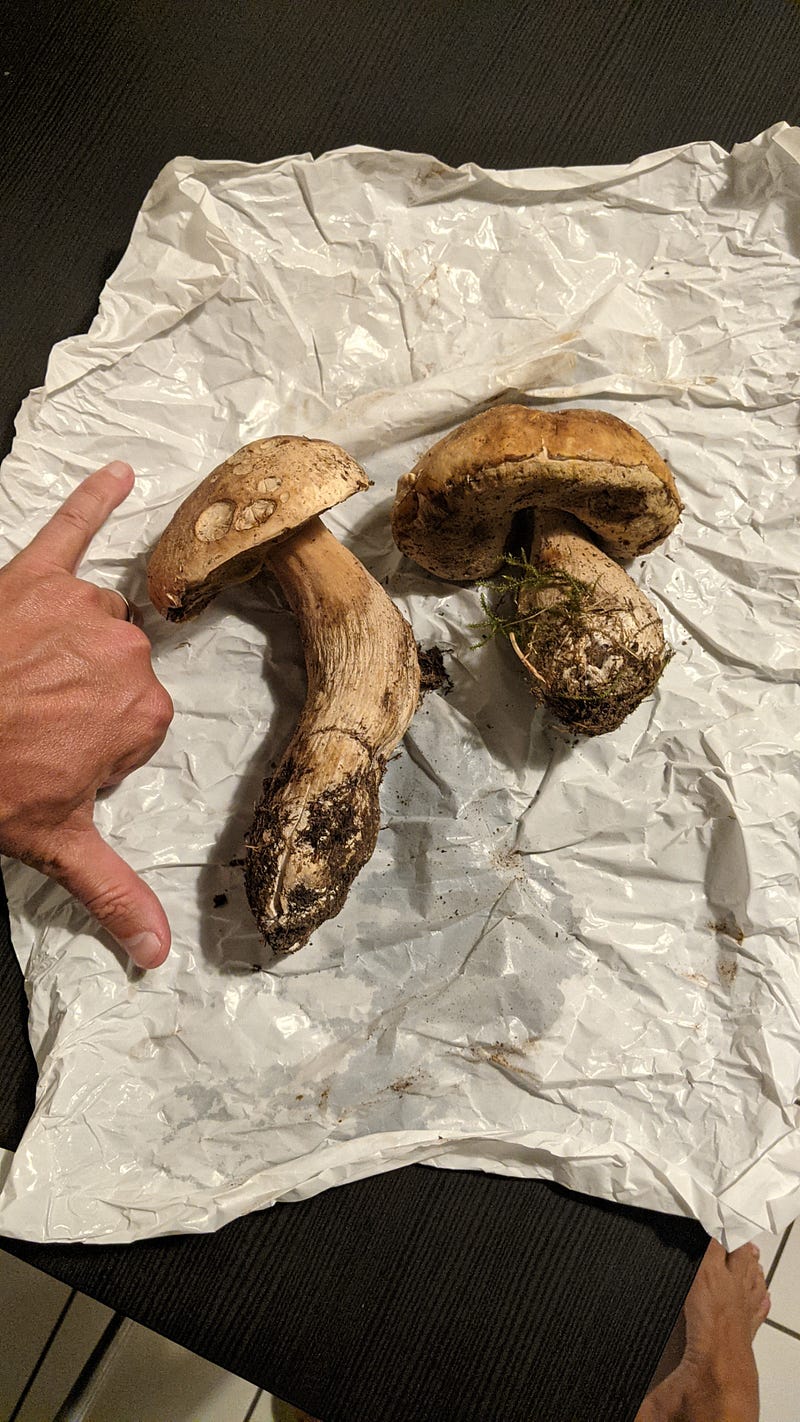
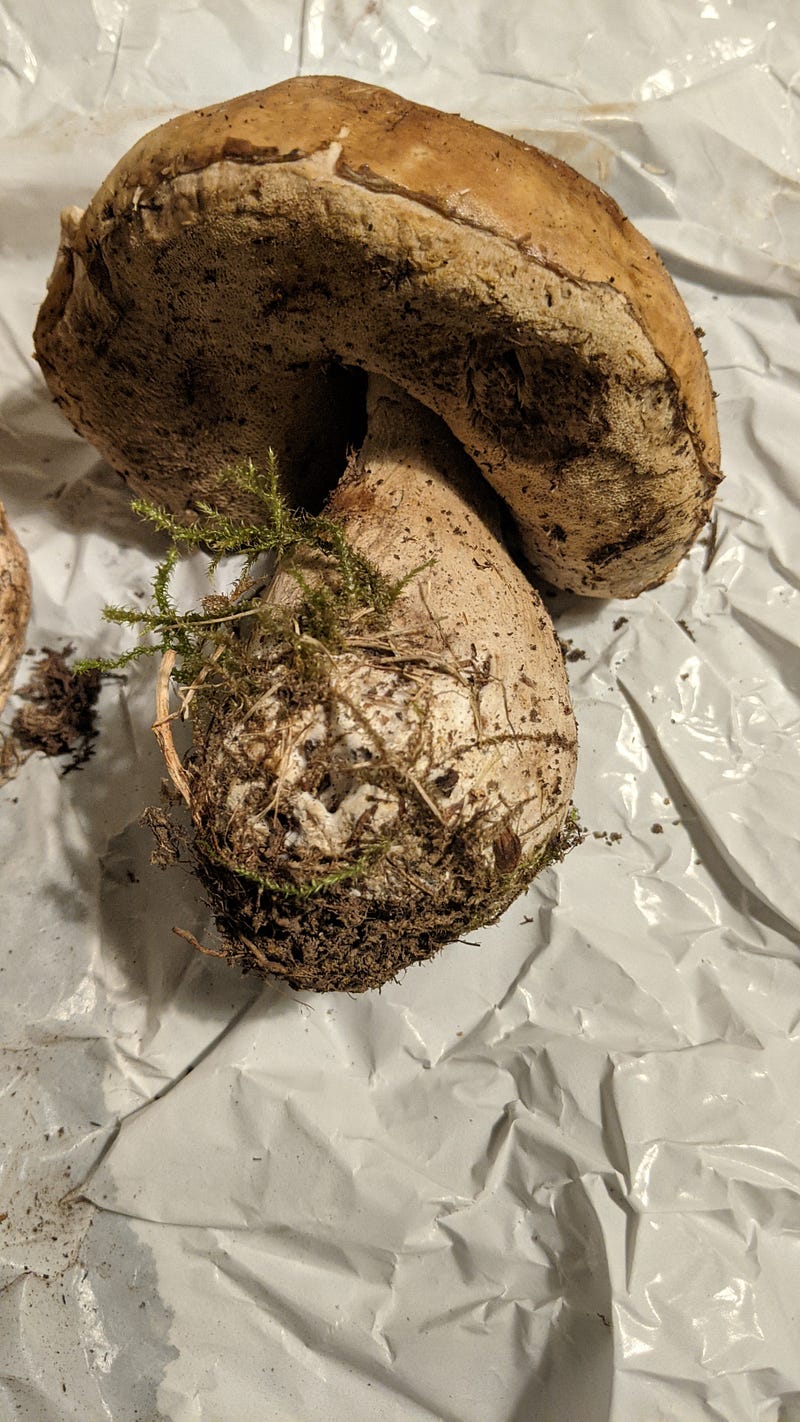
These two mushrooms weigh around 330 grams. For reference, my hand is 21 cm long end-to-end. Photo by author Luciano Abriata.

But I won’t lie to you: I’m not comfortable with picking mushrooms myself, so these I show you here are from a store! I bought them in a small coastal town in Italy. I got two big, clean ones from the offer on the right, as suggested by the owner of the store:
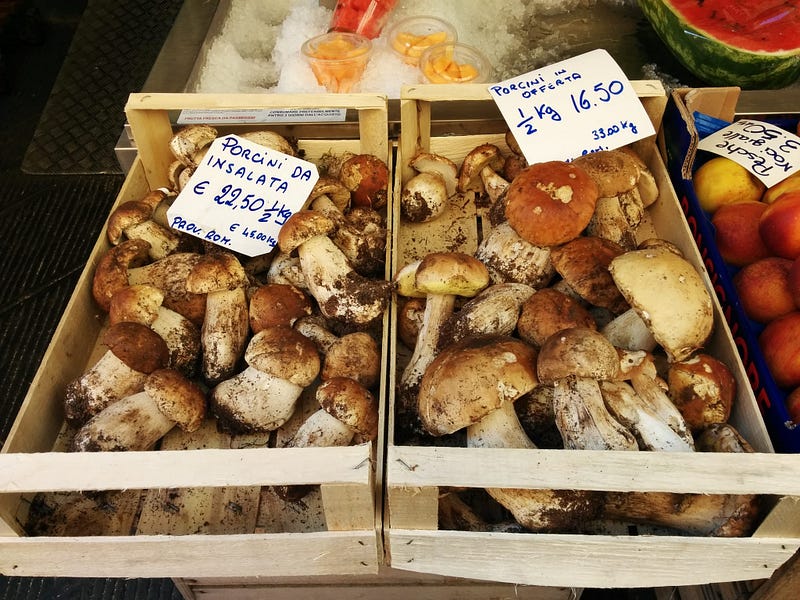
Some hundreds of euros here! Photo by author Luciano Abriata.

First some key points

As I said above, this recipe will work best if you can secure some big specimens, fresh and with white, tender flesh. Make sure you don’t expose them to warm air and to direct sunlight. And avoid moisture. In fact, avoid contact with water by all means!

Do not wash the mushrooms. To clean them, use a brush to remove rests of soil, maybe a wet tissue in some small complicated areas, and simply remove superficial crusts of dry dirt.

Now the recipe

The recipe is quite simple and takes no more than 15 minutes. First, put some olive oil in a pan (or grill) and heat it up. In the meantime, cut the mushrooms into 1–2 cm thick slices. Embed these pieces in olive oil with parsley, and optionally just a bit of garlic (although personally, I prefer no garlic for this). Do not add any salt or pepper yet!
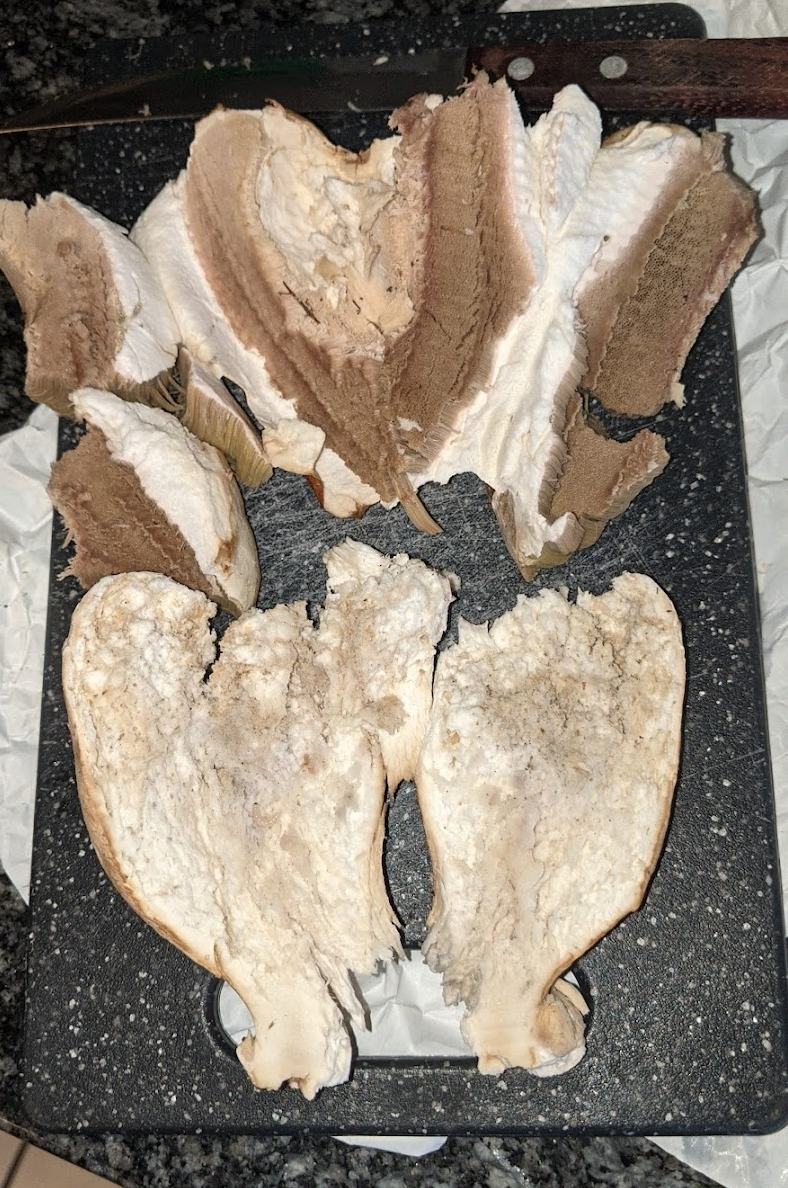
One of my mushrooms, open and sliced, ready to be coated with olive oil and parsil. In the top part you see the cap, which you may keep untouched if it’s not too thick; in the bottom you see the stem, here cut longitudinally in two. Photo by author Luciano Abriata.

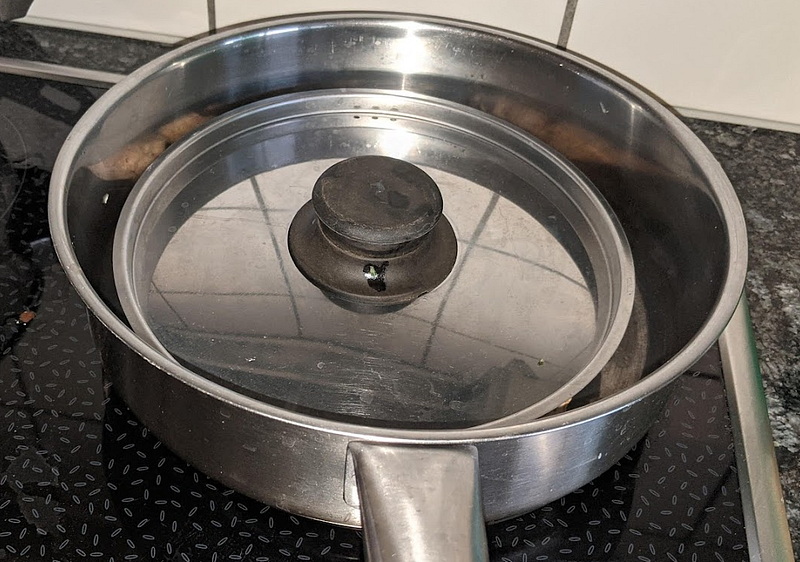
When the olive oil in the pan is hot, place the slices of mushroom and cook them for 3–5 minutes on each side. Cook strongly but avoid burning. After the first 2–3 minutes I cover the mushroom with a cap, but making sure that the cap doesn’t close the whole pan, because we don’t want to retain much water.
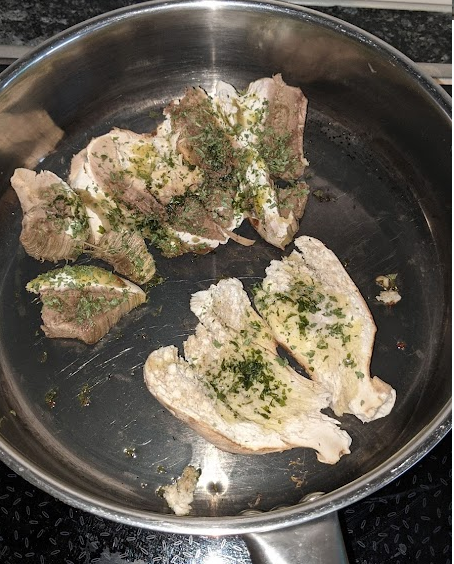
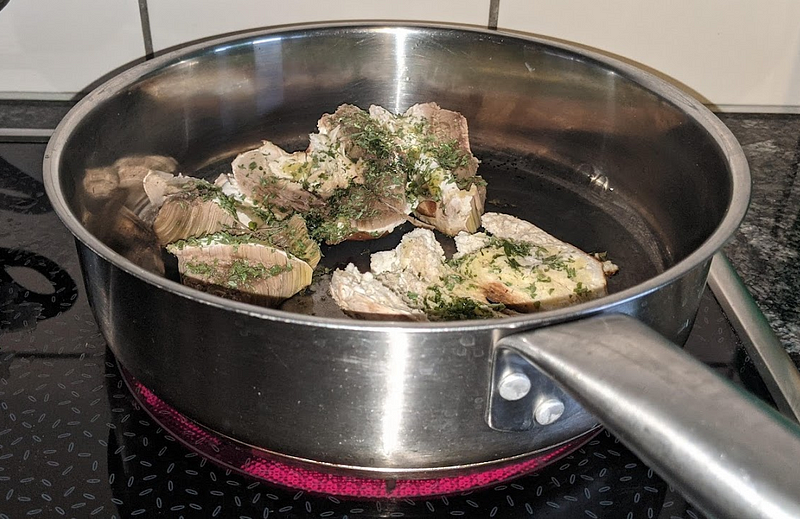
Starting to cook, first open and then partially covered. Photo by author Luciano Abriata.

Once the two sides are cooked, remove from the heat source and now yes, you can add some more olive oil together with some salt and pepper (I recommend not much of any). And ready to enjoy still warm!
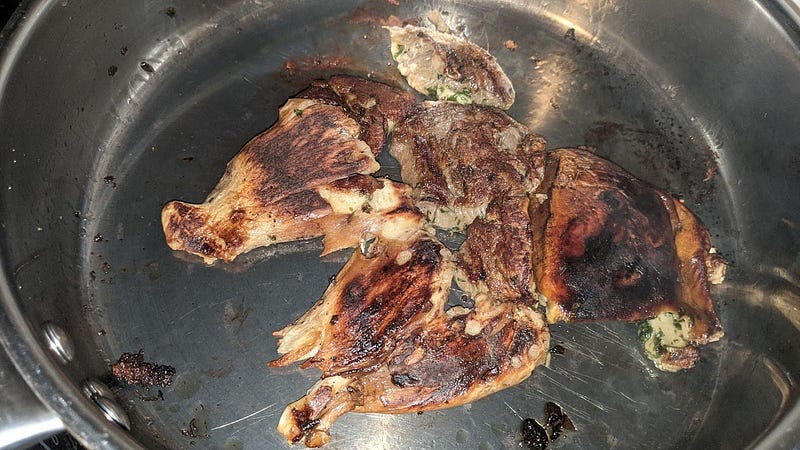
The one on the right is too burnt, the others are perfect. Photo by author Luciano Abriata.

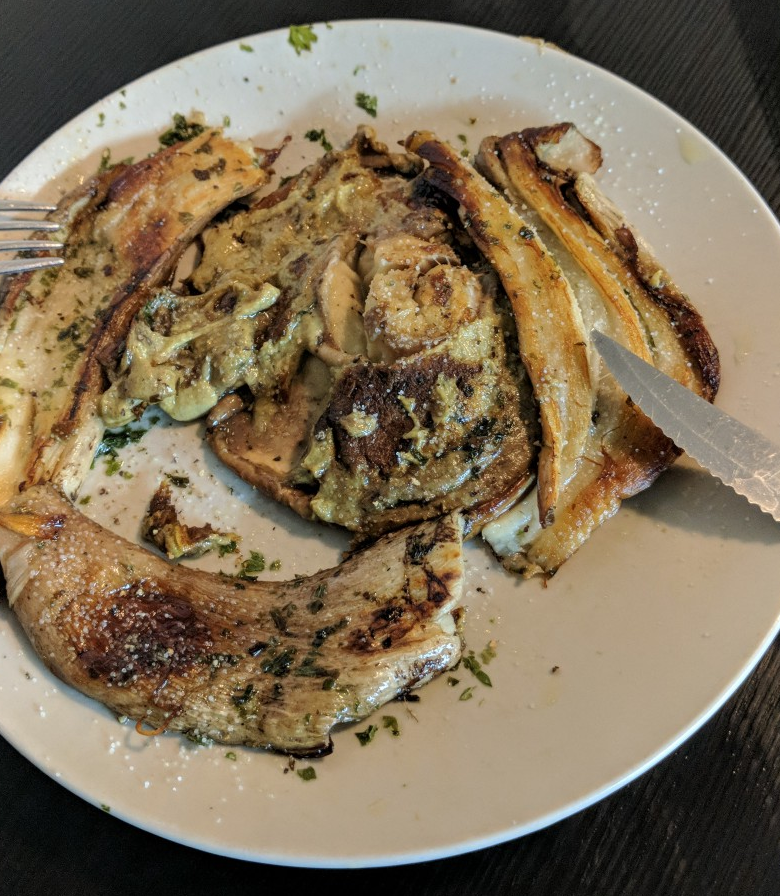
Here’s the other mushroom, which I cooked the following day being more careful with the cooking time and keeping slices thicker:
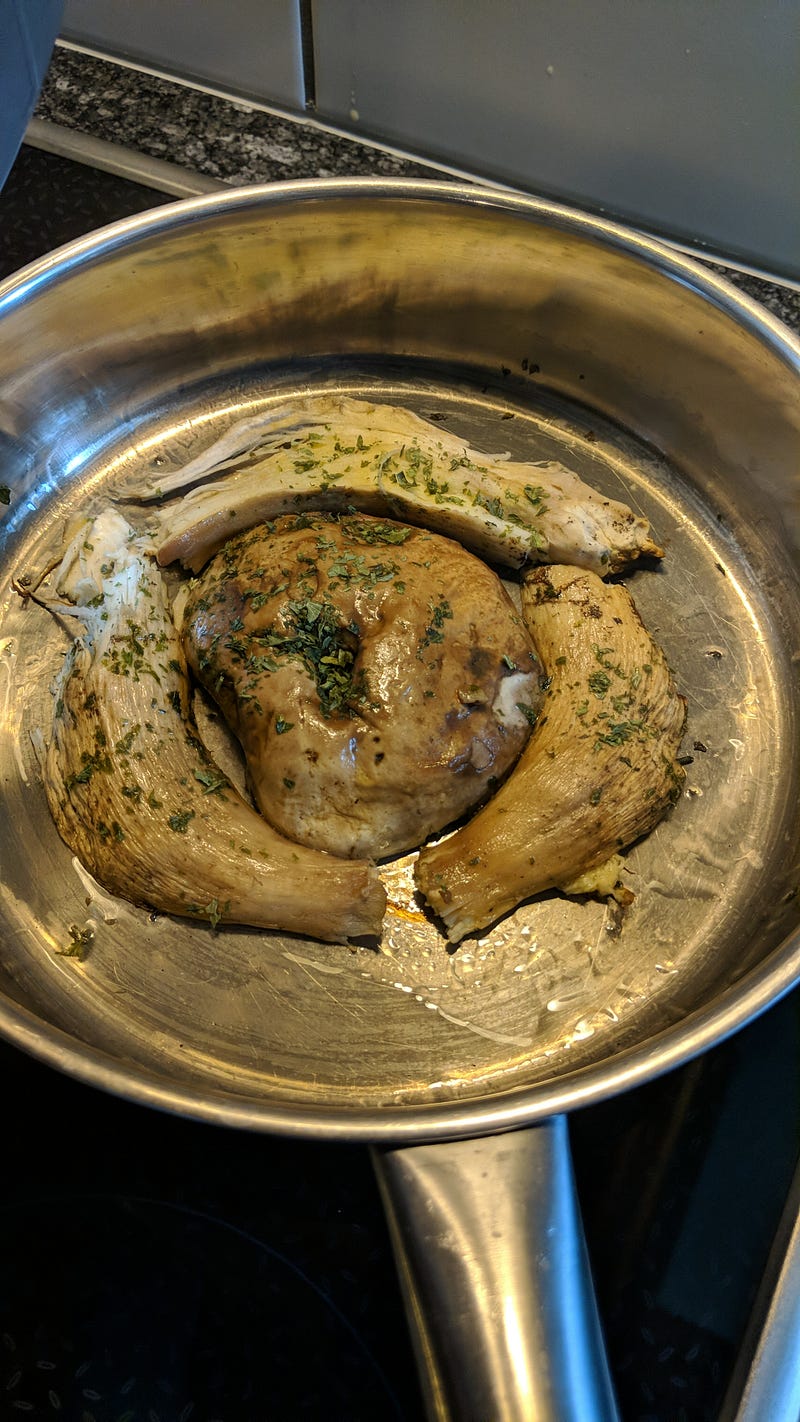
Just started cooking. Photo by author Luciano Abriata.
Enjoying it now! See this one came out better, particularly not burnt at all. Photo by author Luciano Abriata.

Further reading

An ode to this mushroom, by Aspen Blue:

Facts about Funghi porcini from Wikipedia in Italian and in English.

I am a nature, science, technology, programming, and DIY enthusiast. Biotechnologist and chemist, in the wet lab and in computers. I write about everything that lies within my broad sphere of interests. Check out my lists for more stories. Become a Medium member to access all stories by me and other writers, and subscribe to get my new stories by email (original affiliate links of the platform).

Mushrooms
Cuisine
Cooking
Italy
Sustainability
Recommended from ReadMedium