
INTERSECTIONAL FEMINISM SERIES
Did They “Ethnically Cleanse” International Women’s Day?
For the forgotten ones
When women’s rights advocates started celebrating womanhood and bringing increased awareness to a woman’s plight in a male dominated world via International Women’s Day—celebrated on the 8th of March each year — it was a historic moment that helped shape how women since then have fought for their rights.
Yet when the origins of the Day in 1908 are mentioned, oftentimes key players who led the movement are left out. Pauline Newman, a Jewish immigrant, is one of those “forgotten women” who didn’t fit the face of mainstream feminism and womanhood in her time.
The forgotten ones in history are often black and Jewish women
As with Maria Stewart, whom I wrote about in my essay What If I am A Woman?, it seems likely that race (or Jewish ethnicity) and class were key factors in leaving Pauline out of the history books.
The same can be said for Josephine St. Pierre Ruffin and Fannie Barrier Williams. As women’s rights advocates, they were denied entry into the General Federation of Women’s Clubs (GFWC) in 1894 by white middle classed women, due to their race.
“The national club movement of white women preceded that of black women by six years, with the organisation of the General Federation of Women’s Clubs (GFWC). A national movement of coloured women precipitated a debate over racial integration of the GFWC. This issue had first presented itself on a local level when in 1894, Fannie Barrier Williams was rejected from membership in the Chicago Women’s Club because of her race.” — Black Women in White America, A Documentary History (1992) pg. 447
The actions of Pauline Newman sparked a change
Pauline Newman was a working class Jewish woman and member of the Socialist Party of the USA who fought for worker’s rights, particularly the rights of female workers.
Pauline’s work brought intersectional feminism to light; she showed the mainstream women’s movement that some women are oppressed by more than gender. Class, race, ethnicity, politics, religion, and other elements of identity can all play a part.
However, if we look at how history has been recorded — just like with Maria Stewart, Josephine St. Pierre Ruffin, and Fannie Barrier Williams — Pauline Newman’s leadership in organising a protest march held on the 8th of March, 1908 in New York City, which sparked a movement to create an International Women's Day, has been overlooked.
In fact, if we look very closely, we find she’s not even referenced in some official histories of the Day. Why?
International Women’s Day had a link to intersectional feminism
Feminist leaders of Pauline Newman’s time had limited ideas about who qualified to join the struggle vs. who did not, and the whole idea and purpose of women’s rights advocacy had a one-size-fits-all ideology concerning what it meant to be a woman and who could claim womanhood.
But in 1908, the feminist movement took an interesting turn, and International Women’s Day was born. At the time, women were still being bombarded with information about the women’s rights that affected white, middle classed women of the nineteenth century.
The women who shouted the loudest, and dominated the middle classed and white feminist movement, were Elizabeth Cady Stanton, the Grimké Sisters, and Lucretia Mott, et. al. I analysed their contribution to the women’s movement of their time, and how their actions and tune changed concerning womanhood, in my essay What If I Am A Woman?
Believe what you will in the twenty-first century about their intentions or ideas of womanhood back then, and try to see the good side of their efforts when it came to advocating for women.
But history shows us very clearly that this group of advocates had no real interest in the plight of women who worked outside of the home (working classed), or who were uneducated, regardless of race. And they certainly didn’t care about the plight of women who were at the intersection of race and gender discrimination (black, brown, and minority women.)
But their all-white, middle classed narrative on womanhood changed after thousands of working women marched in 1908, and a new tune was sung in the twentieth century.
Even official histories leave key women out
Sources such as the International Women's Day site often cite in “the history of International Women’s Day” section that the movement started with a march for women’s rights in 1908. But they miss key information.
The site states:
International Women’s Day (IWD) has been observed since the early 1900’s — a time of great expansion and turbulence in the industrialized world that saw booming population growth and the rise of radical ideologies.
They also state that:
1908 Great unrest and critical debate was occurring among women. Women’s oppression and inequality were spurring women to become more vocal and active in campaigning for change. Then in 1908, 15,000 women marched through New York City demanding shorter hours, better pay and voting rights.
And
1909 In accordance with a declaration by the Socialist Party of America, the first National Woman’s Day (NWD) was observed across the United States on February 28. Women continued to celebrate NWD on the last Sunday of February until 1913.
But why is there no reference to specifically who in the Socialist party led women forward? (Hint: it was Pauline Newman.)
The missing person was raised poor, a working woman, and Jewish. One has to wonder, are these facets of her identity why she (like others) has been forgotten and/or excluded? Was she ignored based on class, ethnicity, gender — or the intersection of all three?
More on Pauline Newman (18th of October 1887–8th of April 1986)
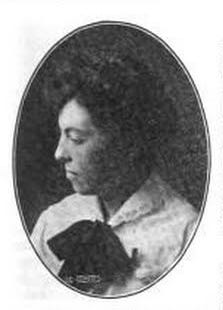
Pauline Newman was a revolutionary working woman, and an active member of the Socialist Party of her era. She is also credited — by some sources — as the woman who organised the first working woman’s march and protest on the 8th of March 1908, which has since become the globally celebrated International Women’s Day.
What other sources say about the declaration of International Women’s Day
Thanks to such Socialist women as Pauline Newman and Rose Schneiderman, a working class suffrage movement was forged, breaking the decade long stronghold of middle class women on the mass campaign for the vote.
By 1908 the Socialist part had created a national women’s commission. On March 8 of that year, women Socialists active on New York’s lower east side organized a mass demonstration in support of equal suffrage, whose anniversary continues to be observed all over the world as International Women’s Day — Angela Davis, Women, Race, Class (1981) pg. 135
Here we see confirmation of Pauline’s involvement in the mass demonstration on the 8th of March, which the International Women’s Day’s page on the history of the day cites — but without any credit, mention, acknowledgement, or respect being placed on the name of the working class, Jewish woman who made it happen.
A second source
The History of The Communist Party in The USA (1952), by William. Z. Foster, also credits the Socialist party women for their organising and work done on the day in question — 8th of March 1908.
The S.P. was also expanding its activity into many new fields. In 1905 the Intercollegiate Socialist Society was formed; in 1906 the Rand School was established; and in 1913 the Young People’s Socialist League was organized. Very special attention was also paid to winning over the preachers, the Christian Socialists being a strong force in the party. The party carried on some work among women. In 1908 a national women’s commission was set up.
The same year the Socialist women of the East Side in New York organized a suffrage demonstration on March 8th, a date which later on became International Women’s Day. Neglect of women’s historical struggle for the vote, and underestimation of women’s work in general, however, characterized both the S.L.P. and S.P. There were, nevertheless, many outstanding women workers in the Socialist Party — The History of the Communist Party in The USA, by William. Z. Foster pg. 113
What we see here is possibly a little “white washing” or “ethnic cleansing” of a key moment in history and feminism. It could also be argued that this is an example of exclusion of facts and history to suit a narrative of white supremacy.
A definition of ethic cleansing
Rendering an area ethnically homogeneous by using force or intimidation to remove from a given area persons of another ethnic or religious group, which is contrary to international law. — EU Commission on Migration and Home Affairs
It appears that “area” may refer to a physical location, however in the context of removing Pauline’s efforts from an “area” of history, it could be suggested that her removal as a founder of International Women’s Day is a case of ethnic cleansing.
It’s a plausible argument considering the history of feminism, and the many cases of minority women being excluded from participation by white feminists (historically) based on their race and class, as referenced above in the stories of Maria Stewart, Josephine St. Pierre Ruffin, and Fannie Barrier Williams.
Still today, in this fourth wave of feminism, we see discrimination based on race and class. I have touched on my own experiences of this in a previous essay: Why White Feminists Need To Understand Ellen Pence's 1982 essay.
Giving credit where credit is due
Looking up International Women’s Day in various sources, including Pauline’s own wiki page, the march on the 8th of March 1908 is sometimes mentioned, however her organisation, efforts, and the credit due her is not. Pauline’s own wiki page states:
Soon after, at the age of twenty-one, Newman won the New York State Socialist Party nomination for secretary of state. Women did not yet have the vote in New York, but Newman used her 1908 campaign as an opportunity to stump for woman suffrage. She believed that women workers needed the political power of the ballot to back up the economic power they had won by joining unions. Using the two together, they would help the working class achieve economic freedom.
If we consider another source
Queer Portraits has recognised who Pauline was, but her efforts have been washed over when it comes to International Women’s Day. Their site states:
When she was 20, Newman led a group of independent women to organize a rent strike in the tenements of the Lower East Side. 10,000 families refused to pay their rent on January 1, 1908, the largest rent strike the city had ever seen, which sparked decades of tenants’ rights activism. The following year, she organized a strike of 40,000 female garment workers. The attention earned her the title “east side Joan of Arc” from the New York Times, and a Socialist Party nomination for New York secretary of state, even though women did not yet have the right to vote. She was also appointed the first female general organizer for the International Ladies Garment Workers Union, and worked with the Women’s Trade Union League — Queer Portraits
Is it possible that Pauline did nothing, then?
Looking at the four different sources cited, most seem to agree that Pauline Newman:
- Did lead women to a mass strike about work, wages, and voting rights — it was a lot of women too!
- The strike she organised took place on the 8th of March in 1908 in New York City
- The strike seen as the inspiration for International Women's Day happened in the same location, and on the same day, as the strike Pauline organised
- That strike was motivated and led by a leftist, Socialist Party movement — which Pauline was part of
Therefore, logically thinking, it’s unlikely that Pauline was not the woman who organised the march which became the inspiration for what we now know as International Women's Day, celebrated every year on the 8th of March. What’s more likely is that she was overlooked, based on how she identified — as a poor, working class Jewish woman.
Pauline’s attitude straightened the spine of many women
When Pauline was twenty-seven, in 1907, the Great Depression had not yet arrived globally, but was well on its way. Life was hard; due to this she organised a group of women she considered to be “self-supporting,” which we can assume probably meant:
- Working women
- Independent and self-sufficient women, as compared to middle classed or bourgeois women
- Unmarried and/or unsupported women, or possibly married but responsible for bringing wages into their homes
In Hudson River, New Jersey she led women who were “self-supporting” to protest and attack the cost of living.
The action that sparked an annual global celebration that continues to this day started as a “leftist” movement led by a working class, immigrant woman who focused on the needs of women who were then and still are today “the forgotten ones.”
The fight for families
The following year, Pauline advocated, organised, and encouraged a strike that involved non-payment of rent to landlords during the winter of 1908 in Manhattan, New York. It’s said that around 10,000 families took part in the demonstration, protesting and not paying rent.
The impact Pauline had on her fellow working classed citizens of New York was an introduction to rent control (aka rent regulation) which restricted, monitored, and controlled the exploitation of working classed people by private landlords who hoped to profit off those in less fortunate financial positions.
International Women’s Day Inspiration
On the 8th of March in 1908, it’s very likely that Pauline organised a protest and marched along with women in New York’s lower east side, demanding “equal women’s suffrage.”
This march focused on women’s suffrage as well as the wages, experiences, and unjust treatment of working women — women who lived in completely different circumstances than the white, female, middle and upper classed women of the time.
Pauline understood what we now call intersectionality and intersectional feminism; she saw and experienced the unjust treatment she received based on her class, ethnicity, and gender. Her white, female, and middle classed counterparts looked on and side-glanced her.
Pauline took her life experience as a Jewish immigrant woman who worked for a living, then applied her militancy and dedication to advocating for lower classed woman and immigrants by joining the Trade Union movement that was happening circa 1907–1908. The unions in this movement represented workers and their trades.
As a factory worker, Pauline joined the International Ladies Garment Workers Union (ILGWU). This was one of the largest unions in the USA, and the predominant union for women of the twentieth century; it was established in 1903.
She led women who were “self-supporting” to attack and protest the cost of living
Pauline organised marches for the ILGWU
At the ILGWU, Pauline organised strikes, protests, marches, and demonstrations in major cities across the USA. In fact, she was the first female organiser for the group. Between 1908–1913, Pauline spent her time representing the voices of women, their rights, and their demands for improvements in the working environment.
These were mostly things that the middle classed women leading the mainstream feminist movement since the nineteenth century, either had no experience of — due to their class — or no interest in being affiliated with. From their limited perspective, they did not consider these intersections of gender, race, and class discriminations worth fighting against.
International Women’s Day today
Pauline was a “first wave feminist and women’s advocate” active in the years of the first wave of feminism, from 1848 when it started to 1920 when the first wave ended.
Today, in the fourth wave of feminism, as we approach International Women’s Day in a little over a week, we should remember:
- Pauline and her militancy for women’s rights — generally
- Pauline and her link to International Women’s Day that historians seem to want to forget
- How intersectional feminism gave us what we know and celebrate as International Women’s Day, in the twenty-first century
- To keep working on intersectional activist work
Pauline saw and experienced the unjust treatment she received based on her class, ethnicity, and gender. Her white female counterparts looked on, and side-glanced her.
Historically, if mainstream feminism has had a hard time (to put it mildly and say the least) coming to grips with the intersectional needs of women who are not white, middle class, cisgender female, and straight, Pauline’s belief in “equal women’s suffrage” is also something to also keep in mind.
The fourth wave of feminism is about embodying this belief system. If we fully embrace what we’re here for as women’s advocates, this is the starting point. The starting point is not being here to hate men; it’s not to focus on one group of women; and it’s not to leave the forgotten ones behind because of who they are — their race, class, ethnicity, sexuality, disability, etc.
Let’s not forget why we’re here, and who we have to thank for the annual International Women’s Day celebration — a working classed, immigrant woman of Jewish descent, who believed in equal rights for all women.
Do you believe in this too?
Do you feel or experience intersectional discrimination in any way?
Further reading on intersectional feminism and women’s rights:
- Is Feminism to Blame For Korean Women Taking Down The Patriarchy?
- Where Culture Meets Feminism: How Patriarchy Oppresses Korean Women
- What If I Am a Woman?
- How Women of The Caribbean are Devalued
- Are The Women of Latin America Classless?
- French Feminists Legally Secure irreversible Abortion Rights From 2024
- Why White Feminists Need To Understand Ellen Pence’s 1982 Essay
- What White Feminists Still Don’t Know
- UN Women: How Close Are Countries To Meeting Their 2030 Goals?
Thanks for your readership, I hope my writing gave you something to think about. If I’ve caught you in a good mood or you’re feeling kind, you can buy me a herbal tea here: https://www.buymeacoffee.com/MeAndMyMuse
For more stories about gender equity, follow Fourth Wave. Have you got a story or poem that focuses on women or other challenged groups? Submit to the Wave!