
INTERSECTIONAL FEMINISM SERIES
What If I Am A Woman?
A Black woman sparked the movement for women’s education

Imagine asking one question, “What if I am a woman?” and that sparking a movement towards women’s rights to education being seriously considered for the first time.
The fight for women’s rights around education started way before 1848, when the Grimké sisters Sarah (1792–1873) and Angelina (1805–1879), Elizabeth Cady Stanton (November 12, 1815 — October 26, 1902), and Lucretia Mott (January 3, 1793 — November 11, 1880) cottoned on to the idea that if they tied their white, female, and middle classed feminist movement and struggle to the fight for freedom of black slaves and abolition of slavery, that somehow white women would be free from white male oppression and everyone would be happy.
As the black feminist writer Angela Davis stated in Women, Race, and Class (1981) pg 50.
“The absence of black women at the Seneca Falls Convention (women’s rights address) was all the more conspicuous in light of their contributions to the fight for women’s rights. More than a decade before this meeting, Maria Stewart had responded to attacks on her rights to deliver public lectures.”
What Angela Davis highlights is that white, middle class women were fighting for their own freedom of oppression from white males via the plight of black people when the Seneca Falls Convention for women’s rights, organised by the white feminists, took place on the 19th of July, 1848.
But imagine this: in 1833, one African-American woman stood up before a group of black and white spectators, both male and female, and asked them, “What if I am a woman?”
This was just before Isabella Baumfree (otherwise known as Sojourner Truth) asked a similar question, “Ain’t I a woman?” in 1851.
If we look at the timeline closely
It appears that the woman in question, Maria. W. Stewart (1803 — December 17, 1879), was the first African-American woman to speak publicly in the USA — as a teacher, journalist, and abolitionist — and the first to address the needs of women’s right to education.
February is Black History Month across the water in the USA, an ideal time to reflect on and celebrate one black woman’s question, which has been argued by black feminist writers such as Angela Davis as the original spark in a movement for women’s rights to education — Maria Stewart’s six words.
Maria Stewart made everyone in the room stand still
Her question was in response to critique about her wish to lecture and provide education, and her belief that women including black women, should have an education.
Her question paved the way for the likes of the Grimké sisters et al to carry forward what this African-American woman started, either for the benefit of just themselves and white women, or for the benefit of all women — depending on your viewpoint on the history of feminism, and the turn it took via Elizabeth Cady Stanton’s actions later on, reviewed below.
In 1827 the Freedom’s Journal, the first black newspaper in the USA, published a letter written by a black woman demanding women’s rights to education. The letter was authored by a woman who identified herself as “Matilda” and focused in on the benefits black women would gain with the right to education.
The author of the 1827 letter asserted:
“I would address myself to all mothers, and say to them, that while it’s necessary to possess knowledge of pudding making, something more is requisite. It is their duty to store their daughters’ minds with learning. They should be made to devote their leisure time to reading books, whence they should derive valuable information, which could never be taken from them.” — Woman, Race, and Class (1981) pg 51.
February is Black History Month across the water in the USA, an ideal time to reflect on and celebrate one black woman’s question…the original spark in the movement for women’s rights to education.
The letter appeared in the paper the year before the white, Scottish advocate for women’s rights, Frances Wright, began to give talks on women and their right to education.
That said, once the movement started, the white, middle classed, feminists (Grimké sisters, Elizabeth Cady Stanton et al), who were at the forefront of what they called a women’s movement, didn’t credit the African-American woman for lighting the flame. They outright overlooked Maria Stewart and focused their efforts on their white and middle classed cause.
Angela Davis writes further in Women, Race, and Class (1981)
“Long before the first women’s convention, middle classed white women had struggled for the right to education. Matilda’s comments later confirmed by the ease which Prudence Crandall recruited black girls for her besieged school in Connecticut, demonstrated that indeed black and white women were united in their desire for education. Unfortunately this was not acknowledged at the convention at Seneca Falls.” — Woman, Race, and Class (1981) pg 51
The Seneca Falls convention to address women’s rights took place on the 19th of July in 1848. Two decades earlier in 1827, an African-American woman named Maria Stewart (under the name of Matilda), published her letter in the Freedom’s Journal calling for women’s educational rights. It fell on deaf ears.
What if I am a woman?
Maria didn’t give up; she continued her fight to lecture and give women their rights to education; however, she had a very short lived career. Her “handicap,” as she called it, of being black and female held her back.
This status we still carry today as black or brown women is often now referred to as our “double jeopardy,” a term coined by black feminist Frances. M. Beal in her work, in 1969, during second wave feminism.
This was when black feminists from the 1960s onwards picked up the baton that black women’s rights advocates of the nineteenth century — Maria Stewart, Sojourner Truth, Anna. J Cooper et al — handed to black feminists a century earlier. So they and the black and brown women of the fourth wave of feminism we’re in now could continue to make progress by advocating for the kind of intersectional feminism that advances the rights of all women.
Maria Stewart throws in the towel
By 1833, Maria Stewart had given up her fight for women’s education. In her farewell address on the 21st of September 1833, she argued:
“What if I am a woman? Is not the God of ancient times the God of these modern days? Did he not raise up Deborah to be a mother and a judge in Israel? Did not Queen Esther save the lives of the Jews? And Mary Magdalene first declare the resurrection of Christ from the Dead? Come, said the woman of Samaria, and see a man that hath told me all things that ever I did, is not this the Christ?”
Maria was a very religious woman it appears, which is not surprising given that Christianity was used heavily during this period to justify the enslavement of black people.
Maria pleaded to the masses of white men and women using their own “tool kit” — the Bible. It could be argued she did this to highlight that if a man — God himself — can give mercy and rights to a woman so can white people in the nineteenth century.
Her full speech and address can be found in Black Women in White America, A Documentary History (1992).
Maria Stewart’s efforts and the white feminist’s treason
“When a person shows you who they are, you should believe them first time” is a saying many of us know. This is where Elizabeth Cady Stanton takes centre stage.
When women finally gained the right to education, even if the loudest protesters to secure that right were the white, middle classed, women such as the Grimké sisters, Elizabeth Cady Stanton, and Lucretia Mott, we can’t forget that Elizabeth Cady Stanton was arguably a racist and traitor. We also can’t forget that Lucretia Mott was reluctant to ensure black women were involved in the fight for freedom.
It’s also fact that white, middle classed feminists also overlooked the work done by the African American woman Maria Stewart and African American women altogether to start the movement for women’s education.
This is well documented in Women, Race, and Class (1981), pg 50.
“During the preparations for the National Female Anti-Slavery Society, Angelina Grimké had to take the initiative to guarantee more than a token presence of black women. Moreover she suggested that a special address be delivered at that convention, to free black people in the north. Since no one, not even Lucretia Mott, would prepare the address, Angelina’s sister, Sarah had to deliver the speech.”
The details of this struggle and speech can be found in, Black Women in White America, A Documentary History (1992).
However Elizabeth Cady Stanton’s treasonous act came much later during the fight for women’s rights. She wrote a letter to the editor of the New York Standard paper on the 26th of December 1865— thirty-eight years after African-American woman Maria Stewart first made the call for women’s rights to education, and thirty-two years after Maria Stewart made her final address.
“When a person shows you who they are, you should believe them first time” is a saying many of us know.
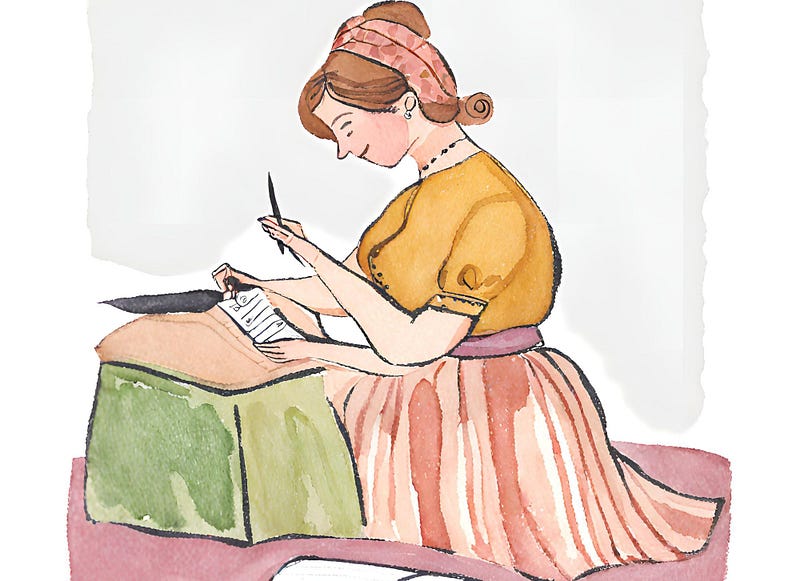
Elizabeth Cady Stanton stated in her letter:
“Although this may remain a question for politicians to wrangle over for five or ten years, the black man is still, in a political point of view, far above the educated white women of the country. The representative women of the nation have done their uttermost for the last thirty years to secure freedom for the negro and as long as he was lowest in the scale of being, we were willing to press his claims, but now as the celestial gate to civil rights is slowly moving on its hinges it becomes a serious question whether we had better stand aside and see “Sambo” walk into the kingdom first.
Sambo…a well known racist slur used against black people, dating back to the era of Elizabeth Cady Stanton.
White Tears, Brown Scars: How White Feminism Betrays Women of Color is an excellent read, for more on this history of “Sambo,” “Sapphire,” and “Jezebel,” which were all terms used to degrade and dismiss black women and men.
She also went on to assert:
“This is the “negro’s hour.” Are we sure that once entrenched in all his inalienable rights he may not be an added power to hold us at bay?”
The worst of her ideology was:
“In fact, is it’s better to be the slave of an educated white man, than the slave of a degraded, ignorant, black one.”
Elizabeth Cady Stanton’s full letter can be read in Angela Davis’ outstanding work Women, Race, and Class (1981).
What we see here is a historical moment in black women’s history with feminism where one white woman laid out her cards — with an agenda that gave with one hand and took away with the other.
To Elizabeth Cady Stanton, freedom for black people was conditional, and her conditions were that they (especially black men, it would appear) didn’t benefit over and above white women, or before them.
What we see here is a historical moment in black women’s history with feminism where one white woman laid out her cards — with an agenda that gave with one hand and took away with the other.
Her letter, actions, and viewpoints could also support the argument that this was a white woman who was a racist, but disguised as an abolitionist. Her connection to the fight for the abolition of slavery, was not because she genuinely felt or saw the need. If she did, surely Elizabeth Cady Stanton would not have worded her letter and questioning of white feminist’s support for abolition in such a racist way.
Historically, it could be suggested that the link between white feminism and the abolition of slavery, and to Elizabeth Cady Stanton especially (and arguably the rest of her gang, depending on your viewpoint), was a means to an end for white women to become “free,” from white, female, oppression — which they likened to slavery.
To Elizabeth Cady Stanton, freedom for black people was conditional, and her conditions were that they (especially black men, it would appear) didn’t benefit over and above white women, or before them.
This support for the abolition of slavery was clearly only under their own conditions, and if they maintained a superior status as white women in society. This is shown to us as not only was Elizabeth Cady Stanton keen to stop the progress for black men, but also black women.
Angela Davis writes in Women, Race, and Class (1981) in response to Elizabeth Cady Stanton’s letter:
“She was determined it seems to prevent further progress for black people — for “Sambo” no less. If it meant that white women would not enjoy the immediate benefits of that progress.”
Once a reader becomes familiar with Elizabeth Cady Stanton, and her full letter to the editor of the New York Standard paper in 1866, it could easily lead a reader with an objective mind to see what Angela Davis points out.
Elizabeth Cady Stanton’s stance on the right for women to vote
To further demonstrate how the woman at the front of the women’s rights movement and the feminist movement of the nineteenth century, was a racist, treasonous woman, we can look closely at her own words and viewpoint.
She stated out loud at an Equal Rights Association meeting on the 18th of May 1867:
“With the black man we have no new element in government, but with the education and elevation of women, we have a power that is to develop the Saxon race into a higher and nobler life and thus, by the law of attraction, to lift all races into a more even platform than can ever be reached in the isolation of the sexes.” — Woman, Race, and Class (1981) chapter 4.
What Elizabeth Cady Stanton was alluding to and advocating for at an equal rights meeting is :
- That the right to vote to be allocated to white women, over black men
- That white women along with white men will remain in a “higher and nobler life” position than black women and men
- That white women gaining status would lift all other races up. This sounds more like a nice, “ladylike” way of advocating for white supremacy, and a hierarchy of races to remain in place, as it already was in the USA, but with the only change being women have a bigger role in the white domination via a political vote.
The major issue here is that the woman with the loudest voice on women’s rights truly showed she had no interest in black women, or seeing them as women just like her, or their elevation via education. Elizabeth Cady Stanton for sure was keen to ensure that black men were never elevated, or in any position of power, certainly not at the cost of white women losing out.
Through all this we should remember
It also highlights (in my view) why there has always, and possibly will always be a need for intersectional feminism via the black and brown woman’s lens, a continued need for writing about it, a need for womanist views, which I have covered in, Is The Combahee River Collective’s Fright For Black and Brown Women Still Needed Today?, a need for advocacy from the intersection of being black, brown, a minority and female, and most importantly, a continued rise of black feminism.
Thank goodness this did come later. Which I dived into in my essay, Why White Feminists Need To Understand Ellen Pence’s 1982 essay,
Also, Where Race Meets Feminism: The Unfinished Conversation.
It also highlights (in my view) why there has always, and possibly will always be a need for intersectional feminism via the black and brown woman’s lens.
Even with the racist actions of white feminists like Elizabeth Cady Stanton (which still happens today!), and the turning point in the support white feminist women finally extended to black women in the 1960s, Maria Stewart’s efforts should not be forgotten this Black History Month — or any month.
Two centuries later, her belief in the benefits of minority women gaining access to education can be celebrated.
What research shows us about education for women
It was reported in 2020 by Thought.co that black women are the most educated demographic across the USA, based on the findings that they hold the most degrees, and enrolled in education more than any other demographic of society.
It could be argued that there’s a similar pattern across the water in Europe, which I will dive into in my next essay. Since the research cited above a 2024 update by Gitnx confirmed that:
- Black women are currently the most educated demographic of society in the USA
- Between 1995 and 2015, the number of black women earning doctoral degrees increased by 200%.
- In 2020, 106 black women earned Ph.D.s in business, 411 in education, 83 in engineering, and 52 in mathematics
- The percentage of black women enrolled in college increased from 34% in 2000 to 41% in 2016.
These are just a few statistics pulled from the full report, for more details, it can be read here.
The statistics, research, and studies in Europe note the trend of educated black, brown, and minority women this side of the Atlantic too, which is great.
The sad thing is
This progress is not happening everywhere, as noted in my last essay, UN Women: How Close Are Countries To Meeting 2030 Goals, which examined the recent report on progress towards the United Nations Member states sustainable development goals (SDGs) with a 2030 deadline. That story, and report, highlights a regression in the rights and access to education for black, brown, and minority women in locations outside of the USA and Europe.
As a black, British, woman with two master’s degrees, who spent just over ten years as a secondary school (high school) teacher, and loves the joys of learning and seeing others become educated — I am thankful for the right to education, but wish for the right to it to be extended to women outside of Europe and the USA.
When we place today’s positive research findings in backdrop of the treasonous and traitorous characteristics that feminism has historically had towards minority women, who have tried to better their fellow sisters’ prospects just as Maria Stewart did, and compare the history to today’s statistics around educational attainment, it brings to mind an old Caribbean saying of my dad’s:
“Who laughs last, laughs hardest.”
The statistics in some parts of the world make me “laugh” and smile, as Dad would say, when compared to the history of what happened with black women’s rights to education two centuries ago, and how we arrived here.
Let’s not forget Maria Stewart this Black History Month, or any month when we consider the fight for women’s rights and education, as this could be a key topic this International Women’s Day coming up in March 2024, based on the findings in UN Women’s recent report on goals the United Nations has for 2030.
Further reading on intersectional feminism and women’s rights
- Is Feminism to Blame For Korean Women Taking Down The Patriarchy?
- Where Culture Meets Feminism: How Patriarchy Oppresses Korean Women
- How Women of The Caribbean are Devalued
- Are The Women of Latin America Classless?
- French Feminists Legally Secure irreversible Abortion Rights From 2024
- Why White Feminists Need To Understand Ellen Pence’s 1982 Essay
Thanks for your readership, I hope my writing gave you something to think about. If I’ve caught you in a good mood or you’re feeling kind, you can buy me a coffee here: https://www.buymeacoffee.com/MeAndMyMuse
For more stories about gender and social justice, follow Fourth Wave. Have you got a story or poem that focuses on women or other challenged groups? Submit to the Wave!