
INTERSECTIONAL FEMINISM SERIES
Where Class Meets Feminism: Are the Women of Latin America Class-less?
And whose responsibility is it to improve their lot?
What social class are you: working or lower, middle, upper, somewhere in between? Your decision is most likely based on the income of your household, education, wealth, power, or occupation, and those metrics are what sociologists use to define social class.
But imagine if a demographic in society had no income, wealth, education, or power — would we consider them class-less?
While looking at intersectional oppression for women, then trying to de-centre the white female point of view, I focused on race in my article When Race Meets Feminism: The Unfinished Conversation, and on culture in Where Culture Meets Feminism: How Patriarchy Oppresses Korean Women. This essay will focus on class.
In Latin America, a woman’s gender oppression is compounded by class. Her social mobility is limited by her class status. Her right, chance, or even prospect of moving upward from being class-less to working or lower-class is more than a challenge. An aspiration of moving upward to middle or upper class — without Prince Charming or a miracle, is impossible.
What does classist oppression look like?
Classist oppression for a woman could mean she won’t be considered for a job at all, and will face other kinds of discrimination because of her social class, little or no education, lack of a wealthy background, etc. It appears the class-less woman status found in Honduras and Guatemala, in particular, impacts a woman’s quality of life in key and unique areas which are different from the way oppression impacts a woman of another class.
Class-less women often face:
- Forced marriage/sexual activity before the legal age of consent for sex
- Sexual exploitation
- More food poverty, as compared to impoverished men
- High rates of childbirth death
- Lack of assistance to achieve social or economic increase, as the government allocates little assistance to women and youth
The rate of “class-less” women with no income in Latin America is double that of men
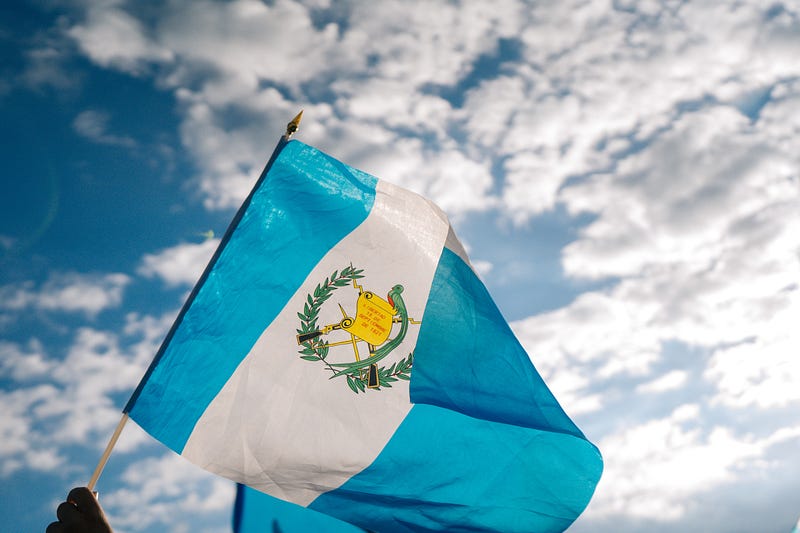
To understand how class-less status would impact a woman, take a look at the reports from The Gender Equality Observatory for Latin America and the Caribbean from 2021. That organisation has found that across the sixteen Latin American countries studied, the women in Guatemala have the highest rate of “no income” of their own, when compared to men. They are also the least employed within this region of the world, as revealed in the report People Without Incomes of Their Own.
The report only focused on sixteen countries in Latin America. The other fourteen countries all had similar statistics showing that women had a higher rate of “no income” when compared to men. In the interest of brevity, I will focus on Guatemala and Honduras, which had the worst statistics for women.
Yet across Latin America as a whole, the report confirms that women are generally more income-less and unemployed than men, showing:
- 23.5% of women across the whole of Latin America are income-less compared to 9.7% of men on average, as of 2022.
Thinking critically about why this might be, we see a similarity with the Korean women in my essay, Where Culture Meets Feminism: How Patriarchy Oppresses Women. Having a large number of “class-less” women could be attributed to cultural belief systems about a woman’s place. But culture is only half the story; the data on class oppression for women in this location give a fuller story.
The Gender Equality Observatory for Latin America and the Caribbean found that:
- 51% of women compared to 14% of men aged fifteen-years-old and above are without an income of their own in Guatemala
- The sample includes women and men who are not otherwise engaged in academic study
What this shows is that over half of the women in Guatemala don’t meet the definition of even the lowest social class status we typically identify today: working-class. There is no income of their own to place them within this group, so they can logically be deemed outside the class system, or “class-less.” It’s important to note that even if class-less women are partnered and their male partner has an income, this status leaves them open to oppression and exclusion by men, by way of control of the household finances. Also, partnering with a man for a source of income may be the only option for class-less women in this part of the world.
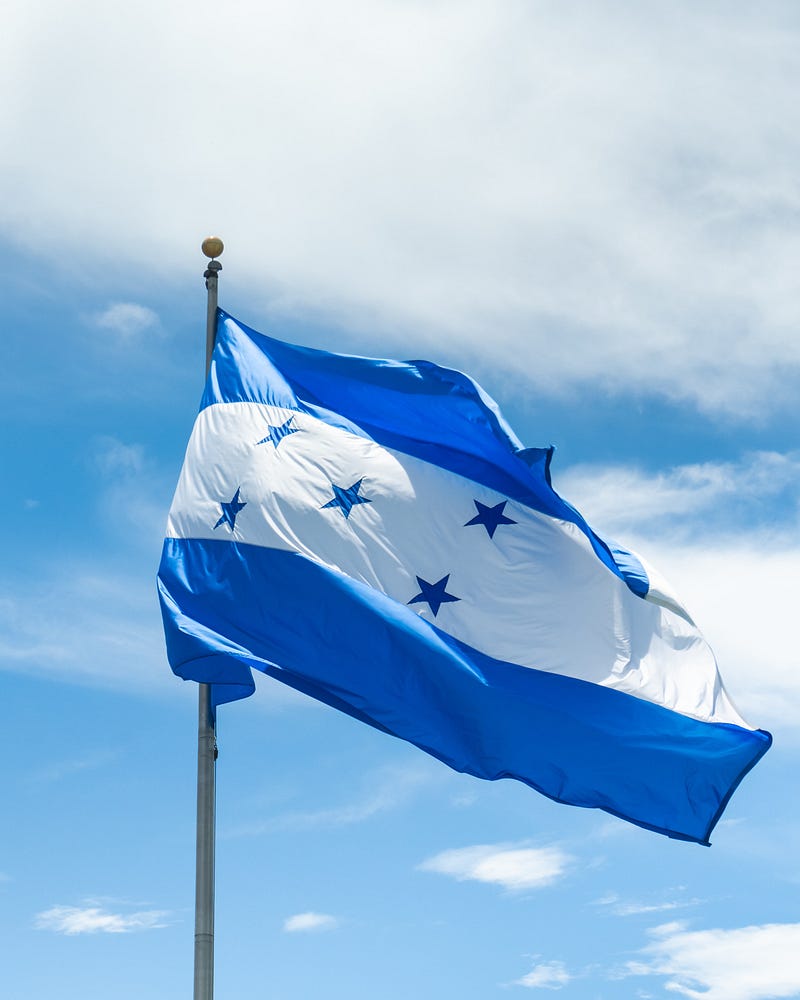
In Honduras The Gender Equality Observatory for Latin America and the Caribbean recorded that women had the second highest rate of unemployment, which translates to no income of their own, with a huge gap between women and men.
Their studies show that in Honduras:
- 43.5% of women aged fifteen-years-old and above compared to 16.5% of men have no income of their own
- The sample includes women and men who are not otherwise engaged in academic study
The women of Guatemala are in a similar position to their Honduran counterparts; they too could be pushed into forced partnerships to survive.
Fourth wave feminists need to raise their consciousness about women in this region. Many women with no income of their own must consider entering a partnership with a man as a means to an end — which comes with a high risk of abuse, as the data shows below.
Sexual exploitation and forced partnerships for “class-less” women
Take note that the legal age for consensual sex in Guatemala is eighteen; in Honduras it’s fourteen, but there are legal implications for involvement with a girl under eighteen. For a woman who is class-less, her oppression by way of sexual exploitation is increased.
UN Women found in their report for the country of Guatemala:
- 29.5% of women aged twenty to twenty- four were married, or entered into a union before the age of legal sexual consent — eighteen.
- 77.4 girls per 1,000 gave birth between the ages of fifteen and nineteen.
- 7.3% of women aged fifteen to forty-nine reported sexual or physical abuse by a partner in the last twelve months.
What the data shows us is the law is not being adhered to by either gender. It can be assumed that for young women and girls, breaking the law regarding the legal age of consensual sex is sadly one of the only real options they have to survive as a class-less young woman with no income of her own. Class-less women occur at more than double the rate of class-less men.
For men, women without income create a chance to exploit a young girl, or a woman’s class-less status, regardless of their age. Are predatory men likely to be found out or held accountable? Is the woman, or the parents of the young girl, likely to go to the police if a man is financially providing for them in a way that a woman herself, or the parents of a young girl, can’t?
As of 2014, women in Guatemala made up 51.2% of the 15.8 million population as reported by UN Women. This means there are more women than men, which could lead to “man sharing” with little choice for women but to put up and shut up, as a financial means to an end. We can only speculate then that sexually transmitted infections are something women in these parts of the world are at risk of, too.
Underage birth risk for young girls
In Guatemala, roughly 77 girls per 1,000 gave birth either under or at an age when they are barely legal to have sex, UN Women Reported. This shows how the vulnerable position of young girls plays out — children are often added to the dynamic, which they must care for while possibly sharing a man. Imagine if this man does not have the financial capacity to feed all mouths, if he creates more children than he can afford outside of his union.
If roughly thirty percent were found to be married or in a union before the legal age of consent, this data would also suggest outcomes for class-less women of forced partnership and children.
In Honduras, the legal age of sex is said to be just fourteen, however there are legal implications for involvement with a girl this young, including imprisonment for six — eight years if the young woman is over the age of fourteen, but under eighteen. If this happens by what the laws consider “deception” it is five — seven years. “Deception” we can assume is the young girl not being honest about her age, as the sentence is reduced.
UN Women found in their report for Honduras
- 33.6% of girls aged twenty — twenty-four were married or in a partnership before the age of eighteen. Note that there are legal implications for involvement with a girl this young.
- 88.7 per 1,000 girls aged fifteen to nineteen had given birth. However, the year before the report (2013) it was 103 girls per 1,000.
- 7.2% of women aged fifteen to forty-nine had reported sexual or physical abuse by a partner in the last twelve months.
It appears based on the data that in Honduras the class-less women are more likely to be in a partnership before they are legally allowed to, and to give birth as a result, when compared to Guatemala.
The same hardships of man sharing as the population has more women than men, or financial difficulty if the man creates more children outside of the home, is not as great in Honduras as it is in Guatemala, since the population of women vs men is more equal. According to Statistica as of 2022:
“In 2022, the population of Honduras amounted to nearly 10.4 million inhabitants, out of which approximately 5.17 million were woman, and 5.27 million were men.”
How a class-less woman’s oppression differs from a woman with a social class
What we see here is that based on the social concepts that define a person’s class, a woman who has no real class in these two countries is likely to have a life that includes: servitude to men, children, no time for herself, and abuse from a young age. Due to the lack of class with no income of her own, the classist discrimination against these women looks very different from women who fall into one class or another, even if they are lower or working class or experience some of the class-less woman’s plight.
What this shows is that over half of the women in Guatemala don’t meet the definition of even the lowest social class status we typically identify today
For class-less women, we also have to consider the benefits/ help systems and government support provide for those with low incomes or who have none at all (often paid for by the taxpayer). Guatemala and Honduras do not have as much taxpayer support compared to America, the United Kingdom, or European countries. This means there is less outside support for the Latin American woman, compared to the lower classed, working class, or non-income women outside of her country.
This is why when class meets feminism, it is important for women from other parts of the world to be conscious of what that looks like for a woman who is not from a traditional, white, feminist demographic.

Poverty oppression for class-less women
Clearly, poverty is going to be an issue for the class-less woman, given she has no income of her own.
How this looks for them as highlighted in the UN Women’s report:
- 61.1 % women compared to 56.6 % of men suffer “severe food insecurity” in Honduras
- 49.1% of women compared to 42.6 % of men suffer from “severe food insecurity” in Guatemala
According to Statistica’s report published in October 2023:
“In 2020, approximately 22 percent of male respondents in the United Kingdom stated in a survey that at some point during the last 12 months, they did not eat because they could not afford it. Among females, this figure was 25 percent.”
In the United States according to The Food Research and Action Centre:
“Women in the U.S. disproportionately experience hunger and poverty compared to American men. About 10 million households with children in the U.S. are headed by a single mother, and 26.6 percent of these families live below the poverty line, compared to 14.9 percent of single fathers. According to USDA’s most recent report, single-parent, female-headed households are also significantly more likely to be food-insecure than single-parent, male-headed households (31.6 to 21.7 percent).”
What this shows us is that even compared to a home headed by a single father or mother in the USA, or a woman in the United Kingdom, the class-less women’s oppression leads to a higher likelihood of food shortages. Her oppression has an impact in a way that is different and unique from other demographics of women.
Maternal Mortality Rate for Latin American Women
Risks, injury, and death in childbirth have been a hot topic for both British and American women.
UN Women found that:
- 95 per 100,000 women die during childbirth in Guatemala.
- 65 per 100,000 women die during childbirth in Honduras.
What this shows us is that while in places like the United Kingdom and USA a woman who identifies as non-white is more likely to face death during childbirth, as the reports linked above have shown, it’s even more likely for the class-less women in Honduras and Guatemala.
In a more recent report from 2020 by Borgen Project, it’s been reported that the Guatemalan government “spends very little money on health care.” Also, that “in the USA the government spends 7,825 dollars per person; in Guatemala it is 97 dollars per person.” They also report a higher maternal mortality rate among Indigenous women in their 2020 report:
“Despite making up 43% of the population, more indigenous people suffer from maternal mortality than any other group. Of the 452 maternal deaths in 2013, 68% were indigenous women. In addition, the indigenous maternal mortality ratio was 159 per 100,000 and only 70 per 100,000 for non-indigenous women.”
No class, No Pension, No Social Security Support
If these women are without an income, there can’t possibly be much of a pension in old age. One thing the Latin American women share in common with the women of the Caribbean which is covered in a separate report is limited access to a pension, or any budget allocation for women and children specifically. In 2011, table one from the International Labor Organisation reported the lowest amount of government spending in Guatemala was on assistance and funds going to “women, youth, and indigenous people.”
What the data on the women in this part of the world shows
When class meets feminism or women’s rights, those in Guatemala or Honduras seem to have very little of either. It’s near impossible to remain single and try to find a way to move up the scale in a social economic way. This is due to little assistance from the government. Instead, the data shows that young girls are likely to fall into a relationship with a man, as men are more than twice as likely to be employed. The outcome is then becoming a young mother and crossing her fingers that the man she has partnered with due to oppression will provide for them both.
The fourth wave of fighting for women’s rights faces different issues when it comes to “class-less” women
As mentioned in the opening, we can’t forget that a woman is often discriminated against because of her class. For Latin American women in the two countries with the highest rate of women with no income at all, the oppression looks very different. She has no chance of work, which we can assume by looking at the low rate of men who are unemployed. Her outcomes and level of outside support from the government are different too.
A woman who has no real class in these two countries is likely to have a life that includes: servitude to men, children, no time for herself, and abuse from a young age.
The feminists who fought with their fists in the air in the second wave of feminism (1963–1980s) for the right to work were amazing women who benefited from that fight. However, the “class-less” women of Latin America did not. In the current fourth wave of intersectional feminism, it’s key to recognise how the intersection of gender and class affect women across the globe today. The difficulties they face are far greater than oppression by being relegated to housewife roles.
What do you think about this?
And whose role is it to help these women? The government? Family? Or something or someone or else?
What about the sentences for engaging in underage sex for girls in Honduras? Too light or just right? What do you think?
Thanks for your readership, I hope my writing gave you something to think about. If I’ve caught you in a good mood or you’re feeling kind, you can buy me a coffee here: https://www.buymeacoffee.com/MeAndMyMuse. Why not follow me for more of my thought-provoking muse?
For more of the good stuff, follow Fourth Wave. Have you got a story, essay, or poem that focuses on women or other disempowered groups? Submit to the Wave!


