
DISMANTLING LOW KEY RACISM — AGAIN IN WOMEN’S HISTORY MONTH
What White Feminists Still Don’t Know
This is getting tired
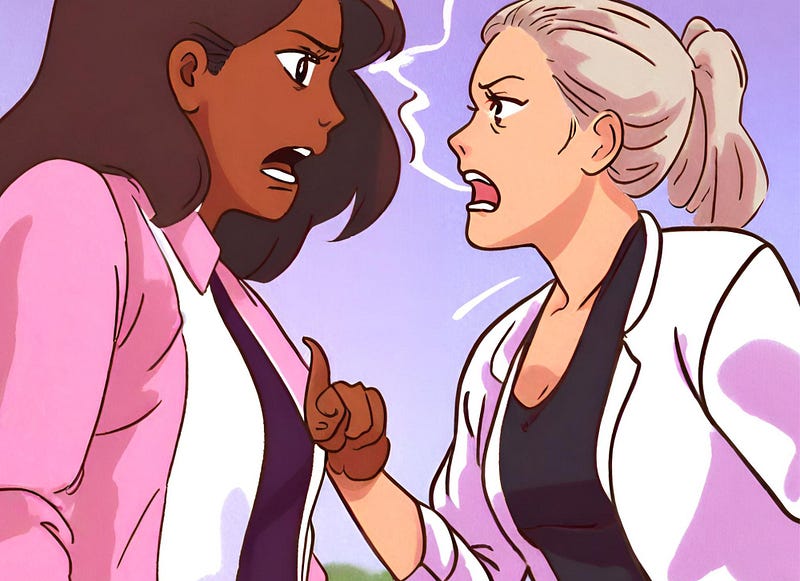
Yes, it’s simple really. All you need to do is question why someone reacts the way they do, when it comes to equality, and the low key racism will shine.
Yet I’m back with the same bottom line, but from different angle — again.
It’s been a while since it’s happened if you consider about three months to be long, but it never ceases to amaze me how often it does.
Guess what?
I got into another spat and disagreement with another so called white feminist. Or liberal white women you could say, based on the context which it happened and what the spat was over — the right for people to voice opinions on the hardships of marginalised people, racism, and/or the lack of intersectional feminism.
Here we go again.
I slept on the disagreement I had with her, mulled over whether I was the one overreacting — you know like us black women do, when we’re faced with the delicate flower’s tears. I’ve concluded why remain silent?
The reality is there’s two key things white feminists still don’t know
Since I wrote my last piece, Why White Feminists Need To Understand Ellen Pence’s 1982 Essay,
There’s a need to break down exactly what they don’t know, from a different angle one more time.
Number One: when they try to silence you
If I told you that as a white person when you try and silence a black, brown, or minority person (or even one of your white counterparts) from speaking their truth about racism — whatever that might be, in spaces where highlighting racism is the aim. Or you try to silence them from using the truth of another person to highlight injustices what you’re doing is:
· Stopping progress
· Overlooking racism and injustices
· Questioning someone’s genuine plight
· Keeping the historical status quo of racial oppression in place
Don’t reach for the tissues — you know it.
This is exactly what happened to me (again), in these so called “intersectional feminism spaces.”
The right of myself, other black, brown, minority women, and the progressive non-black people in the group needed to be silenced, according to this white woman. They could not move forward with their activist’s work and highlight injustices.
Why?
It could be logically argued it’s fear over what would be exposed, all the injustices and racism. That said, how this was to be used was to raise awareness of it. Does that not sound like low key racism to you, by stopping this?
The raising of other people’s consciousness to racism, and all the other “isms” is supposed to be about just that — bringing awareness of it. Why would you want to silence people’s voices about this?
What should be remembered is
When any woman who is concerned about women’s rights and the progression of it, takes the time to understand the history of it in Europe, USA, and worldwide. If we narrow down to the history of feminism’s “silencing of voices,” we’ve seen historically how white feminists have tried to silence the voice of black, brown, and minority women, and their progressive non-racist white women’s rights advocates.
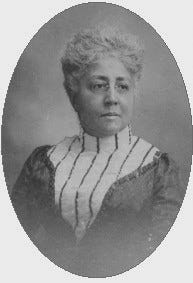
Take for example Josephine St. Pierre Ruffin who was the representative of the first black women’s suffrage newspaper and club Woman’s Era, founded in 1894.
She was barred from access to the General Federation of Women’s Clubs (GFWC), which was the white and female women’s association of the time. The GFWC were due to hold a meeting for women and their rights.
Why was she barred from attending and access? Because she was a black woman who had come to represent her black and brown sisters.
What happened to Josephine?
After this happened to Josephine St. Pierre Ruffin, the white women of the GFWC published a fictionalised, false, and racist story entitled, The Rushing In Of Fools, about black women, to scare other white women into not allowing black women into their clubs to represent their sisters.
Following this, the legendary Ida. B. Wells the black, female journalist notorious for her reporting on white supremacy covered the story and behaviour of the white women, at the GFWC.
According to her reporting on the story written by the white women, Angela Davis the black feminist and scholar of modern times writes that the story from the white women:
“(It) described the pitfalls of integrating club life in a certain unnamed city” — Women, Race, Class (1981) by Angela Davis pg. 114.
White women of the GFWC published a fictionalised, false, and racist story entitled, The Rushing In Of Fools, about black women.
Not only that Fannie Barrier Williams was also rejected from membership of the Chicago branch of the GFWC — because she was black.
“The national club movement of white women preceded that of black women by six years, with organisation of the General Federation of Women’s Cubs (GFWC), national movement of coloured women precipitated a debate over racial integration of the GFWC. This issue had first presented itself on a local level when in 1894, Fannie Barrier Williams was rejected from membership in the Chicago Women’s Club because of her race.” — Black Women in White America, A Documentary History (1992) pg. 447
Now, in this fourth wave of feminism
The experiences I have and this most recent one, 130 years after Josephine St. Pierre Ruffin’s and Fannie Barrier William's, where a white woman wanted to silence their voices, actions, and follow up of injustices. For me it clearly echoed the racial undertones of the historical silence of black, brown, and minority women.
What’s the deal? Why are we still here with white women who want to call themselves “liberal” or “progressive”?
Sure, I was not being barred from entry, but the voice and ability to speak out about the injustices discussed, or discovered, was what was being silenced. Not just for me, for everyone mind you.
Why do they do it?
I asked myself why was this white woman so worried about protecting white people’s feelings? Because it certainly would not be protecting black, brown, or minority people’s feelings by highlighting injustices and conscious raising about it.
It’s the age old answer — one can only conclude it’s most likely because she was aware that injustices would and could be highlighted, and followed up with— she didn’t want that. Not at the expense of white people’s feelings. It’s better to keep all that hush-hush.
You tell me, is that not low key racism or even upholding it, and stopping black, brown, and minority women and people from progressing with their plight.
Number two: when they turn the victimhood around
Every woman of colour has experienced this, especially in women’s rights spaces, at work, and in life. All of a sudden the injustices are not being carried out against the double jeopardy of being female and black, brown, or a minority.
Which means racism impacts a woman who does not look like the average white feminist, liberal white woman, or even non-liberal white woman. As the black feminist Frances. M. Beal highlighted in her work Double Jeopardy: To Be Black and Female (1969).
Which means when a black, brown, or minority woman wants the freedom to speak out, it’s because of her double jeopardy that is still very much alive and well, in 2024.
But no, all of a sudden, these injustices are against the white woman’s feelings and how she or other white people will “feel” if people speak out.
Do not clutch your pearls — you know where the injustice is placed, it is not with you by turning around the victimhood.
Which means when a black, brown, or minority woman wants the freedom to speak out, it’s because of her double jeopardy that is still very much alive and well, in 2024.
Here’s the thing:
Black women, brown women, and minority women are fed up of having this uphill struggle with white women. In this fourth wave of feminism, which has an intersectional focus, which means race, disability, class, and many other “isms” that don’t impact a white, straight, woman are what the “forgotten ones” have come out of the woodwork to talk about.
And this time everyone is going to listen.
If feelings are a real focus let’s reflect on:
· Fannie Barrier’s feelings? When she was not considered a woman, and barred from feminist spaces to voice her concerns, and the plight of black women — because she was black.
· What about Josephine St. Pierre Ruffin’s feelings? When she was barred from entry as she was a black and female writer, and creator of the first black female newspaper in the USA. But white women blocked her because one: she was black, and two: white women knew she was dangerous as a writer, this black woman would most likely start a movement for her black sisters with her pen, they didn’t want that.
· What about the feelings of Ida B. Wells? And all the backlash she got, as a black and female journalist, because she too kicked up a fuss with her pen and reporting.
What about the feelings of the modern day black, brown, or minority women? Who are also on a move to dismantle the historical racist, treasonous, and traitorous like behaviour feminism has had towards black, brown, and minority women in arguably every wave of feminism up to this fourth wave.
Every time I face the same issues and injustices in feminist and women’s rights spaces, it becomes an eye-roll moment, it’s tired now we’re centuries into it.
Black, brown, and minority women have had enough of protecting white people’s feelings when speaking about injustices — that in itself is the injustice.
Stop asking or expecting us to be silent about it.
White women, can get deep into their feelings about what I say and feel, don’t expect a black, brown, or minority woman to say anything to pick you up out of your feelings.
Girl, we’re done and tired.
Stop asking or expecting us to be silent about it.
I will continue to call out the injustice and see things through the lens of the black, brown, and minority woman, because it appears nothing much is changing. But it is about to.
I will do this while white feminists stay in their feelings over false victimhood, and needing to protect the feelings of other white people when a black, brown, or minority woman has got something to say.
Further reading on intersectional feminism and women’s rights
- Is Feminism to Blame For Korean Women Taking Down The Patriarchy?
- Where Culture Meets Feminism: How Patriarchy Oppresses Korean Women
- How Women of The Caribbean are Devalued
- Are The Women of Latin America Classless?
- French Feminists Legally Secure irreversible Abortion Rights From 2024
- Why White Feminists Need To Understand Ellen Pence’s 1982 Essay
- What If I Am A Woman?
- Did They “Ethnically Cleanse” International Women’s Day?
Thanks for your readership, I hope my writing gave you something to think about. If I’ve caught you in a good mood or you’re feeling kind, you can buy me a coffee here: https://www.buymeacoffee.com/MeAndMyMuse