avatarJennifer Fu

Free AI web copilot to create summaries, insights and extended knowledge, download it at here

2660

Abstract

src/MicroFrontend.js"><code>MicroFrontend</code>.js</a> to handle chunks:</p> <figure id="785e"> <div> <div>

            <iframe class="gist-iframe" src="/gist/JenniferFuBook/0cd7d34548c76df1837988692880b54c.js" allowfullscreen="" frameborder="0" height="undefined" width="undefined">
          </div>
        </div>
    </figure></iframe></div></div></figure><p id="905f">Lines 13 to 38 load small chunked js files. When all chunks are loaded, it invokes <code>this.renderMicroFrontend()</code> at line 31. This is how micro-frontends can preserve optimization.</p><p id="8239">Now we can see micro-frontend’s three chunked files are loaded:</p><figure id="85d6"><img src="https://cdn-images-1.readmedium.com/v2/resize:fit:800/1*1WA-rkNfEFwRRaeuuSi4UA.png"><figcaption></figcaption></figure><p id="67e8">They are embedded in the app container’s HTML files:</p><figure id="5861"><img src="https://cdn-images-1.readmedium.com/v2/resize:fit:800/1*j7Rbaz33A7Ejzt4wKO-DbA.png"><figcaption></figcaption></figure><h2 id="6db3">Hook version of MicroFrontend.js</h2><p id="c746">As a bonus, we convert MicroFrontend.js to use Hook.</p>
    <figure id="eb39">
        <div>
          <div>
            
            <iframe class="gist-iframe" src="/gist/JenniferFuBook/94bd3eaaa26fb8097f100164c6bc1c0c.js" allowfullscreen="" frameborder="0" height="undefined" width="undefined">
          </div>
        </div>
    </figure></iframe></div></div></figure><p id="f02c"><a href="https://gist.github.com/JenniferFuBook/0cd7d34548c76df1837988692880b54c#gistcomment-3350826">As natansevero pointed out</a>, for anybody that using this algorithm and do not want to load all micro front-end JavaScript on the <code>&lt;head&gt;</code> tag, you can replace the code from line 33 to <code>document.body.after(script)</code>. It works as expected :)</p><h1 id="e1b2">The Code Repositories</h1><p id="3798">There are two code repositories for this example:</p><ul><li><b>The app container:</b> The three-step converted application container is located <a href="https://github.com/JenniferFuBook/app-container">here</a>.</li></ul><div id="6ac2"><pre>git <span class="hljs-keyword">clone</span> <span class="hljs-title">--single-branch</span> --branch chunkOptimization https://github.com/JenniferFuBook/app-container.git

npm i npm <span class="hljs-literal">start</span></pre></div><ul><li><b>The micro-frontend app:</b> The five-step converted micro-frontend application is located <a href="https://github.com/JenniferFuBook/micro-frontend">here</a>.</li></ul><div id="b70a"><pre>git

Options

<span class="hljs-keyword">clone</span> <span class="hljs-title">--single-branch</span> --branch chunkOptimization https://github.com/JenniferFuBook/micro-frontend.git npm i npm <span class="hljs-literal">start</span></pre></div><blockquote id="bc9f"><p><i>As matter of this improved version of MicroFrontend.js, you don’t have to use <code>react-app-rewired</code> in step 1, and step 2 can be completely skipped. 5 steps are reduced to 3.5.</i></p></blockquote><blockquote id="f14f"><p><i>This saving is captured in the </i>chunkOptimization <i>branch.</i></p></blockquote><h1 id="edb9">The Launch Command</h1><p id="f29c">Assume these two repositories are in your <code>home</code> directory. Set the following alias in your Bash profile:</p><div id="39af"><pre><span class="hljs-keyword">alias</span> runBoth='<span class="hljs-keyword">cd</span> ~<span class="hljs-string">/app-container</span>; concurrently <span class="hljs-string">"npm start --prefix ~/micro-frontend"</span> <span class="hljs-string">"npm start"</span>'</pre></div><p id="493c"><code>runBoth</code> uses <a href="http://micro%20front-end/"><code>concurren</code>tly</a> command to start both the app container and the micro-frontend app. For this branch of work, we retain optimization for micro-frontends.</p><h1 id="96a3">Conclusion</h1><p id="2abd">You don’t have to lose optimization for micro-frontends.</p><p id="913a">Part of this work is contributed by Jonathan Ma.</p><p id="5733">Thanks for reading. I hope this was helpful.</p><p id="ecec">This is a series about micro-frontend. The following is a list of other articles:</p><ul><li><a href="https://readmedium.com/5-steps-to-turn-a-random-react-application-into-a-micro-frontend-946718c147e7">5 Steps to Turn a Random React Application Into a Micro Front-End</a></li><li><a href="https://readmedium.com/3-steps-to-turn-a-random-react-application-into-a-micro-frontend-container-a80e33b6a066">3 Steps to Turn a Random React Application Into a Micro-Frontend Container</a></li><li><a href="https://readmedium.com/build-your-own-micro-frontend-ecosystem-a05128c74f99">Build Your Own Micro-Frontend Ecosystem</a></li><li><a href="https://readmedium.com/10-decision-points-for-micro-frontends-approach-4ebb4b59f40">10 Decision Points for a Micro-Frontend Approach</a></li><li><a href="https://readmedium.com/6-steps-to-create-a-multi-version-react-application-1c3e5b5df7e9">6 Steps to Create a Multi-Version React Application</a></li><li><a href="https://readmedium.com/micro-frontends-using-webpack-5-module-federation-3b97ffb22a0d">Micro Frontends Using Webpack 5 Module Federation</a></li></ul></article></body>

You Don’t Have to Lose Optimization for Micro-Frontends

A way to progressively load chunked micro-frontends from your manifest.json

Photo by Tomas Williams on Unsplash

After “5 Steps to Turn a Random React Application Into a Micro Front-End,” we were asked by a reader:

In project too large, if not split code when loaded, so it becomes hard to scalable and will have a bad effect on UX.

Yes, it is a valid statement. We have to resolve this issue.

How Does Code Work?

In “3 Steps to Turn a Random React Application Into a Micro-Frontend Container,” we showed how micro-frontend works. Micro-frontends run as independent applications. At the bundling stage or runtime, these applications are loaded into a micro-frontend container. The application container runs them as if these micro-frontends are its own components and provides a seamless workflow to users.

In our basic example, there is one micro-frontend app and one app container.
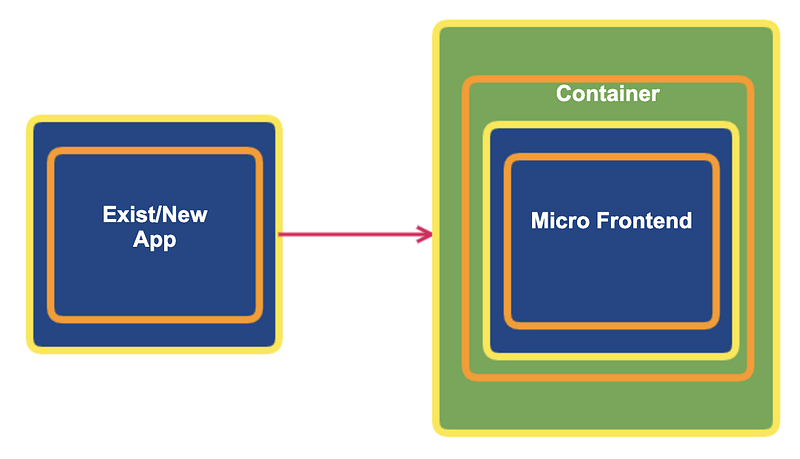
This translates to the below illustration, with a micro-frontend app on the left and an app container on the right.
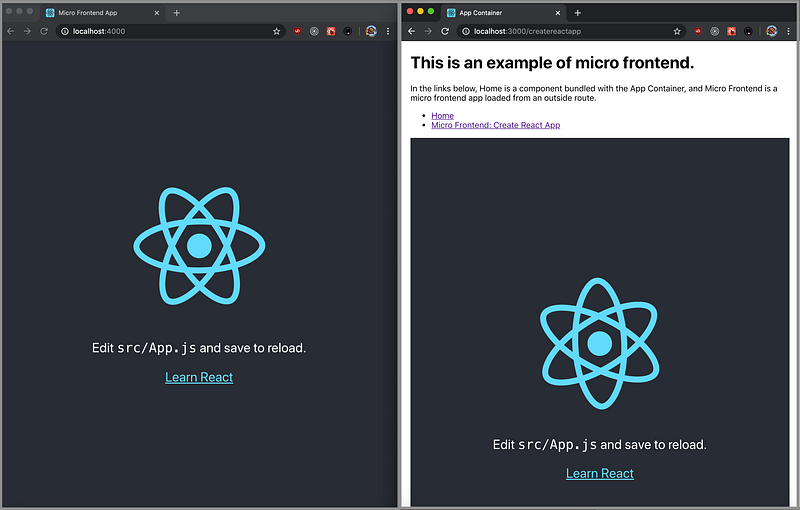
In order to make it work, we disable chunk optimization, which splits the code into small chunks to be progressively loaded.
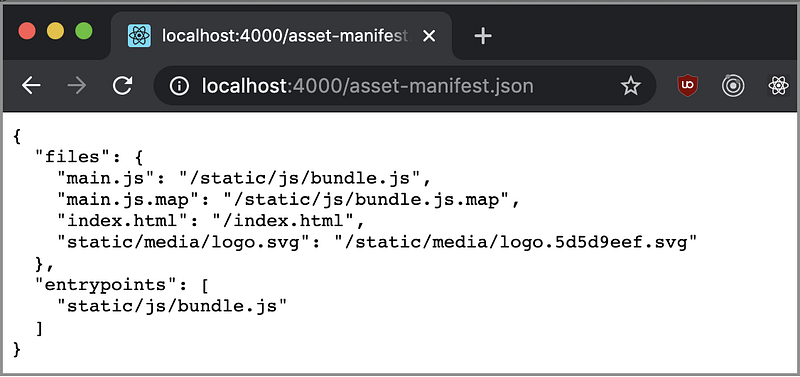
Here we re-enable chunk optimization.
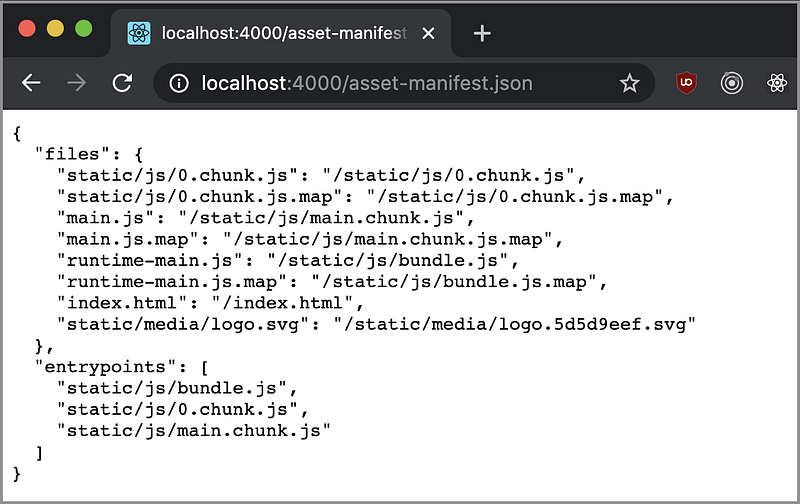
Now what?

We need to modify Cam Jackson’s MicroFrontend.js to handle chunks:

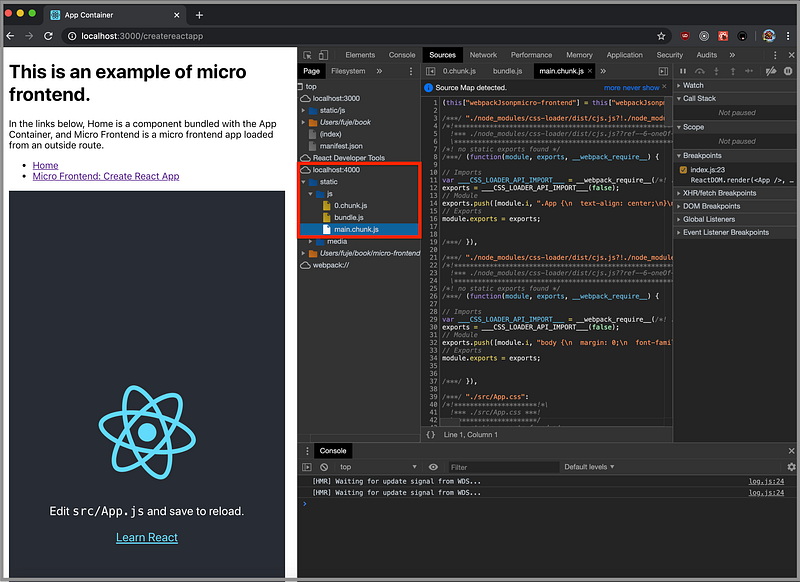
Lines 13 to 38 load small chunked js files. When all chunks are loaded, it invokes this.renderMicroFrontend() at line 31. This is how micro-frontends can preserve optimization.

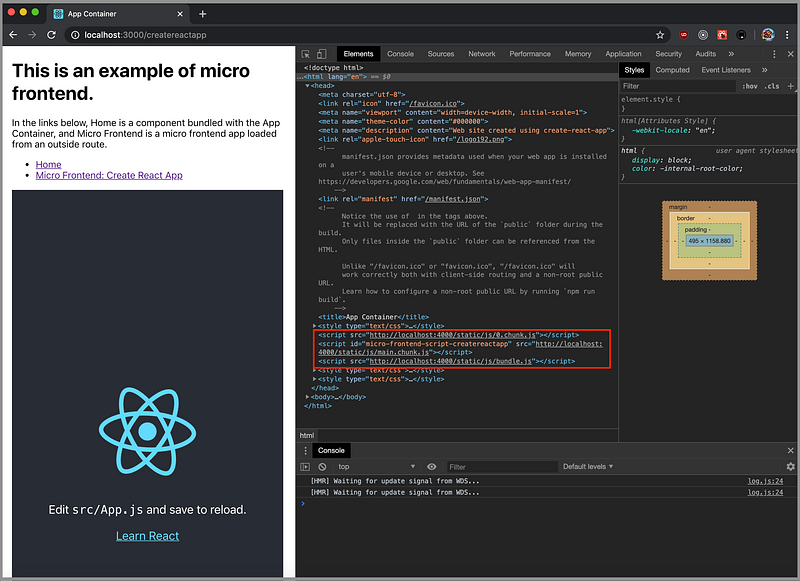
Now we can see micro-frontend’s three chunked files are loaded:
They are embedded in the app container’s HTML files:
Hook version of MicroFrontend.js

As a bonus, we convert MicroFrontend.js to use Hook.

As natansevero pointed out, for anybody that using this algorithm and do not want to load all micro front-end JavaScript on the <head> tag, you can replace the code from line 33 to document.body.after(script). It works as expected :)

The Code Repositories

There are two code repositories for this example:

  • The app container: The three-step converted application container is located here.
git clone --single-branch --branch chunkOptimization https://github.com/JenniferFuBook/app-container.git
npm i
npm start
  • The micro-frontend app: The five-step converted micro-frontend application is located here.
git clone --single-branch --branch chunkOptimization https://github.com/JenniferFuBook/micro-frontend.git
npm i
npm start

As matter of this improved version of MicroFrontend.js, you don’t have to use react-app-rewired in step 1, and step 2 can be completely skipped. 5 steps are reduced to 3.5.

This saving is captured in the chunkOptimization branch.

The Launch Command

Assume these two repositories are in your home directory. Set the following alias in your Bash profile:

alias runBoth='cd ~/app-container; concurrently "npm start --prefix ~/micro-frontend" "npm start"'

runBoth uses concurrently command to start both the app container and the micro-frontend app. For this branch of work, we retain optimization for micro-frontends.

Conclusion

You don’t have to lose optimization for micro-frontends.

Part of this work is contributed by Jonathan Ma.

Thanks for reading. I hope this was helpful.

This is a series about micro-frontend. The following is a list of other articles:

JavaScript
Programming
React
Reactjs
Front End Development
Recommended from ReadMedium