
RIP Hollywood?
Why The Hype About Zeroscope’s AI-Generated Videos?
An open-source text-to-video model to take on industry leaders
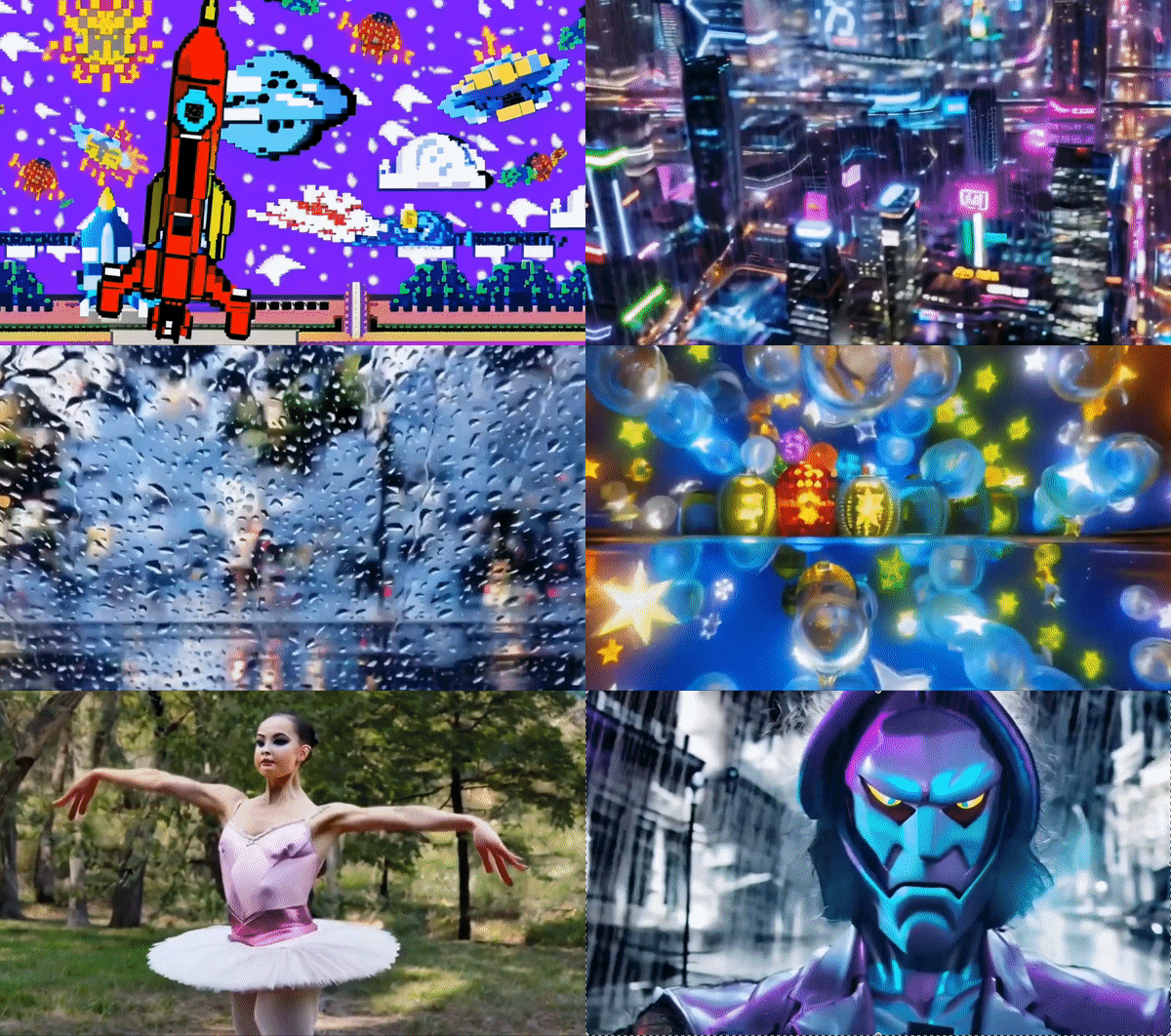
While text-to-video is still in its infancy, there is no doubt that this technology is gaining momentum. So, let’s take a closer look at an open source model that’s making waves in the AI scene right now — Zeroscope.
(No time to read, just wanna try out the model? Jump to the end of this article)
Why the hype about Zeroscope?
Sure, there are already companies with enormous computational and financial resources, like RunwayML, which with Gen1 and Gen2, have already released powerful video-to-video and text-to-video tools. And then there are others, which are still keeping their video models under wraps, such as Google with its Phenaki or Meta with Make-A-Video.
But in this scenario of an emerging industry, where the big tech companies are already placing themselves, Zeroscope is now suddenly entering the scne as an open source alternative that is 100% free to use. This is remarkable because in the past, communities around open source projects have produced innovative workflows that were later used by large technology companies. Just look at what the Stable Diffusion community developed a year ago, which was recently implemented by companies like Adobe or Midjourney.
The great strength of open source models: any developer can further improve the model. And Zeroscope has the potential to follow a similar path.
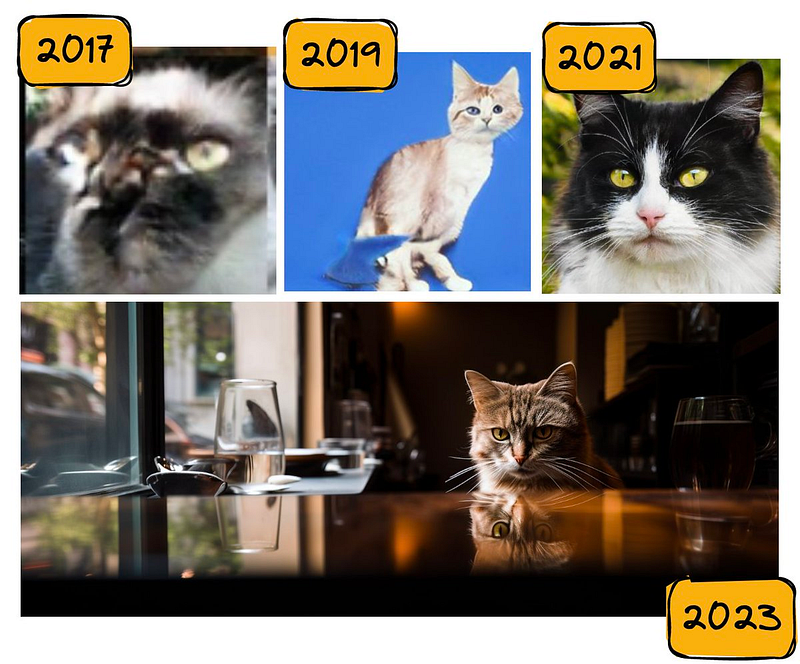
And what happens with a technology that’s still in its infancy when it has a community that drives its development?
Dual approach
Following an approach familiar from early model versions of Midjourney, Zeroscope is based on two components:
- Zeroscope_v2 567w, designed for rapid content creation at a resolution of 576×320 pixels for video concept exploration, and
- Zeroscope_v2_XL, a model for upscaling the results of Zersoscope_v2567w to 1024×576 pixels.
This dual approach enables users to quickly iterate through video ideas using the lower-resolution version and then refine their favorite concepts in higher resolution.
Another advantage is that Zeroscope’s smaller version, v2, can run on many standard graphics cards as it requires only 7.9 GB of VRAM, while its bigger counterpart, V2 XL, requires 15.3 GB.
How to use Zeroscope
On Replicate you can find a demo version that you can try out (comes with lots of parameters to tweak results):
Another option is Huggingface, where you will find a simpler demo Space here:
➡️ Follow me to stay up to date on “AI &Creativity”. If you want to support my work, become a Medium member using my referral link and get full access to all my articles (140+ and growing) and those of thousands of other writers. 🙏
➡️ If you like my content, why not leave a “clap” at the end of this article, so more people can see it?


