
Why Microservices are not silver bullet? 10 Reasons for NOT using Microservices
Don’t blindly use Microservices for every single application you build
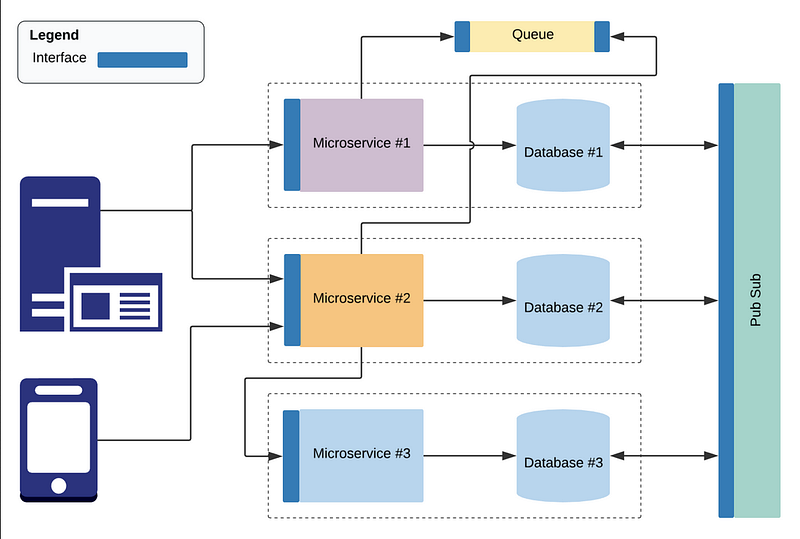
Hello folks, the tile may sound like what?? everyone is saying use Microservice and you are saying others? why? Well, its not just me, many people think like that and there are solid reasons for it, which you will see in this article.
This was also one of the question which was asked to me last week for a big, reputable bank interviews, so knowing when not to use Microservice architecture is as important as knowing when to break your monolith into Microservices.
By the way, if you are preparing for Java developer interviews, then I have shared many resources earlier, which you can also check it out to prepare better.
For example In the past, I have shared several resources for Java interviews like 21 Software Design Pattern questions, 10 Microservice Scenario based questions, 20 SQL queries from Interviews, 50 Microservices questions, 60 Tree Data Structure Questions, 15 System Design Questions, and 35 Core Java Questions and 21 Lambda and Stream questions , if you haven’t checked them yet, I suggest you to look at the them before your interview.
By the way, if you are new to Microservice architecture or just want to revise key Microservice concepts and looking for resources then here are few online courses you can join:
- Master Microservices with Spring Boot and Spring Cloud [Udemy]
- Building Scalable Java Microservices with Spring Boot [Coursera]
- Developing Microservices with Spring Boot [Educative]
- Master Microservices with Java, Spring, Docker, Kubernetes [Udemy]
This list includes both video and text-based courses as well as project based courses for hands-on learning, you can join one or a couple of them to revise Microservices concepts. If you need more choices, you can see the below articles:
And, if you need more options, you can also checkout following article where you will more Microservice courses form different platform for Java developers:
10 Reasons Why You shouldn’t use Microservices for Everything
While Microservices can offer many benefits to software development, they are not always the best choice for every situation. Here are ten reasons why you might not want to use microservices:
1. Increased complexity
Nothing is free in this world. Implementing microservices requires a lot of additional infrastructure, such as service discovery, load balancing, and inter-service communication. This can increase the complexity of your system and make it harder to maintain.
2. Difficult to Test
With Microservices, Testing becomes more complex as each service must be tested individually, as well as in conjunction with other services that it depends on.
3. Higher deployment costs
Because Microservices involve multiple services running independently, deploying and maintaining them can be more expensive than deploying and maintaining a monolithic application.
4. Increased operational overhead
If you ask me, managing and supporting one service is always easier then managing 100s of them even if they are smaller. With Microservices, you have to manage and monitor multiple services, which can add to your operational overhead.
5. Distributed systems are harder to debug
This is probably the most important reason for me to avoid Microservices for everything I build. When something goes wrong in a distributed system, it can be difficult to identify the root cause of the problem.
6. Higher latency
Microservices communicate with each other over the network, which can introduce additional latency into your system. This one is also a popular Microservice question where interviewer commonly ask on which scenario using Microservices is not desirable? while there are many but latency sensitive applications should be built on Microservice architecture.
7. Difficult to reason about
With multiple services running independently, it can be harder to understand how they all fit together and how data flows through the system.
8. Requires a team with specialized skills
Microservices require a team with specialized skills in areas such as distributed systems, networking, and DevOps.
9. Security concerns
Securing a microservices architecture can be more challenging than securing a monolithic application. Though, you can use framework and libraries like Spring Security, JWT and OAuth 2.0 its still challenging to secure Microservices. If you want to learn more, see my earlier article about securing microservices:
10. Not always necessary
For smaller applications, a monolithic architecture might be perfectly suitable and implementing microservices might be overkill. So stick to what suits best for your requirement.
Java and Spring Interview Preparation Material
Before any Java and Spring Developer interview, I always use to read the below resources
Grokking the Java Interview
Grokking the Java Interview: click here
I have personally bought these books to speed up my preparation.
You can get your sample copy here, check the content of it and go for it
Grokking the Java Interview [Free Sample Copy]: click here

If you want to prepare for the Spring Boot interview you follow this consolidated eBook, it also contains microservice questions from spring boot interviews.
Grokking the Spring Boot Interview
You can get your copy here — Grokking the Spring Boot Interview

That’s all about 10 reasons for Not using Microservices all the time. Ultimately, whether or not to use microservices depends on the specific needs and goals of your project.
It’s important to carefully consider the benefits and drawbacks of microservices and determine if they are the right choice for your particular situation.
Additionally, you can also prepare Microservices Questions like difference between API Gateway and Load Balancer, SAGA Pattern, how to manage transactions in Microservices, and difference between SAGA and CQRS Pattern, they are quite popular on interviews.
By the way, if you are new to Microservice architecture or want to improve your knowledge about Microservice architecture and looking for resources then here are few online courses you can join:
- Master Microservices with Spring Boot and Spring Cloud [Udemy]
- Building Scalable Java Microservices with Spring Boot [Coursera]
- Developing Microservices with Spring Boot [Educative]
- Master Microservices with Java, Spring, Docker, Kubernetes [Udemy]
This list includes both video and text-based courses as well as project based courses for hands-on learning, you can join one or a couple of them to revise Microservices concepts. If you need more choices, you can see the below articles:
And, if you need more choices, you can also checkout following resources:
Other Java Interview Questions you may like:


