
Difference between SAGA Pattern and 2 Phase Commit in Microservices?
Understanding the Pros and Cons of SAGA Pattern and 2 Phase Commit for Distributed Transactions in Microservices
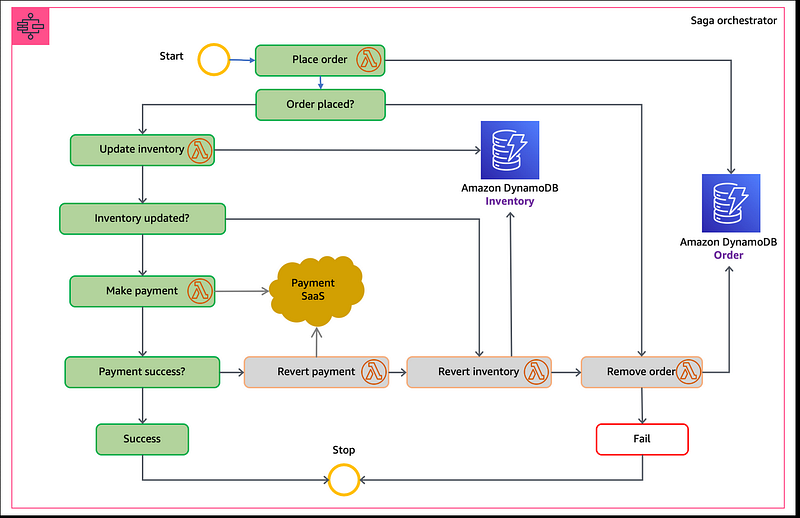
Hello folks, in my last interview for a senior Java developer position, I was asked this question, “what is difference between SAGA and 2 Phase Commit? Which one will you prefer and why?”, while I have fair idea of both SAGA Pattern and 2 Phase commit as I have not only used them but also written about them, but I think interview pressure got me and I couldn’t explain the difference as well I could, at least that’s what I felt.
I haven’t heard from them after that so I think, I probably not going to receive any offer and it was any way very senior position of managing their suite of Microservices and architecture new strategic solution, which I felt will require a lot of communication with stack-holders and very less coding, something not desirable at this moment, I would like to remain hands-on with coding.
Anyway, let’s come back to the questions so that you can answer this question better when you see in your next Java Interview.
By the way, if you also like online courses to learn or revise key Microservice concepts then here are the best online courses you can join:
- Master Microservices with Spring Boot and Spring Cloud [Udemy]
- Building Scalable Java Microservices with Spring Boot [Coursera]
- Developing Microservices with Spring Boot [Educative]
- Master Microservices with Java, Spring, Docker, Kubernetes [Udemy]
This list includes both video and text-based courses as well as project based courses for hands-on learning, you can join one or a couple of them to revise Microservices concepts. If you need more choices, you can see the below articles:
And, if you need more choices, you can also checkout following resources:
Difference in SAGA Pattern vs 2 Phase Commit
While both the Saga pattern and Two-Phase Commit (2PC) are used to maintain data consistency in distributed systems, but they differ in their approaches.
The Two-Phase Commit (2PC) protocol is a distributed algorithm used to ensure that all nodes in a distributed system agree to commit or abort a transaction.
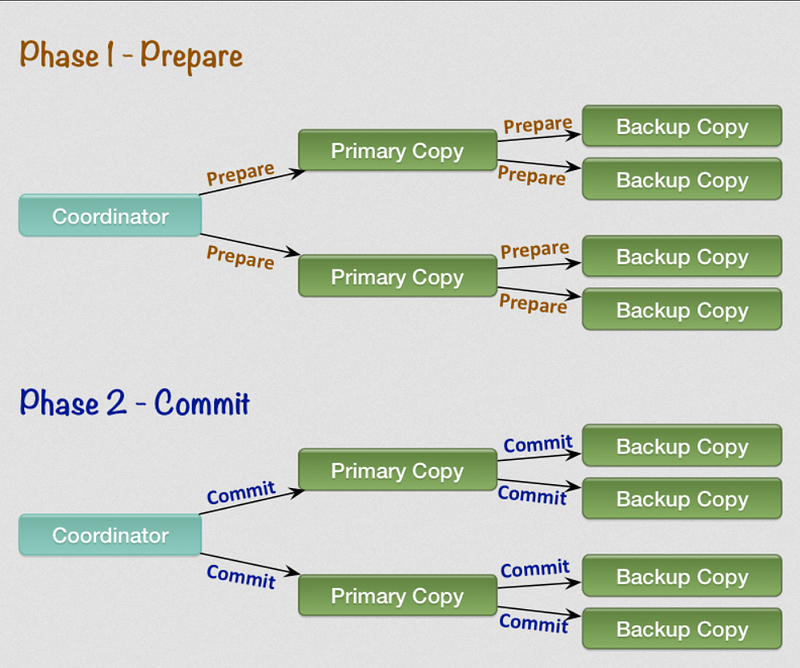
2PC works by coordinating transactions between a coordinator node and multiple participant nodes. The coordinator sends a request to the participants to prepare for the transaction, and once all participants respond with a positive acknowledgement, the coordinator sends a commit message to each participant to commit the transaction.
If any participant fails to respond or sends a negative acknowledgement, the coordinator sends an abort message to all participants, and the transaction is rolled back.
2PC guarantees that all nodes will commit or abort a transaction, but it can be slow and vulnerable to failure.
Here is a nice diagram which illustrate how 2 Phase commit works:
On the other hand, SAGA Pattern is a Microservices design pattern for managing long-lived transactions in a distributed system. A saga is a sequence of local transactions, where each local transaction updates the state of a single service, and each service has its own database.
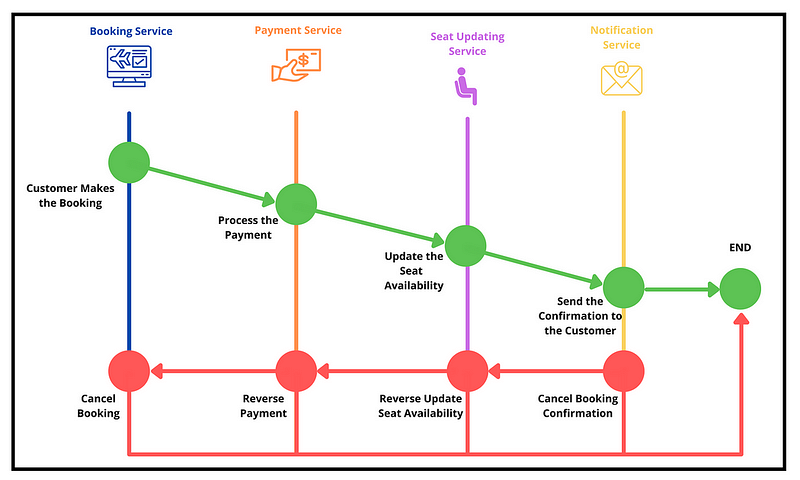
Each local transaction is an atomic operation that either completes successfully or compensates for its effects. If a local transaction fails, the saga executes a compensating transaction that undoes the effects of the failed transaction.
The saga pattern allows for more flexibility than 2PC and can better handle complex, long-lived transactions, but it requires careful design to ensure data consistency.
Here is a nice diagram which shows how SAGA Pattern works:
When to use SAGA and 2 PC commit in Design?
This is the second part of the question which slightly hard to answer because we only know that both are used to manage distributed transaction in microservices but there are more to it.
The 2PC protocol is useful in situations where all participants of the distributed transaction must commit or roll back the transaction together. It ensures atomicity and consistency of the transaction but can lead to blocking and performance issues in highly distributed systems.
Therefore, it’s typically used in scenarios with a small number of participants, where the latency and scalability limitations of 2PC can be managed.
In contrast, SAGA pattern is useful in situations where the transaction is too large to be managed by a single 2PC protocol. SAGA breaks the transaction down into smaller, local transactions that can be independently managed by each microservice.
This allows for greater scalability, fault tolerance, and performance in highly distributed systems. SAGA is typically used in complex, long-running business processes that involve multiple microservices, where a transaction rollback would be expensive or not feasible.
Java and Spring Interview Preparation Material
Before any Java and Spring Developer interview, I always use to read the below resources
Grokking the Java Interview
Grokking the Java Interview: click here
I have personally bought these books to speed up my preparation.
You can get your sample copy here, check the content of it and go for it
Grokking the Java Interview [Free Sample Copy]: click here

If you want to prepare for the Spring Boot interview you follow this consolidated eBook, it also contains microservice questions from spring boot interviews.
Grokking the Spring Boot Interview
You can get your copy here — Grokking the Spring Boot Interview

That’s all about difference between SAGA Pattern and 2 Phase commit in Microservice architecture. In summary, 2PC is a distributed protocol that coordinates transaction commits, while the Saga pattern is a design pattern for managing long-lived transactions by breaking them down into a sequence of local transactions that can be compensated for if necessary.
2 Phase commit is more appropriate for scenarios with a small number of participants, where the latency and scalability limitations of 2PC can be managed, while SAGA pattern is useful in situations where the transaction is too large to be managed by a single 2PC protocol
By the way, if you also like online courses to learn or revise key Microservice concepts then here are the best online courses you can join:
- Master Microservices with Spring Boot and Spring Cloud [Udemy]
- Building Scalable Java Microservices with Spring Boot [Coursera]
- Developing Microservices with Spring Boot [Educative]
- Master Microservices with Java, Spring, Docker, Kubernetes [Udemy]
This list includes both video and text-based courses as well as project based courses for hands-on learning, you can join one or a couple of them to revise Microservices concepts. If you need more choices, you can see the below articles:
And, if you need more choices, you can also checkout following resources:
Other Java Microservices articles you may like:


