
50+ Spring Boot Interview Questions and Answers for Java Programmers
These are 50+ Spring Boot Interview Questions and answers to Crack your Next Java Developer interview
Hello folks, if you are preparing for Spring and Java developer interviews and looking for resources like frequently asked spring framework questions then you have come to the right place.
In the past, I have shared several resources for Java interviews like 21 Software Design Pattern questions, 10 Microservice Scenario based questions, 20 SQL queries from Interviews, 50 Microservices questions, 60 Tree Data Structure Questions, 15 System Design Questions, and 35 Core Java Questions and 21 Lambda and Stream questions , if you haven’t checked them yet, I suggest you to look at the them before your interview.
Now, coming back to Spring Boot Interview questions, Spring Boot has gained widespread popularity among Java developers due to its simplicity and ease of use. It provides a comprehensive framework for building enterprise-level applications quickly and efficiently. It leverages the Spring ecosystem to offer a broad range of features, such as auto-configuration, starter dependency, actuator and more.
If you’re preparing for a Spring Boot interview, it’s essential to have a good grasp of the key concepts and features of the framework. In this article, we’ll cover more than 50 Spring Boot interview questions, ranging from the basics of the framework to more advanced topics. Whether you’re a beginner or an experienced developer, this article will help you prepare for your next Spring Boot interview and ace it with confidence.
But, if you are not a Medium member yet then I highly recommend you to join Medium and read my other member only articles for your interview preparation. You can join Medium here
50+ Spring Boot Interview Questions for Java Developers
Here is a list of frequently asked Spring Boot related questions form Java developer interviews. I have divided all the questions into different section based upon the topic they are asked like Spring Boot Basics, Auto-configuration and Actuator, Spring Data JPA, Spring Cloud and Microservices, Spring MVC And REST, Spring Security and Spring Batch etc.
This way you can also checkout the areas you want to prepare first. Anywa, let’s jump into questions now:
1. Spring Boot Basics Questions and Answers
In this section we will take a look at interview questions which are based upon Spring boot general concepts. They are also the good starter and knowing them will help you to answer other advanced Spring Boot question better.
1.What is Spring Boot Framework? Spring Boot is an open-source Java-based framework used to build stand-alone and production-ready Spring applications quickly and easily. It provides a comprehensive platform to develop enterprise-level applications by simplifying the configuration and deployment process.
2. What are the benefits of using Spring Boot for Java development? While the most important benefit of Spring boot is faster development, here are few more benefit of using Spring Boot for Java development:
- Simplified application configuration and deployment
- Reduced development time and effort
- Increased productivity and efficiency
- Provides embedded servers like Tomcat, Jetty, and Undertow
- Offers a wide range of plugins and modules for easy development
- Provides support for various data sources and databases
- Enables easy testing and debugging of applications
3. What are the different components of Spring Framework? Here are the different components of Spring Framework include:
- Spring MVC for building web applications
- Spring Data for database access and manipulation
- Spring Security for secure authentication and authorization
- Spring Actuator for monitoring and managing application behavior
- Spring Integration for integrating various systems and services
- Spring Batch for batch processing
- Spring Cloud for building cloud-native applications
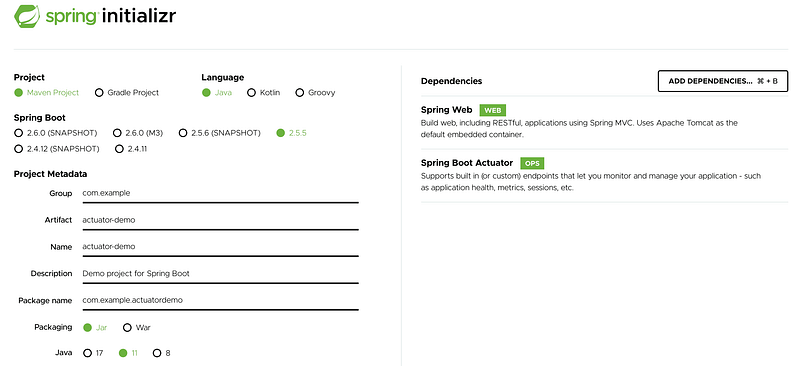
4. What is Spring Initializr? Spring Initializr is nothing but a web-based tool used to create a new Spring Boot project easily and quickly. It provides a user-friendly interface to select the dependencies, packaging options, and project metadata. The tool generates a starter project with all the necessary configurations and dependencies required to run the application.
5. What is the difference between Spring and Spring Boot? This one is a popular question which I have seen during telephonic round of interview. Spring is a modular Java-based framework used to develop enterprise-level applications.
It provides various modules like Spring MVC, Spring Data, and Spring Security, which can be used to build web applications, access databases, and provide security to the application.
Spring Boot, on the other hand, is a framework built on top of the Spring framework, which provides a comprehensive platform to develop stand-alone and production-ready Spring applications quickly and easily.
6. How does Spring Boot work? Spring Boot does for spring framework what Spring framework did for Java, I mean making it easy to create Java application.
Spring Boot works by providing a comprehensive platform to develop stand-alone and production-ready Spring applications quickly and easily. It provides various features like auto-configuration, embedded servers, and a wide range of plugins and modules, which simplify the configuration and deployment process.
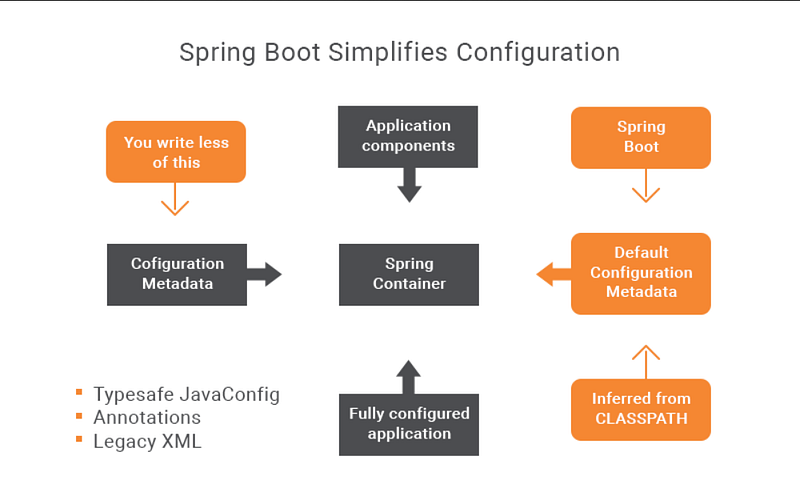
Spring Boot uses the principle of convention over configuration, which means that it provides default configurations and settings for the application, and developers can override them as per their requirements.
7. What is the default port for a Spring Boot application?
The default port for a Spring Boot application is 8080. However, developers can change it by setting the server.port property in the application.properties file.
8. What is the purpose of the application.properties file in Spring Boot? The application.properties file in Spring Boot is used to store application-level properties like server port, database connection details, logging configuration, and other custom properties. It provides a central location to store all the configurations required by the application and makes it easier to manage and maintain the application.
The ultimate main idea of Spring Boot is simplified configuration, it mainly auto-configure things for you like embedded server, JDBC, database connectivity, message queue, json parsing, logging, and much more.
2. Spring Annotations Questions and Answers
Now days whatever application you do, you will use annotations and both Spring and Spring Boot has a lot of them that’s why you will also find a lot of questions based upon annotation on interviews. Here are a few popular Spring Boot questions based upon annotations:
9. What is the difference between @Controller and @RestController in Spring Boot? (detailed answer) @Controller and @RestController are both used to handle HTTP requests in Spring Boot applications. However, @RestController is a specialized version of @Controller that is used for RESTful web services. @RestController returns the response in the form of JSON or XML, while @Controller returns the response in the form of a view.
10. What is the difference between @Component, @Service, and @Repository in Spring Boot? (detailed answer) @Component, @Service, and @Repository are all used to annotate classes in Spring Boot applications. @Component is a generic annotation used to annotate any class as a Spring component. @Service is used to annotate classes that perform business logic operations. @Repository is used to annotate classes that interact with the database or other data sources. Although there is no technical difference between these annotations, using them appropriately can make the code more readable
11. What is difference between @Bean and @Component? (detailed answer)
Both @Bean and @Component are used for defining beans in Spring. However, @Component is a class-level annotation that tells Spring to create an instance of this class as a bean, while @Bean is a method-level annotation that tells Spring to use the return value of that method as a bean. So, @Component is used for classes that are automatically discovered by Spring during component scanning, while @Bean is used for more fine-grained control over the bean creation process.
12. What is the purpose of the @Autowired annotation in Spring Boot?
The @Autowired annotation in Spring Boot is used to inject dependencies automatically. It eliminates the need for explicit bean wiring or XML configuration.
13. What is the purpose of the @Bean annotation in Spring Boot?
The @Bean annotation in Spring Boot is used to declare a bean explicitly. It is used to configure third-party components, as well as to define custom beans that are not automatically detected by Spring.
14. What is the difference between @PathVariable and @RequestParam in Spring Boot? (detailed answer) In Spring Boot, @PathVariable is used to bind a path variable to a method parameter, while @RequestParam is used to bind a request parameter to a method parameter. Path variables are part of the URL path, while request parameters are part of the query string.
15. What is the purpose of the @Transactional annotation in Spring Boot? The @Transactional annotation in Spring Boot is used to mark a method as transactional. It ensures that the method is executed within a transactional context, which allows multiple database operations to be grouped together as a single unit of work.
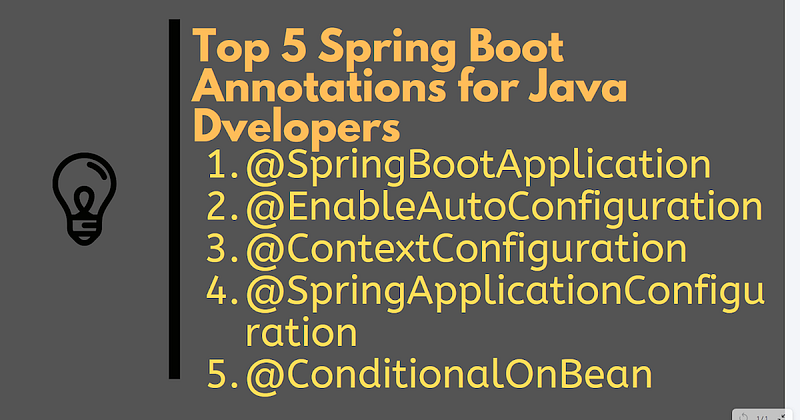
16. What is difference between @SpringBootApplication and @EnableAutoConfigrutaion? (answer)
SpringBootApplication is combination of @EnableAutoConfiguration and two other annotations, please see the answer link for detailed discussion.
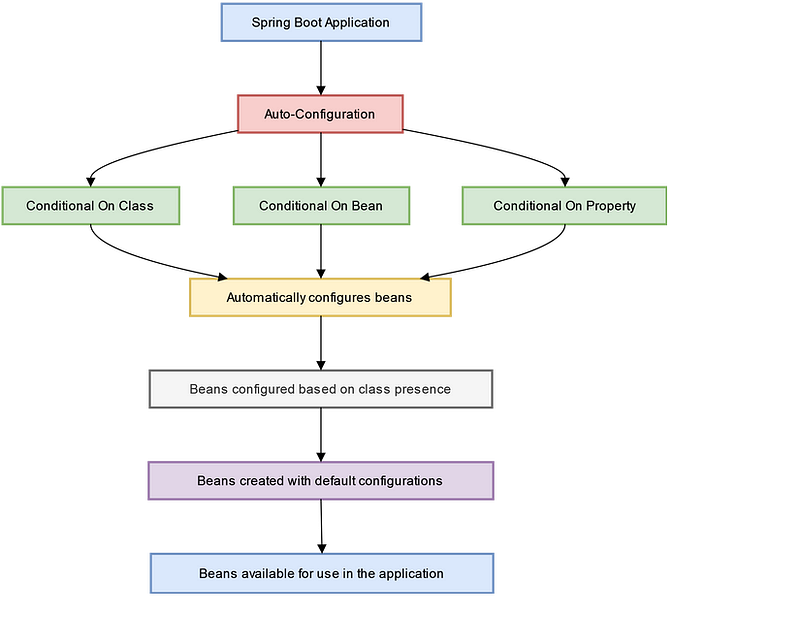
17. How does Auto-configuraiton works? Autoconfiguration works by leveraging conditional annotation. That’s the tool they use to detect what is available in classpath and then configure the feature according. You can further see how Auto-configruation works in Spring Boot for more detailed answer.
3. Spring Boot, Spring Cloud and Microservices Interview Questions
It’s also very common that Microservices related question to come on Spring Boot interview as Spring Boot and Spring Cloud are the main framework for developing Microservices in Java. In the past, I already shared 50+ Microservices Interview questions covering essential Microservices concepts, design principles and patterns and In this section, we will take a look only popular ones.
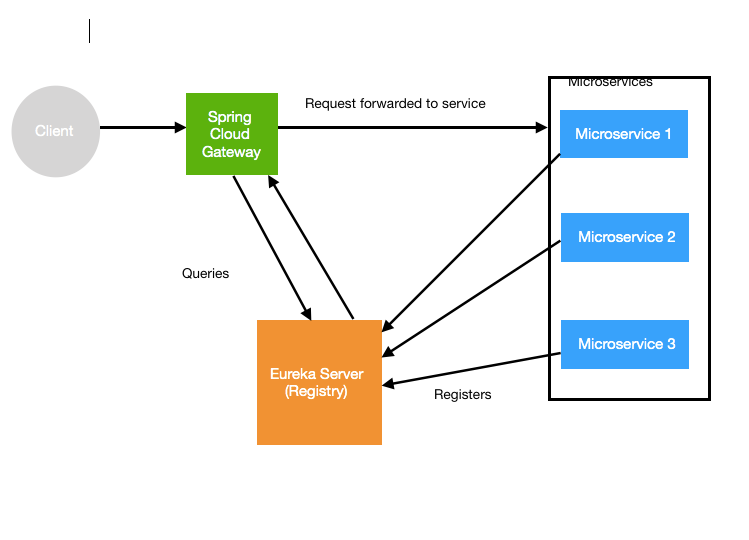
18. What is difference between API Gateway and Load Balancer? (detailed answer) An API Gateway and a Load Balancer are both used in the context of distributed systems, but they serve different purposes. A Load Balancer distributes incoming network traffic across a group of servers to ensure that no single server is overloaded.
An API Gateway is an entry point for all the API calls from clients, which handles routing, security, load balancing, and other cross-cutting concerns. While a Load Balancer only handles traffic distribution, an API Gateway provides a single point of entry for all the API calls, as well as additional functionality such as authentication and authorization.
19. What is difference between Microservices and Monolith? (detailed answer) A monolithic architecture is a traditional approach where all the components of an application are tightly coupled and interdependent, whereas a microservices architecture is an approach where the application is composed of smaller, independent services that communicate with each other through APIs.
Microservices architecture allows for greater scalability, flexibility, and resilience, whereas monolithic architecture is simpler to develop and deploy. Microservices also require more complex management and deployment processes.
20. What is Spring Cloud? Spring Cloud is a set of tools and frameworks that are designed to simplify the development of distributed systems based on Spring Boot. It provides features such as service discovery, load balancing, and distributed configuration management.
21. What is the purpose of the @EnableDiscoveryClient annotation in Spring Boot?
The @EnableDiscoveryClient annotation is used to make a Spring Boot application into a Discovery Client, which can register itself with a Service Registry such as Eureka, Consul or Zookeeper.
22. What is the purpose of the @EnableConfigServer annotation in Spring Boot?
The @EnableConfigServer annotation is used to enable a Spring Boot application to act as a configuration server. It allows clients to connect to the server and retrieve configuration data using the Spring Cloud Config project.
23. What is Spring Cloud Gateway? Spring Cloud Gateway is a lightweight and developer-friendly Gateway framework for building API gateways in Spring Boot applications. It provides features such as routing, filtering, and load balancing.
24. What is the purpose of the @EnableZuulProxy annotation in Spring Boot? The @EnableZuulProxy annotation is used to enable a Spring Boot application to act as a reverse proxy and a Load Balancer. It uses Netflix’s Zuul proxy under the hood to route requests to microservices.
4. Spring Boot + Spring Data JPA Interview Questions
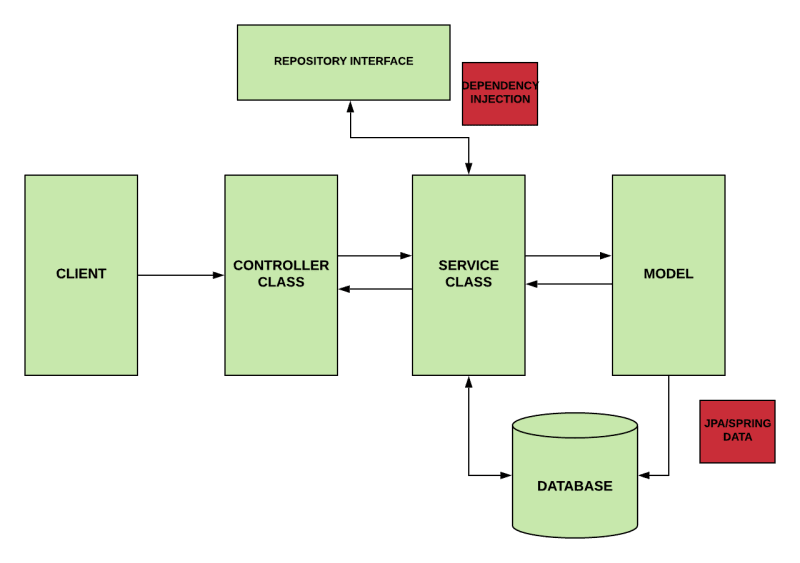
It’s also common to use Spring Data JPA for database access in Spring Boot applications hence you can also expect few Spring Data JPA related question on Spring Boot Interviews. Here are few popular Spring Data JPA Questions for practice.
25. What is Spring Data JPA? Spring Data JPA is a module of Spring Framework that provides an implementation of the Java Persistence API (JPA) specification. It simplifies the development of JPA-based applications by providing common repository interfaces and default implementations.
26. Difference between Spring Data JPA, Hibernate, and JPA? Hibernate is a popular Object-Relational Mapping (ORM) framework that provides an abstraction layer between Java objects and relational databases. JPA (Java Persistence API) is a specification that defines a set of interfaces and annotations for standardizing ORM in Java.
Spring Data JPA is a subproject of the Spring Framework that provides a convenient way to interact with databases using JPA. So, Hibernate is an implementation of JPA, and Spring Data JPA builds on top of JPA to provide additional functionality and ease of use in Spring-based applications.
27. What is the purpose of the @Entity annotation in Spring Boot? The @Entity annotation in Spring Boot is used to mark a class as a persistent entity. It indicates that the class is mapped to a database table and its instances can be stored and retrieved from the database using JPA.
28. What are the different types of databases that Spring Boot supports? Spring Boot provides support for various databases such as MySQL, PostgreSQL, Oracle, MongoDB, and H2. The database driver and configuration properties can be specified in the application configuration files. Spring Boot also provides support for JPA-based data access using the spring-boot-starter-data-jpa dependency.
5. Spring Boot and REST Interview Questions
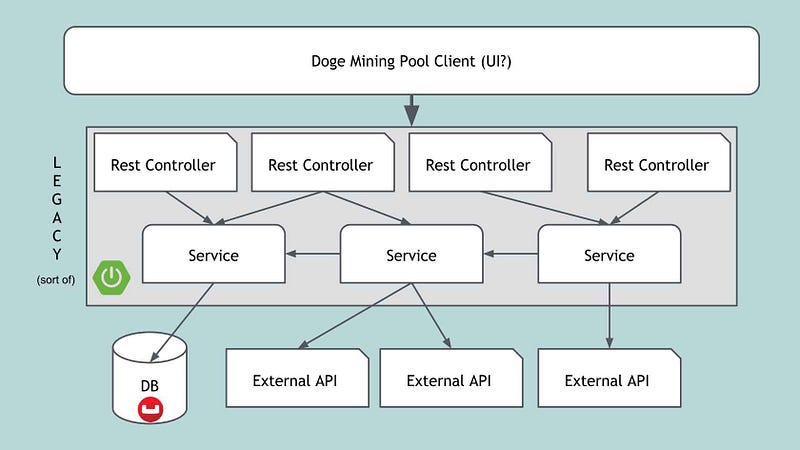
Most of the Spring Boot application uses REST for API development hence its common to see REST API and RESTful web service development relate questions on Spring Boot interviews. Here are a few Spring Boot and REST Interview questions for practice:
29. How can you create a RESTful web service using Spring Boot?
Spring Boot provides various starter dependencies that can be used to quickly create a RESTful web service. The spring-boot-starter-web dependency provides support for the development of web-based applications, and the spring-boot-starter-data-jpa dependency can be used to add support for JPA-based data access.
Additionally, Spring Boot provides annotations such as @RestController and @RequestMapping that can be used to define RESTful endpoints and HTTP methods.
30. What is the difference between a PUT and POST request in Spring Boot? In Spring Boot, a PUT request is used to update an existing resource, while a POST request is used to create a new resource. A PUT request requires the client to provide the complete representation of the resource being updated, while a POST request allows the server to generate an identifier for the new resource.
6. Spring Boot + Spring Security Interview Questions
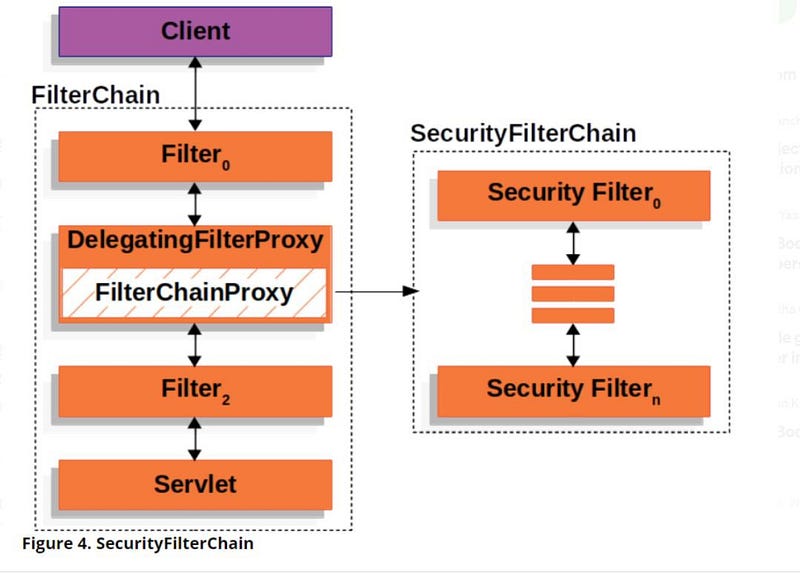
Spring Security is another Spring project which is quite important for Java developers as its used to secure your Spring boot application. That’s why you will find a few Spring security, authentication, authorization, and access control related questions on Spring Boot interviews.
Here are a couple of popular Spring Security Questions for practice:
31. What is Spring Security? Spring Security is a module of Spring Framework that provides security features for web applications. It provides authentication, authorization, and other security-related functionalities.
32. What is the purpose of the @EnableWebSecurity annotation in Spring Boot?
The @EnableWebSecurity annotation in Spring Boot is used to enable web security features for a Spring Boot application. It indicates that the application uses Spring Security for securing its web endpoints.
33. What is JWT authentication in Spring Boot? JWT authentication in Spring Boot is a method of authenticating users based on JSON Web Tokens (JWTs). It involves issuing a JWT token to the user after successful authentication, and then requiring the user to include the token in subsequent requests to access protected resources.
34. How can you implement security in a Spring Boot application? Spring Boot provides support for implementing security using Spring Security, which is a powerful and highly customizable security framework. The spring-boot-starter-security dependency can be included in the project to add support for Spring Security. Developers can then use various annotations and configuration properties to customize the security settings of the application.
7. Spring Batch and Spring Integration Interview Questions and Answers
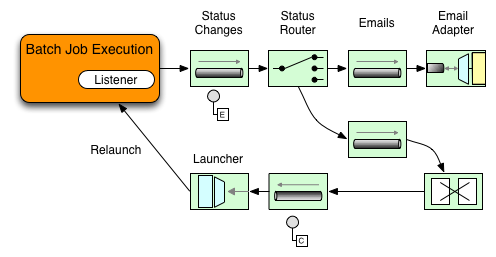
In this section we will take a look at the Spring Batch, a lightweight framework for building batch processing application and Spring integration, another lightweight framework for building Enterprise integration pattern related questions.
35. What is Spring Batch? Spring Batch is a framework for building batch processing applications in Java. It provides a set of reusable components such as readers, writers, and processors to read, process, and write large volumes of data.
36. What is the purpose of the @EnableBatchProcessing annotation in Spring Boot? The @EnableBatchProcessing annotation is used to enable Spring Batch in a Spring Boot application. It provides various features and auto-configurations for batch processing.
37. What is Spring Integration? Spring Integration is a lightweight framework for building Enterprise Integration Patterns (EIP) in Java. It provides a set of pre-built components such as routers, transformers, and endpoints to build integration solutions.
38. What is the purpose of the @MessagingGateway annotation in Spring Boot?
The @MessagingGateway annotation is used to define an interface that represents a messaging gateway. It is used to integrate Spring Integration with other Spring components such as Spring MVC or Spring Boot.
39. What is Spring AMQP? Spring AMQP is a framework for building messaging applications using the Advanced Message Queuing Protocol (AMQP) in Java. It provides a set of abstractions to work with AMQP such as exchanges, queues, and bindings.
40. What is the purpose of the @RabbitListener annotation in Spring Boot?
The @RabbitListener annotation is used to define a listener endpoint for messages received from a RabbitMQ broker. It is used to consume messages from a RabbitMQ queue.
8. Spring WebFlux and Reactive Programming Questions
Now, let’s see questions form Spring WebFlux framework and Reactive programming in Java and Spring
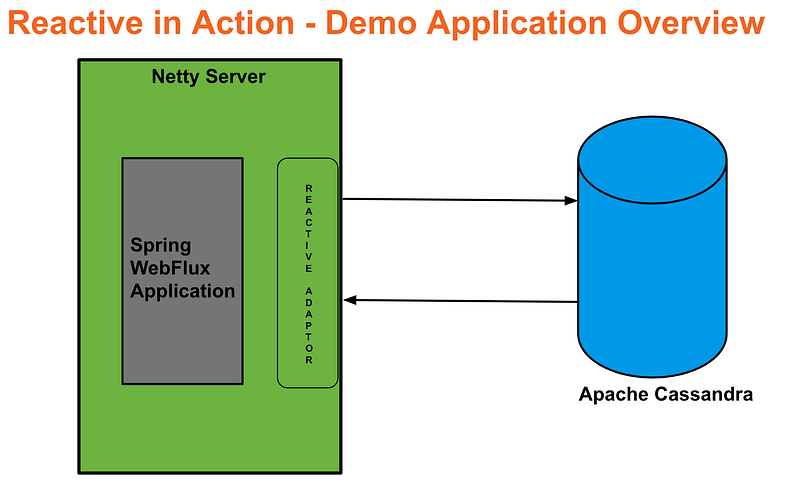
41. What is Spring WebFlux? Spring WebFlux is a reactive web framework for building non-blocking, event-driven web applications in Java. It provides a programming model based on Reactive Streams and the Reactor library.
42. What is reactive programming in Spring Boot? Reactive programming is a programming model that is designed to handle streams of data in a non-blocking, event-driven way. It is used in Spring Boot to build reactive applications.
43. What is the purpose of the @RestController annotation in Spring WebFlux?
The @RestController annotation is used to define a controller for handling REST requests in a Spring WebFlux application. It is used to create RESTful web services.
44. What is the purpose of the Flux class in Spring WebFlux? The Flux class in Spring WebFlux is a Reactive Streams Publisher that represents a stream of zero or more elements. It is used to handle streams of data in a non-blocking way.
45. What is the purpose of the Mono class in Spring WebFlux? The Mono class in Spring WebFlux is a Reactive Streams Publisher that represents a stream of exactly one element or an empty stream. It is used to handle streams of data in a non-blocking way.
46. What is difference between Mono and Flux in Spring WebFlux? Mono is used to return zero or one result while Flux is used to return multiple results.
9. Spring Boot Actuator Interview Questions and Answers
So far, we have looked at different Spring Boot component and features and its to see Spring Boot Actuator, a key part of Spring Boot that provides runtime monitoring and management functionality of any Spring Boot application in production. Solid knowledge of Spring Boot Actuator is required for both Developers and Support people to manage Spring Boot app in production.
47. What is Spring Boot Actuator? Spring Boot Actuator is a sub-project of Spring Boot that provides endpoints and tools for monitoring and managing the Spring Boot application. It offers various management endpoints such as health check, metrics, environment, shutdown, and more. Spring Boot Actuator also provides an easy way to expose custom management endpoints.
48. What is the purpose of the /actuator/health endpoint in Spring Boot Actuator?
The /actuator/health endpoint in Spring Boot Actuator provides information about the health of the application. It returns a JSON or plain text response that indicates whether the application is running or not. This endpoint can be used by monitoring tools to check the health status of the application.
49. What is the purpose of the /actuator/info endpoint in Spring Boot Actuator?
The /actuator/info endpoint in Spring Boot Actuator provides general information about the application. It returns a JSON or plain text response that includes details such as application name, version, description, and more. This endpoint can be used to retrieve basic information about the application that is useful for debugging and troubleshooting.
50. What is the difference between Spring Boot Starter and Spring Boot Starter Parent? Spring Boot Starter is a set of dependencies that can be included in a project to add support for specific frameworks and libraries. It provides all the necessary dependencies and configuration required to get started with the particular framework or library. On the other hand, Spring Boot Starter Parent is a parent POM that provides a common set of configuration and dependencies that can be inherited by the child projects. It provides the core Spring Boot functionality and allows developers to manage the version compatibility of dependencies.
51. What is the role of the Spring Boot Actuator? Spring Boot Actuator provides various production-ready features that can be used to manage and monitor the application in a production environment. It provides endpoints that can be used to view application metrics, health status, and other information related to the application. The actuator endpoints can be customized and secured based on the specific requirements of the application.
10. Spring Boot Auto-configuration Interview Questions
Spring Boot question is one of the darling topic of Java interviewer, most of them think that many Java developer just use Spring Boot without understanding how it works and that’s why they check your Spring Boot knowledge by asking how does auto-configuration and starter-dependency works. Hence, you must prepare questions form these topics to do well on your Spring boot Interview.
52. How does Spring Boot auto-configuration work? (answer) Spring Boot uses the principle of “convention over configuration” to automatically configure the application based on the classpath and dependencies present in the project. It provides default configurations for commonly used frameworks and libraries, and the auto-configuration mechanism applies these configurations based on the project’s classpath. If a specific configuration is required, the developer can override it by providing their own configuration.
53. How does Spring Boot support externalized configuration?
Spring Boot allows developers to externalize the application configuration in various formats such as properties, YAML, JSON, and XML. The configuration can be stored outside of the application in the file system, environment variables, or cloud-based configuration services. Spring Boot also provides a hierarchical property resolution mechanism that allows different configuration sources to be merged, and the configuration properties can be accessed using the @Value annotation.
11. Miscellaneous Spring Boot Interview questions
In this section we will see miscellaneous interview questions from other remaining topics like testing, support, monitoring, internationalization and localization and more.
54. How does Spring Boot support testing?
Spring Boot provides various testing capabilities that can be used to write unit tests, integration tests, and end-to-end tests for the application. The spring-boot-starter-test dependency includes the necessary libraries for testing such as JUnit, Mockito, and Hamcrest. Spring Boot also provides annotations such as @SpringBootTest and @WebMvcTest that can be used to configure the application context for testing.
55. How does Spring Boot support internationalization and localization?
Spring Boot provides support for internationalization and localization using the MessageSource interface.
The spring-boot-starter-web dependency includes the necessary libraries for message resolution and localization. Developers can create message resource files in various languages and configure the MessageSource bean in the application context. Spring Boot will then automatically resolve the messages based on the user’s locale.
Java and Spring Interview Preparation Material
Before any Java and Spring Developer interview, I always use to read the below resources
Grokking the Java Interview
Grokking the Java Interview: click here
I have personally bought these books to speed up my preparation.
You can get your sample copy here, check the content of it and go for it
Grokking the Java Interview [Free Sample Copy]: click here

If you want to prepare for the Spring Boot interview you follow this consolidated ebook, it also contains microservice questions from spring boot interviews.
Grokking the Spring Boot Interview
You can get your copy here — Grokking the Spring Boot Interview

That’s all about the 50+ Spring Boot Interview Questions and Answers. I have tried to divided the questions into different topics like Spring Boot Basics, Spring Security, Spring Batch, Spring integration, Spring Cloud, and Spring REST. By going through these questions you can quickly revise the key Spring Boot concepts for interviews.
Additionally, you can also prepare Microservices Questions like difference between API Gateway and Load Balancer, SAGA Pattern, how to manage transactions in Microservices, and difference between SAGA and CQRS Pattern, they are quite popular on interviews.
And, if you are not a Medium member then I highly recommend you to join Medium and read great stories from great authors from real field. You can join Medium here
Other Java Interview Question article you may like to read


