
Top 20 Spring Framework and Spring Boot Scenario based Questions for Java Developers
Mastering Practical Application of Spring and Spring Boot with These Real-World Interview Questions for Java Developers
Hello folks, if you are preparing for Java and Spring Boot Interview then apart from preparing for common theoretical questions like difference between RequestParam and PathVariable annotations you should also prepare for real world problem solving questions like how you going to implement caching, or security in Spring framework etc?
In last couple of articles I have explained difference between @Contorller and @RestController annotation, @Bean vs @Component annotation, and @Controller vs @Service @Repository and in this article, I am going to share 20 such problem solving, scenario based question based upon Spring Framework and Spring Boot, and other Spring packages like Spring Security.
By the way, if you are preparing for Java and Spring interview then In my earlier articles, I have also shared 21 Software Design Pattern questions, 10 Microservice Scenario based questions, 20 SQL queries from Interviews, 50 Microservices questions, 60 Tree Data Structure Questions, 15 System Design Questions, and 35 Core Java Questions and 21 Lambda and Stream questions which you can use for your Java interview preparation.
Now, coming back on the topic, As a Java developer, being well-versed in Spring Framework and Spring Boot is essential for building robust and scalable applications.
In addition to theoretical knowledge, understanding how to apply these frameworks to real-world scenarios is crucial for success in technical interviews.
This article presents 20 scenario-based interview questions that focus on practical implementation of Spring and Spring Boot concepts.
These questions cover a wide range of topics including security, exception handling, transaction management, microservices, caching, internationalization, messaging, API documentation, and batch processing.
By preparing for these scenario-based questions, you can demonstrate your expertise in Spring and Spring Boot and increase your chances of acing your Java developer interviews.
By the way, if you are new to Spring Framework and want to learn Spring in depth and looking for resources then you can also checkout following online courses:
- Spring Master Class — Beginner to Expert
- Spring & Hibernate for Beginners
- Learn Spring: The Certification Class
- Master Microservices with Spring Boot and Spring Cloud
All of these are top rated courses to learn Spring framework in depth but if you need free resources you can also checkout these free Spring framework courses:
20 Core Spring and Spring Boot Scenario Based Questions for Java Developers
Here is a list of scenario based, problem solving question based upon Spring Framework and Spring Boot for Java developers. If you have worked in Spring then most likely you already know the answer but if you haven’t you can learn a lot from them.
1.How would you handle database transactions in a Spring Boot application?
Answer: You can handle database transactions in a Spring Boot application by using Spring Data JPA or Spring JDBC with the help of @Transactional annotation or by configuring transaction management through XML or Java-based configuration.
2. How would you implement caching in a Spring MVC application?
Answer: Caching can be implemented in a Spring MVC application using the caching support provided by Spring, such as @Cacheable, @CacheEvict, and @CachePut annotations, along with a caching provider like Ehcache or Redis.
3. How would you handle cross-cutting concerns, such as logging or security, in a Spring application?
Answer: Cross-cutting concerns in a Spring application can be handled using Spring AOP (Aspect-Oriented Programming) by defining aspects that intercept method calls or join points to provide additional functionality, such as logging or security, without modifying the core business logic.
4. How would you handle exceptions in a Spring application?
Answer: Exceptions in a Spring application can be handled using Spring’s exception handling mechanisms, such as @ExceptionHandler, @ControllerAdvice, and HandlerExceptionResolver, to define custom exception handling logic and provide appropriate responses to clients.
5. How would you configure multiple data sources in a Spring Boot application?
Answer: Multiple data sources can be configured in a Spring Boot application by defining multiple data source configurations, specifying different properties for each data source, and using @Qualifier to specify which data source to use in different parts of the application.
6. How would you implement security features, such as authentication and authorization, in a Spring Boot application?
Answer: Security features like authentication and authorization can be implemented in a Spring Boot application using Spring Security, which provides comprehensive security solutions for web applications, including features like authentication providers, access rules, security filters, and support for common security requirements like CSRF protection and session management.
7. Imaging You have a web application developed using Spring MVC and need to add security features to protect certain endpoints. How would you implement authentication and authorization using Spring Security?
As I said, you can use Spring Security to implement authentication and authorization in a Spring MVC web application. You can further use Spring Security dependency, configure security rules, implement authentication providers, define roles/permissions, and use Spring Security’s built-in features like form-based login or OAuth for secure access to protected endpoints.

8. How would you implement RESTful APIs using Spring Boot?
Answer: RESTful APIs can be implemented in a Spring Boot application using Spring MVC, which provides built-in support for RESTful web services, including features like @RestController, @RequestMapping, @GetMapping, @PostMapping, and other annotations for defining REST endpoints and handling HTTP requests and responses.
9. How would you implement scheduled tasks in a Spring Boot application?
Answer: Scheduled tasks can be implemented in a Spring Boot application using Spring’s scheduling support, such as @Scheduled annotation or TaskScheduler interface, to define tasks that run at specified intervals or according to a fixed schedule.
10. How would you handle security vulnerabilities, such as CSRF or XSS, in a Spring application?
Answer: Security vulnerabilities like CSRF (Cross-Site Request Forgery) or XSS (Cross-Site Scripting) can be handled in a Spring application by implementing appropriate security measures, such as enabling CSRF protection through Spring Security, validating and sanitizing user input, using safe coding practices, and following secure coding guidelines provided by Spring and OWASP (Open Web Application Security Project) to prevent common security vulnerabilities.
11. How would you handle file uploads in a Spring MVC application?
Answer: File uploads in a Spring MVC application can be handled using Spring’s MultipartFile or CommonsMultipartResolver to parse and process uploaded files, along with appropriate validation and error handling, to ensure secure and reliable file uploads.
12. Suppose, you are building a RESTful API using Spring Boot and need to handle exception handling for various error scenarios such as invalid input, authentication failure, and database errors. How would you implement global exception handling using Spring Boot’s exception handling mechanisms?
You can use Spring’s built-in exception handling mechanisms to implement global exception handling in a Spring Boot RESTful API.
This can involve using the @ExceptionHandler annotation to define exception handling methods, and configuring global exception handlers using the @ControllerAdvice annotation.
Additionally, you can utilize Spring Boot's predefined exception classes, such as ResponseEntityExceptionHandler, to handle common error scenarios like invalid input, authentication failure, and database errors in a centralized manner.
13. You have a complex business logic that involves multiple steps and dependencies, and you need to implement transaction management to ensure data integrity. How would you configure declarative transaction management using Spring’s transaction management support? To configure declarative transaction management using Spring’s transaction management support, you can follow these steps:
- Configure a transaction manager
Define a transaction manager bean in your Spring configuration that corresponds to the type of database or resource you are using, such as
DataSourceTransactionManagerfor a JDBC DataSource orJtaTransactionManagerfor a JTA transaction manager. - Annotate transactional methods
Annotate the methods in your service or DAO classes that need transactional behavior with the appropriate transactional annotation, such as
@Transactional. You can configure various attributes of the transactional annotation, such as isolation level, propagation behavior, rollback rules, and more, to customize the transactional behavior. - Configure transaction boundaries
Use transactional annotations to specify the boundaries of transactions for your business logic. For example, you can annotate a method with
@Transactionalto start a new transaction before the method executes, and commit or rollback the transaction based on the outcome of the method. - Handle exceptions
Configure the appropriate rollback rules in your transactional annotations to specify when a transaction should be rolled back based on exceptions thrown during the transactional method execution. You can also handle exceptions explicitly in your code and trigger a rollback programmatically using the
TransactionAspectSupport.currentTransactionStatus().setRollbackOnly()method.

14. You are building a microservices-based architecture using Spring Cloud and need to implement service discovery and load balancing using Netflix Eureka and Ribbon. How would you configure and use these components in your Spring Boot microservices?
If you have used Spring Cloud then you may know that you can useNetflix Eureka and Ribbon to implement service discovery and load balancing in a Microservices-based architecture in Java.
Here’s a high-level overview of how you can configure and use these components in your Spring Boot microservices:
- Set up Eureka server
Create a Eureka server as a separate microservice that will act as the service registry for all other microservices. Configure it in your Spring Boot application by adding the
spring-cloud-starter-netflix-eureka-serverdependency and annotating your main class with@EnableEurekaServer. Configure the server's properties such as port, hostname, and service registration. - Register microservices with Eureka
In each microservice that you want to register with Eureka, add the
spring-cloud-starter-netflix-eureka-clientdependency and configure it to connect to the Eureka server. Annotate your main class with@EnableDiscoveryClientor@EnableEurekaClientto enable service registration. - Implement load balancing with Ribbon
Use Ribbon, a client-side load balancing library provided by Spring Cloud, to balance the incoming requests to multiple instances of the same microservice. Add the
spring-cloud-starter-netflix-ribbondependency and configure the Ribbon client with the registered service name of the microservice. - Use service discovery with Eureka
Use Eureka to discover and resolve the instances of a registered microservice dynamically. In your microservice, use the
@LoadBalancedannotation in conjunction withRestTemplateorWebClientto perform client-side load balancing among the instances of the microservice registered with Eureka.
15. Assume, You are building a multi-tenant application using Spring Boot and need to implement data partitioning to isolate data for different tenants. How would you implement database-based data partitioning using Spring Boot’s data source routing or Hibernate’s multi-tenancy support?
To implement data partitioning for a multi-tenant application using Spring Boot, you can utilize Spring Boot’s data source routing or Hibernate’s multi-tenancy support. . This involves configuring separate data sources or database schemas for each tenant, and dynamically routing database queries based on the tenant identifier.
This can be achieved using techniques such as AbstractRoutingDataSource for data source routing, or implementing TenantIdentifierResolver for Hibernate’s multi-tenancy support, to ensure data isolation and separation for different tenants.
16. Suppose, you are building a caching mechanism for your application to improve performance and reduce database load. How would you configure and use Spring’s caching abstraction to implement caching for frequently accessed data?
You can use Spring’s caching abstraction to implement caching in any Spring based Java application. This involves configuring a caching provider (e.g., Redis, Ehcache) in the application’s configuration, annotating the methods or classes that need caching with @Cacheable or other relevant caching annotations, and specifying the cache name and key generation strategy. This will allow frequently accessed data to be cached, reducing database load and improving application performance.
17. You are building a web application with internationalization (i18n) and localization (l10n) support using Spring Boot. How would you configure and use Spring’s i18n and l10n support to provide localized messages and date/time formats based on the user’s locale?
To provide internationalization (i18n) and localization (l10n) support in a web application using Spring Boot, you can leverage Spring’s built-in support for i18n and l10n.
First, you would need to configure the appropriate message source in your Spring Boot project. This can be done by adding properties files with the localized messages for each supported locale, and specifying the location of these files in your application configuration.
Next, you can use Spring’s MessageSource and LocaleResolver interfaces to provide localized messages and date/time formats based on the user's locale. MessageSource is used to retrieve messages from the properties files, while LocaleResolver is used to determine the user's locale based on their preferences or other criteria.
You can then use Spring’s MessageSourceAccessor to access the localized messages in your code, and use them for various purposes, such as rendering views, generating error messages, or displaying date/time values in the user's preferred format.
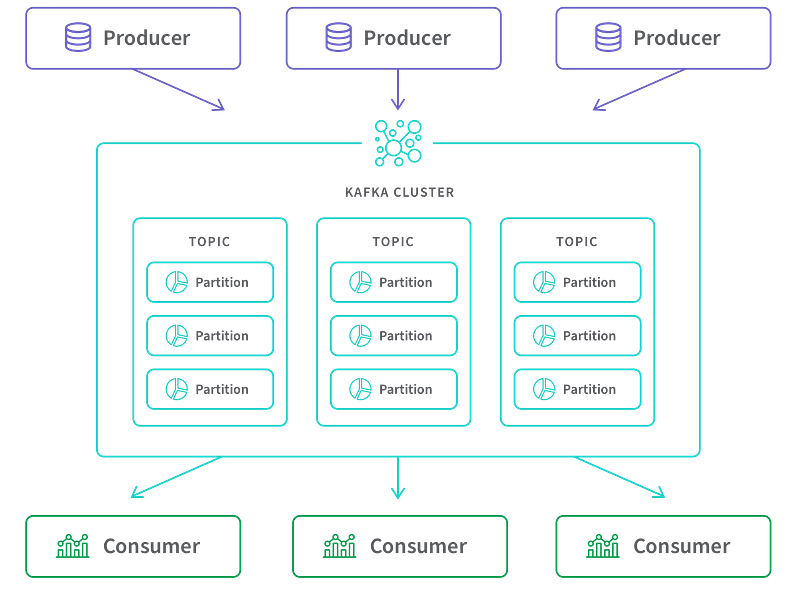
18. You are building a message-driven application using Spring Boot and need to implement asynchronous communication using message brokers such as RabbitMQ or Apache Kafka. How would you configure and use Spring’s support for messaging to send and receive messages asynchronously?
To implement asynchronous communication using message brokers like RabbitMQ or Apache Kafka in a message-driven application with Spring Boot, you can take advantage of Spring’s support for messaging.
First, you would need to configure the appropriate messaging broker in your Spring Boot project, such as RabbitMQ or Apache Kafka, by adding the necessary dependencies and properties in your application configuration.
Next, you can use Spring’s messaging abstractions, such as @EnableJms for Java Message Service (JMS) with RabbitMQ, or @EnableKafka for Apache Kafka, to enable messaging capabilities in your application. You can also use other Spring components, such as JmsTemplate for sending JMS messages, or KafkaTemplate for sending Kafka messages, to produce messages to the message broker.
For receiving messages asynchronously, you can use Spring’s message-driven annotations, such as @JmsListener for JMS or @KafkaListener for Kafka, to define methods that act as message listeners. These methods can be annotated with the appropriate listener settings, such as the destination or topic, and can process the received messages asynchronously.
19. You are building a RESTful API using Spring Boot and need to implement API documentation and testing using OpenAPI (formerly Swagger) and JUnit. How would you configure and use Springfox or Spring REST Docs to generate API documentation and write API tests?
To generate API documentation and write API tests in a RESTful API built using Spring Boot, you can configure and use either Springfox or Spring REST Docs.
Springfox allows you to automatically generate API documentation from your Spring Boot application’s code using OpenAPI (formerly Swagger) annotations.
Spring REST Docs, on the other hand, allows you to generate API documentation as part of your tests using JUnit and snippets, providing a comprehensive and executable documentation.
Both options offer powerful tools for documenting and testing your RESTful API in a Spring Boot application.

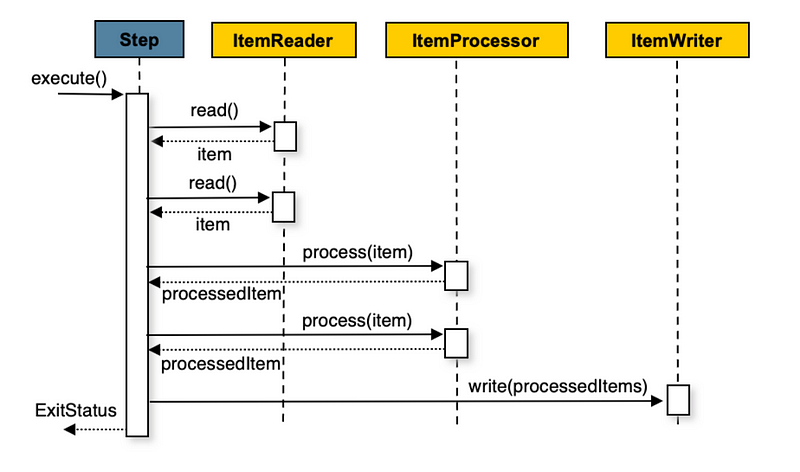
20. You are building a batch processing application using Spring Batch and need to implement data processing, chunking, and retry logic for large datasets. How would you configure and use Spring Batch’s features to implement efficient batch processing with error handling and recovery mechanisms?
In order to implement efficient batch processing with error handling and recovery mechanisms using Spring Batch, you can configure Spring Batch’s data processing, chunking, and retry features.
This involves defining batch jobs with appropriate steps, chunk sizes, and item processors or writers for data processing. You can also configure retry policies and listeners for error handling and recovery.
Additionally, you can use job parameters, job state, and job repository for managing batch job metadata. This will allow you to efficiently process large datasets with robust error handling and recovery in your batch processing application.

Java and Spring Interview Preparation Material
Before any Java and Spring Developer interview, I always use to read the below resources
Grokking the Java Interview
Grokking the Java Interview: click here
I have personally bought these books to speed up my preparation.
You can get your sample copy here, check the content of it and go for it
Grokking the Java Interview [Free Sample Copy]: click here

If you want to prepare for the Spring Boot interview you follow this consolidated eBook, it also contains microservice questions from spring boot interviews.
Grokking the Spring Boot Interview
You can get your copy here — Grokking the Spring Boot Interview

That’s all about 20 Spring Framework and Spring Boot scenario based questions for Java Developer Interviews. These scenario-based questions cover various aspects of Spring Framework and Spring Boot, including security, exception handling, transaction management, microservices, caching, internationalization, messaging, API documentation, and batch processing.
These questions are designed to asses your knowledge and understanding of real-world scenarios and best practices in using these frameworks. They are not just useful for interviews but also to improve your understanding of Spring Framework and Spring Boot and become a better Java developer.
These are important questions for Spring framework interviews and you should prepare for them. By the way, if you are new to Spring Framework and want to learn Spring in depth and looking for resources then you can also checkout following online courses:
- Spring Master Class — Beginner to Expert
- Spring & Hibernate for Beginners
- Learn Spring: The Certification Class
- Master Microservices with Spring Boot and Spring Cloud
All of these are top rated courses to learn Spring framework in depth but if you need free resources you can also checkout these free Spring framework courses:
Other Java and Microservices articles you may like


