
We Don’t Need to be Skinny and White to be Beautiful
Stop policing our beauty
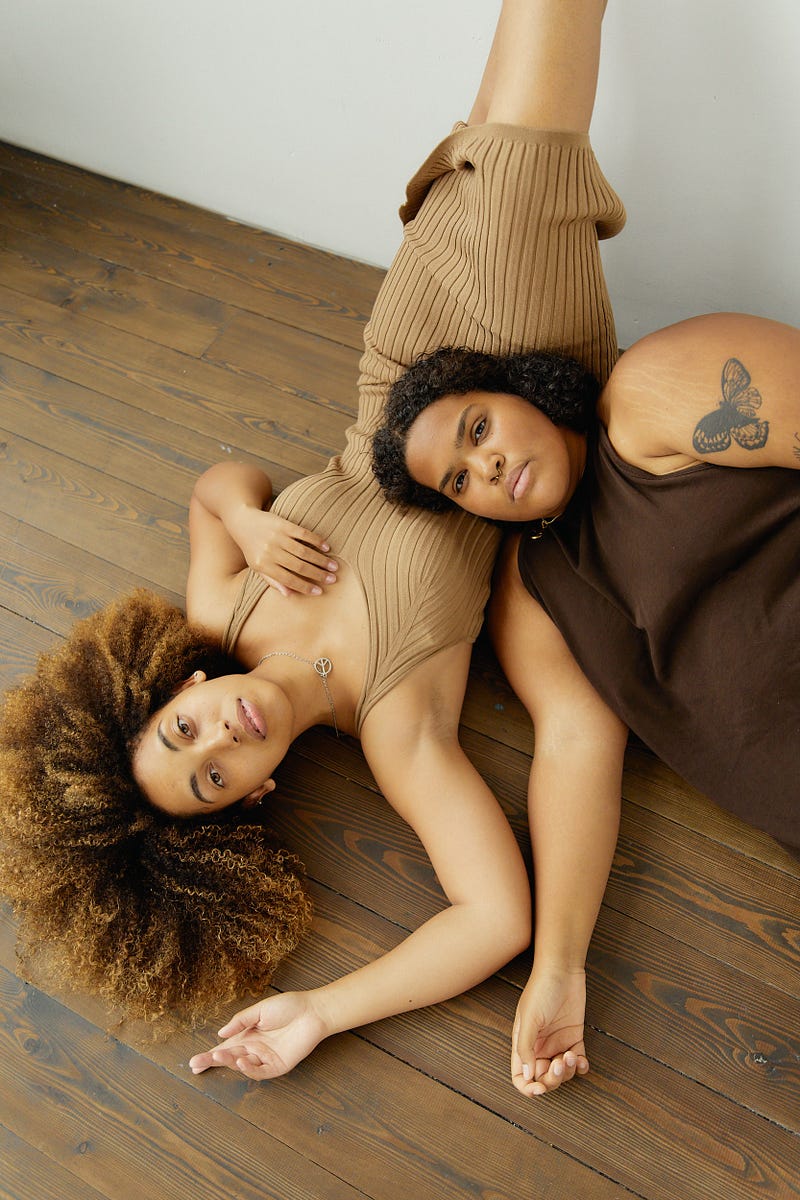
If beauty is in the beholder’s eye, then it’s no wonder why America’s perspective of beauty is limited in scope. The entire system developed based on the idea that white people are the protagonists in the American story. As a result, society views thin white women as beautiful and every other type of woman as divergent. When they call a Black woman’s skin dark, her hair nappy, and her nose, lips, hips big, they do so compared to a woman with European facial features and body type. Before 1940, the Miss America pageant only admitted healthy, white women. Inherent in their rejection is the concept that only white women could be beautiful.
That association between beauty and whiteness has proved hard to shake. There’s a reason that so many people still think of an “all-American beauty” as a thin, blonde, blue-eyed white woman (Donnella, 2019).
When a Black woman looks in the mirror, she is not truly alone. She is with her reflection. It is only natural that she considers her day ahead upon gazing at her face and figure. She may think of who she will see that day, what she wants to wear, and what she hopes to achieve. Inherent in her gaze is an assessment of herself. Societal and familial experiences contribute to the development of amour propre*.
While many portray beauty as something fickle and fleeting, it is essential to recognize it as an instrument of power. In every facet of life, European beauty standards negatively impact Black women and women of color. How women look and perceive their appearance directly influences the opportunities they receive. A woman’s perceived beauty can determine the quality of her educational opportunities, which career she obtains, how high she climbs up the corporate ladder, and the quality of her interpersonal relationships.
In the pursuit of beauty and the power that comes with it, many Black women attempt to conform and, as a result, feel less beautiful without altering their natural state.
Living as a Black woman means your physical body is political from head to toe. In America, a nation created to celebrate white people’s freedoms attempts to police the bodies of Black women.
Tangible Impacts of European Body Standards
Educational opportunities
A young black female student talks about how she was sent home because she wore her hair in an afro hairstyle. A slightly older girl recalls the time a teacher cut her hair because she was playing with her braids, and another says she was thrown to the floor for simply sitting at her desk (Nix, 2017).
Schools push out Black girls more than any other group of students. They discriminate against them because of their natural hairstyles and over sexualize Black school girls by unjustly critiquing their clothing. While their parents approved of their child’s clothes, the administrators do not respect the Black parents’ perspectives. They exhibit systematic racism by implying the inadequacy of Black family units.
Unfortunately, white administrators often perceive them as inherently hostile. This narrative derives from the Angry Black Woman trope. In the documentary, Pushout: The Criminalization of Black Girls in Schools (2019), Black girls told their candid stories about getting pushed out of school. Private and public schools suspend and expel Black girls at a higher rate than any other group, even more than young Black boys. The documentary, based on the book, Push Out, by Monique Morris, highlighted the psychological and physical abuses Black girls experience in the American school system.
An educator’s unconscious biases may prompt him or her to view the classroom behavior of a black female student as defiant while seeing the same behavior exhibited by a white female student as curious.(Nix, 2017)
Black girls have different bodies than white girls, and administrators punish them for it. It is not their fault if their skirt rides up high because they have thick thighs. Nor should teachers make them feel inadequate because of their natural hairstyles, skin color, or body size.
Advocates like Morris encourage those who want to improve the lives of Black girls to become actively involved. You can support Congresswoman Ayanna Pressley’s bill H.R. 5325 (I.H.) — Ending Punitive, Unfair, School-based Harm that is Overt and Unresponsive to Trauma Act of 2019. If you are a young Black girl or know one who got pushed out of school, there is a space to tell your story on Pushoutfilm.com. Using direct action, Americans can protect Black girls and ensure they have equal access to educational opportunities.
Employment opportunities
Women’s appearances impact the employment opportunities they receive because white men hold most of the leadership roles. Through their gaze, they evaluate Black women.
Attempting to live up to European beauty standards causes undue stress to Black women as they try to enter positions traditionally reserved for white men and women.
Too often, Black women’s body types are viewed as unconventional and, thus, unprofessional. Companies show preference to elevating careers of thin, white women. In many cases, they use white women to illustrate the company’s diversity and progressive values. White women may insist that the company is not misogynistic because a white woman has a position of power. Still, they will not say the company is misogynoiristic for not placing a Black woman in a leadership role.
No matter how much makeup she cakes on, how straight her hair looks, or the outfit she wears, she will be Black. That is something she cannot hide, so she will need the interviewer to accept that, or else the meeting becomes an empty formality.
Even when they get hired, Black women may not climb as high up the corporate ladder. Suppose there is already a Black woman in a leadership role. In that case, companies may feel they already addressed racial inequality and are less likely to give a second or third Back woman a position of equal significance. In other words, even when they allow some Blackness, they shut down the diversity if it cuts too deeply into their white-washed corporate hierarchy.
They will let just enough minorities in the company to appear inclusive, all the while paying Black women and women of color for the same jobs. They can smile in your face and still engage in your marginalization.
Black women experience both a race and gender wage gap that reflects the intersectional reality of their daily lives. The sharpest earnings differences are between Black women and white men, who are benchmarked as the highest earners, but Black women also experience wage disparities when compared with white women and Black men. As experts have noted, it is important to understand that this race-gender wage gap consists of more than simply adding the separate numbers associated with each gap. Rather, it reflects a unique effect that results from how the combination of race and gender are perceived together (Frye, 2019).
While some companies are attempting to incorporate diversity, many Americans vehemently opposed affirmative action programs, which attempted to diminish racial disparities in the federal workforce.
Ultimately, companies need guidelines to follow because their individualistic efforts have failed, and, as a result, Black women are the ones who suffer. Affirmative action or similar policies need to be enacted in the private sector to address these inequities.
Healthcare disparities
Black women do not receive the same quality of care as other women. The trends show that discrimination is at the heart of American healthcare. Society characterizes Black women as inherently unhealthy, fat, and medical professionals tend to blame them for their health problems instead of offering viable treatments.
We can see these disparities in the case of maternal mortality. While American women are more likely to die from childbirth, Black and Indigenous women are more than three times more likely than white women. These numbers are alarming when you consider that doctors say most of these deaths are entirely preventable. Black women need access to consistent preventative healthcare.
Many doctors have claimed that black women’s “excess” weight is the main cause of their poor health outcomes, often without fully testing or diagnosing them. While there has been a massive public health campaign urging fat people to eat right, eat less and lose weight, black women have been specifically targeted (Strings & Bacon, 2020).
Black women, often labeled as fat, naturally have different body sizes than European women. The medical community has criminalized their bodies, perpetuating fat-shaming even when their weight is not a factor in their poor health.
Women, men, and children in the Black community are more likely to have poor health outcomes, but this is due to the impact of systematic racism, not their inherent Blackness. Black families have less access to clean water, air, and many live in food deserts, where they do not have healthy meal options.
Because the average white family has ten times the wealth of a Black family, it is difficult to imagine a world where Black people’s health and well-being improves without addressing the race-wealth gap.
Only upon fixing a broken health care system will Black women stop falling through the cracks. Medical professionals need training in how to treat Black women with the dignity and respect they deserve. Too often, doctors dismiss Black women’s health concerns, leading to increased instances of suffering, chronic illness, and death.
Interpersonal relationships
When Black girls and women leave school and work, they continue to endure trauma emanating from Europeanized body standards. A Black woman’s body is always political, and there is no safe place she can hide from societal glares.
Black women, viewed as inherently sexual, are fetishized in American culture. Big is a comparative word, so when they say her butt looks big, they say it looks big compared to white women’s backsides. Even when people talk about Black women’s bodies as a way of complimenting them, it is done so through comparison. This systematic racism dehumanizes Black women by describing them as odd, instead of focusing on her as a standalone.
White people want Black women to appear asexual and docile so as not to threaten white women. Thus, people mock them for having bigger bodies, appearing sexual, or wearing colorful hairstyles and clothing.
Because Mammy was masculine in her looks and temperament, she was not seen as a sexual being or threat to white women. Because she was non-threatening to whites, Mammy was considered “…as American as apple pie (Jewell, 1993, p. 41).
American society wants all Black women to play the Mammy role, like in Gone with the Wind. It would make them happy if Black women would pack that big butt away, lighten their skin, straighten their hair, and speak using only the King’s English. They desperately want to put each Black woman into a box, and when she does not fit in one, they condemn her, mock her, and dismiss her humanity.
Representations of Black women in United States popular culture and public discourse frequently depict them stereotypically as fat and in need of policing for moral failures (Kwate & Threadcraft, 2015)
American culture views Black women as morally abhorrent people who are fat because they cannot care for themselves. They fail to recognize that Black women inherently have different body sizes and what looks like fat to them is not always unhealthy. Furthermore, they attempt to shame big women. They want them to feel bad about what they decide to be.
They want Black women to think about European beauty standards when they open their mouths to speak or eat. There truly is nowhere to run and hide from the piercing eyes and impacts of these standards. The perception of Black women as moral failures also subjects them to more abusive treatment by law enforcement.
Police use harsh tactics on Black women. Officers get more physical with them and view their bodies as less fragile. The Strong Black Woman trope negatively impacts Black women by insinuating that she is strong enough to endure abuse.
Breonna Taylor’s death occurred, in part, because officers did not prioritize her safety when they broke in her home. She was a casualty of misogynoir because police did not consider her life as valuable in the way they would if a white woman was sleeping in her home.
While the conversation around Stop and Frisk policies tends to center on the negative impacts on Black men, it usually skates over the harsh treatment Black women endure from law enforcement.
Stop and Frisk may have hidden consequences for Black women. That Black women were much more likely to be stopped in private space suggests that police profiling is raced and gendered”(Kwate & Threadcraft, 2015).
Dating
Men harshly judge the bodies of Black women. White supremacists ideology perpetuates a perspective that limits their interpretations of beauty. Women are larger than white women, on average. Unfortunately, people use this difference to de-feminize Black women. Too often, their inability to conform to European weight norms and beauty standards puts them at a romantic disadvantage.
Black women experience discrimination for their Blackness, but specifically their skin-shade. Colorism asserts that the fairer the skin, the more attractive the woman is. Skin-bleaching products sell Black women the dream of whiteness. They want women to trade their Black dignity for acceptance, and unfortunately, they made a thriving industry from the feelings of Black inadequacy. Straight hair is preferred and natural hairstyles, which white people characterize as unruly, unsophisticated, and unprofessional. If Black women are not skinny, then society views them as unnecessarily complicated or self-negligent.
Some Black men fall into the trap of perpetuating white supremacy in their dating preferences. I have heard Black men say they do not date Black women because they are too big, manly, combative, and refuse to submit. They fail to see that submission is an expectation of European gender norms. Traditionally, African women did not need to become docile to have a healthy relationship. To judge Black women not living up to European standards, it is absurd that even white women take issue with this dynamic.
They also take issue with Black women’s innate ability to self-advocate, which they often view as troublesome. Their offense derives from white-supremacist conditioning, which manifests itself through ridiculing Black women. In this environment, it is kosher to dismiss their objections as irrelevant. In this way, European beauty standards inject negativity in Black romantic relationships. While it is true that most Black men love Black women, white supremacy influences their relationships with Black women.
Too often, society expects Black women to exist solely for the pleasure and gratification of others. As a result, many men refuse to listen to a woman’s perspective if she is not attractive.
Over this summer, Megan thee Stallion was shot, then mocked by Black men who said she looked like a man. They refused to see her pain because her Black womanhood meant she could take untold amounts of pain. Still, when those bullets went into her foot, she felt real despair and loneliness.
When the police responded, she did not tell them that Torey Lanez shot her because bad things happen to Black people when the police get involved. Even amidst her pain, she aimed to protect herself and the other Black people with her. In many instances, Black women defend Black men, even after suffering abuse, enduring pain for unity. More than possibly any other group, Black women know what it feels like to live behind enemy lines.
Because she does not have Europeanized features, they mockedMegan Thee Stallion because she chose to take ownership of her sexuality and express herself and Cardi B in WAP, this summer’s controversial top song.
Too often, Black women are dismissed and ridiculed. Often, men view them as only good enough to sleep with or impregnate. While 67% of white women are married, only 34% of Black women are married. This dynamic is a direct result of slavery. Black people were bred against their will, forced to make children with someone to create more slaves as a workforce.
Now that the chattel slavery system is over, Black women are navigating in a world that sees them as only kind-of-human. They want Black women to birth the low-income workforce of tomorrow. While many women contend this results from women not wanting traditional roles, the racial disparity indicates that Black men are not forming those bonds intentionally. This system conditioned them to view Black women as inherently, over-sexualized, beautiful breeders.
In 1965, 24 percent of black infants and 3.1 percent of white infants were born to single mothers. By 1990 the rates had risen to 64 percent for black infants, 18 percent for whites (Akerlof & Yellen, 2020)
Even if you take feminism into account, the numbers do not support the assertion that this disparity is explained by saying Black women do not want to get married. These numbers show a disturbing trend where Black men have babies with Black women and not willing to marry them.
I know Black women who cohabitate with men, have children for them, and are not getting asked. Black men are not stepping up to ask the mothers of their kids to marry them, and they are using the possibility of failure as a primary excuse. If they agree with white men that Black women are just difficult, they never have to put in the effort to build healthy Black families. Unbeknownst to them, their actions perpetuate white supremacy.
White men often fetishize Black women and see the act of sleeping with them as a conquest. They ask one another with glee in their hearts, “Have you ever slept with a Black woman”? To them, it’s a fun game. Even though their ancestors raped Black women, they find it now entertaining to engage in sexual relationships with Black women, often dismissing the misogynoir they endure. Without acknowledging that, they do not love their partners. When they fail to address the racism, Black women experience their relationships become extensions of chattel slavery oppression.
Black and white men need to stop seeing Black women as playthings and recognize that you need to show respect if you want to date a Black woman. Yes, all women endure misogyny, but the misogynoir that Black women face compounds their bigotry’s harmful impact. Black women do have different bodies than white women but frankly, stop staring. Staring is not seeing. Look into a woman’s eyes when you speak to her and show Black women that you see them as humans, not just sexy vixens or welfare queens.
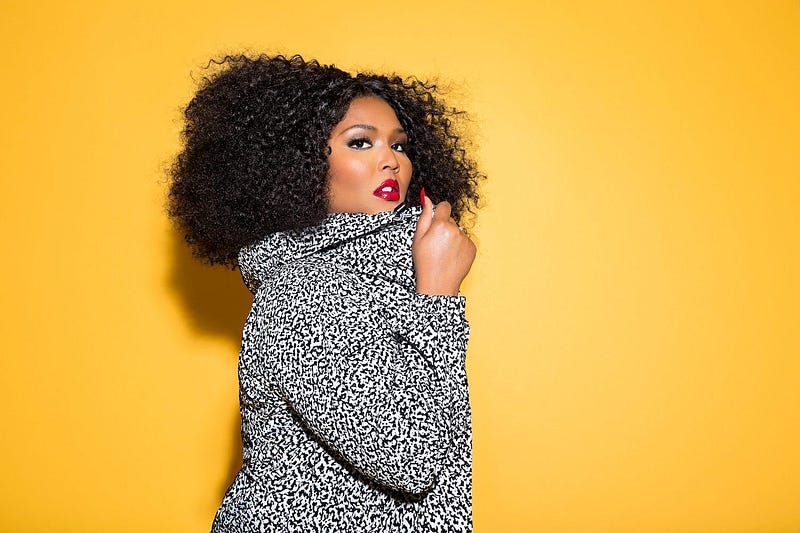
Lizzo and body positivity
The body positivity movement and the fat-acceptance movements have also consistently pushed back on the idea that thin, young, white, able-bodied women are the epitome of beauty — or that beauty should be a precondition for respect to begin with (Donnella, 2019)
Grammy award-winning artist, Lizzo is also a Black body positive advocate. With her music, her twerk skills, and self-confidence, she is a fantastic sight to see. In her music videos, you can see Black women and white women who are big, bold, and beautiful. She breaks down the barriers to thin expectations. Some in the music industry mocked her but ultimately, she prevailed because she chose to love herself.
I’m doing this for myself. I love creating shapes with my body, and I love normalizing the dimples in my butt or the lumps in my thighs or my back fat or my stretch marks. I love normalizing my black-ass elbows. I think it’s beautiful. Lizzo (Obell, 2019)
She is a beacon of hope in a country that fails to value body diversity, and when it does, it only does so under pressure. She encourages each person to love themselves as they are, despite societal expectations.
Conclusion
One thing to keep in mind is that beauty is a facet of power. Being considered beautiful can help you gain access to certain spaces, or increase your power in certain settings. By the same token, a perceived lack of beauty, or a refusal or inability to conform to certain beauty standards, also has really tangible consequences (Donnella, 2019)
While everyone should decide for themselves who is attractive and which physical qualities they prefer, Black women are negatively impacted by European body standards in tangible ways, not something Americans should facilitate.
Sometimes Black women need to let their hair down, go makeup-free to a big date, eat their favorite meal, and feel willing to lose anyone who does not respect that.
Black women are not difficult, but their lived experiences are. Attempting to live up to European beauty standards is an exhaustive process. Black women and their advocates must continue to work towards normalizing African beauty standards.
Amour propre* — A French Expression for self-love
Articles Curated in Women, Race, Equality, and Beauty:
We Don’t Need to Aspire to European Beauty Standards
Women in every culture are beautiful
medium.com
References:
Akerlof, G., & Yellen, J. (2020, August 03). An analysis of out-of-wedlock births in the United States. Retrieved September 15, 2020, from https://www.brookings.edu/research/an-analysis-of-out-of-wedlock-births-in-the-united-states/
Donnella, L. (2019, February 06). Is Beauty In The Eyes Of The Colonizer? Retrieved September 15, 2020, from https://www.npr.org/sections/codeswitch/2019/02/06/685506578/is-beauty-in-the-eyes-of-the-colonizer
Frye, J. (2019, September 03). Racism and Sexism Combine to Shortchange Working Black Women. Retrieved September 15, 2020, from https://www.americanprogress.org/issues/women/news/2019/08/22/473775/racism-sexism-combine-shortchange-working-black-women/
Green, L. (2020). Negative Racial Stereotypes and Their Effect on Attitudes Toward African-Americans. Retrieved September 15, 2020, from https://www.ferris.edu/htmls/news/jimcrow/links/essays/vcu.htm
Kwate, N. O., & Threadcraft, S. (2015). Perceiving the Black female body: Race and gender in police constructions of body weight. Race and social problems, 7(3), 213–226. https://doi.org/10.1007/s12552-015-9152-7
Light, A. (2019, July 04). Why I’m no longer using the term ‘body positive’. Retrieved September 13, 2020, from https://www.hellomagazine.com/healthandbeauty/health-and-fitness/2019070474966/body-positivity-term-instagram/
Nix, N. (2017, March 28). Black Girls 6 Times as Likely to Be Suspended as Whites. ‘Let Her Learn’ Looks to Reverse the Trend. Retrieved September 15, 2020, from https://www.the74million.org/article/black-girls-6-times-more-likely-to-be-suspended-than-whites-let-her-learn-looks-to-reverse-the-trend/
Obell, S. (2019, May 15). Lizzo Twerks To The Beat Of Her Own Bop. Retrieved September 13, 2020, from https://www.essence.com/feature/lizzo-talks-cuz-i-love-you-album-body-positivity/
Strings, S., & Bacon, L. (2020). The Racist Roots of Fighting Obesity. Scientific American, 323(1), 26–27.
- Inspired by comments made by Vuyo Ngcakani


