
Affirmative Action is the Answer
Equitable Representation in the Workplace is Long Overdue
She sees them meeting around the table through a glass wall. They sit around, laughing, eating pastries, and making decisions. Most of them are white men, and some are white women. Still, she works and waits for her turn that may never come because Black women are the most undervalued group of Americans. This story is all too common. Corporations consistently ignore Black women’s talent, condemning their ambition, and depriving them of a seat at the table.
“Women of color are the most underrepresented group in the corporate pipeline. They experience the greatest challenges. Yet they receive the least support — and efforts to increase diversity are not adequately addressing the magnitude of the issues they face,” the study found” (ONeal, 2017).
The Civil Rights Act of 1964 made race-based discrimination illegal in the workplace. Companies who take federal money to operate their businesses must comply. However, what compliance looks like remains ambiguous and elusive. Since the leadership in the Executive branch changes every four to eight years, enforcement remains spotty. Furthermore, enforcing nondiscriminatory practices was more difficult in the private sector, under all past administrations.
While some companies commit to diversifying, others take advantage of the federal government’s standoffish approach. Failing to meet the challenge head-on, they maintain the status quo, perpetuating under-represented Black women, men, and people of color.
For companies to reject discriminatory workplace practices, they must first commit to creating an unbiased recruitment process. Then, CEOs must create an inclusive work environment that should be present at each level. The goal is not perfection. This country will not begin to reflect inclusive values overnight. The goal is to counter the bias that Black applicants and employees receive. Activists should remain skeptical of claims by companies that do not include finite plans to diversify.
Systematic Racism
One of the main impediments in incorporating Black women and people of color in management and leadership positions is the widespread denial of systematic racism and sexism. Historically, businesses struggled to acknowledge that the impact of systematic racism on Black employees. Until American companies commit to systemic change, they will further perpetuate racism by failing to consider it a factor. Instead of addressing the harm caused, the government and corporations have pretended the system is already equitable. Too many companies use color-blind policies. While these companies claim that race is not a factor, the statistics tell a different story. In reality, from the moment a Black woman shows up to an interview, her complexion and cultural identity are factors. The interviewer evaluates her skin tone, hair, and clothing choices. To pretend otherwise is not credible.
The interviewer does not need to be racist to perpetuate racist hiring practices. Still, their implicit bias continues to play a role in the workplace. These companies do not value Black employees or deem them worthy of equal pay and equitable promotional opportunities.
A young Black woman named Kennedy Mitchum made history when she successfully petitioned the Merriam-Webster dictionary to change the definition of racism.
“Racism is not only prejudice against a certain race due to the color of a persons skin, as it states in your dictionary,” she wrote. “It is both prejudice combined with social and institutional power. It is a system of advantage based on skin color” (Hauser, 2020).
Her impassioned words conclusively illustrated her point, and they changed the definition to include systematic racism. A victory for Black women, this change created a pathway for formally expressing the prejudice experienced in the workplace.
“The existence of systematic discrimination reflects the reality that the workplace was designed by and primarily for a working population that was white, Christian, able-bodied, and male” (Agocs & Burr, 1996).
To counter white supremacist ideology, employees, unions, and managers must ensure that companies create inclusive workplaces and provide safe spaces to confront bigotry.
Affirmative Action Must Be Implemented
When opponents claim affirmative action is unfair, they are the ones being unfair. Their worldview avoids the abuses endured by Black people, their families, and communities. No one can erase history and the crimes against humanity committed against Black and Indigenous people. Nevertheless, past failure is not an excuse for the continued negligence in pursuance of justice.
In a color-blind world, their argument works. Racists can tell the lie that all Americans receive an equal opportunity for socio-economic growth. However, the truth is that Americans have different lived experiences. This theory also relates to the wealth-blind policies implemented by wealthy citizens. Corporations’ Let-Them-Eat-Cake mentality continues to exasperate poverty within America. Gaslighting is a vital tool that elite citizens use to oppress impoverished and marginalized groups of people.
The Black Power movement aims to empower Black people. However, in doing so, it does not intend to drag white people down. White Americans do not need to choose between their prosperity and the prosperity of others. We can all prosper, and its high time that business and political leaders implement policies to ensure equitable work environments. By considering race in the hiring and promotion decisions, corporations can do their part to combat systematic racism in their ranks.
America is currently engaged in the process of reckoning with racism. Thus, these color blind views of the country’s institutions are now an archaic fallacy. Opponents of affirmative action either do not fully understand the role of systematic racism on America’s current socio-economic caste system or are blatantly racist.
Improving the lives of Black people takes work but helps America. Citizens share the responsibility of creating a more perfect union. That starts with an end of the age-old denial of race as a discriminatory factor. Once the denial ends, companies can commit to implementing affirmative action in the private sector, producing the equity Black people deserve.
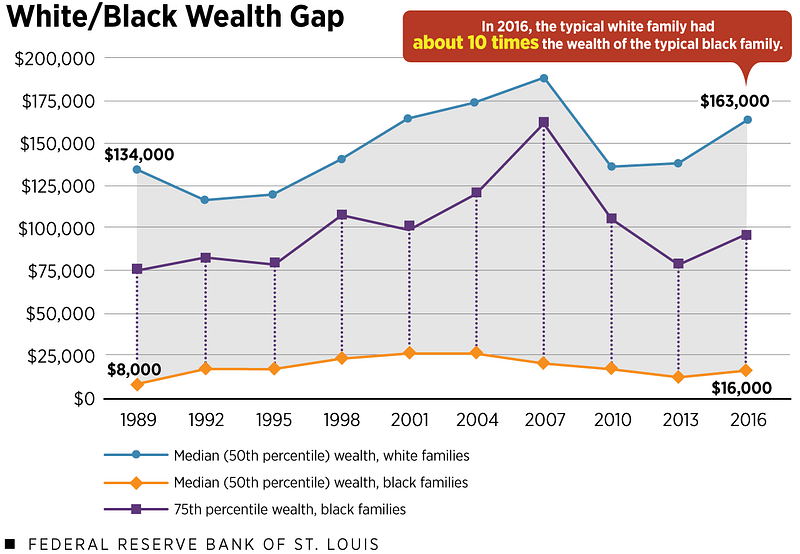
The wealth gap between Black and White families continues to widen, exasperated by the lack of resources to combat poverty, a global pandemic, and police brutality. Opposition to reform comes from a desperate attempt for white people to deprive Black people of opportunities. Rising through the ranks of a company does not fit into the ideology that Black people are inferior. Thus, many racist people continue to resist anti-discriminatory policies.
“Under federal regulation, employers who received contracts, grants, and other benefits from the US government were required to collect and report data on the composition of their workforce and to set goals and timetables for hiring in order to improve representation of disadvantaged groups that were underrepresented relative to relevant labour markets. These groups included women, Blacks, Hispanics, Asians, and American Indians” (Agocs & Burr, 1996).
The program began under John F. Kennedy’s administration. By Executive Order 10925, he called for the use of affirmative action for any business receiving federal funding. However, conservative Republicans like Reagan and Bush fought against affirmative action and did not maintain the implementation under their administrations.
“Enforcement in the USA was largely discontinued in the 1980s under the Reagan and Bush administrations, which were hostile to the principle of affirmative action” (Agocs & Burr, 1996).
Because the Civil Rights Act prohibits discrimination based on race, the federal government has a responsibility to ensure that American companies comply and stop using discriminatory practices.
While the racial divisions in this country are troublesome, hope springs eternal. Affirmative action stands as a way for private companies and entities to diversify their workforce. Companies who succeed in increasing diversity in their workforce construct specific plans to accomplish that goal. Color-blind policies are counterproductive to combating systematic racism.
How can white people, in good faith, say that affirmative action is unfair given the privilege and advantages white Americans maintain?
“Companies must confront racism at a systemic level — addressing everything from the structural and social mechanics of their own organizations to the role they play in the economy at large. There are proven ways to improve hiring programs, interrupt bias at the team level, interrogate supposedly “color-blind” analytics, and support employees of color — especially Black employees” (Editors, 2020).
No one person, company, or even a country can single-handedly combat racism, hatred, or bigotry. Still, well-meaning citizens will not shrink from the challenge. Through insistence in policy change, the glass wall keeping equity at bay will shatter. Together, we can change the world into a more inclusive place.
A Helpful Book List for Confronting Racism in the Workplace:
More Articles on Race, Equality, and Injustice:
References:
Agocs, C., & Burr, C. (1996). Employment equity, affirmative action and managing diversity: assessing the differences. International Journal of Manpower, 17(4/5), 30. https://doi.org/10.1108/01437729610127668
Editors, T. (2020, June 19). Confronting Racism at Work: A Reading List. Retrieved August 09, 2020, from https://hbr.org/2020/06/confronting-racism-at-work-a-reading-list
Hauser, C. (2020, June 10). Merriam-Webster Revises ‘Racism’ Entry After Missouri Woman Asks for Changes. Retrieved August 07, 2020, from https://www.nytimes.com/2020/06/10/us/merriam-webster-racism-definition.html
ONeal, L. (2017, October 10). Study: Women of color underrepresented in corporate America, but also more ambitious and entrepreneurial. Retrieved August 08, 2020, from https://theundefeated.com/features/women-in-the-workplace-2017-study-women-of-color-underrepresented-in-corporate-america/


