
Stop the Natural Hair Discrimination
The impact of systematic racism on black women based on hairstyle
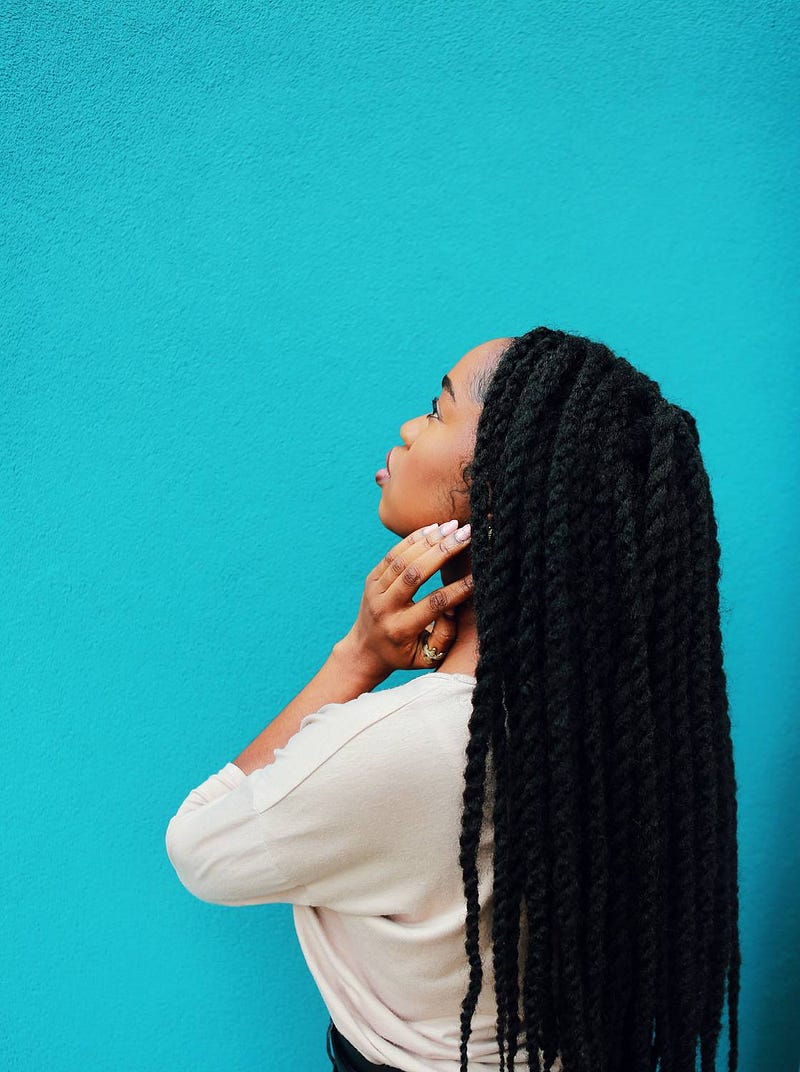
Our hair looked different. We knew that, even as children. For Black women, hair influences social status. The proper hairstyle opened doors or slammed them in our faces. Perms and hot combs straightened our hair. Straight hair helped girls to fit in. Often called nappy when they refused to comply with these social norms, they usually relented. Our mothers did too. Behaviors by Black people reflect their struggle. White people feel more comfortable around Black women with straight hair. Taught to comply, little Black girls got groomed into submission.
As a consequence of white supremacy, hatred trickled down. White people put pressure on Black parents to conform. In turn, Black parents wanted to protect their children from the consequences of individualist behavior. Through the suppression of natural hairstyles, Black parents complied. Loving yourself as a Black woman becomes revolutionary when your natural hair becomes controversial.
Girls at my elementary school would sing songs about hair:
“If your hair wrap around one time
You bald head. You bald head.
If your hair wrap around two times
You got hair. You got hair.
If your hair wrap around three times
It’s not fair. It’s not fair. “
Hair length and texture, like the shade of our brown skin, held significance. Systematic racism interrupted the joy of imperfection experienced by children. Judging one another through the lens of white expectations became a schoolyard pastime.
Black women share similar memories of feeling the burn of having the chemicals in their hair just a little too long. The pain to possess straight hair against-all-odds felt palpable. Our curly hair, called nappy, made us question our inherent beauty. To maintain straight hair, hairdressers apply the perm every six weeks. To assimilate, Black women sacrificed a lasting tribute of their ancestral lands, their natural hair.
As girls, we experienced pressure to conform to societal demands. Hair texture remains a controversial topic among Black women. Black girls and women called straight hair good hair. What did that make our hair? Though I never heard girls or women describe our natural hair as bad, what else could it mean? We all knew but refused to utter our disdain for our natural black hair. Deep down, Black girls are self-conscious.
I stopped perming my hair as a young adult. People viewed me differently. Coworkers and managers searched my face for submission that no longer existed. Feeling joyous, I decided to continue my natural hair journey. Nevertheless, my joy failed to protect me from racism.
“Many women claim that they have more self-confidence after going natural. In fact, a study was performed in which black women were shown pictures of beauty standards to evaluate attractiveness, and the results solidified that owning your identity was the key to self-esteem” (Wolff, 2017).
Bias becomes racism in the hands of hiring managers. Black women face a troublesome problem. Our hair, in a white supremacist country, appears nonconformist. As a result, Black women, viewed as inherently confrontational, struggle for acceptance in the workplace.
Personal Story:
Wanting a better job, I walked into a chic French Quarter restaurant to apply. Wearing black slacks and a button-up white shirt, I felt confident. Most Black people worked in the kitchen; I wanted to work in the front, as a server. At this point, I had an Associates Degree in Science with about two years of server experience. My education and competence made me qualified. However, I knew my personality and their comfortability with Black women determined my future.
My interviewer did not appear to carry some secret bias. She asked about my experience and my availability. I took a short multiple-choice quiz and spoke to a second manager. We smiled with one another; I left feeling optimistic.
With no guarantees, I continued my day. My phone rang. After trading simple courtesies, she asked me if I would accept the job. My face lit up. I did it. After hanging up with her, I called my family and friends. I wanted to yell on the mountain about my little victory.
Then, she called again. Curious, I answered the phone. She asked me whether or not my hairstyle was called twists or dreadlocks. The warmth left my face. I knew she wanted to know whether my hair would always look the way it did. At that time, my hair was short and twisted.
White people did not understand the difference between twists and dreadlocks. Twists are a precursor for dreadlocks if you choose to let your hair lock. At that point, I lied to her. After telling her they were twists, she confirmed I could start working in a few days. I did not know whether or not her discrimination was legal or not. However, I needed a job. Like a side dish, racism came with the new opportunity.
Black women endure discrimination based on their hair every day in America.
“A recent study found that African American women face the highest instances of hair discrimination and are more likely to be sent home from the workplace because of their hair. The study also uncovered that 80 percent of African American women felt they needed to switch their hairstyle to align with more conservative standards in order to fit in at work. Hair discrimination occurs not only in the workplace, but in schools as well” (Arefin, 2020).
A Black woman’s hair reveals her beauty, grace, and heritage. Asking Black women to Europeanize their hair to be accepted disrespects their African culture. This discrimination is disgraceful systematic racism in the workplace and schools. To counter this, Black women should wear their hair freely. Let their hair rise into fluffy afros; let it fall into thick locks. Black women should expose racist institutions that discriminate based on hair. No longer should they hide under the guise of office acceptability.
Systematic racism called; my voice shrank. If I could do it all over again, my message would change. I would use my voice, telling the truth about my hair.
Black women change the world when they choose to speak on issues that matter. The white supremacist system will continue to use natural hair discrimination to prevent Black women from achieving their career goals. We must unite and support The Crown Act, countering that racism. The Crown Act stands for Creating a Respectful and Open Workplace for Natural Hair. As of 2019, this law protects Black women in California. However, the movement to implement the law nationwide is ongoing. Black women should continue to fight against workplace and school discrimination. One day, we can all wear our crowns, under the protection of the law.
References:
Arefin, S. (2020). Is Hair Discrimination Race Discrimination? Retrieved July 27, 2020, from https://www.americanbar.org/groups/business_law/publications/blt/2020/05/hair-discrimination/
Wolff, M. (2017, September 26). How Your Hair Ties to Your Self-esteem. Retrieved July 25, 2020, from http://www.curlynikki.com/2017/09/how-your-hair-ties-to-your-self-esteem.html


