
Fund BIPOC Communities
Assessing the True Meaning of Defund the Police
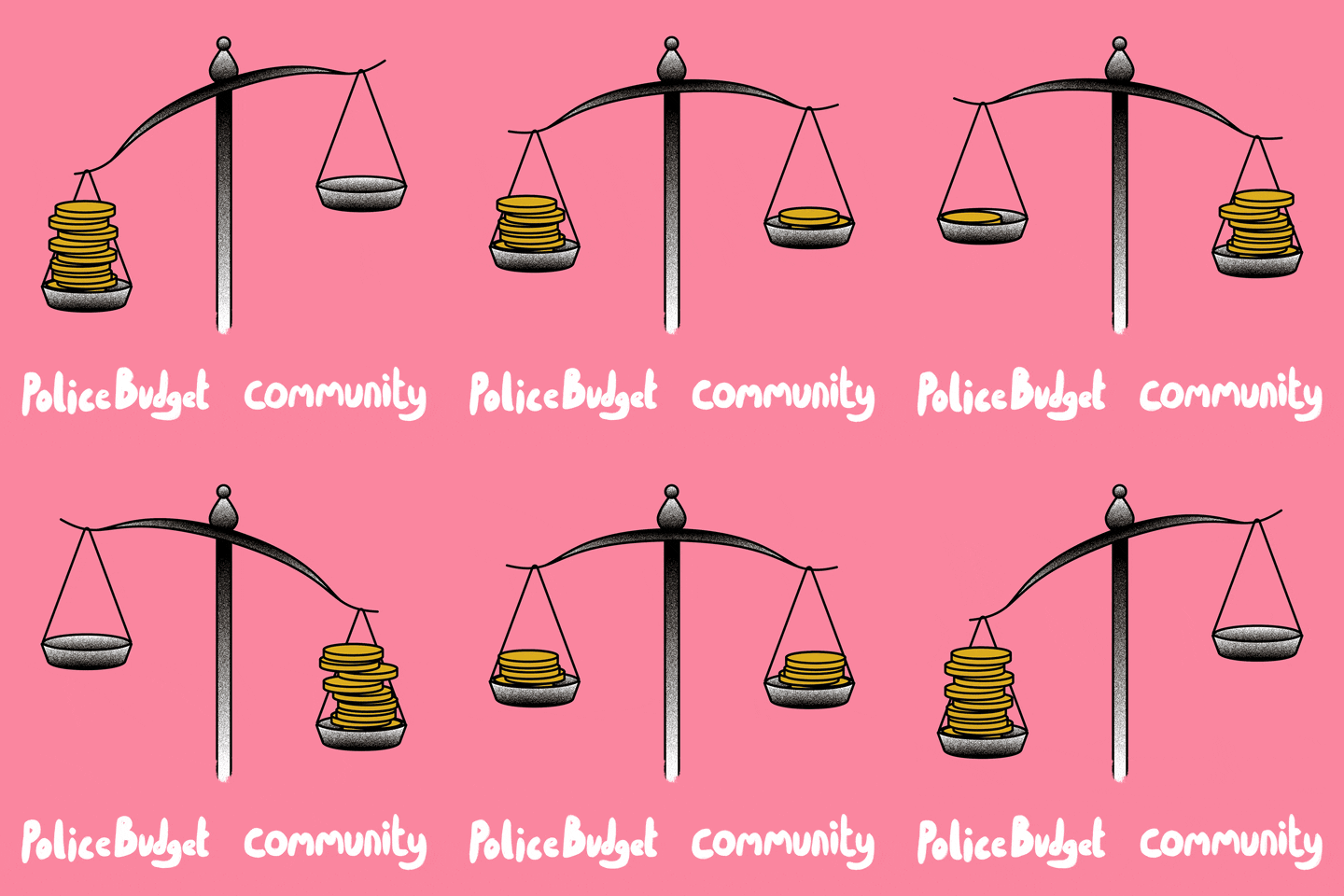
Be forewarned. Opponents to police reform are using bad faith arguments. They want you to think that the term, defund the police, means that police will cease to exist. The majority of Americans failed to consider systematic change because of this mischaracterization. While some criminal justice reform advocates favor abolition, defund the police does not mean that. So far, bad faith actors led a successful campaign against the movement within the movement. Americans should reconsider.
American police apply the law unevenly. Officers use the poverty of the neighborhoods as justification for over-policing BIPOC communities. If it looks like a high crime area, they use more force with individuals in that area. Nonetheless, poverty is not a crime. In suburban areas, police officers respond differently.
“This form of policing is based on the mindset that people of color commit more crime and therefore must be subjected to harsher police tactics. Police argue that residents in high crime communities often demand police action” (Vitale, 2018).
What does defund the police mean?
Defund the police aims to decrease the police presence while investing in the health and welfare of these neighborhoods. Black people and people of color get stopped more frequently and experience more harassment and violence from police officers. They make up the majority of prison populations. Many black people can share experiences when an officer made them feel uncomfortable, afraid, or shell-shocked.
After the public killing of George Floyd, many claimed that a few bad apples caused the trouble. However, that type of argument ignores the training that officers receive. Trained as warriors, they fail in their role as community guardians. Officers should not treat black and brown people as enemies of the state. As citizens, they deserve freedom. Yet, young Black boys cannot play with toy guns because their blackness makes them an inherent threat to police officers.
“Tamir Rice and John Crawford were both shot to death in Ohio because an Officer’s first instinct was to shoot” (Vitale, 2018).
Instead of blaming only the officers for their moral failings, America should evaluate the training and culture of police departments. Unfortunately, bad faith actors attempt to disrupt useful dialogue about police reform. They accuse criminal justice reform advocates of trying to promote anarchy and chaos. In reality, the goal of these advocates is to create safer neighborhoods for everyone. Police unions continue to fight against meaningful transparency and reform. This opposition undermines attempts to address systematic racism in American policing.
Police respond to crimes. They do not prevent crime like in the movie Minority Report. Americans want to believe that police keep them safe. Police ensure consequences, not preventative measures. Instead of the safety officers communities need, they act as oppressors of the community they swore to protect. In Southern states, many police departments started as Slave Patrols. Consider the history of American policing, particularly in the South.
“The American South relied almost exclusively on slave labor and white Southerners lived in near constant fear of slave rebellions disrupting this economic status quo. As a result, these patrols were one of the earliest and most prolific forms of early policing in the South. The responsibility of patrols was straightforward — to control the movements and behaviors of enslaved populations” (Hansen, 2020).
Since the beginning of American policing, their job was to patrol Black people. The American policing system is a well oiled machine. Police unions and officers attempt to justify the harm they cause, but not in court. Instead, they want the benefit of the doubt. Police officers, provided with qualified immunity, treat lives as expendable. Disturbingly, officers value law-enforcement over preservation of life. Imagine being Rodney King, beaten half to death, for speeding. Officers should not be the judge and jury. They do not have the right to beat citizens indiscriminately. When officers take someone’s life, they act autonomously.
When a police officer harms someone in the community, the same police department investigates one or more of its officers. In the sad case of Elijah McClain, officers killed him on August 24, 2019. Using a chokehold, ignoring his pleas, they killed him. Officers were not charged with any crime because, in America, Black lives don’t matter as much. Until national media and social media expressed outrage, his case went cold.
“Body-cam footage of the arrest does exist, although the ADP did not release it to the public until late November, months after McClain’s death. In the footage, an officer can be heard admitting McClain had done nothing illegal prior to his arrest” (Lampen, 2020).
The officers initially put on administrative leave, came back onto the force. Lack of transparent action from police departments denied justice to his family. The District Attorney refused to press charges. His family deserves to know what happened to their son and why. Police unions shield officers from seeing their day in court. If they believed in the righteousness of their actions, why would these officers work so hard to avoid the courtroom?
Using their training and life experiences, officers make the best choice they can. At least, that’s what many white Americans want marginalized communities to believe. Consider the alternative. Policing, originating from a racist system, maintains the status quo by oppressing people of color. Police do not protect members of the community. They enforce the laws as they see fit. This power should concern any American since police officers do not have law degrees. Unidentified officers in Portland used their power to detain and terrorize protesters. Police reform should go beyond racial sensitivity training. They must re-evaluate the way policing impacts communities.
“Police exist primarily as a system for managing and even producing inequality by suppressing social movements and tightly managing the behaviors of poor and nonwhite people: those on the losing end of economic political arrangements” (Vitale, 2018).
Developing a relationship with marginalized communities becomes difficult when accountability becomes an afterthought. The District Attorneys’ office works with police officers. They do not want local law enforcement to appear corrupt or illegitimate. Their goal is to work together to prosecute cases introduced in the system by those officers. How then, can they protect the people from the police officers when maleficence occurs?
“We don’t have fully accurate information about the number or nature of homicides at the hands of police” (Vitale, 2018).
Most Americans acknowledge that the current policing system must change. However, they argue about what those changes should entail. Small reforms fail to address the systematic racism in policing. Although the term defund the police scares some people, those fears are not based on available data. City funding should not be locked into place. Communities have the freedom and power to re-assess relationships with law enforcement.
Opponents of criminal justice reform often claim that black on black crime is the real problem. This bad-faith argument uses the broken window policing tactic. Because of the significant wealth gap between Black and white families, Black people are more likely to live in marginalized communities. To indicate that poverty in of itself is criminal is unAmerican. Crime and poverty go hand in hand. As long as opponents to reform can insist the impoverished suffer due to inferiority, they can erase empathy from the criminal justice system.
Those interested in decreasing crime should support anti-poverty social programs. Fostering successful socioeconomic opportunities decreases crime. Modern city planning needs to consider the best way municipalities should spend their money. Environmental, educational, and healthcare programs benefit members of the community. Yet, these programs, cut after the Recession, struggled to maintain proper funding. Public education, for example, funding has been cut dramatically.
Fostering successful socioeconomic opportunities decreases crime.
“Our country’s future depends heavily on the quality of its schools. Increasing financial support can help K-12 schools implement proven reforms such as hiring and retaining excellent teachers, reducing class sizes, and expanding the availability of high-quality early education. So it’s problematic that some states have headed sharply in the opposite direction over the last decade. These cuts risk undermining schools’ capacity to develop the intelligence and creativity of the next generation of workers and entrepreneurs” (Leachman, Masterson, & Figueroa, 2018).
Children deserve a proper education regardless of which neighborhood they live in or the color of their skin. Policing, which does not prevent crimes, is not more important than Public Education. At least, let the citizens decide. Bad faith arguments prevent community leaders and advocates from working together to implement change.
While the federal government does not encourage taking funds away from police departments, they lay forward a plan to address crime in low-income communities. That plan requires reinvestment in community resources. Most Americans agree on the importance of crime reduction. The solution should reflect a science-based approach.
“The evidence on neighborhoods and violent crime suggests several strategies for improving safety and neighborhood health. Investing in communities caught in cycles of crime, decay, and disinvestment can help reduce crime rates. Research on social ties and institutions suggests that strong community organizations and leadership can make a difference. Investments that increase inclusion and support education, skills, and access to jobs may be necessary to address the concentrated disadvantage at the root of violent crime in neighborhoods. Housing programs may avoid re-concentrating poverty in disadvantaged areas and crossing thresholds linked to increases in violent crime. In general, policies that reduce economic, racial, and ethnic segregation can increase communities’ access to key resources to prevent violent crime and promote healthy development. In addition, more comprehensive national data on crime at the neighborhood level can help us better understand trends” (Neighborhoods and Violent Crime, 2020).
The government, through research, assessed the correlation between poverty and crime. Those who oppose social programs for disadvantaged families, public education spending and restorative justice are soft on crime. By failing to address the systematic racism and poverty in these communities, they perpetuate an infinite loop of chaos. High crime, low-income neighborhoods struggle to fund schools sufficiently. They attract very few investors and lack socioeconomic mobility for residents.
Don’t loose hope. America is a representative democracy; citizenship takes work. Creating safe neighborhoods is worthwhile. In a safe community, every person gets respected by police officers. Black Lives Matter when we make them matter. Only then can we address the disparities in marginalized communities and push meaningful reforms forward.
In closing, police govern by consent. When communities lose the power to negotiate with police departments, officers violate the consent BIPOC communities deserve. Reforming American policing cannot end with defunding. Citizens expect officers to protect and serve. Law enforcement should not strike fear into the hearts of innocent Americans.
References:
Hansen, |. (2020, June 03). Slave Patrols: An Early Form of American Policing. Retrieved July 24, 2020, from https://lawenforcementmuseum.org/2019/07/10/slave-patrols-an-early-form-of-american-policing/
Lampen, C. (2020, July 05). What We Know About the Killing of Elijah McClain. Retrieved July 24, 2020, from https://www.thecut.com/2020/07/the-killing-of-elijah-mcclain-everything-we-know.html
Leachman, M., Masterson, K., & Figueroa, E. (2018, February 28). A Punishing Decade for School Funding. Retrieved July 24, 2020, from https://www.cbpp.org/research/state-budget-and-tax/a-punishing-decade-for-school-funding
Neighborhoods and Violent Crime: HUD USER. (n.d.). Retrieved July 24, 2020, from https://www.huduser.gov/portal/periodicals/em/summer16/highlight2.html
Vitale, A. S. (2018). The end of policing. London, UK: Verso.


