
We Don’t Need to Aspire to European Beauty Standards
Women in every culture are beautiful
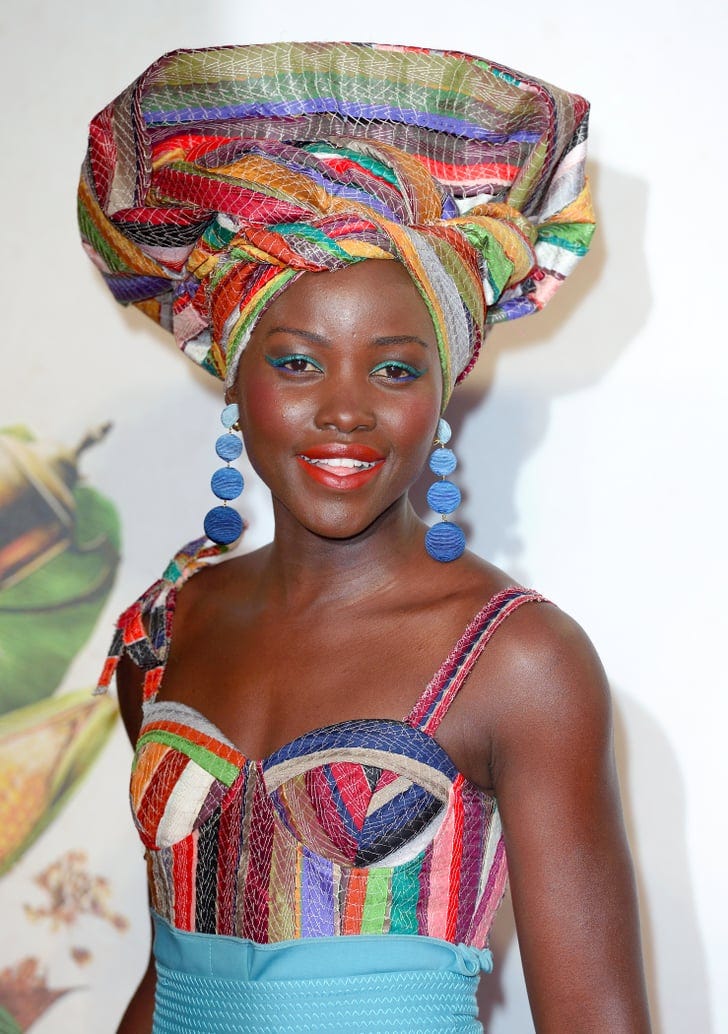
Deep down, we all know that the expression, “Beauty is only skin-deep” is a misnomer. It promotes a perception of beauty that is superficial and trivial. Beauty is relevant because a woman’s awareness of her physical appearance will, in turn, impact her capacity to develop and maintain self-esteem. Applying this mindset means those who do not fit societal expectations should accept their ugliness and still somehow feel content. Instead of pretending that physical appearances are irrelevant, societal norms should adjust to respect and value women of color.
“The better a woman feels about her physical appearance, the greater her sense of self esteem. In contrast, for example, a number of health problems have been traced to poor self-image and low self-esteem including eating disorders, substance abuse, depression and suicide” (Evans & McConnell, 2003; Monro & Huon, 2005; Thompson & Dolce, 1989) (Lynch, 2007).
People take pride in their appearance, and in the absence of that pride, self-doubt thrives. Women of color are beautiful, even if many people within a society cannot acknowledge their inner and outer beauty. If we declare that beauty is only skin deep, aren’t we further preserving Europeanized beauty standards that deny many people of acceptance? We should not have to say, “You are not light-skinned and your hair is not straight, but beauty is only, skin-deep, and you are a good person, so it’s okay.” The consolation prize given to women perceived as homely is that they are good people on the inside, so people should be kind to them. This approach is condescending. Just because a person cannot see someone else’s beauty does not mean they are ugly — it means the observer is short-sighted.
“Due to events like the widespread colonialism of the 1800s, the European societal norms have lingered in other societies and have taken away from different cultures’ own values of beauty” (Tranchina & Flores, 2015).
American connotations of beauty have a straightforward relationship to white supremacist ideology spread through colonialism. In this system, white people systematically oppressed Black and Indigenous people. Women of color endured poor treatment in this environment because their natural appearance deviated from white women’s physical characteristics. White supremacist ideology perpetuates the idea that all non-white people are inferior and aesthetically unattractive.
Our culture and shared experiences create beauty standards. Women see the people in their lives, in their communities, and those presented in magazines, television shows, and movies. Women of color can see the lack of representation and subconsciously understand their role in society. Many Black women will hear a white person say, “You are so beautiful for a Black girl,” as if it is shocking to find a beautiful woman who has a dark complexion. Similarly, racist white people describe the intelligence of Black people in a limited capacity. Many white people were shocked at how well President Obama spoke as if Black people were less capable of comprehension and self-expression. Racism is the undercurrent that American society dwells in, and these micro-aggressions came along for the swim.
The Beauty Industry
“To the beauty industry, women of color aren’t worth having products meant to celebrate our natural beauty. But we do have value as consumers paying into a multi-billion dollar industry of changing ourselves to look more like white women” (Johnson, 2020).
Covertly, the beauty industry reinforces Europeanized beauty standards. They do this using positive reinforcement — as long as they hire mostly white women, they do not have ever to call Black women ugly. Companies communicate this message in the absence of their presence. When they do include a woman of color, industry executives see her as an oddity, and like the doubting of intelligence, white people seem to feel startled by her beauty.
The prevalence of these standards impacts every facet of life, from professional opportunities to interpersonal relationships and everything in between. Women of all skin shades, affected by the beauty industry’s limited perceptions of womanhood, are assessed for their facial features, weight, and body shape. They play a role in their ability to be hired, and thus considered beautiful by a wide array of consumers. However, as in most facets of life, women of color have a more robust fight ahead. The color of their skin, as well as their hair texture and style, are heavily scrutinized.
Society expects women of color to fulfill the fantasy of womanhood by adjusting their natural appearances to meet archaic and white-washed beauty standards. While the beauty industry thrives from the products women choose to buy, they often perpetuate limited perceptions of femininity, which leaves many women struggling to compete with an air-brushed version of a model or actress. Beauty commercials, magazines, and social media marketing tools contribute to how women view other women and themselves. This marketing is a powerful influence on women who come into contact with mostly white examples of beauty. In addition to impacting girls and women, beauty marketing affects the perception boys and men have about women, and more importantly, what they expect from them.
“For women of color, the Western, Eurocentric standard of beauty creates internalized self-hatred. We’re told that striving for beauty isn’t just a matter of presenting our best self, but of fundamentally changing ourselves with things like hair straightening chemicals, plastic surgery, and toxic skin-lightening creams” (Johnson, 2020).
The American beauty market is an experiment, and the control group consists of white women. Black women and women of color are the variables in this social experiment. They will never look like white women in the control group, so it is a setup to justify calling them unsightly.
Every place on Earth that colonialism spread, so did hatred, bigotry, and the dehumanization of African and indigenous people. Their ideology perpetuates a homogenous perception of beauty. In particular, European societal norms fail to appreciate physical attributes atypical amongst white people.
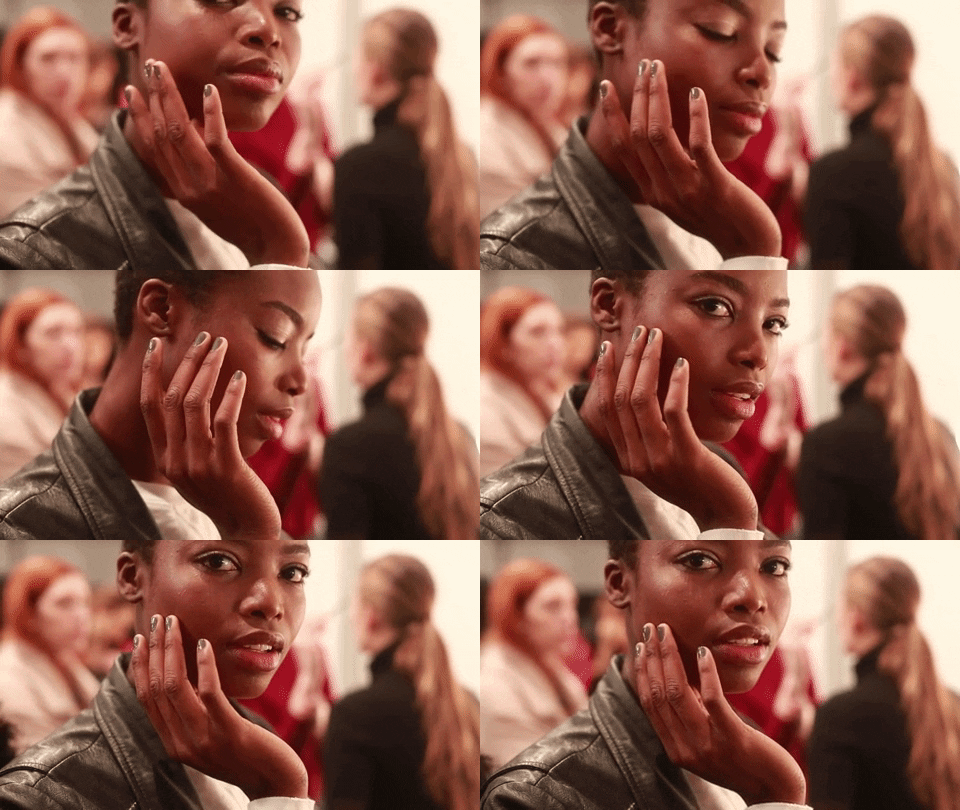
The American beauty industry has shown a preference for women with light or fairer skin. Colorism refers to discrimination based on proximity to whiteness. Dominant in the beauty industry, colorism negatively impacts darker-skinned women of color by hindering their ability to work and thrive in the industry.
“This one-way colorism shows up in the beauty industry, telling women of color that the darker we are, the uglier we are” (Johnson, 2020).
The systematic racism in the industry continues to impact the self-esteem of girls and women negatively. The sub-conscious brown paper bag test is hard at work.
Dating Preferences
Too often, people use dating preferences as justification for not acknowledging the beauty of women of color. However, no one should need to feel sexually attracted to another person to treat them with dignity and accept their beauty as human beings first and foremost. People should date who they feel attracted to but should never confuse attraction with that person’s inherent aesthetic value.
The Receipts
“Lupita Nyong’o talked about feeling this impact, saying, “I remember a time when I, too, felt unbeautiful. I put on the TV and only saw pale skin. I got teased and taunted about my night-shaded skin. And my prayer to God, the miracle worker, was that I would wake up lighter-skinned.” (Johnson 2020).
Even though Lupita Nyong’ o is considered by many to be a brilliant, gorgeous Black woman, she struggled with self-esteem because of the rampant colorism in the beauty industry. The impact of colonial beauty standards can take a toll on even the most celebrated of Black women. Her experiences did not occur in a vacuum of space — this is the result of colorblind beauty industry executives. Too many fail to understand what it is like to be Black and considered ugly just for existing.
This mistreatment is experienced by Black men and boys of color as well. In 2018, H&M apologized for creating an advertisement where a dark-skinned young boy wore a shirt that said, “Coolest Monkey In The Jungle.” For hundreds of years, white supremacists described and continue to describe Black people as monkeys. Calling Black people monkeys is an old trope that reveals they do not see Black people as human, but rather as a sub-human species undeserving of respect. The “in the jungle” part comes from a deep-seated disregard for African nations. Living near a jungle or in a jungle does not make a civilization of people savage. However, racists made up their minds a long time ago. For them, Black people are no better than monkeys. They applied this same justification to enslave, torture, and maim Black and Indigenous people. This advertisement demonstrated a lack of diversity in H&M leadership roles. If only white people decide what messages are acceptable, then Black people and people of color will continue to be accosted and marginalized.
Beauty is in the Eyes of the Beholder
“In this country American means white. Everybody else has to hyphenate”. — Toni Morrison (Mortchev, 2019).
Toni Morrison hit the nail on the head. Americans are white, and everyone else has to have a sidebar to explain their citizenship and validate their existence in America. Through the eyes of mostly white beauty executives, people see their perception of beauty. In America, white people are the traditional protagonists in the story. When a model struts her stuff, it is through the European perspective that people judge her. Her walk, her face, her complexion, her hair, her makeup, and her value are compared to white women, instead of appreciated as unequivocally beautiful.
Across Cultural Barriers
Black women and women of color worldwide face the same type of systematic racism in the culture as a whole, highlighted by the beauty industry. Research shows that Black and Indian women maintain negative associations between their appearances and those of white people. These negative associations are a direct result of the white-supremacist dominant culture.
“Similar to the findings for the Indian sample, among African American women, Whiteness internalization predicted skin and hair outcomes, in part, through the relation with skin tone and hair surveillance” (Harper, K., & Choma, 2019).
It is essential to recognize the prevailing trend of demonizing dark-skinned women across cultural barriers because, together, women of color can counter these narratives.
In closing:
The beauty industry made meaningful progress in comparison to previous generations. Companies like Dove made it their mission to represent women of different ages, skin tones, hair textures, and sizes. The adjustment of their business model using the hashtag #showus is a fantastic example of the direction beauty companies can turn towards. The company did not make changes because of the unrest following George Floyd’s death. Dove made these changes years ago and stuck with it, building upon widening the perception of beauty. Their campaign is impressive for its consistency and its rejection of tokenism. Too often, companies include one Black person or person of color and then give themselves a pat on the back. It is time to do more.
“We are moving toward a culture of big-tent beauty. One in which everyone is welcome. Everyone is beautiful. Everyone’s idealized version can be seen in the pages of magazines or on the runways of Paris” (Givhan & Morales, 2020)
The idea that we are moving towards a big-tent beauty is optimistic and, in ways, idealistic. While it is trendy today to promote inclusivity, many companies need a push to acknowledge beauty-diversity and to commit to diversification in the long run. If in doubt about how to implement diversity, they should look to Dove and recognize their success in changing the company’s culture that once only perpetuated white women as beautiful. They can also invite more Black beauticians into board rooms to create inclusive campaigns.
Creating a more inclusive environment will improve the self-esteem of Black women, women of color, and girls who society should acknowledge as beautiful. To accomplish this goal, companies must develop specific plans to address the historical lack of diversity in beauty campaigns. Platitudes are irrelevant if they cannot impact or alter the white-washed narrative of beauty. While it is impressive that some companies are pushing change forward, there is still so much ground to cover and many companies who make no efforts to change. Americans must continue to hold these companies to account, never accepting a status quo that perpetuates homogenous beauty.
References:
Akinro, N., & Mbunyuza-Memani, L. (2019, November 25). New Study Shows that African Magazines Emphasize Eurocentric Beauty Standards. Retrieved August 22, 2020, from https://www.natcom.org/communication-currents/new-study-shows-african-magazines-emphasize-eurocentric-beauty-standards
Givhan, E., & Morales, P. (2020, January 16). The idea of beauty is always shifting. Today, it’s more inclusive than ever. Retrieved August 22, 2020, from https://www.nationalgeographic.com/magazine/2020/02/beauty-today-celebrates-all-social-media-plays-a-role-feature/
Harper, K., & Choma, B. L. (2019). Internalised White Ideal, Skin Tone Surveillance, and Hair Surveillance Predict Skin and Hair Dissatisfaction and Skin Bleaching among African American and Indian Women. Sex Roles, 80(11/12), 735–744. https://doi.org/10.1007/s11199-018-0966-9
Johnson, M. Z. (2020, August 14). 10 Ways the Beauty Industry Tells You Being Beautiful Means Being White. Retrieved August 22, 2020, from https://everydayfeminism.com/2016/01/when-beauty-equals-white/
Lynch, M. S. (2007). An exploration of the relationship between personal ideal … Retrieved August 23, 2020, from https://scholarworks.smith.edu/cgi/viewcontent.cgi?article=2420&context=theses
Mortchev, M. (2019, August 07). In this country American means white. Everybody else has to hyphenate. — Toni Morrison. Retrieved August 23, 2020, from https://dukeengage.duke.edu/in-this-country-american-means-white-everybody-else-has-to-hyphenate-toni-morrison/
Tranchina, G., & Flores, J. (2015, July 27). Eurocentric Beauty Standards: A Global Disease. Retrieved August 22, 2020, from http://www.germmagazine.com/eurocentric-beauty-standards-a-global-disease/


