
Unplanning: The Best Way to Travel the World
How profound life lessons can come from this approach to travel
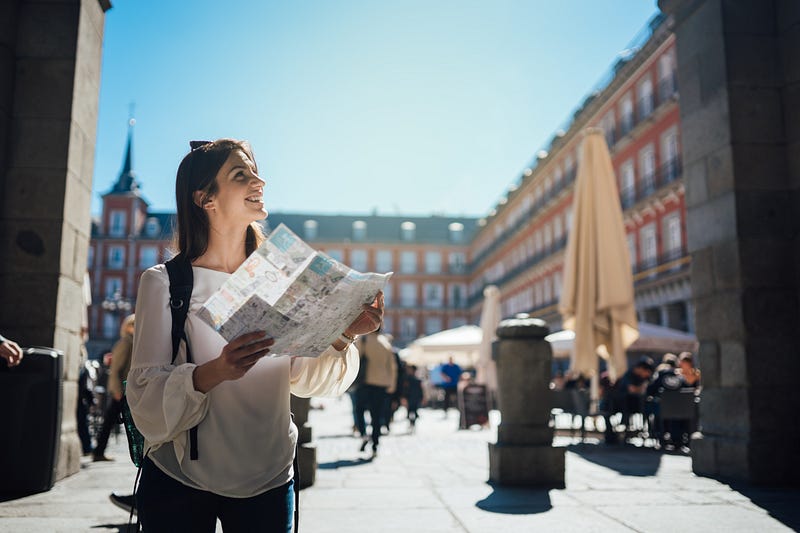
When we’re not craving a relaxing, slothful beach vacation, we’re often wanting our international travel experiences to be deep, meaningful, and transformative. How do we make that happen? With each of us carrying around our own complex stew of morals, fears, challenges, and strengths, we develop dozens of orientations toward travel planning.
What type of travel planner are you?
Perhaps you are well-researched and take pleasure in a detailed itinerary, knowing you won’t miss out on any sites, pieces of art, or a desired culinary epiphany. You carry a binder.
Instead, maybe you hire a travel agent, book a tour that spans the length of the trip or schedule a series of guides in each city. You carry nothing, knowing that your trip leaders hold all information.
Or perhaps you wing it, identifying one or two key destinations, prioritizing slow, low-key travel, and understanding that you may miss a well-known site or historical location. You carry a journal.
Maybe you do a bit of each, depending on your goals for a particular trip, your destination, or how much time you have to plan.
With plenty of ways to organize a trip, try Unplanning, one of the best strategies for creating connections, clarifying worldviews, learning as much as you can from a culture across the world.
What is Unplanning?
To have the immersive experiences we seek, we must marry planfulness with a commitment to flexibility, open-mindedness, and instinct. Boxed trips, group tours, and all-inclusive resorts do have a place and a purpose. They’re effortless; they’re relaxing. But they’re typically not life-altering because they don’t allow for a key ingredient to transformative travel: Spontaneity.
Through Unplanning, we knit together the art and the science of travel, the planful and the spontaneous, so that we can place ourselves in spaces and moments ripe with the possibility of life-changing experiences.
How to plan just enough to make space for transformational experiences
Unplanning is an orientation, not a particular set of steps, but these ideas below may help you approach your next international trip using Unplanning.
Research
Prior to your departure, do just enough research to locate places that strike you as lively or culturally important. Perhaps you choose the souks (markets) of your Moroccan destination or the zocalos (squares) of your Mexican one. You know that you’ll have the opportunity to interact with local residents in these spaces.
(I like central squares a lot because locals congregate there, and they’re everywhere. My small Connecticut hometown had a central square, and my beloved Portland has one too. When I was in Venezuela, I was told that every village, town, and city has a Plaza de Simon Bolívar, though I didn’t travel wildly enough to confirm this statement.)
You can carry the orientation with you while hiking from village to village on the Annapurna Circuit in Nepal or the Camino de Santiago in Spain. Vast, rambling, bustling markets also make great destinations for Unplanning.
Pace
When you reach one of these spots, park yourself, chill out, and slow down. Sip some tea; throw a coin in a performer’s hat; chat with a shopkeeper. You’re not waiting for Godot here. You’ve placed yourself in this place for a reason, and you have agency.
Think of this as active waiting.
Wander. Show curiosity. Ask questions. Interact. Stop noticing the time. Do not plan anything later. Do not pull out a phone or a book. Slow down, look around, and engage.
(Remember, countries don’t exist so that you can check them off a list. Quickly “doing” countries eliminates your opportunities for learning and growth.)
Persistence
Chances are, not much will happen. You’ll have a laugh with someone over your shoddy Spanish and eat a taco. The next day, though, who knows what you might make happen?
(One of my most profound life experiences came when I was 20 years old and traveling in Beijing. I made what felt like a crazy choice not to see the Great Wall of China — still haven’t seen it —instead accepting an invitation to take tea in the home of a Chinese student I met in Tiananmen Square. No, not that Chinese student.)
Attentiveness
While sitting in a plaza or lounging in a park of some enticing international locale may seem simple, travel is rife with social, political, and economic issues. While you’re setting yourself up for a life-changing interaction with local people, remain attentive to issues of poverty and wealth or race and privilege that may be visible. Understanding them will deepen your learning and amplify your epiphanies about the culture.
Flexibility
You may not consider yourself a spontaneous person, and you may consider impulsivity a detriment. However, if someone at the St. James’s Gate Brewery in Dublin invites you behind the bar to draw a shamrock in a pint of Guinness, do it. If you see a secret passage in a tiny Italian town, travel down it to take a peek. If you’re watching an elderly woman practice Tai chi at the Summer Palace in Beijing, and she waves you over to give it a try, ultimately to laugh with your lack of grace and strength, give it a shot.
All those examples happened to me. And with openness, flexibility, and the lack of a “place to be,” deep, authentic experiences like these that promote connection, break down stereotypes, and remind you of the inherent goodness of others will happen for you too.
So to Unplan, avoid strict itineraries; slow down and observe; allow many more hours than you think you might need; put your next destination out of your head.
Before you know it, you may be sharing yak butter tea with your Nepalese hosts on the Annapurna Circuit, enjoying tapas with some elders in a small Spanish town on the Camino, or tasting steamed buns with a family in Beijing. I promise you, the active waiting will be worth it.
You might like