
Think World Travel Is Only About Beaches, Food, and Art? Think Again.
Why traveling abroad is messy and how to do it anyway
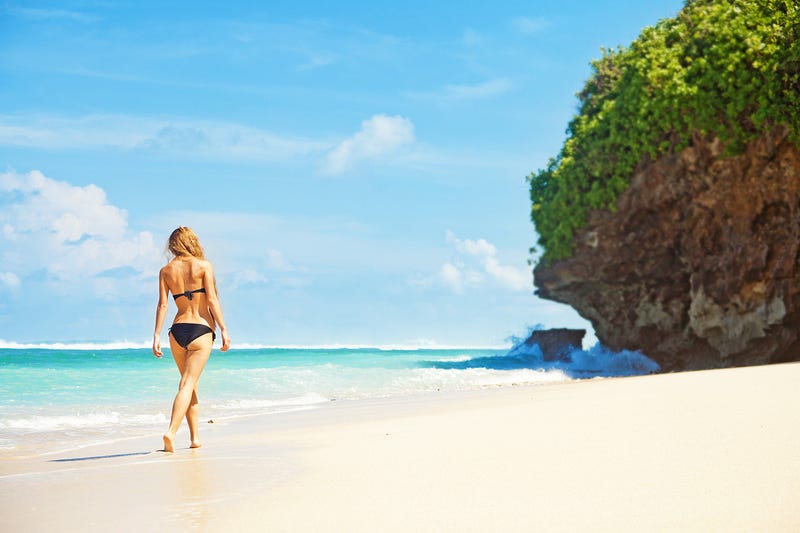
Popular travel blogs and websites entice readers to far-flung locations to wander ancient cobblestone streets, drink wine while taking in a stunning view, or linger on a Thai beach in a bikini, buns revealed. But let’s not kid ourselves. Nothing about travel is so simple, so clean, so breezy. The beautiful photos on those sites may have resulted from five hours of photography and editing, and just out of the frame, you might find polluted waters or begging children.
As travelers, we pack a bundle of invisible items in our luggage — race, class, wealth, feelings of superiority or inferiority, perhaps, stereotypes of other cultures, and more. We carry these objects across oceans and unpack them onto the floors of distant lands where they contribute to undeniable hierarchies. Driver/rider, host/guest, server/diner, guide/client.
Power dynamics abound in world travel, and they boil down to one meta-dynamic: the privileged and the underprivileged.
Travel for the fortunate few
Consider who gets to travel by choice. Every year, millions of people move outside of their borders unwillingly as refugees of violence or climate change. Those of us who proactively choose travel make up a tiny percentage of the people on the earth; we who travel internationally radiate privilege and inequity simply by landing somewhere new.
At one time in my life, I believed I transcended these power dynamics: as a U.S. Peace Corps Volunteer in Mali, West Africa. During those two years, as I became more acclimated to the Malian lifestyle, I thought I was seen just as a person like any other, not a young, white, wealthy American.
When you host a party, you can put the liquor in the farthest corner of the house, in the laundry room on top of the washing machine, perhaps, and people will locate it. For my first several months in Mali, I was the liquor in the laundry room. People came over to watch me write in my journal (with my left hand! and so quickly!), touch my hair or skin, examine my food, or peer into my books. Families traveling through my village stopped at my gate just to meet me. Babies who had never seen someone like me cried.
One year later, I could have sent up a flare, and no one would have turned a gaze toward me. I became boring. I was just a person pulling water from my well, eating millet porridge, chattering away in Bambara, and wearing out my flip flops like everyone else. I’d thought that even my strange American customs had become uninteresting.
I was naïve.
The power differential is evident, if you’re looking for it.
In truth, my presence in Mali made political and social statements every day of my service. A woman in her early 20s who wasn’t married or a mother yet, a person who left her home and community for two years, someone with the leisure not to work, a government that supported it financially — all of this spoke volumes to Malian villagers who had never left their country or even their region. Perhaps their understanding of the inequities and opportunities in the world became more nuanced from knowing me, or maybe everything just became muddier.
Honest commentary on the state of the world lies just beneath a traveler’s languid days on white-sand beaches or lazy perambulations around an idyllic African village. A German backpacker lingering in a Thai village might tell a story of opportunity and affluence. A British traveler in India may provide commentary on race and history. A retired Canadian couple gliding toward the Galapagos on a luxury ship might say something about the relationship between developing and developed nations or, perhaps, the tension between environmental preservation and GDP.
So no, nothing about travel — be it a lovely glass of wine at sunset, a stroll down an ancient lane, or a young American acclimating to a Malian village — is simple during a typical year. Layer on whatever global crisis engulfs us, and world travel becomes messier. Taking journeys during COVID-19’s rampage is problematic. Traveling in the age of climate change is fraught. Volunteering with the “less fortunate” is thorny.
I remain mired in the moral morass of the systems, structures, and hierarchies that allow me to visit 40 countries by age 40 while a billion others never cross borders for pleasure.
So why travel at all?
Despite all this, I still travel. The value is incalculable. Not only is the potential for personal growth immense, but a traveler’s open mind can impact everything they touch in the future.
To me, a good traveler becomes a temporary local, connects with the people, gets out of their comfort zone and comes home with the most beautiful souvenir: a broader perspective.
Let’s not underestimate that broader perspective; it’s synonymous with an open mind, tolerance, and compassion, all of which we need to create a more peaceful, equitable world.
How to travel abroad in a complicated world
As you consider your next journey, think about the choices you make, and recognize the complexity inherent in world travel.
- Immerse and connect. Slow down, sit down, and meet local people. Making a personal connection has always been the most powerful way to destroy stereotypes and dismantle hierarchies.
- Learn about your potential impact on the environment and how to mitigate it. Choose to travel sustainably and lightly.
- Do your research. Dozens of countries have been altered by colonialism, slavery, internal conflicts, and other nefarious historical acts. Understanding the outcomes of these acts will help you build compassion for the local people and ensure you’re not contributing to the damage.
- Consider your impact on people and their cultures. Overtourism will return, and the most popular places (Venice, Angkor Wat, Barcelona, and others) will continue to degrade landmarks, historic sites, and people’s communities. Find destinations that receive fewer visitors or travel during low-season.
- Bring along an open heart, an open mind, and the ability to self-reflect. Be willing to change course if you feel uncomfortable with your itinerary.
And above all, remember that splashing on a beach in Thailand isn’t only about crystal waters, soft sand, and bronzed flesh.


