
How Solo Travel Is Like the Best Long-Term Relationship
Both offer immense opportunities for personal growth.
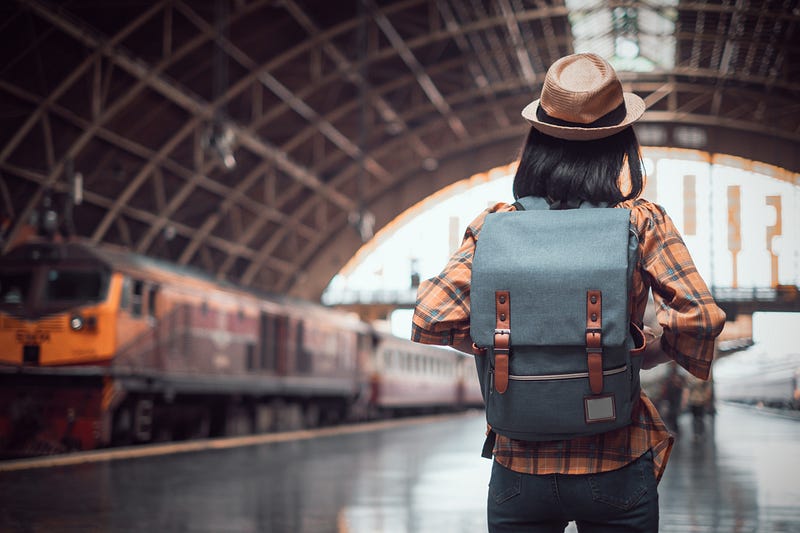
Perhaps this title seems paradoxical. Solo travel, after all, happens alone, while a relationship requires at least two people. However, traveling through life in partnership and across continents alone have a striking similarity: they both require courage, risk, and vulnerability, and they both till fertile ground for exactly the kind of personal growth we may seek.
For this article, let’s assume that solo travelers plan and embark on journeys to other countries alone. However, solo travel is not the same thing as lonely travel. Travelers may meet up with friends or family, plan a homestay, or join a tour or program. Those who stay in hostels or guesthouses with community spaces may spend more time with others than they would like.
Five ways that solo travel is similar to the best long-term relationship.
We feel confused
In a long-term relationship, we’re sometimes confused. Our partner reacts to something we thought we expressed with kindness; we’re triggered by something they impart gently. We wonder why we got so angry; we wonder why they became so mad. Often what’s missing for us is context. Perhaps our partner had a negative experience at work. Maybe something old and unresolved sparks a reaction. An argument might have deeper roots and be part of a pattern.
When traveling alone, we also feel confusion when misreading context. We misunderstand body language, fail to catch sarcasm, find signage baffling, or offend someone unintentionally.
In healthy relationships and during life-changing solo travel experiences, confusion offers an opportunity for growth. Moments of bewilderment bring opportunities to consider what’s actually going on for us and around us. If we pause and reflect, we might deepen our understanding of our motivations, learn more about our own culture, or notice power dynamics, stereotypes, and inequities.
We take risks
To deepen a relationship and foster closeness, we take risks. We tell our partner something we’re ashamed of, or we admit a shortcoming. We ask hard questions. Maybe we broach topics we’d rather avoid, knowing that communication is critical.
When traveling alone, we tap into a well of courage to take chances. We may approach someone at a hostel who intrigues us and invite them to join us on an excursion the following day. Perhaps we engage a stranger in a conversation in another language, bashfully testing our pronunciation. Or maybe, going on just a little bit of information, we hop on a bus and explore a new destination.
Why does risk-taking matter? Most children naturally climb only so far up a tree, self-modulating to remain physically safe. However, they still climb. Through that exploration, children learn more about their physical and emotional capacity as well as their boundaries. Risk-taking illuminates our limits and does wonders for our self-confidence, especially when our risk pays off. (A child who scales a tree may feel strong, accomplished, and ready to face a new challenge.) And when it doesn’t, we learn through failure and do better next time.
We ask for help
In the age of smartphones, we rarely need others when dwelling in our home country. When we see a motorist on the side of the road, we drive past (though this wasn’t always the case), assuming they have a phone with them. Texts and emails have replaced a phone call with another human. Google has replaced the librarian. We’ve grown incredibly self-sufficient.
In healthy relationships, we expose our limitations and lay our needs bare. When we’re overwhelmed at the intersection of career, housework, and childcare, we go to our partner for support. We admit our fear of ladders and ask our partner to paint.
Similarly, solo travelers ask for assistance all the time (remember that feeling of confusion?). We need directions (where’s the bus station?), instructions (how do I turn on the shower?), translation (I have no idea what anything on this menu means), or elucidation (can you explain why the buildings are pock-marked?). We may be stranded, injured, lost, or afraid, and we turn to those around us for support.
When we ask for help, we make ourselves vulnerable and put trust in another individual to offer support rather than ridicule. Not only might we make a friend or deepen an intimate relationship, but we learn something about ourselves too. As travel writer Andrew McCarthy says, asking for help makes us “right-sized again.” It forces us to give up all pretense that we are in control or always able to navigate life alone.
We confront fears
So much about solo travel can be low-level frightening. We step onto a public bus in Bolivia, and everyone looks at us. We eat meals in restaurants alone. We push ourselves out of our comfort zone, following the sound of music in a small Vietnamese town, only to come upon a wedding celebration in full swing.
Likewise, our long-term partner forces us to confront our fears, pushing us to try something physically challenging (like rock climbing or backpacking farther than we thought possible) or emotionally frightening (such as unearthing and discussing childhood trauma).
Many of us would feel butterflies in the belly being the only foreigner on a Bolivian bus or attempting to rock climb. Taking these actions helps us access inner strength and courage, and we return from these experiences a bit more confident, empowered, and self-assured.
And ultimately, we grow
Whether in a foreign land or our most committed relationship, when we take risks, ask for help, initiate hard conversations, express our confusion, and confront fears, we’re choosing challenge. As writer Rachel Friedman wrote, “Who you are when you’re tested might not be pretty, but it’s always real.” Our pretenses and facades dissolve. We quickly find it impossible to keep cultivating a falsehood that we possess all the answers, move through life with complete confidence, have no fears, or always look wonderful.
When these facades fade away, what remains is our true selves, individuals with insecurities, limitations, and demons and also with limitless abilities, talents, and strengths.
In the healthiest long-term relationships and our most life-changing solo travel experiences, we come to know ourselves better, notice our gifts, and little by little, carry them into all our future relationships and endeavors.


