
Why You Should Never “Do” a Country
How to approach world travel differently
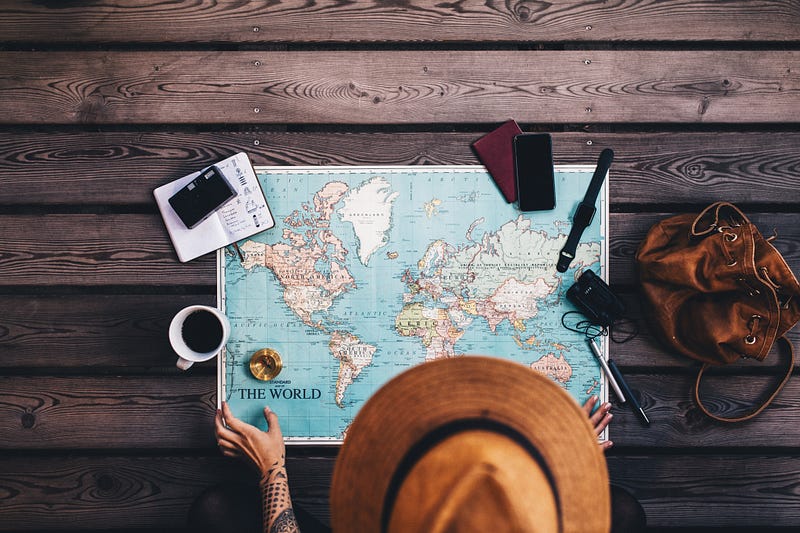
In the United States, people often use the verb “to do” when talking about travel. “We really want to do France when the borders open back up.” “We did Morocco, and it was fabulous!”
That verb always stops me in my tracks and draws me out of the conversation. The flippancy inherent in that verb, when used about a travel destination, makes my skin crawl.
We do lunch. We do our hair. We do…other things. Here’s why we shouldn’t “do” countries.
We dismiss the richness of the place.
To say we’ve done Egypt, for example, diminishes the meaning of the place for millions of people who live there. They raise their children there; they contribute to their communities; they work to improve their way of life.
Not only that, but the vast, rich cultural differences between the Sinai, the Western Desert, Upper Egypt, and Lower Egypt deserve our time and attention. Thinking that we’ve finished with that country eliminates our ability to sample foods from different regions, meet people from multiple ethnic groups, see various ancient sites, and more.
If someone were to tell me they’ve “done” Portland, Oregon, I’d feel insulted and then toss out a dozen experiences and places they undoubtedly failed to notice.
We imply that countries are static.
Other tenses of the verb “to do” include “did” and “done.” There’s a finality to those words, a completeness. Thinking we’re done with a place is short-sighted and limiting as there’s always more to see and experience. Rick Steves has built an empire traveling and enticing others to visit the same countries over and over again.
Nations evolve, just like people do.
We assume there’s no more to learn.
World travel provides some of the richest opportunities for lasting personal growth. We can go to the same country or even the same town and learn vastly different lessons about humanity, history, or ourselves. Assuming we’re done with a place means we close ourselves off to potentially life-changing lessons.
How to approach travel instead.
Rather than “doing” a country, explore it, peel back its layers, give it your attention, notice its gifts.
To make an international travel experience enriching and potent, try these ideas:
Give yourself a project.
What interests do you have at home, and how can you tap into those interests abroad?
As a foodie, maybe you taste the national dish in each country you visit or each region within one country. Perhaps you discover the local craft and pick up something representative by a local artist. Maybe you purchase an instrument from each country you visit, or learn how to say the same line in several languages.
Slow down.
The best way to absorb all a culture can provide is to move slowly. Getting a “feel” for a place is an amorphous but fulfilling task. Refrain from overplanning or scheduling, and go with the flow. Embrace spontaneity so you can harness surprising opportunities that come your way. (As an added benefit, slow travel costs less and is environmentally-friendly.)
Learn about the complexity of the place you’re visiting.
Travel is about a lot more than fruity drinks, cobblestone streets, and unfamiliar road rules. Deepen your experience by learning about the history, social, political, and environmental issues, and places of interest before you travel, and ask questions to local people while moving about your destination.
Remain open to dissimilar people.
We travel to open our minds, to make connections, and to be inspired and revitalized, among other reasons. These outcomes are less likely to come if we remain with people who share our values and lifestyles. Work to push yourself out of your comfort zone and interact with those you may never meet at home.
One of my most profound life lessons came through an interaction with a man across the world who couldn’t have been more different than me.
Above all, go back again.
With almost 200 countries on the planet, a number that fluctuates, it’s easy to select a new destination for each international experience. No harm in that. However, revisiting the same destination and deepening your understanding of a particular place can only be beneficial.
In reality, “doing” a country to completion is impossible. A Malian proverb tells us,
“A log can spend a long time in the water, and it’ll never become a crocodile.”
Just like the log that’ll never become a crocodile, a traveler can never know a place like a local. Let go of the possibility of “doing” a country to the point you never need to return. Instead, mine the gifts each destination can provide, and remember that you can always go back.


