
Titanic’s Forebears: The ‘Big Four’ Ocean Liners
Meet White Star’s most successful series of ships…
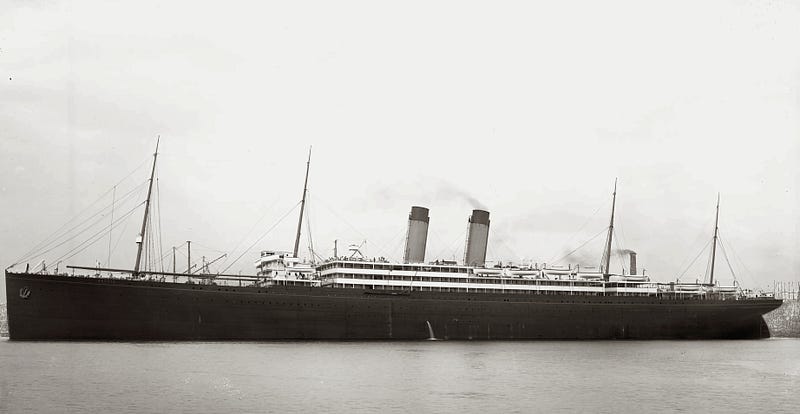
The ‘Big Four’ ocean liners were the most successful series of ships of the White Star Line, the shipping company most commonly known for operating the ill-fated Titanic.
The ‘Big Four’ class was introduced in the transatlantic service between 1901 and 1907 and included the Celtic, Cedric, Baltic, and Adriatic. Designed to be the largest and most luxurious vessels afloat, the four ships would serve for a combined 110 years, and through their career, they carried around 1.5 million passengers from Europe to the United States.
General Characteristics
The ‘Big Four’ were designed to have a tonnage of over 20,000 tons. They had two propellers driven by steam quadruple expansion engines and could reach an average speed of 16 knots (30 km/h).
The vessels had luxury on an unprecedented scale. Notable features included a dining room dominated by a glass roof, a lounge with a reading and writing room, a smoking room decorated with stained glass windows, and a covered promenade deck.
The ‘Big Four's size, design, and luxury amenities would act as a blueprint for the construction of the more-publicized ‘Olympic’ class ships, which included the legendary RMS Titanic.
This is their story.
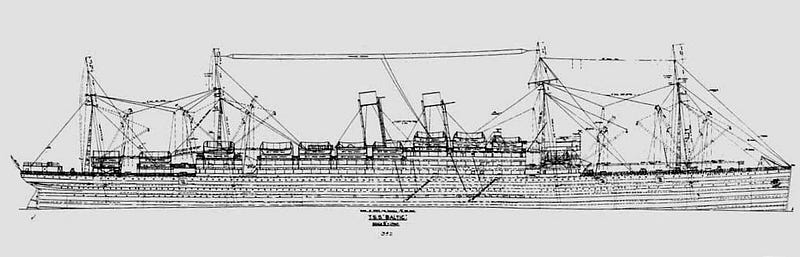
RMS Celtic (1901–1928)
The RMS Celtic entered service in 1901 as White Star’s newest flagship. At 20,904 GRT (gross register tonnes), she was the first ship to exceed in tonnage the Great Eastern, the legendary iron sailing steamship designed by Isambard Kingdom Brunel in 1858 [1].
Celtic’s career was sadly marked by several misfortunes and accidents. Having been transformed into an auxiliary cruiser during the First World War, she struck a mine in 1917. The following year she was torpedoed by a German submarine but again managed to sustain the damage [2]. The mishaps did not end with the war: she would suffer two more collisions with other vessels in 1925 and 1927, respectively.
Finally, in 1928, she struck rocks off Cobh, Ireland, and was considered unrepairable. Celtic was completely dismantled for scrap by 1933.
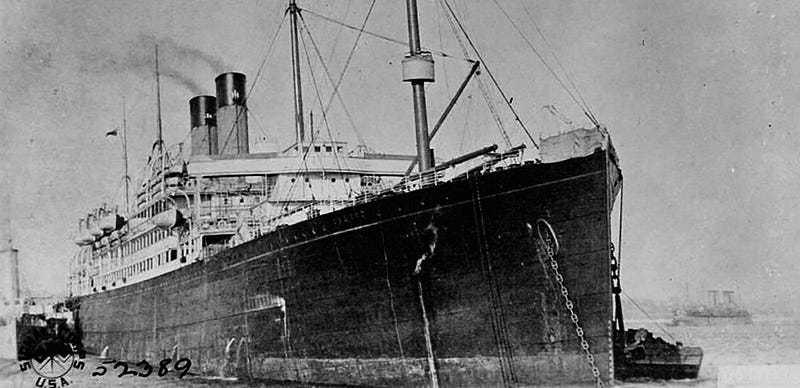
RMS Cedric (1903–1932)
The RMS Cedric was the second ship of the ‘Big Four’ class. The liner was launched in Belfast on 21 August 1902 and sailed for her maiden voyage on 11 February 1903.
During the First World War, Cedric was also transformed into an auxiliary cruiser. The liner was involved in an accident on 29 January 1918, when she collided with the SS Montreal, off Morecambe Bay. On 30 September 1923, Cedric was yet again involved in an accident- this time with Cunard’s RMS Scythia in Queenstown harbor. Due to dense fog and reduced visibility, the two ships collided, but, fortunately, none of them was seriously damaged.
Cedric’s last transatlantic crossing commenced on 5 September 1931. A few weeks later, she was decommissioned and sold for scrap at Inverkeithing, Scotland.
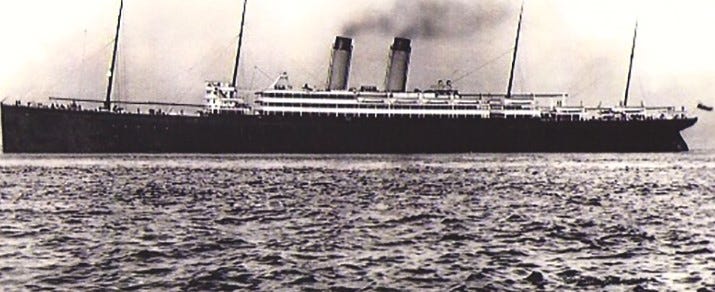
RMS Baltic (1904–1933)
The RMS Baltic launched on 21 November 1903 and sailed for her maiden voyage on 29 June 1904. She was commanded by Captain Edward J. Smith, the future commodore of the Titanic. At 23,876 GRT, she was the world’s largest ship until 1905.
With the outbreak of World War One, the Baltic assisted in the evacuation of Americans from Europe and hauled war materials from the States to Britain. After the war, Baltic continued her successful commercial transatlantic service until the early 1930s.
On 17 February 1933, she sailed for Osaka, Japan to be scrapped.
RMS Adriatic (1907–1934)
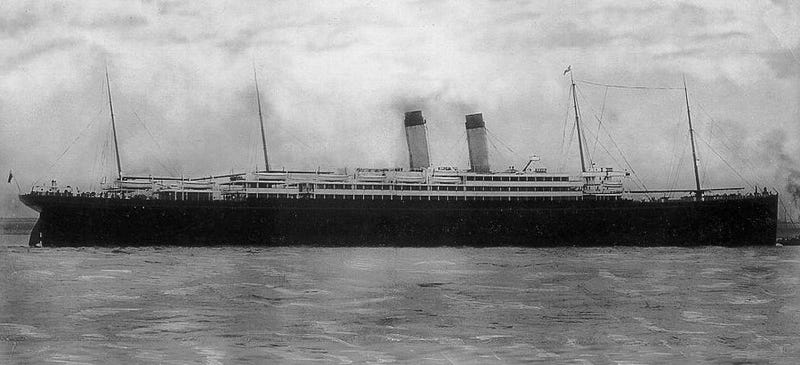
The RMS Adriatic was the last of the ‘Big Four’-class ships. She was the only of the four vessels which never held the title of the world’s largest ship, even though she was the largest of her class. She was also the fastest and most luxurious.
The Adriatic was the first ocean liner to have an indoor swimming pool and a Turkish bath, two features that would be later incorporated into the famous ‘Olympic’ class ships. The liner entered service in 1907 and she enjoyed a successful commercial career: she even had the honor of opening the Southampton — New York route for the White Star Line.
During the First World War, she was converted to a troopship and was finally retired from service in 1934. The ultimate of the ‘Big Four’ liners was scrapped in Japan the following year.
Epilogue
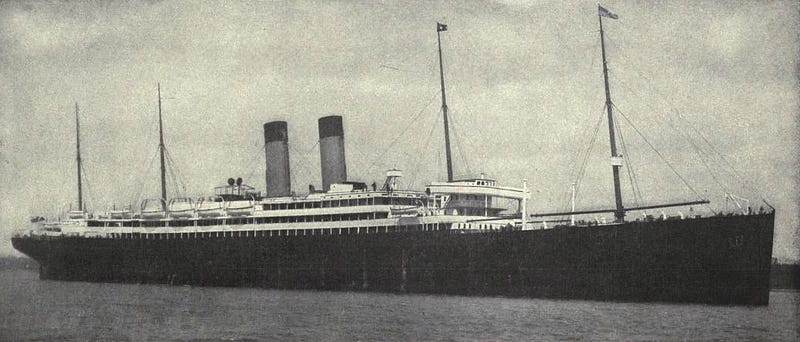
Despite their popularity, White Star’s ‘Big Four’ entered service in a time of extreme competition in the transatlantic crossing where every shipping line constantly outperformed each other.
When the RMS Adriatic sailed for her maiden voyage in May 1907, Cunard’s Lusitania and Mauretania were nearing completion. Cunard’s twins became both the fastest and biggest ships in the world when they entered service later the same year, instantly outclassing the ‘Big Four’ liners.
In order to regain the lion’s share of the transatlantic crossing, the boarding directors of the White Star Line envisioned a new trio of ships that would be even bigger and more luxurious than the Cunard’s twins. One of them was destined to acquire fame unparalleled to any other ship and her tragic story would still resonate with millions of people today…
Notes
[1] White Star’s RMS Oceanic of 1899 had already exceeded the Great Eastern in terms of length. To find out more about it, check the article below:
[2] In March 1918, U-Boat UB-77 torpedoed Celtic in the Irish Sea. Six people on board were killed, but Celtic remained afloat. Eventually, the damaged vessel was towed to Liverpool and repaired again.
References
Chirnside, Mark (2016). The ‘Big Four’ of the White Star Fleet: Celtic, Cedric, Baltic & Adriatic. Stroud, Gloucestershire: The History Press. ISBN 9780750965972.
The Famous Big 4 of the New York — Liverpool Service — White Star Line — 1909 Brochure Archived 12 March 2009 at the Wayback Machine, Gjenvick–Gjønvik Archive. Retrieved 27 July 2009
Arnold Kludas. Great Passenger Ships of the World Vol 1 1858–1912. Patrick Stephens Ltd. p. 90. ISBN 0–85059–174–0.
Roberts, Chalmers (August 1901). “The Biggest Ship”. The World’s Work: A History of Our Time. II: 1176–1179. Retrieved 9 July 2009.


.jpg)


.jpg)
