
What if Titanic Hadn’t Sunk?
Here’s what would have been the Titanic’s story had the fateful collision with the iceberg never happened…
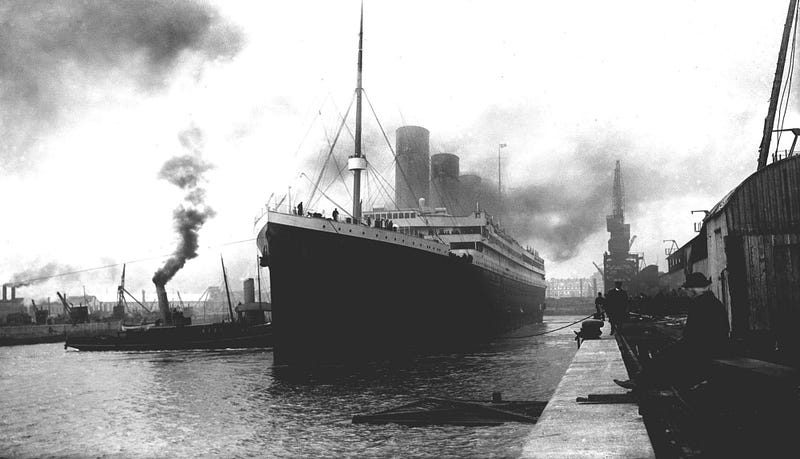

Just before midnight on April 14, 1912, the RMS Titanic struck an iceberg and sank on her maiden voyage claiming the lives of 1,496 passengers and crew. The disaster not only shocked the world but also gave birth to a legend still holding to this day. Numerous films, books, songs, and even theatrical plays were written about the tragedy keeping the story ever-popular with all generations.
To learn more about why the Titanic has such a deep impact on popular culture read the article below:
But what would have happened had the mighty vessel not sunk? Would Titanic acquire the same level of global attention and fame? What her career as a passenger liner would be like?
Actually, we may have a pretty decent picture of how events would have probably unfolded for her. We only need to look at the career of her lesser-known sister, the RMS Olympic.
You can read Olympic’s full story below:
Background
Titanic was the second ship of the Olympic Class trio conceived by White Star Line to attract more passengers who were embarking on the transatlantic crossing. Traffic at the North Atlantic route was peaking on the eve of the twentieth century and the competition between rival shipping companies was intense.
While the Cunard Line, White Star’s arch-rival, was mainly preoccupied with speed, the Olympic Class vessel design opted for size and luxury instead. Olympic and Titanic were built alongside in Harland & Wolff shipyard in Belfast. Olympic’s keel was laid in December 1908, with Titanic’s following three months later.
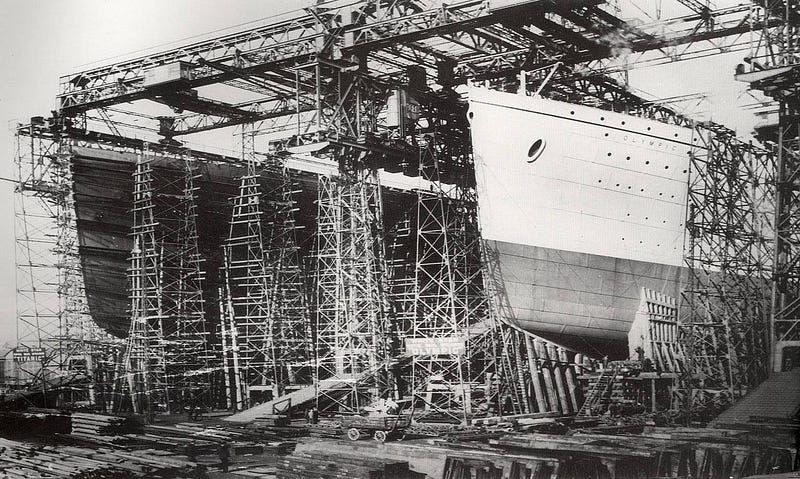

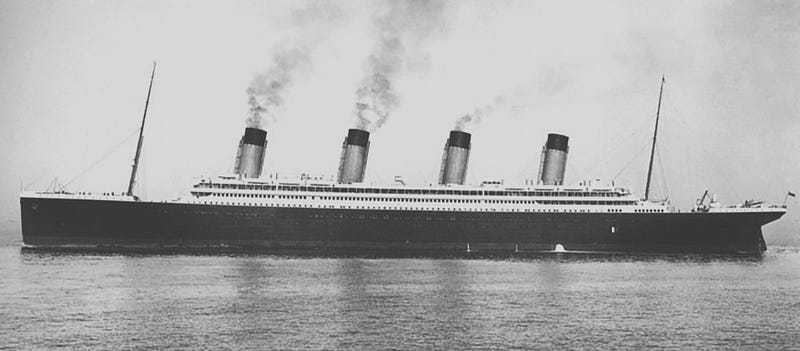
The two sisters were practically identical [1]. So much so, that the majority of Titanic’s photographs existing on the Internet are actually of the Olympic’s. Original photos of the Titanic are scarce since the vessel had a shockingly brief life and because she was the second ship of her class. Olympic, being the first, got understandably the most attention at the time.
.jpg)
A Successful Career
Olympic enjoyed a highly successful career spanning almost a quarter of a century. If Titanic hadn’t collided with the iceberg, she would probably have fared no different.
After completing her maiden voyage, she would have captured media attention and held temporally the title of the biggest ship afloat. This title would be lost in June 1913 to the new Hamburg-American Line’s SS Imperator.

Titanic at War
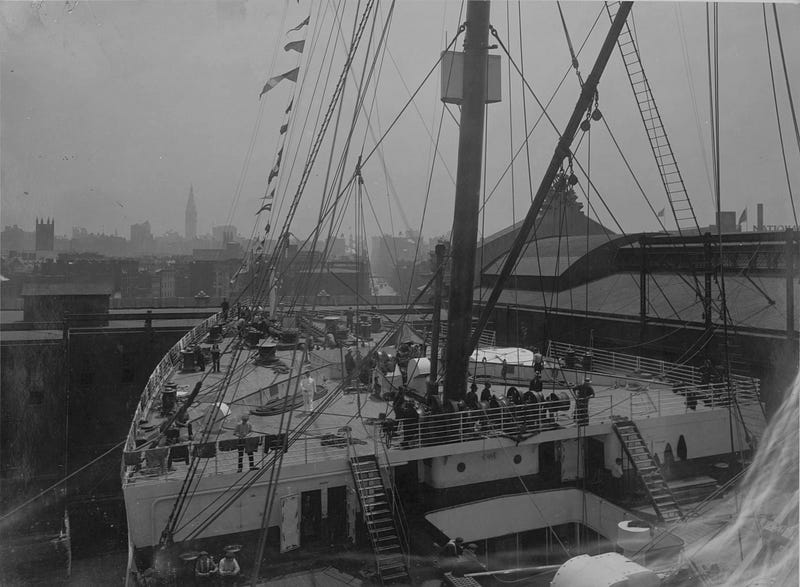
With the outbreak of the First World War in 1914, the Titanic would eventually have been requisitioned by the Admiralty. Depending on the circumstances, she would have been ordered to serve as a troopship or a hospital ship. Olympic was commissioned to be a troopship, while the Britannic -the last of the Olympic Class vessels- was converted to a hospital ship.
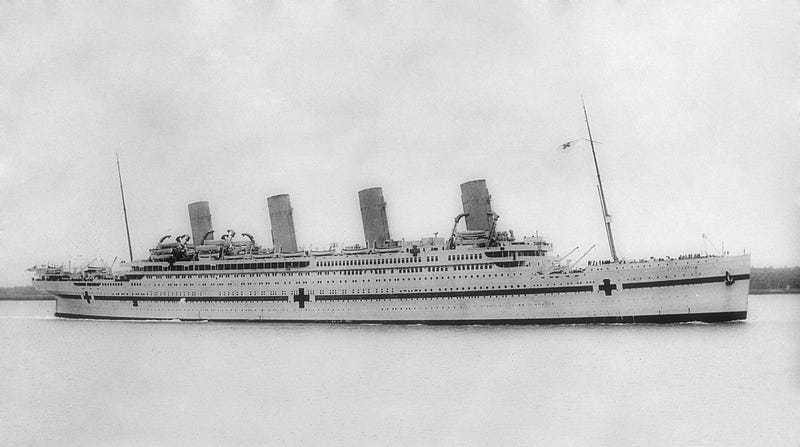

Like her ill-fated sister, Britannic never completed a single transatlantic crossing. On 21 November 1916, while on war service, she struck a mine and sank in the Aegean Sea. She was the largest ship to be lost in the Great War.
To learn more about the Britannic, read the article below:
A Decade of Prosperity
Had the Titanic survived the casualties of the war, she would probably have enjoyed a decade of prosperity. During the ‘roaring twenties’, passenger lists gradually recovered and reached pre-war levels. Titanic, like her sister Olympic, would have been converted to burn oil instead of coal, adding to her efficiency and reducing operational costs. She would have been a fairly popular ship with devoted followers willing to travel only aboard her.
Decline
Unfortunately, the Great Depression, starting in 1929 and continuing well into the ’30s, stagnated the world economy. Passenger lists dropped again, and anti-immigration laws posed by the United States government brought the shipping companies to their knees.
So grave the situation was that the former rival companies, Cunard and White Star were forced to merge in 1934. The low ticket demand minimized the need for a large fleet, so Cunard-White Star decided to sell the older vessels for scrap as a measure to cut its operational costs.
Famous and highly popular vessels such as Mauretania and Olympic were sold for the aforementioned reason. Titanic would probably face the same fate as newer and more modern liners made them look redundant and expensive to operate.
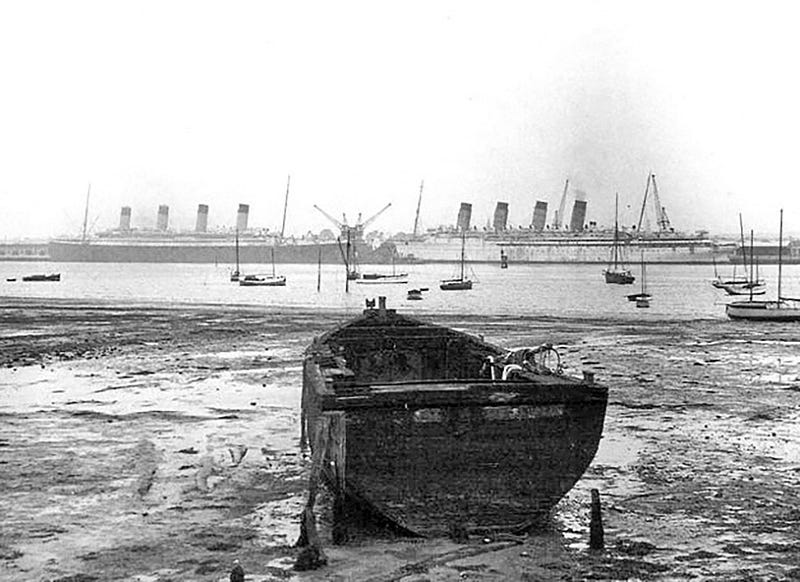

Titanic was a product of the so-called “Belle Époque “, a time where World Wars were thought unthinkable and the faith of man in everlasting progress was dominant. A global economic crisis lasting many years was something her builders never quite anticipated.
In the end, it proved too much for her sister Olympic and there’s nothing to suggest that Titanic could have done any better. Chances are, the once-mighty ship would have met her end in oblivion.
Epilogue
In conclusion, we should probably expect the Titanic today to be no more famous than the Olympic, had she not sunk on her maiden voyage. The name “Titanic” would be unfamiliar to the vast majority of people and surely no movies, books, songs or plays would have written to commemorate her existence. She would have remained relatively unknown outside maritime history texts and ocean liner aficionado’s books.
Notes
[1] Olympic and Titanic did have some differences though, mainly on A and Promenade Decks. Olympic A-Deck Promenade was open but Titanic had roughly 1/2 of it enclosed with openable sliding windows and an exterior partition to shield against the wind. Olympic’s B-deck originally was a fully enclosed promenade but as passengers barely used it, the Titanic instead had enlarged staterooms, a private promenade for some passengers, and the addition of the Cafe Parisien and A la Carte Restaurant.
References
Chirnside M.,(2004), RMS Olympic Titanic’s Sister, The History Press
Chirnside M.,(2012), Olympic*Titanic*Britannic An Illustrated History of The “Olympic” Class Ships, The History Press
McCluskie T., Sharpe M., Marriott L.,(1998), Titanic & Her Sisters Olympic & Britannic, Parkgate Books Ltd
McCutcheon J.&C.,(2014), Titanic & Her Sisters A Postcard History, Amberley Publishing
Panos Grigorakakis is a journalist particularly interest in history, evolutionary biology, anthropology and…ocean liners! Connect with him on Linkedin or say hi on Twitter.