
The Perilous Cosmetic-Beauty Industry
It’s Time To Educate: The Culture of Beauty Part 3
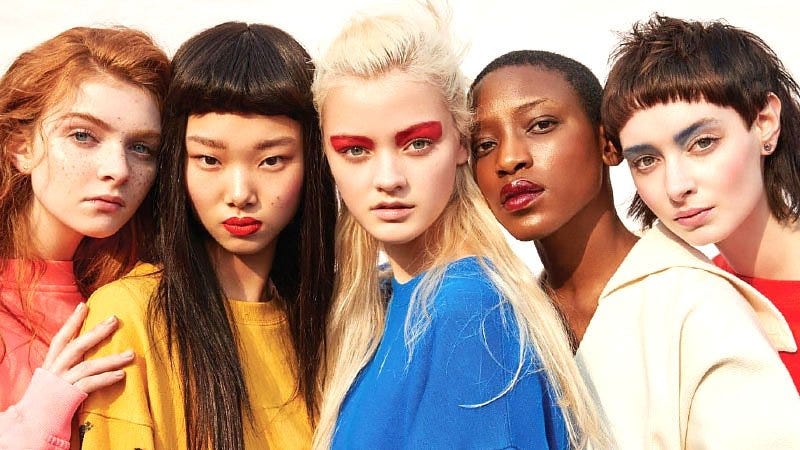
It seems that many women forget just how beautiful their faces are without makeup.
In this piece on cosmetics, I am specifically referring to the use of makeup on a woman’s face.
Annalisa Barbieri argues that “cosmetics are not just ways to improve one’s looks but are essential to a woman’s self-esteem” (Espejo, 102). However, Carlin Flora, argues that “people are more beautiful than they think they are, and stopping the obsession about your looks […] can make you look better by improving your confidence” (Espejo, 106).
Some people believe that consistently utilizing makeup is not a negative action or habit. Others believe consistently utilizing makeup is an institution of bondage, oppression, and devaluation of the natural body. I do take into consideration that many individuals use makeup as art, for fun, and some only use makeup on an occasional basis. However, I am focusing on individuals who are dependent on makeup, never leave the house without make-up, and individuals who feel incomplete and less confident without makeup on their faces.
If a woman feels that she must wear makeup, she is conveying to the world that she does not feel comfortable with her natural appearance, and she does not accept her natural appearance for what it is.
Women who become dependent on makeup are essentially in bondage because they feel they cannot go without it. Furthermore, quality makeup is not the cheapest thing to buy; in the long run, the cost of makeup adds up over time, and this could potentially financially hinder some women or cost them thousands of dollars.
The Profitable Billion Dollar Cosmetic Industry
The beauty industry is highly profitable; this industry monetizes individuals’ feelings of inadequacy, insecurity, low self-esteem, low self-confidence, and the pressure to be “pretty” at all times.
In my opinion, people who are dependent on makeup are the victims and targets of the beauty industry because they constantly invest in this billion-dollar industry without receiving anything valuable in return except for more objectification of their bodies and a false sense of self. “A mark of their victimization is that they accept their lot in life without visible question, without organized protest, without collective anger or rage” (Hooks, 1). Many people that habitually use makeup do not realize how they have been perniciously influenced into this habit. The mere fact that the cosmetic industry directs most of its advertisements and products at women conveys how much more valued a woman’s appearance is than a man’s appearance; this also shows which gender or sex is predominantly targeted by this industry.
Pressure To Be “Pretty” And Self-Objectification
The pressure to enhance the female body perpetuates the idea that a woman is close to nothing more than her body and that her body defines her value; it also can inhibit the development of a woman’s intellect and unique set of skills that she possesses because she is so focused on her appearance. This value and focus placed on the female body displace the value that should be centered on a woman’s intellect or other valuable and intangible qualities (e.g., character, ambition, talents, etc.).
“According to the objectification theory (Fredrickson and Roberts 1997), Western societies sexually objectify women through media images, social interactions, and cultural messages about feminine beauty. This socializes women to self-objectify, that is, to view themselves as social objects to be judged based on physical appearance” (Ford et al., 254).
Since many women are enculturated to self-objectify themselves, they essentially perpetuate their own dehumanization by treating and viewing themselves as the media and the general society do. Research claims that the widespread utilization and dependence on makeup by individuals does not make sense, but it nevertheless improves how a woman feels about herself (somehow).
“It’s nonsense on one level, of course, but the power of lipstick, and how it makes a woman feel, must never be trivialized. […] to the enormous impact makeup and lipstick can have on a woman’s psyche, there’s more going on than just coloring in one’s face (Espejo, 103).
The Power Makeup Gives A Woman’s Confidence
John Gustafson is a skincare guru that donated excess and unused makeup to a women’s refuge center that housed physically abused women. “[…] apparently, it was a huge help psychologically for the women” (Espejo, 104). So why does makeup help individuals psychologically? In one case, female soldiers were given a large amount of lipstick. Lieutenant Colonel Mervin Willett Gonin said, “At last they could take an interest in their appearance. That lipstick started to give them back their humanity” (Espejo 104–105). I think this statement is profound; I had to digest this statement because it is extremely shocking. I could understand how the soldiers utilized lipstick to add more distinction to themselves due to homogenization, but why do many women, who have not been homogenized, act like their identity mainly comes through their appearance? How could makeup, which often makes a woman look less like her natural self, give a woman back her humanity and identity? I believe this statement conveyed how many women feel the need to feel and believe they are beautiful and attractive, which has often been taught to be the most important component of the female identity; in my opinion, this statement shows how women equate their value to their level of beauty.
The Correlation Between Beauty & Self-Value
The relationship between beauty and self-value has been established through centuries of societal enculturation. Many women feel that they can elevate their value in society with the usage of makeup. As Annalisa Barbieri argued, makeup can highly improve a woman’s self-esteem and confidence (Espejo, 102). Still, self-esteem and self-confidence should not be solely based on appearance but should be more based on internal characteristics.
Women have developed a strong dependence that many believe it is necessary to use makeup to feel better about themselves. This situation hinders many women from realizing and reaching their full potential as human beings; if women are so focused on their appearance, then they definitely will be distracted from making as many political, technological, social, and economic advances in society as they could if they were not as distracted by such trivial matters.
Media messages that promote unrealistic images of beauty have deceived many women. “The promotion of the […] sexy ideal in our culture has created a situation where most girls and women don’t like their bodies” (Espejo, 185); though society body shames both sexes with unrealistic ideals conveyed through the media, I claim that this situation is gender-focused because more women are body shamed in comparison to men. According to Lamont (2015), “Body shame is a negative self-conscious emotional response to the perceived failure to meet a body ideal and the attribution of that failure to the core self.”
No-Makeup Challenge
I decided not to utilize any makeup for one year several years ago (now it has been 6 years, but I can’t say I will never utilize makeup again; I like mascara and eyeliner). I decided to do this because I wanted to discover what it means to be a woman in our current society that does not utilize any makeup. I desired to develop my confidence independent of my appearance. If my skin broke out, I did not mask it. I simply let it heal on its own, and let it show to the world. Falling in love with my natural appearance, without any help from cosmetics, was a big goal for me. Loving myself as I am, without trying to enhance my appearance in any way (aside from living a healthy and active lifestyle), is important to me.
Do you have to stop wearing makeup to develop your self-confidence? Of course not. However, choosing not to wear makeup for an extended period is a positively enriching and deep experience. Not partaking in the use of any cosmetics is going against societal norms.
Society encourages women to use cosmetics to make themselves look better. Society and the media encourage women to always look their best, even at the simplest of places. Society teaches many women that they need makeup and that they look plain or tired without it.
By taking a break from makeup, you can navigate your feelings about yourself and most likely deal with some of the pressures that society has placed on you to be beautiful. Taking a break from cosmetics is the equivalent of an external detox. One of my goals is to ensure that I am never dependent on makeup. I want it only to be an accessory or a fun thing to do.
Love Yourself, Women
As women, we must learn to love our bodies as they are, and of course, we need to do our part to eat healthily and live an active lifestyle, but we must know that our bodies are perfect…no matter what physical stage we are at.
The ideas that women are not perfect, women need a little extra help or a physical boost, women should always look their best, and makeup is a necessary item to utilize are all erroneous. It’s one big f*cking lie.
If you are a dependent makeup user, try going to simple places without makeup. Take an even bolder step and go to a big event without any makeup on. When I first began my journey of not utilizing makeup, I felt so naked and uncomfortable. I felt like my face was so bare, and my look was not good enough, and I didn’t even wear foundation; I only wore eyeliner and mascara. However, over time I have learned to love and enjoy my natural face the way it is. Ironically, after a while, I feel like my face became more attractive to me after the long break I took from not utilizing makeup.
Why don’t you try to take a break from makeup? Even if you are going through a breakout, try not using makeup (it is better not to cover up inflamed skin with makeup to give it time to breathe and heal). Take a week break or even 24–48 hours if you do not feel you can go longer. By taking a break from makeup, you are officially taking a step back from participating in societal norms and becoming conscious of the culture of beauty. By taking this break, you can see how you truly feel about your appearance independent of makeup.
“She’s so beautiful she doesn’t even need to wear makeup.” As women, let’s put a stop to this statement. All women are beautiful. All women are beautiful without makeup. No woman needs to use cosmetics. When we say things like this, we tell others that women, who aren’t perceived (according to societal standards) as beautiful, are inadequate without makeup.
Bibliography
Caffrey, C. (2015). Culture of Beauty. Salem Press Encyclopedia
Espejo, Roman. The Culture of Beauty: Opposing Viewpoints. Greenhaven Press. 2010. Print
Ford, T. K. (2015). Sexist humor as a trigger of state self-objectification in women. Humor: International Journal of Humor Research, 28(2), 253–269
Hooks, b. (2000). Feminist theory: From Margin to Center. Cambridge, MA: South End Press, c2000
Spelman, E. V., Shanley, M. L., & Pateman, C. (1991). Simone de Beauvoir and Women: Just Who Does She Think ‘We’ Is?. Feminist Interpretations And Political Theory, 199–216
The Culture of Beauty Series
- What Is The Culture of Beauty?
- Are You Interested In Plastic Surgery?
- The Perilous Cosmetic-Beauty Industry
- The Secret To Building Your Best Body — Naturally
- What’s the Deal With Hair Texture & Shaving?
- Women: Race, Skin Color, Exoticism
Destiny S. Harris is a writer, poet, entrepreneur, teacher, and techie who offers free books daily on amazon. Follow her on Instagram, Facebook, or @ destinyh.com


