
THE CULTURE OF BEAUTY
Women: Race, Skin Color, Exoticism
Let’s Talk About It
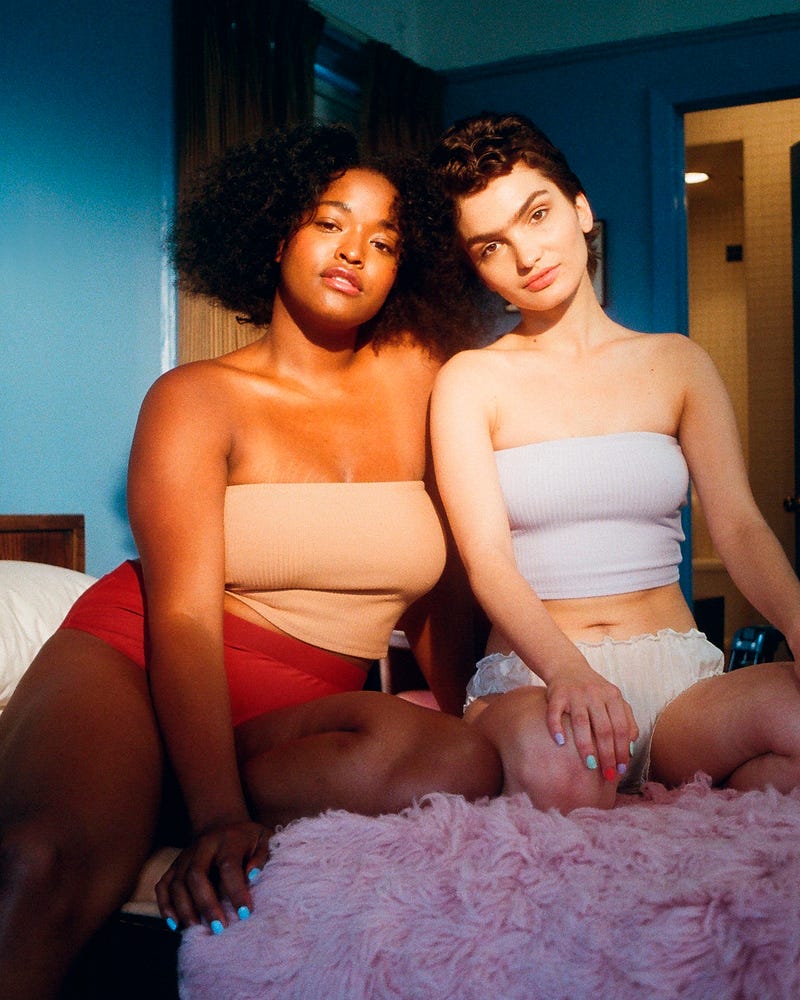
Skin Color
Much of society perpetuates the belief that having lighter skin is more attractive and having darker skin is less attractive, but who gets to determine what is the most or least attractive?
Brighter and lighter do not equate to prettier and better; all shades of skin are beautiful.
So, why doesn’t everyone enjoy their skin color? Furthermore, why do so many people let others decide whether the skin color on their bodies is attractive or not?
We need to hold onto the following truth: All skin is beautiful. Your skin is beautiful. Embrace the skin you are in and accept that you are completely perfect in the skin you were born in.
The Multi-Racial Phenomenon
As time has progressed, so has society. Many people are now in interracial relationships; hence, our multi-racial population is increasing significantly.
Many people find multi-racial people to be more attractive or more interesting in appearance than genetically homologous people; when you think about why this could be, you can link the reasoning to science.
Genetic diversity is attractive, but why? “[…] mixed-race individuals appear healthier. Humans, like other animals, look for markers of good genetic health in their quest for a reproductive partner” (Espejo 46).
It is known that the more diversified your genetics are, the healthier and more attractive you are and appear to be. When two people from different genetic and racial backgrounds reproduce, they produce considerably more genetically fit children than a homogenous couple that chooses to reproduce. Furthermore, genetically diverse offspring are potentially less susceptible to many diseases and have lower risks of contracting certain diseases. Interesting facts, huh?
So being multi-racial not only can potentially make you appear more attractive but can also provide a more genetically sound and diverse foundation for your offspring (if you choose to have them).
But for everyone who is not multi-racial or does not look multi-racial, do not fret; it really isn’t all that important. If you look around you, you will notice that many non-multi-racial individuals are still healthy and attractive, just like their multi-racial counterparts.
People Are Attracted To Health (Actually)
We can see that people are attracted to health, and genetic diversity conveys signs of health. People often look for attractive and healthy features, and one way they can do this is by observing the skin of individuals.
“Which features radiate both health and beauty? One may be the appearance of skin. In a second experiment, Roberts found that women rated close-up photos of heterozygous males’ skin as healthier than close-ups of homozygous males’ skin, and these judgments correlated with ratings of overall attractiveness” (Espejo, 47).
As we see here, skin can function as a distinguisher of both health and physical attractiveness. However, skin color does not factor into the appearance of health necessarily.
On Exoticism
My Exoticism Theory: Exoticism is another extension of the culture of beauty.
Western society’s standard of beauty has often been defined as tall, blonde, blue-eyed, and thin. Interestingly, even though this may seem to be one of the main beauty standards, many other developing and prevalent beauty standards encompass features and characteristics of multiracial people, people with unique phenotypes, and minorities.
“[…] people with mixed […] origins have become synonymous with exotic glamour” (Espejo 45).
Exoticism thrives off curiosity that derives from ambiguity, which breeds questioning and interest for individuals that appear different than the Caucasian standard (e.g., white, thin, etc.).
Throughout my life, I have witnessed people convey more adoration, curiosity, and interest in individuals who appeared to be multi-racial compared to homogenous individuals (especially within the African-American community).
This is important because it creates new inequalities and hierarchies within racial and ethnic communities, allowing the culture of beauty to become a more complex institution with multiple dimensions of oppression.
Bibliography
Caffrey, C. (2015). Culture of Beauty. Salem Press Encyclopedia
Espejo, Roman. The Culture of Beauty: Opposing Viewpoints. Greenhaven Press. 2010. Print
Ford, T. K. (2015). Sexist humor as a trigger of state self-objectification in women. Humor: International Journal of Humor Research, 28(2), 253–269
Hooks, b. (2000). Feminist theory: From Margin to Center. Cambridge, MA: South End Press, c2000
Spelman, E. V., Shanley, M. L., & Pateman, C. (1991). Simone de Beauvoir and Women: Just Who Does She Think ‘We’ Is?. Feminist Interpretations And Political Theory, 199–216
The Culture of Beauty Series
- What Is The Culture of Beauty?
- Are You Interested In Plastic Surgery?
- The Perilous Cosmetic-Beauty Industry
- The Secret To Building Your Best Body — Naturally
- What’s the Deal With Hair Texture & Shaving?
Destiny S. Harris is a writer, poet, entrepreneur, teacher, and techie who offers free books daily on amazon. Destiny obtained three degrees in political science, psychology, and women’s studies. Follow her on Instagram, Facebook, or @ destinyh.com


