
Are You Interested In Plastic Surgery?
The Culture of Beauty — Part 2
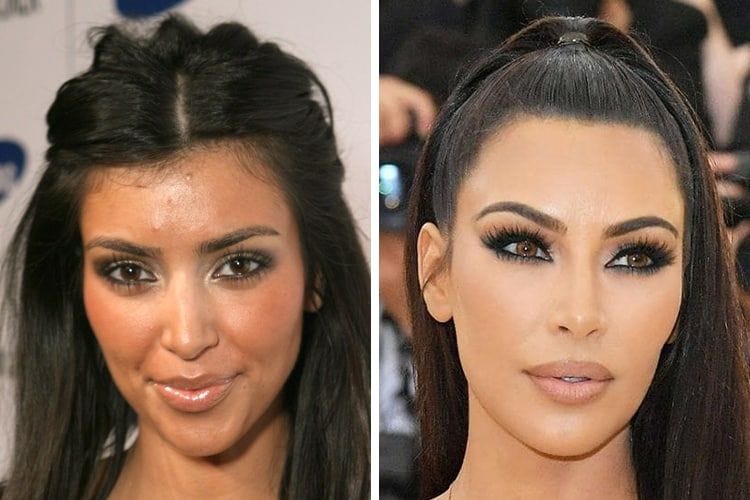
Is It Wrong?
Is it wrong to get plastic surgery, or is it empowering and demonstrative of the execution of one’s owns agency over their body? Is plastic surgery a breeding ground for insecure women?
“The face was once finite; a unique set of features and a mirror of the soul. You were born with it, lived with it, aged with it, and died with it. Now it’s a movable feast; a playground and a battlefield where skin, flesh, and bone are manipulated […]” (Espejo, 50).
When discussing the culture of beauty, the topic of plastic surgery is salient due to the continuously soaring rates of women who obtain plastic surgery today.
“Women account for more than nine-tenths of all cosmetic procedures” (Espejo, 128).
This statistic shows how there is a disproportionate number of women obtaining plastic surgery in comparison to men. This is because many women often feel more pressure to be physically attractive in comparison to men. Furthermore, the age of people who obtain any form of plastic surgery has been drastically decreasing; many females, still in their teenage years, are obtaining elective surgery to enhance their appearance. Women are not only getting boob jobs and facelifts but also many sorts of injections all over their bodies.
There are many reasons people get cosmetic surgery. “Plastic surgeons commonly say that [people] today choose surgery […] — to empower, better, and preserve themselves” (Espejo, 130), but there are countless other reasons that essentially boil down to the need and desire for external validation from others and the sustainment of youth. Having a “good body” and being attractive (according to societal standards), whether the body is fake or real, can win a person attention, social value, pseudo-confidence, and advantages (e.g., more job opportunities, kindness, admiration, popularity, etc.) in comparison to a person that looks less attractive. In many cases, the obtainment of elective plastic surgery demonstrates that many people have learned not to appreciate their natural untouched bodies.
Boobs: The Obsession is Real
A woman’s breasts have been noted as one of the most interesting body parts she possesses. Often, a woman will be judged and criticized based on the size and shape of her breasts. Everyone has breasts. So, what has perpetuated this “boob frenzy”? What do you think has perpetuated it?
It seems that since society has gotten caught up with this female reproductive organ, women have also got caught up in the frenzy. Countless women have forgotten that all breast sizes are beautiful and unique. Large breasts, medium breasts, small breasts, uneven breasts, and flat breasts are all magnificent, beautiful, and unique, but many of us have still become consumed and self-conscious about our breasts. But why? Where did we learn to feel insecure about our breasts? Many women feel their breasts are:
1. Not big enough and 2. Do not have the right proportions (uneven).
Some women, who get surgery, base their decision on what they believe others desire to see and find attractive; hence, breast augmentations are among the most frequently executed procedures.
Side note: If you have never seen a breast augmentation performed, take the time to watch a documentary or a procedure. Observe and analyze the procedure and see how it makes you feel; I know I felt enlightened after watching a breast augmentation being executed.
Risks
Obtaining breast augmentation has been a consistent trend amongst the female community. The issue does not lie in obtaining the breast augmentation, though; the issue lies in the reasoning behind the breast augmentation. Why do many women put themselves at risk to enhance their physical appearance? Even though there are many successful breast surgeries, there are often many cases where things do not go as planned. Is putting yourself at risk for a fleeting physical characteristic really worth it? For some, it is, and for others, not so much.
Essentially plastic surgery is the equivalent to unnecessary pain that you pay in exchange for what you or others define as more attractive.
“[…] a woman is prepared to suffer considerable pain to be remolded to male specifications […]” (Espejo, 56).
The fact that women are willing to put themselves at physical risk for elective procedures demonstrates how powerful the culture of beauty affects women.
Why and how are so many women willing to voluntarily put themselves at risk to enhance their physical appearance?
Yes, many cosmetic and plastic surgery procedures are often low risk, but there is always a chance for complications and death; of course, this does not occur in most cases, but can and does happen (e.g., Kanye West’s mother died from complications of her plastic surgery).
Media Effects
When women consistently consume media messages, they intake these messages and become infected by the culture of beauty without any critical awareness. Over time, the consumption of media messages, specifically ones focused on the body or that utilize the body, can decrease the self-esteem, self-confidence, and self-appreciation of an individual; this can potentially occur by simply seeing presumably perfect bodies repeatedly, which inevitably takes a negative toll on a person’s psyche about their own body — if they allow it.
Self-Awareness & Self-Questioning
From here on, understand and be aware of why you make the choices you make about your body. If you want to obtain plastic surgery or already have, I encourage you to understand the motive behind the desire.
Is it because you feel like you are: missing something, unattractive, inadequate without the surgery, or because you want a change along with the opportunity to execute your autonomy?
Always seek the motives behind your actions and observe (don’t judge) them. But before anyone decides to get any form of cosmetic surgery, I recommend that they work on loving themselves so much that they can consciously question (without bias) if obtaining the surgery is truly worth it; they should ensure that their mind is full of clarity and not with self-doubt, nor thoughts generating from feelings of inadequacy and low self-esteem. Furthermore, a person should consider how the consistent intake of various forms of media can insidiously influence their decisions.
Final Note
I can’t say I would never get plastic surgery, but I would have to take a long while to question my motives if I ever did consider it. We must question everything because, many times, our desires are not even our own.
Bibliography
Caffrey, C. (2015). Culture of Beauty. Salem Press Encyclopedia
Espejo, Roman. The Culture of Beauty: Opposing Viewpoints. Greenhaven Press. 2010. Print
Ford, T. K. (2015). Sexist humor as a trigger of state self-objectification in women. Humor: International Journal of Humor Research, 28(2), 253–269
Hooks, b. (2000). Feminist theory: From Margin to Center. Cambridge, MA: South End Press, c2000
Spelman, E. V., Shanley, M. L., & Pateman, C. (1991). Simone de Beauvoir and Women: Just Who Does She Think ‘We’ Is?. Feminist Interpretations And Political Theory, 199–216
The Culture of Beauty Series
- What Is The Culture of Beauty?
- Are You Interested In Plastic Surgery?
- The Perilous Cosmetic-Beauty Industry
- The Secret To Building Your Best Body — Naturally
- What’s the Deal With Hair Texture & Shaving?
- Women: Race, Skin Color, Exoticism
Destiny S. Harris is a writer, poet, entrepreneur, teacher, and techie who offers free books daily on amazon. Follow her on Instagram, Facebook, or @ destinyh.com


