
What Is The Culture of Beauty?
Part 1 — We Forget We Are Beautiful Without Adjustments
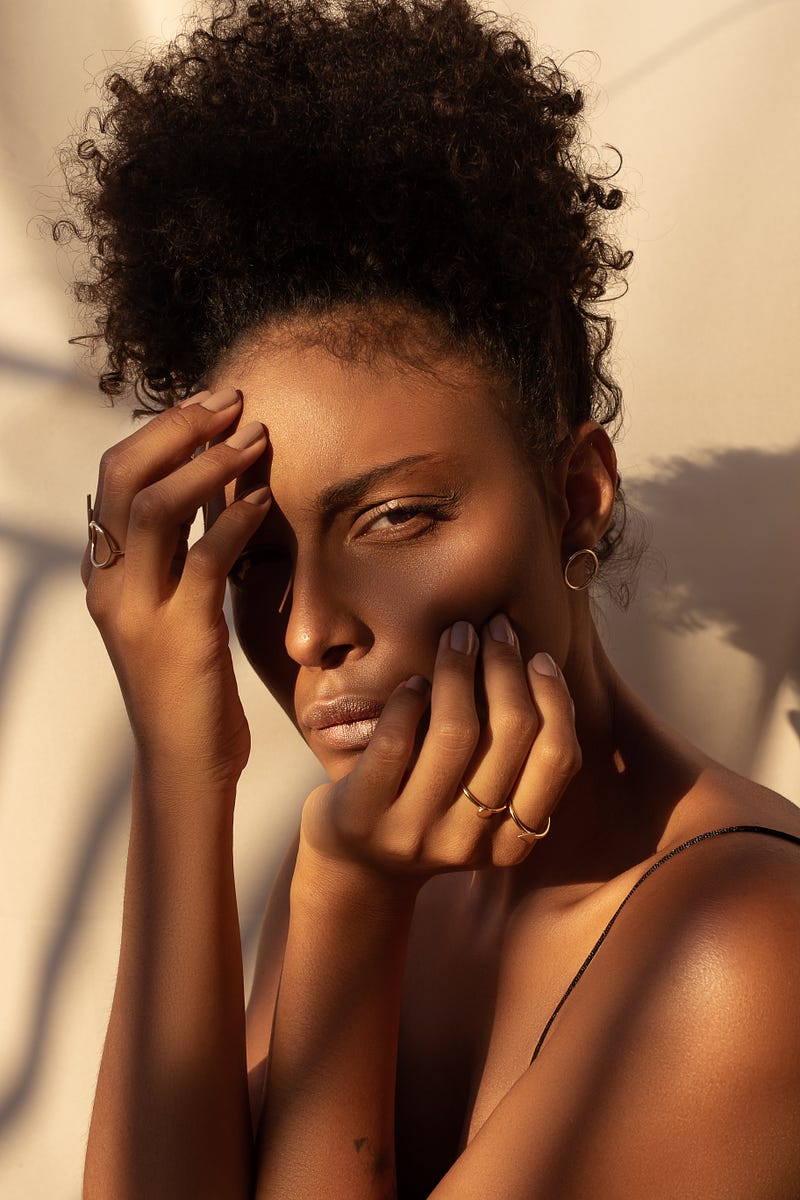
As women, we often forget that we are simply beautiful without making any adjustments to our faces and bodies. We also forget that there are other types of beauty aside from physical beauty. Though these are simple truths, we often live our lives constantly trying to enhance our bodies in some shape or form to be more beautiful and to appear more attractive to ourselves and others.
My No-Makeup Journey
One day, I decided to go one year of not utilizing any makeup products. This experience helped me to love and accept my natural self, more than I did before I commenced the journey; my self-esteem and self-confidence inevitably benefitted and soared from completing this journey. I have never heavily and consistently utilized makeup, but I still often used mascara and eyeliner to give me that “pop”. This journey of not using makeup enlightened me of how dependent a woman can become on even the simplest makeup tools and techniques to enhance her appearance.
Society Teaches Us We Need To Make Adjustments
The culture of beauty thrives on others’ consistent dependence on different “beauty-enhancing” techniques such as cosmetics, plastic surgery, and fad diets; my goal is to avoid dependence on beauty-enhancing techniques to prevent myself from being an active participant in this artificial culture.
I spent a lot of my life as an unconscious participant in the culture of beauty. The consistent messages, advertisements, and media have affected me at many points in my life, and I often allowed (without even realizing it) these messages to internalize and influence me in ways that made me more self-conscious of my body. I know that if the media and the beauty industry have affected me, then they have probably affected numerous others as well.
The Purpose of This Piece
This article derives from a research paper I completed at the University of Georgia. I felt it necessary to expand on the paper because beauty culture affects ample amounts of people across the globe, which makes it a relevant topic. I do not write this piece to criticize the beauty industry, but to speak candidly about it. I do not write this piece to chastise people who take meticulous care of their appearance and utilize beauty techniques to enhance their appearance. The purpose of this piece is to communicate how the culture of beauty can affect people in ways they may not even realize; furthermore, I wrote this piece to help people understand the reasons why they choose to engage in beauty-enhancing techniques. There is a difference between being brainwashed and influenced to believe your body is inadequate versus consciously, but still willingly participating in beauty culture because you want to — knowing your natural body is good enough.
The Culture of Beauty Defined
You may ask, “What is the culture of beauty?” According to Caffrey (2015), “The culture of beauty refers to the prevalent standards of physical attractiveness as dictated by popular opinion.” Within this culture, certain features are usually focused on such as symmetry, body weight, hair type, and skin tone. The media (e.g. music, magazines, film, entertainment, news, and advertisements) greatly influences what is considered beautiful and attractive.
How The Media Discriminates Against Women
If you take time to observe the media, you may notice that most women who are in the news, film, entertainment, and broadcasting industries are often young (or look younger than their age) and are doused with makeup to enhance their physical appearance. Older women, and presumably less attractive (according to Western societal ideals) women, are often shunned by society and are not often seen in the visible spotlight; it is as if once a woman ceases to be a sexually consumable object or past a presumable reproductive age, she loses value. Furthermore, there seems to be a negative correlation between a woman’s value and the age of her body. You may also notice that there are considerably more men, who are older, that are actively involved in the industries I listed above in comparison to older women.
Gender Oppression
I believe the culture of beauty perpetuates gender oppression and gender inequality amongst women and men because it often conveys to society that women are objects to be enhanced — often for male consumption. Women are continually reduced to their bodies; consequently, women are frequently not seen as full human beings. Moreover, through this timely cultural norm, women have ended up unconsciously perpetuating and participating in their own objectification.
There are many forms of gender oppression that are directed at women, and the culture of beauty is only one of them. Many people have never considered the beauty industry to be an extension of the patriarchy or an example of oppression on women; however, if a person observes just how successful this billion-dollar beauty industry is, one may notice that this industry thrives off the insecurities of women, which is the fuel that feeds the culture of beauty. Understanding the culture of beauty and its effects on society will help mitigate the powerful influence it has on individuals across the globe.
Gender Oppression: There is not one exclusive definition for gender oppression. Gender oppression can represent unjust treatment or control of a human being. It can also signify mental pressure or mental distress on someone.
This is only part one of the Culture of Beauty; we are just getting started here. Until next time, cheers.
Bibliography
Caffrey, C. (2015). Culture of Beauty. Salem Press Encyclopedia
Espejo, Roman. The Culture of Beauty: Opposing Viewpoints. Greenhaven Press. 2010. Print
Ford, T. K. (2015). Sexist humor as a trigger of state self-objectification in women. Humor: International Journal of Humor Research, 28(2), 253–269
Hooks, b. (2000). Feminist theory: From Margin to Center. Cambridge, MA: South End Press, c2000
Spelman, E. V., Shanley, M. L., & Pateman, C. (1991). Simone de Beauvoir and Women: Just Who Does She Think ‘We’ Is?. Feminist Interpretations And Political Theory, 199–216
The Culture of Beauty Series
- What Is The Culture of Beauty?
- Are You Interested In Plastic Surgery?
- The Perilous Cosmetic-Beauty Industry
- The Secret To Building Your Best Body — Naturally
- What’s the Deal With Hair Texture & Shaving?
- Women: Race, Skin Color, Exoticism
Destiny S. Harris is a writer, poet, entrepreneur, teacher, and techie who offers free books daily on amazon. Follow her on Instagram, Facebook, or @ destinyh.com
Want to write for The Pink? We’d love to have you in our community of 200+ writers. Or Follow us on Instagram for more.


