
The Discovery That Changed Our Perception of Dinosaurs
Deinonychus fired up the ‘dinosaur renaissance’…
Sluggish, dumb, lumbering giants.
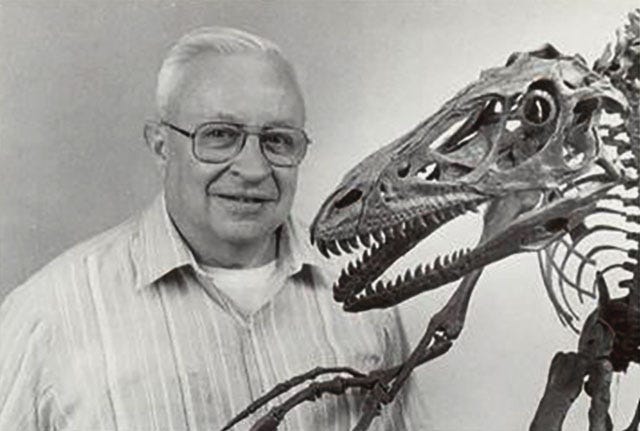
This was the common perception of dinosaurs from the late 19th century to the most part of the 20th [1]. In 1964, however, paleontologist John Ostrom found in Montana the remains of a small dinosaur that did not fit the established description.
It was this discovery that set the stage for what we know today as the ‘dinosaur renaissance’, a scientific revolution that completely revolutionized our view about these creatures.
“Terrible Claw”
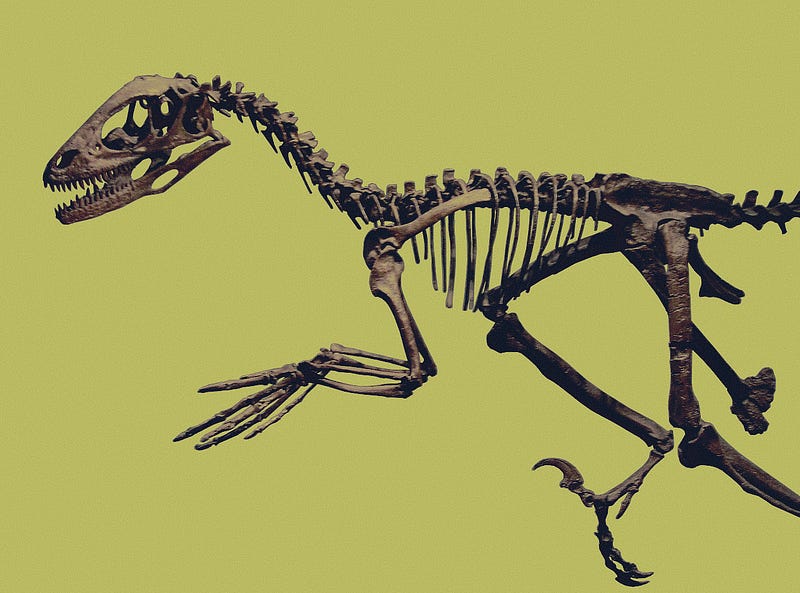
Ostrom unearthed the remains of a relatively small carnivore that had hollow bones, a sleek, horizontal posture, and a pair of large, sickle-shaped claws on its feet. The paleontologist named the new find Deinonychus or ‘terrible claw’ and published the description of the genus in the late 1960s.
He argued that the animal’s many birdlike features suggested it was an active, quick-moving predator. To be an energetic and swift hunter, this animal must have also been warm-blooded, like modern birds and mammals.
Ostrom’s views soon ignited a debate between those scientists who followed the traditional view of dinosaurs as slow, cold-blooded reptiles and those who saw them as active, warm-blooded creatures [2].
The ‘Dinosaur Renaissance’
Gradually Ostrom’s idea of active, warm-blooded dinosaurs gained ground in both the scientific community and popular culture through Ostrom’s student, paleontologist Robert Bakker.
In his 1986 book The Dinosaur Heresies: New Theories Unlocking the Mystery of the Dinosaurs and Their Extinction, Bakker sums up the evidence that indicates that many dinosaurs had a metabolism most similar to modern birds than to lizards or other reptiles. While some chapters are outdated by current research, most arguments made on the book still represent a prevalent view in paleontological circles.
The ‘dinosaur renaissance’ led to a profound shift in the thinking of nearly all aspects of dinosaur biology. It also changed the way these creatures were depicted in popular culture.
In Popular Culture
Bakker’s views influenced the depiction of dinosaurs in the 1993 Hollywood blockbuster Jurassic Park.
The dinosaurs in the movie were intelligent, quick-moving, and graceful animals compared to the tail-dragging monsters we used to watch in previous films. The success of Jurassic Park helped to popularize the idea of the ‘dinosaur renaissance’ and inspired many young people to pursue a career in paleontology.
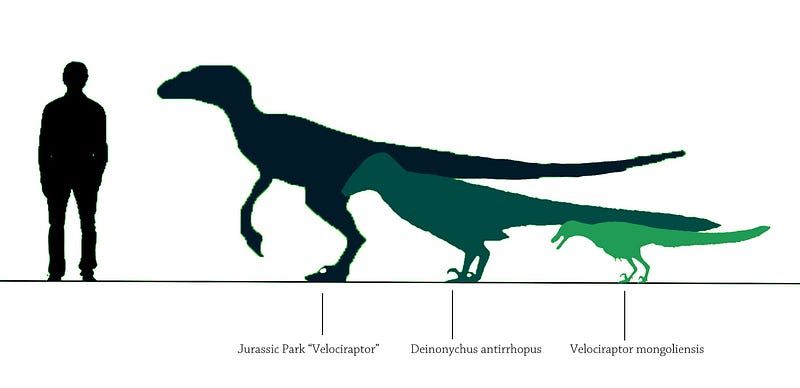
The film also established an iconic depiction of Deinonychus in popular media. Although the vicious sickle-clawed predators that disembowel humans in the movie are called Velociraptors, they are in fact based on Deinonychus. The real-life Velociraptor mongoliensis was roughly the size of a turkey, considerably smaller than its North American relative[3].
A More Accurate Image
Despite the good intentions, the ‘raptors’ from Jurassic Park are somewhat inaccurate in today’s paleontological terms.
Where did the film go wrong, and how Deinonychus really looked like?
Deinonychus could grow up to 3.4 meters (11 ft) in length, and it was approximately 0.87 meters (2.9ft) tall at the hip. It had an estimated weight of 73 kg (161 lb). The Jurassic Park variant is a bit oversized- it could reach between 1.68 and 1.83 meters (5.5–6 ft) in height and up to 4 meters (9.8–13 ft) in length.
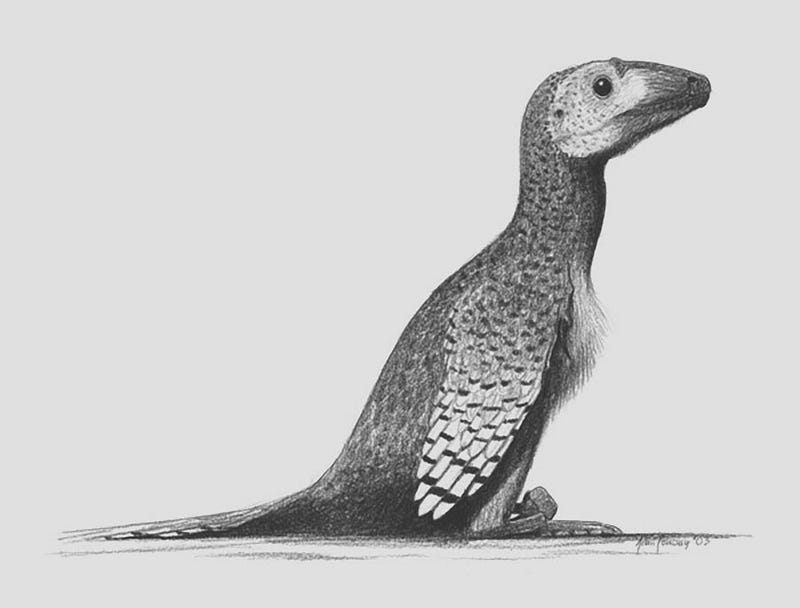
Deinonychus was a member of the Dromaeosauridae family, a group of small to medium-sized feathered carnivores that flourished during the Cretaceous Period. That’s right: Deinonychus, as well as its close relatives, were fully feathered. In contrast, the Jurassic Park ‘raptors’ have scaly, reptilian-like skin.
Moreover, a recent analysis of Deinonychus teeth shows that raptorial dinosaurs likely did not hunt in big, coordinated packs as portrayed in the movie. Though widely accepted, evidence for this behavior is relatively weak. Paleontologists have proposed a different model for dromaeosaurs that is more similar to Komodo dragons, where individuals of the same species may attack the same animal, but cooperation is limited.
As far as their intelligence is concerned, paleontologist Thomas Holtz states that real-life dromaeosaurids were probably “only about as smart as your backyard opossum. It would have been dumber than in the movie, but I still wouldn’t want to meet one without some serious weapons.”
Moreover, Deinonychus was not nearly as fast as a cheetah, as game warden Robert Muldoon says at the beginning of the film.
To find out more paleontological inaccuracies from the famous blockbuster, read the story below:
Deinonychus lived during the early Cretaceous Period, about 115–108 million years ago in modern-day Montana, Utah, Wyoming, and Oklahoma.
It shared its environment with the ornithischian dinosaur Tenontosaurus, which was possibly its main prey target. In certain locations, it also coexisted with the giant carnivore Acrocanthosaurus, the second-largest predatory dinosaur discovered in North America.
Epilogue
The discovery of Deinonychus was a turning point in paleontology. The agile predator with the characteristic large, sickle-shaped foot claw fired up a scientific revolution and forever changed our perception of dinosaurs.
The so-called ‘dinosaur renaissance’ provided a new, refreshing image of these creatures that was gradually accepted by the scientific community. Many people are yet to embrace the change, though.
Almost 51 years after Ostrom’s discovery, outdated stereotypes about these animals persist and the cultural interpretation of the word “dinosaur” remains widely misunderstood. To find out more about the subject, check the article below:
Notes
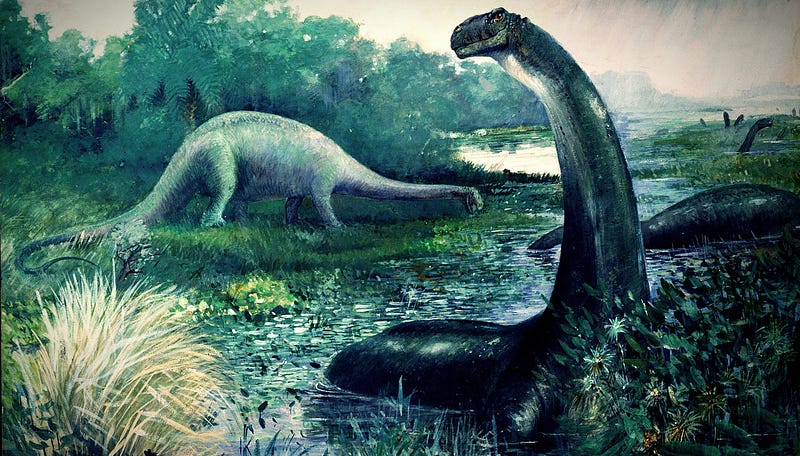
[1] For the most part of the 20th century, people imagined dinosaurs as evolutionary failures destined for extinction. Their awe-inspiring size made scientists and illustrators perceived them as sluggish, dumb, lumbering beasts. For example, creatures like the famous Brontosaurus and its long-necked relatives were portrayed as tail-dragging, lethargic animals that needed to spend most of their time in the water to counterbalance their enormous weight.
[2] Deinonychus also inspired Ostrom to connect birds with dinosaurs. After Ostrom’s discovery, the idea that birds evolved from dinosaurs gained support among paleontologists, and today it is universally accepted. Phylogenetic analysis and the discovery of several feathered dinosaurs have helped confirm the relationship.
Despite that, Ostrom was not the first to note the similarities between certain dinosaur species and birds. British biologist Thomas Henry Huxley had already proposed during the 1860s that birds descended from dinosaurs. Huxley cited the several skeletal similarities between Archaeopteryx, an exquisitely preserved winged theropod dinosaur found in Germany with modern birds.
[3] The ‘dinosaur renaissance’ inspired the 1988 book Predatory Dinosaurs of the World by paleoartist Gregory S. Paul. Apart from depicting many illustrations of feathered dinosaurs, the author attempted to revise some dinosaur taxonomy.
Paul noted the similarities between the skeletons of the Velociraptor from Mongolia and the Deinonychus skeletons from North America. He decided to group the Deinonychus fossils under the name Velociraptor, as the older name took precedence according to the rules by which organisms are named. Paleontologists did not agree with this change — Velociraptor was kept distinct from Deinonychus — but Paul’s book was a hit with the general public. And one of the people who read the book was Michael Crichton, the author of the Jurassic Park novel.
Crichton listed Paul as one of the people who inspired his vision for dinosaurs portrayed in the book, and he used the name Velociraptor to describe the intelligent dromaeosaurid dinosaurs that stalked the humans in the visitor center. The same taxonomy was carried over into the film series, which ultimately made what would otherwise seem to be an abstruse scientific term a household name.
Relevant Read:
References
Ostrom, J. H. (1969). “Osteology of Deinonychus antirrhopus, an unusual theropod from the Lower Cretaceous of Montana”. Peabody Museum of Natural History Bulletin. 30: 1–165.
Ostrom, J.H. (1976). “On a new specimen of the Lower Cretaceous theropod dinosaur Deinonychus antirrhopus”. Breviora. 439: 1–21
Black R., (2008), You say “Velociraptor,” I say “Deinonychus”, Smithsonian Magazine, Link:https://www.smithsonianmag.com/science-nature/you-say-velociraptor-i-say-deinonychus-33789870/
Bakker, R.T. (1968). “The superiority of dinosaurs”. Discovery. 3 (2): 11–22.
The University of Wisconsin Oshkosh. (2020, May 6). The movie ‘Jurassic Park’ got it wrong: Raptors don’t hunt in packs. ScienceDaily. Retrieved August 13, 2020, from www.sciencedaily.com/releases/2020/05/200506123751.htm


