
Scientists Reveal The Most Dangerous Place in Earth’s History
Humans would not last long there…
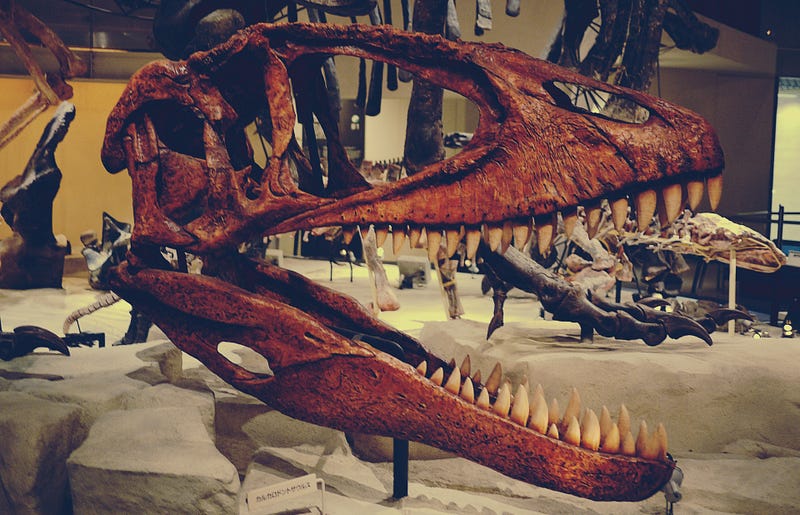
Carnivorous dinosaurs that rivaled or even exceeded the eponymous T.rex in size; fierce pterosaurs larger than any flying creature alive today, and dozens of species of crocodile-like reptiles no less terrifying than their contemporary descendants-all cramped together in the same confined locality. Sounds like a bad sci-fi movie scenario, right?
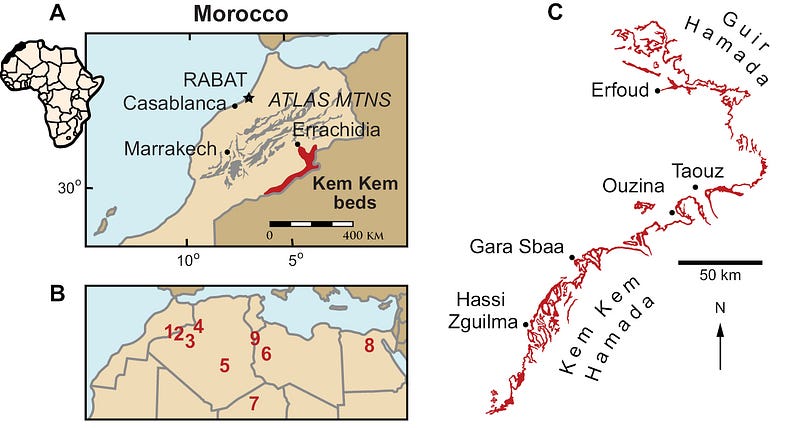
According to an international team of paleontologists, this nightmarish predatory assemblage really existed in North Africa roughly 100 million years ago. Today, the area near the border between Morocco and Algeria is one of the aridest and most inhospitable places on Earth. During the Late Cretaceous period, though, it was the heartland of a comprehensive river system that supported a great number of incredibly terrifying species.
Scientists examined fossil material from the so-called Kem Kem Group and published the biggest review of fossil vertebrates originating from this ancient rock formation in almost 100 years. Based on the striking overabundance of predatory animals found in the location, they concluded that this was the most dangerous place in Earth’s history.
“This was arguably the most dangerous place in the history of planet Earth, a place where a human time-traveler would not last very long,” said Dr. Nizar Ibrahim, Assistant Professor of Biology at the University of Detroit Mercy, and lead study author.
A terrifying ecosystem
In most ecosystems, predators are far less common than prey animals. In the prehistoric assemblage of northern Africa, the rule is reversed. It’s not only the number of predators that surprise scientists, however. It is also their size.
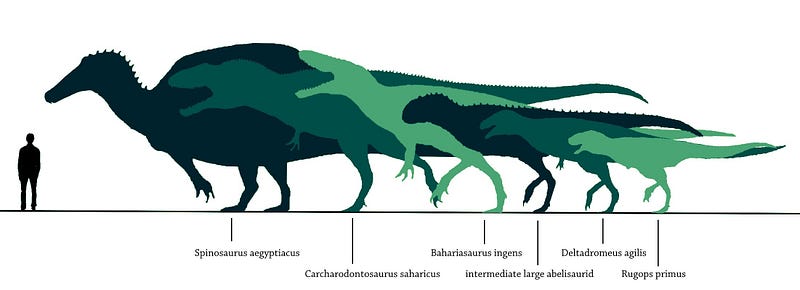
Three T.rex-sized theropods have been recovered from the Kem Kem Group and the similarly aged rocks of the Bahariya Formation from Egypt.
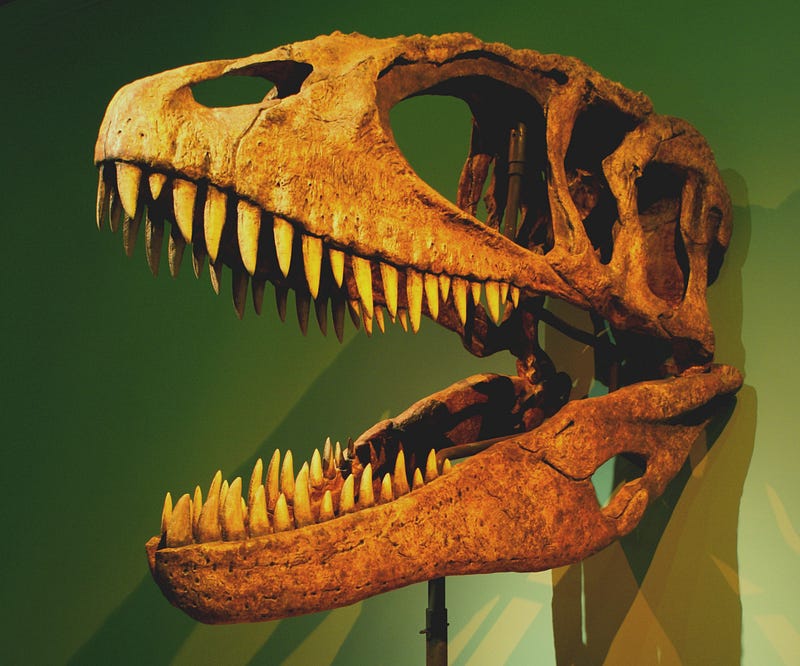
Among these apex predators, the most well-known is Carcharodontosaurus, a derived allosauroid equipped with enormous jaws and long, serrated teeth. This enormous carnivore could stretch up to 12m (39ft) in length and weigh as much as 7.8 metric tons (8.6 short tons). Bahariasaurus, an obscure predator whose phylogenetic relationships remain poorly understood, could also grow to similar proportions.
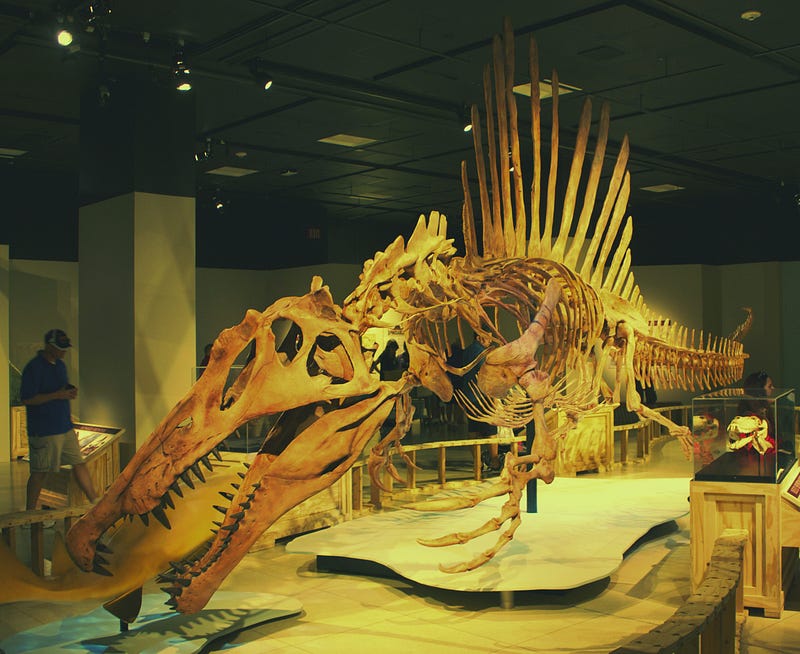
The most bizarre apex predator of the region was Spinosaurus. It had a skull similar to that of a modern crocodilian and bore straight conical teeth with no serrations. Its most prominent feature was its tall neural spines, some of which grew to at least 1.65 meters (5.4 ft) long and formed a unique sail-like structure on its back. Its large tail fin and its distinct center of gravity were adaptations that enabled it to swim and hunt on the riverside, making it a semi-aquatic predator. This aberrant creature had an estimated length of over 14 meters (49 ft) and a body mass of 4 metric tons (4.4 short tons).
Secondary predators included the 8 meter-long (26 ft) Deltadromeus — a carnivore some scientists consider synonymous to Bahariasaurus, and Rugops, a short-snouted abelisaurid theropod that could grow up to 6m (20ft) in length. The remains of another intermediate abelisaurid that was larger than both the aforementioned carnivores also reported from the area.
Apart from dinosaurs, the environment supported several crocodile-like genera, as large or even larger than their extant relatives. And as if these were not enough, terrifying pterosaurs swiped the landscape, providing an additional threat from the air. Some of these flying reptiles had an estimated wingspan of over 6m (20 ft), easily surpassing in size every contemporary flying creature.
What’s on the menu?
Contrary to carnivores, herbivore dinosaurs are under-represented in the Kem Kem Group. At first glance, the lack of many plant-eating species may appear strange, but scientists came up with a reasonable explanation. The deltaic plain and nearshore environments, they claim, would have limited the areas where the vegetation to support large-bodied herbivores could grow. With so few plant-eaters around, what did the predators eat?
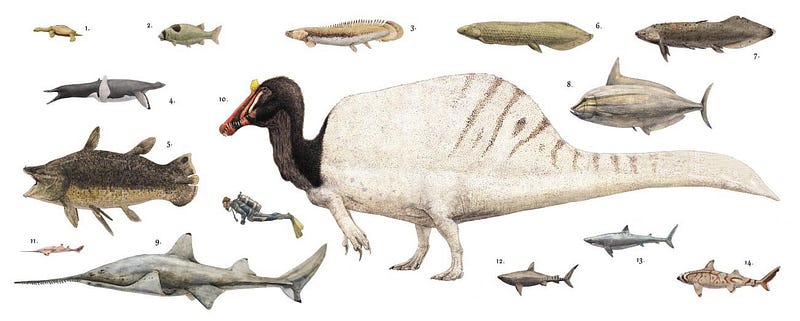
The researchers suggest that large theropods in the food web were supported primarily (Spinosaurus) or secondarily (Carcharodontosaurus and the rest terrestrial carnivores) by the huge amount of aquatic protein sources. Study co-author David Martill from the University of Portsmouth says that the rivers were filled with fish, some of which were as enormous as the predators themselves. To give you an idea, these water systems were home to coelacanths the size of a car!
“Most of the described vertebrates, with the exception of some of the pterosaurs and dinosaurs, lived exclusively or predominantly within an aquatic setting, which would include pond, river, delta, and nearshore habitats. Most of the [groups] in the assemblage, thus, are predators utilizing aquatic food resources as in modern marine food webs.”
Epilogue
Roughly 100 million years ago, giant carnivorous dinosaurs, terrifying flying reptiles, and fierce crocodile-like predators made the Sahara the most dangerous place on Earth. The faunal assemblage of the Kem Kem Group is truly unparalleled in the history of our planet — no other extinct or contemporary terrestrial ecosystem had such bias toward large-bodied carnivores.
Eventually, this peculiar world and the amazing creatures it hosted gradually disappeared. Sea levels began to rise around 93 million years ago, submerging the region and converting it into a shallow sea. Most of the creatures adapted to thrive in the freshwater networks could not adjust to the changing circumstances and soon became extinct. The incredible predators that relied on them for food were quick to follow...
References
Ibrahim, Nizar; Sereno, Paul C.; Varricchio, David J.; Martill, David M.; Dutheil, Didier B.; Unwin, David M.; Baidder, Lahssen; Larsson, Hans C.E.; Zouhri, Samir; Kaoukaya, Abdelhadi (2020–04–21). “Geology and paleontology of the Upper Cretaceous Kem Kem Group of eastern Morocco”. ZooKeys. 928: 1–216. doi:10.3897/zookeys.928.47517. ISSN 1313–2989. PMC 7188693. PMID 32362741.
Greshko, Michael (September 23, 2020). “Case for ‘river monster’ Spinosaurus strengthened by new fossil teeth — Newfound troves from the Moroccan desert suggest that the immense predator spent much of its time in the water”. National Geographic.
Smith, Collin (2016–02–29). “Fossil find reveals just how big carnivorous dinosaur may have grown”. Imperial News. Retrieved 2020–02–03.
Sereno, Paul C.; Wilson, Jeffrey A.; Conrad, Jack L. (2004–07–07). “New dinosaurs link southern landmasses in the Mid-Cretaceous”. Proceedings of the Royal Society B: Biological Sciences. 271 (1546): 1325–1330. doi:10.1098/rspb.2004.2692. ISSN 0962–8452. PMC 1691741. PMID 15306329.
Sereno Dutheil; Iarochene Larsson; Lyon Magwene; Sidor Varricchio; Wilson (1996). “Predatory Dinosaurs from the Sahara and Late Cretaceous Faunal Differentiation” (PDF). Science. 272 (5264): 986–991. Bibcode:1996Sci…272..986S. doi:10.1126/science.272.5264.986. PMID 8662584. S2CID 39658297.


