
Riding Through Patagonia
Traveling from Chile into Argentina by car, on foot and on horseback
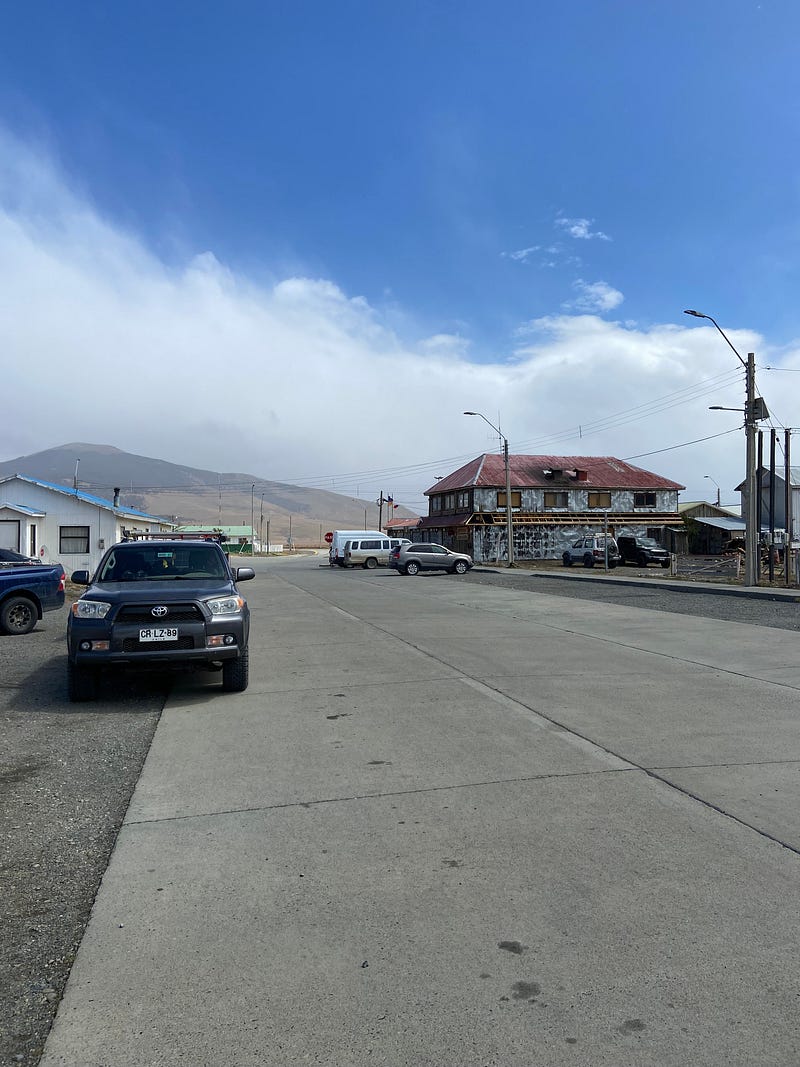
“Ahora tendrán que esperarme un poco. Que se mantengan en el coche.” Now you will have to wait for me for a while. Stay in the car. With those parting words, our driver slammed the door shut and went off into a four by four meter concrete hut perched upon a mountain pass.
After having been stamped out of Chile and driven a couple of kilometers through a deserted no man’s land, it seemed we had made it back to Argentina — or nearly, at least. A few minutes later, he returned and we joined him in the hut where we had our passports checked a final time. On the way out of the immigration checkpoint, I noticed an official, government-sanctioned ‘Malvinas Argentinas’ sign — in case I had any doubts as to which country we were in. The driver took us a few meters further where a slim but puff-chested, average-height man in his mid-sixties, adorning a well-groomed white moustache to match his slick-backed hair was waiting outside of a blue van sporting sunglasses and a down jacket. The drivers shook hands firmly, keeping steady eye contact throughout, as if the official exchange depended on this formality. We loaded up the car and set off into the Patagonian steppe.
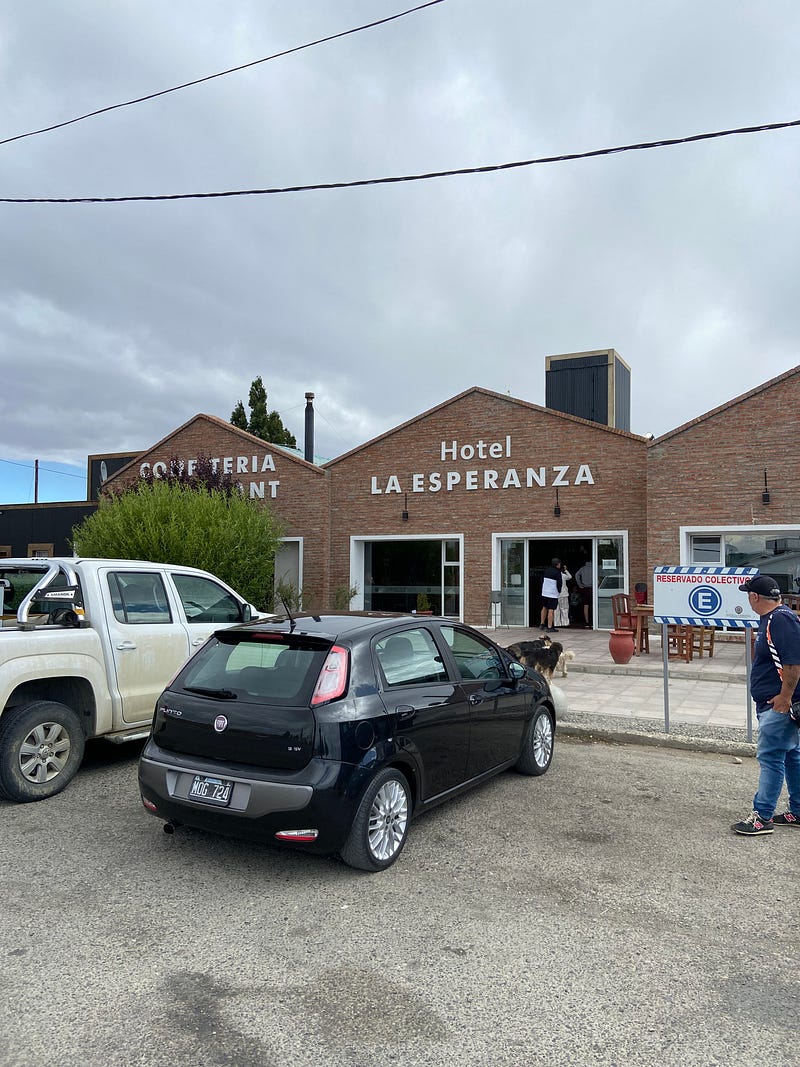
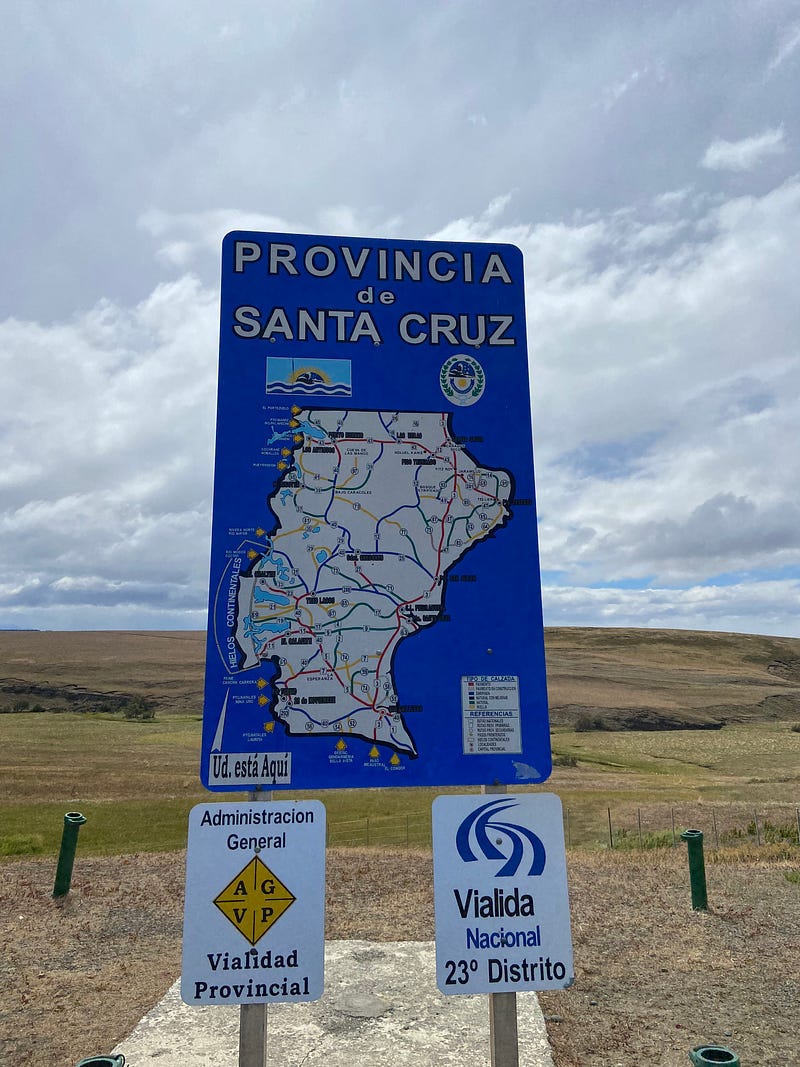
The journey from Torres del Paine to El Calafate is unnecessarily long. The straight-line distance is technically only sixty kilometers west-east. However, due to a connecting road never having been built to cut through the narrow corridor of the Andes separating the two, the route is extended to a three-hundred-kilometer journey which takes four hours. Instead of just cutting directly northeast, one has to go south, then east and finally northwest. The first part of the Argentinian leg of the route is an endless, sleep-inducing, brown, arid deserted steppe. There are no houses, some farm signposts, a few guanacos and sheep — although far fewer than there used to be. There is one rest stop in the middle of the province before continuing to El Calafate, making it a mandatory stop for anyone passing through. The weigh station is appropriately named Esperanza (Hope) and could easily have been taken out of an old spaghetti western. After a quiet, first hour through the windy plains, we loaded up on caffeine, checked some things through the wifi connection and bought a couple of souvenirs with the spare change we had left.
Then, as we hopped back into our blue van, the mustachioed driver began speaking fluent English and told us everything there was to know about the Santa Cruz province. He did not stop until we arrived to El Calafate. We learned about the sheep whose numbers decreased “from seven million forty years ago to one million now.” When we asked why, he laughed and countered with his own question, “How many wool sweaters do you have in your bags right now?” Touché.
Later, while steadily climbing the steppe to a height of one-thousand meters, we were acquainted with the new regional industry: oil. Our driver explained that “most of them are privatized and have a large part of foreign shareholders which is a problem because more of the money should really go to the Argentines. But then how do you avoid becoming a new Venezuela?” Thinking back to the trust deficit we witnessed amongst Buenos Aires residents, it would be difficult to picture Argentines trusting their own government to oversee the extraction of such a valuable resource.
The various oil fields and pumps were the only sign of civilization for nearly a hundred kilometers after Esperanza. The province is, to say the least, sporadically populated and remains in many regards an unexplored frontier. “Santa Cruz has half a million guanaco but only three-hundred-thousand people. But as you see, this land has infinite potential.” He animatedly held up his index finger and wagged it. “We need more people to have more money from the state and infrastructure to kickstart the region. Maybe not in my lifetime. I am old, but you will hear about good old Patagonia one day. We will be back.”
We parted ways with our impromptu Patagonian historian and were handed over to Mariano, the owner of our bed and breakfast. Mariano would turn out to be our guide, driver and concierge for the rest of our stay in Calafate. He is a strong, broad-shouldered mountain guide with wavy hair. More than that, he is as Argentinean as one can possibly be. He greeted us at the door with kisses and hugs before proceeding to inundate us with offers for mate, coffee and biscuits. Two of his grandparents were Italian — as per standard — while the other two were Basque and Belgian. His story of mixed European migration in the early twentieth century was typically Argentinian. But the search for a better life and unexplored frontiers spans generations. Mariano moved from the far end of Buenos Aires province — where his grandparents had moved as part of a government-financed westward expansion “on the condition of keeping the natives out” — to Mendoza where he became a mountain guide specialized in groups to summit the Aconcagua. The budding tourism scene then led him south to Calafate, where he was able to not just be a guide but also open a hotel.
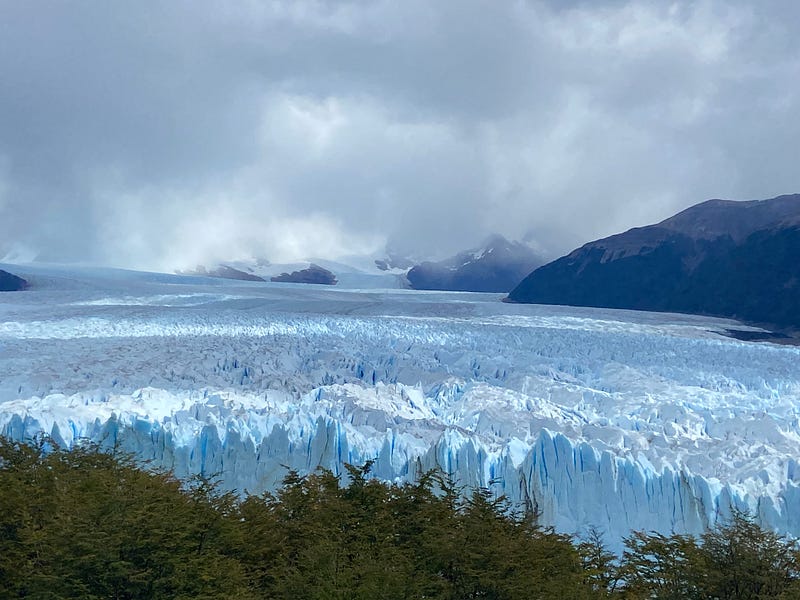
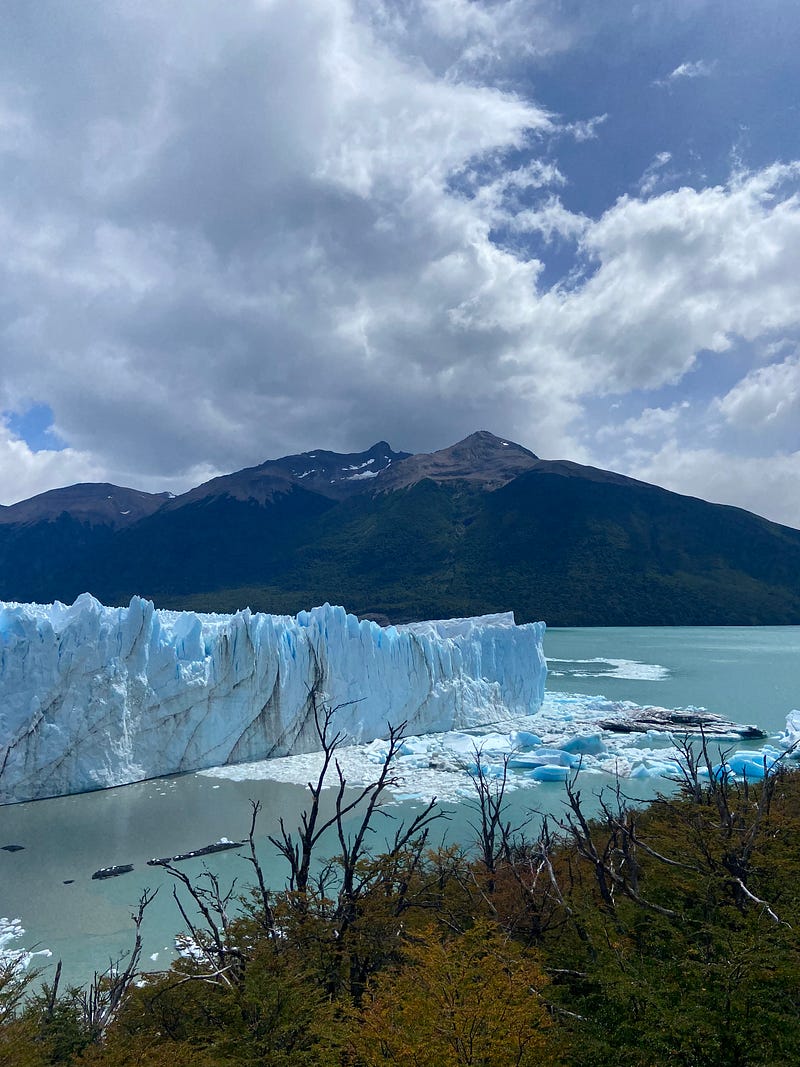
The next morning, Mariano organized for us to visit the Perito Moreno glacier. The temperate glacier, within the Parque Nacional Los Glaciares, straddles the border with Chile and gives into the Lago Argentino. It is a must for any tourist visiting Argentinian Patagonia and, as such, an entire tourism industry with adjoining city and airport has been created around it. Thousands upon thousands of tourists make the journey to this part of Patagonia, many just for this. There are cruises that skirt the imposing ice wall, as high as seventy-four meters. You can even trek on the ice or follow kilometers of catwalks along the edge of the glacier to get perfect snaps. There is an entire strip running through the center of Calafate with at least ten different agencies dedicated solely to selling excursions out to the glacier. Taking all of that into consideration, plus the fact that we thought Chilean Patagonia could not be matched, it sounded like an overt tourist trap. I mean, how exciting can a temperate glacier be? Well, as the cashier at a kiosk in town — with Syrian and Chilean ancestry — told me that morning, “That glacier is forever changing. I go there every two weeks and notice something different every time.”
The glacier was everything it was made out to be and more. It towered into the lake and went all the way back into the mountain until the fog made it invisible. With every step we took on the catwalk, the glacier changed color: from pure white to a sparkly crystal to sky blue. When a piece crashed off, it sounded like a heavy summer thunderstorm was hitting. The split chunks then floated slowly around the lake, often meeting other strays and combining to form an iceberg. After half a day admiring the glacier and its contours, we made our way back to town with Mariano.
That evening before dinner, Maria and I decided to take advantage of the long daylight hours and go for a jog to explore the town. We ran through the side streets behind our hotel and headed straight toward the lake. While doing a loop around the first bend along the shore, we noticed two stray dogs to which both Maria and I made kissing sounds, not thinking twice, as we passed them. A few seconds later, hearing heavy panting and warm breath working its way up towards my calves, I turned around to see both dogs — mixed breeds, one dark, one light — jogging along next to us. We stopped for a second to look around and see if anyone in the vicinity was calling to them, said bye and proceeded with our run. The dogs stayed with us. They seemed very temperate and were probably just hoping we would lead them to some food, but seeing how recklessly the locals were driving all over town, we did not want them to follow us into the road and so tried to talk them into staying behind. At one point, Maria — who is our family’s dog whisperer — faked to one side and sprinted towards a children’s playground in the middle of the square overlooking the lake. I joined her, assuming that this would confuse the dogs enough to stay behind or, at the very least, find someone else to beg for food from in the square. Before even attempting to go back down the children’s slide, we noticed the two dogs taking opposite positions on the exits of the jungle gym. Within a few seconds, they began a split-formation attack and cornered us. As they came up to us again, now on top of the slide tower, I tried to explain to them, in Spanish, that it was too dangerous for them to follow us. There was nothing to be done. They followed us off the playset and proceeded to jog next to us. When we would speed up, they would too. When we would stop in our tracks they would continue on for a little while — at which stage we thought we had them — before looking back and waiting for us with a look that only a dog can emulate, enough to pull at anyone’s heartstrings. It was only half an hour later, after having jogged in circles, split up multiple times, only to be reunited by our two strays who played roulette with the passing cars, that they finally tired out and understood we had no food for them. Coming back to our bed and breakfast devasted from the agony of watching those two poor abandoned dogs, I told Mariano’s colleague about it at the reception.
“Yes. There are a lot of strays here. People do not castrate their dogs and so those ones you saw are not necessarily abandoned, they just have always been strays.”
This did not make me feel any better.
“But were they skinny?” He asked me.
I did not know what to make of this but upon thinking, I answered him, “No.”
He smiled, tapped his pen twice on the desk and leaned back in his chair, seemingly satisfied, “You see. They are fat, happy dogs. The entire town takes care of them and feeds them.”
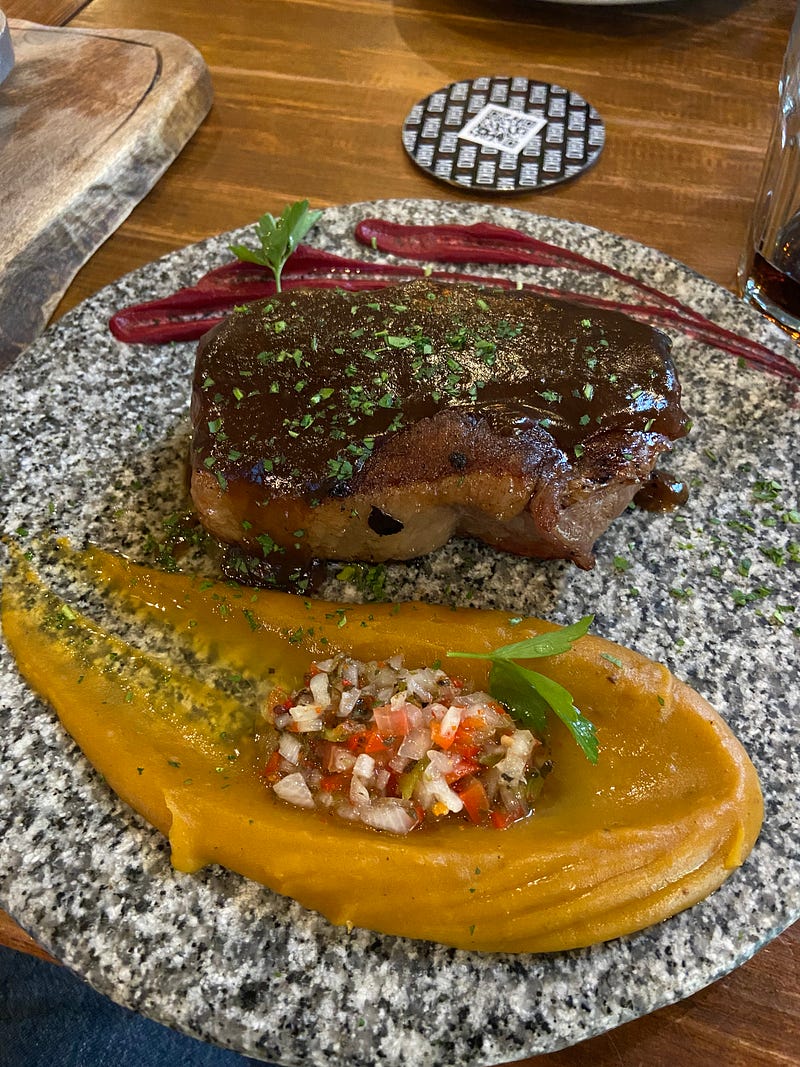
On second thought, we had seen plenty of dogs roaming in packs around the center, outside of restaurants and other food stores in those days. Many of them were chewing on leftovers and looked to be in fine shape. The city of Calafate has adopted them. That night after dinner, Maria made sure to sneak a few bread rolls out of the restaurant and the first dog we found, sitting outside a steakhouse, simply scoffed at the bread roll, knowing he would get something better from the restaurant.
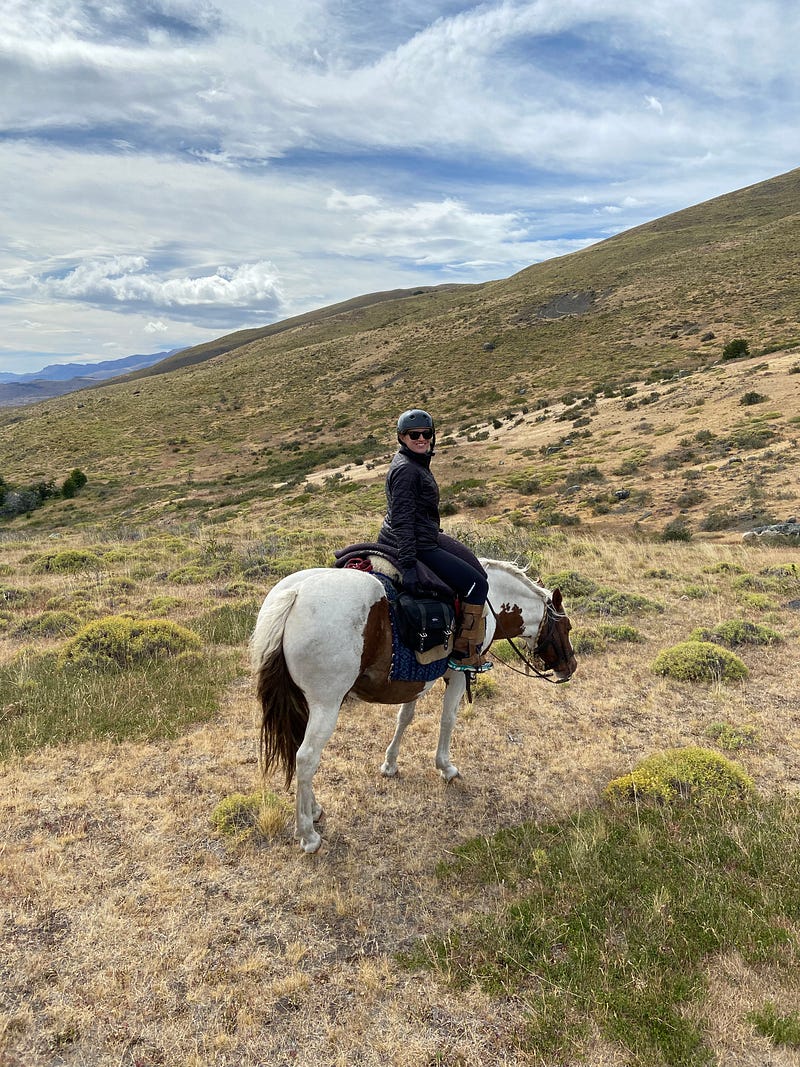
We came down to the lobby the next day for a full-day horseback riding excursion. Maria had decided to up the ante after our surprisingly fun experience back in Chile. It was clear from the start that this would be no chariot ride through the park. We met Luciano, the man in charge of the horses, in the lobby. Mariano introduced us and asked him, “Why do they always give you foreign tourists when you do not speak a syllable of English?” They both laughed and Luciano — a middle-aged, stocky man, decked out in jockey gear with perma-tanned arms showing through his rolled-up sleeves — replied, “I just give them a lot of wine.” Both of them laughed and smacked each other’s backs, they clearly knew each other well — or were just overly affectionate like most other Argentines.
We climbed into the jeep that would take us to the ranch and met Miguel — Luciano’s second in command. The two of them were alternating sips of mate in what would become a ritual for the rest of the day. Joining us would be Brian and Ashley — a young couple who had traveled out from Pittsburgh. Ashley, of course, was originally from Minnesota and so we bonded about life as high schoolers there. The final piece of the puzzle was Anisa, a Calafate resident, originally from Salta in the far north of Argentina. She also came with an extra-large mate cup.
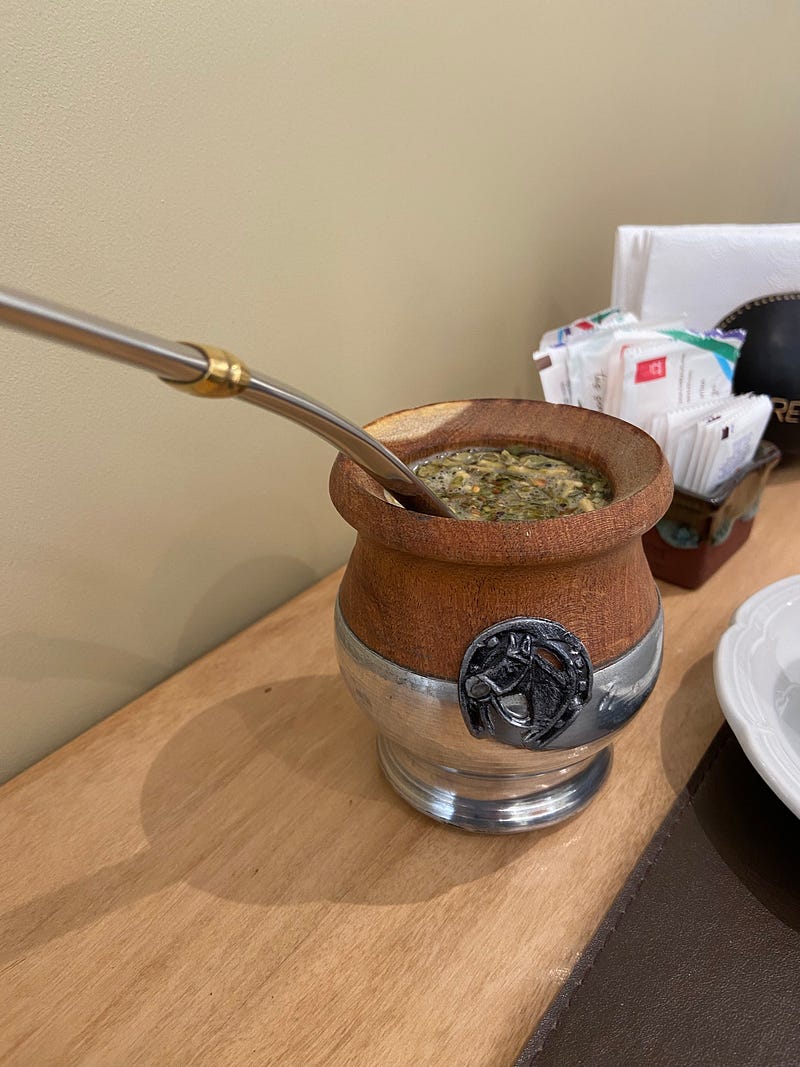
Luciano drove us down a dirt path, mostly on the wrong side of the road to avoid the deep potholes. We joked that with his English and the way he drove, he could fit right in in the UK. To which he replied that he had heard that before, but unfortunately there were not enough horse ranches anymore in the UK. At the ranch, Marie — a French student traveling around South America — was waiting for us with a buffet of breakfast pastries. While we carbo-loaded for the journey Miguel, Luciano and Anisa drained their mates as if there was no tomorrow. When Anisa caught me glancing at her in amazement she smiled and just said, “Es necessario.” It’s necessary. Never question an Argentine’s use of mate, it is borderline sacrilegious.
We got paired with our horses. This time I got Maledetto, the cursed one. We were off to a great start. The horses were clearly much more jovial than the ones we had ridden the week before in Chile and, as such, required much more focus and shows of authority from us. At this stage though, I considered myself an experienced rider and was more focused on the view. I quickly learned that there is a big difference between a one-hour saunter and a full-day cabalgata. Sitting on a horse for hours on end puts a strain on your hip flexors and, due to the uneven terrain and constant climbs, also keeps your lower back and core active the entire time. (My apologies to anyone that I ever offended by saying that horseback riding is not a sport.) As we exited the ranch, we caught a glimpse of the glacier yet again and were able to witness its striking mass from a different perspective than when we had been up close and personal the day before.
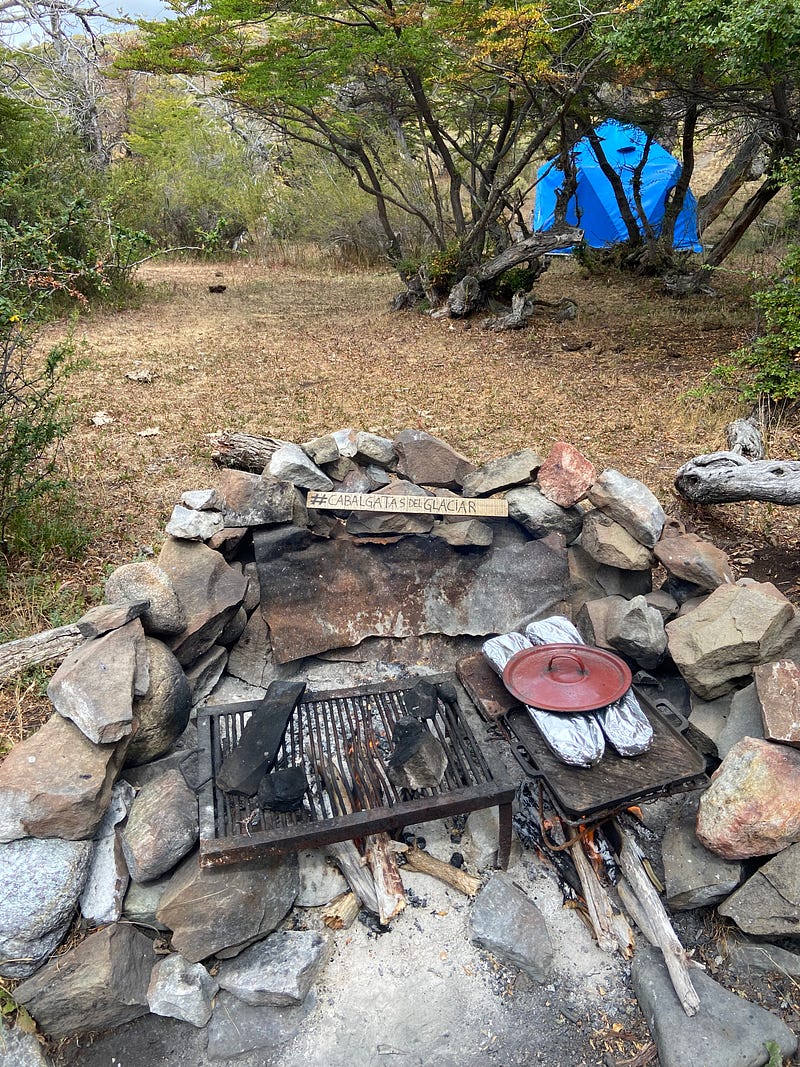
After galloping around in the arid alto piano overlooking the lake for a couple of hours, we stopped for lunch at a makeshift grill that Luciano had set up in the middle of nowhere. Luciano prepared some steaks, uncorked a wine from northern Argentina and entertained us with stories — that I had to translate — about his ancestors.
On the way back to the ranch I finally learned what it was like to become one with my horse and caught myself dozing off. I could have used a mate myself at that point. Back at the ranch, after Luciano ran around herding all the horses back into the stable, he came back out of breath and uttered, “Now, before we go, I need a mate.” He proceeded in the usual ritual of passing around the mate with Miguel and Anisa. This time, I also joined in but was quickly reprimanded for stirring with the metal straw. All the rules that Argentines forgo in daily life seem to have been applied to the custom of mate. Mate is as acquired of a taste as Vegemite in Australia but the ritual of sharing one is as intimate of an experience as you can have, only then do you feel you truly belong.
Our Patagonian experience had come to an end. Mariano was kind enough to drive us to the airport, offering multiple times to buy my hiking trousers and backpack off of me saying he “could wash them himself.” I declined, telling him I would need them for when we would go hiking up Aconcagua together next year. It had only been a couple of days, but he hugged us both as if we were family. Off we went to catch our flight back to Buenos Aires, where our adventure had begun.
My travel storytelling centers on long form first-hand accounts with a focus on vivid depictions of the local culture through the people I meet along the way. I also work as a travel advisor tailoring travel adventures all over the world, more info here: https://www.foratravel.com/advisor/nicola-volpi
Stay tuned! In the meantime you can find some of my other pieces below: