
Crossing the Andes from Argentina to Chile
After three packed days in the blistering heat of the capital, we began our journey southwards by cutting northeast across Buenos Aires to the Aeroparque Jorge Newbery in a taxi with a broken transmission which stalled at every traffic light. Bariloche would be the next stop on our adventure and the beginning of our descent towards Patagonia.
Upon boarding our plane, we were immediately greeted by three gracious flight attendants. Little did we know that we were in the presence of greatness. Something felt different from the onset. Every now and then you encounter an individual who is both supremely talented and highly engaged by their job. These individuals are masters of their craft, regardless of what it may be. The head flight attendant on that day was part of this rare breed. He did not miss a beat while running a cabin which was orderly, on-time but also full of top-tier banter. His highlights included announcing over the PA: “hay alguien que solamente habla inglés?” (Is there anyone that only speaks English?) He said all of this in Spanish but seemed to be well aware of the contradiction because he let out a cheeky giggle to himself after being met by silence from the cabin. A few minutes later, as we started to roll off the tarmac he asked who was flying for the first time and encouraged those passengers to raise their hands. “Uno, dos…siete…nueve…doce…un applauso por favor!” The live studio audience complied. Never in all my years of flying have I witnessed that level of empathy, enthusiasm and leadership. He was on a mission to make flying great again. But it did not end there. Upon landing he welcomed everyone to Bariloche, said it was twenty-six degrees celsius and was interrupted by applause from every single passenger as if he had brought the outdoor temperature down himself from his control panel. I turned to face Maria awestruck at the flying festival we had just witnessed.
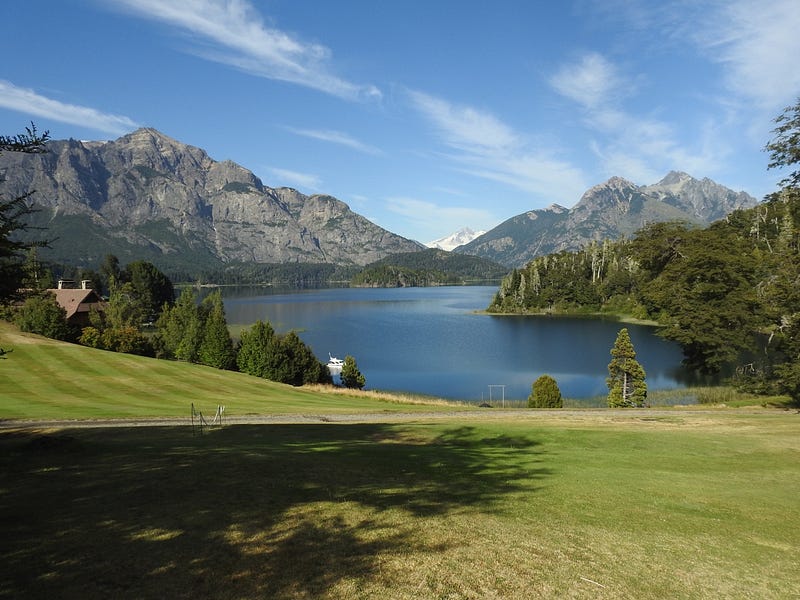
And I remained awestruck as we made our way from the airport in Bariloche to our hotel in the last hour of sunlight. Bariloche is hermoso in the truest sense of the word. When you pick up a photography collection of Argentinian landscapes or an any guide book about the country, chances are Bariloche and the surrounding lakes district will be showcased on the cover. Majestic glacial peaks give way to slanted pine tree forests that reflect themselves in the intersecting translucent lakes. At first one struggles to believe that such a peaceful idyll is in the same region of the world — let alone country — of Buenos Aires. The only reminder being the driver’s radio blaring the commentary of the San Lorenzo pre-season match.
Tourists — mostly from the largest cities in Argentina and Brazil — flock to Bariloche for a summer getaway in very much the same way that certain Europeans choose to experience the alps in summer instead of the beach. The variety in landscape and the pristine temperatures — heating up to around twenty-six degrees celsius in peak summer — provide something for everyone. The hiking, mountain biking and water sports on offer — although inferior to the hardcore options of other regions — are abundant but so is the opportunity to bask in the sun on crystal clear lake shores or relax at a spa. Regardless of what one chooses to do while in Bariloche, the one certainty is a spectacular view in whichever direction one looks.
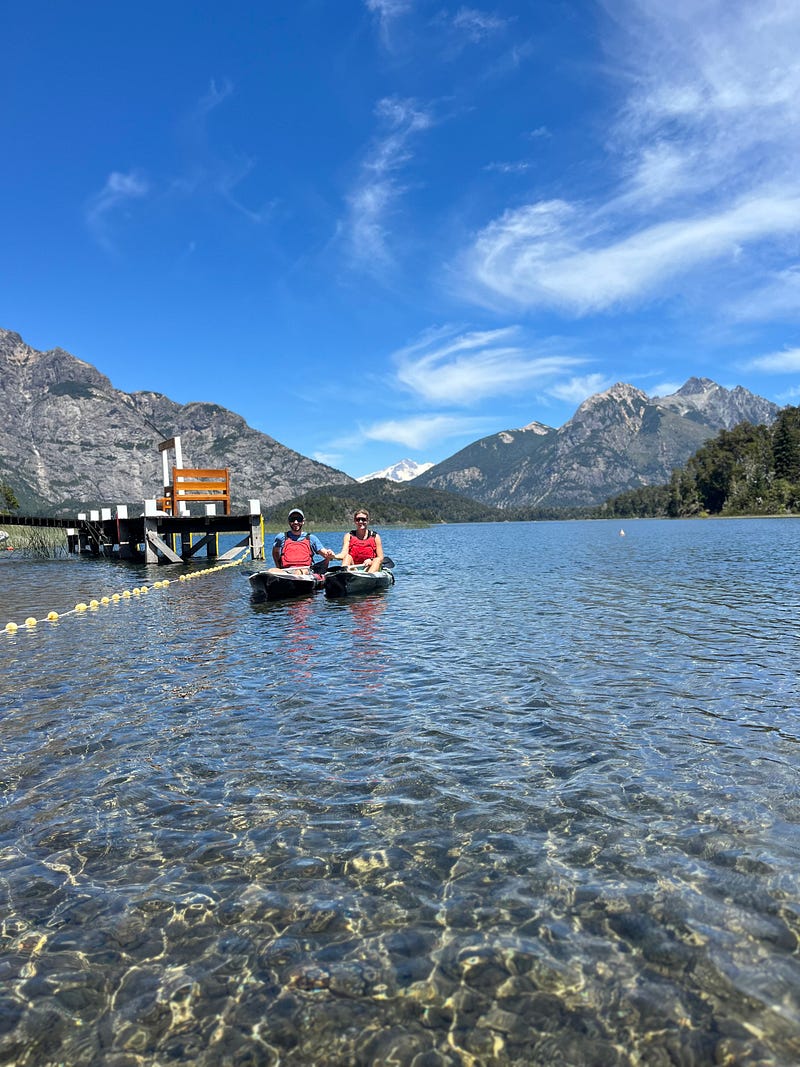
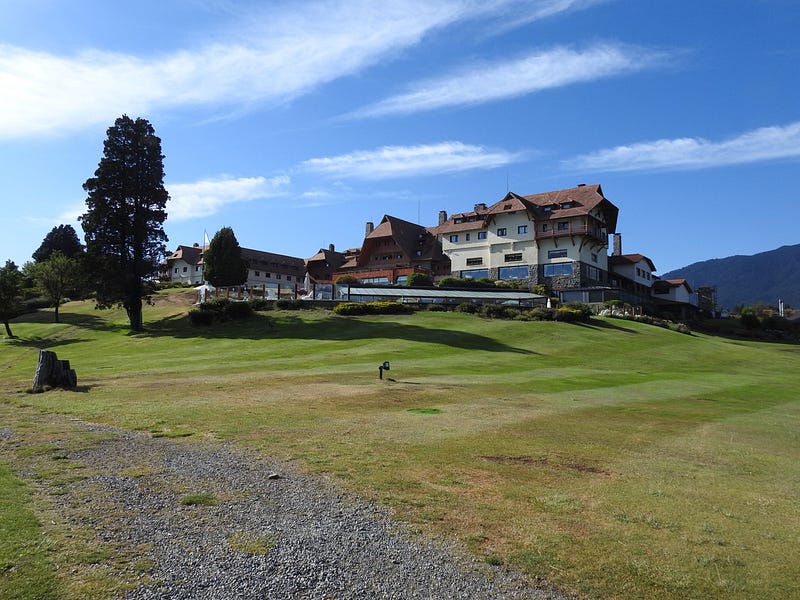
Perched upon a bluff sandwiched in between two lakes sits the Llao Llao — Bariloche’s answer to Stephen King’s Overlook Hotel in Sidewinder, Colorado. A true summer mountain getaway popular with honeymooners. The resemblance to The Shining is uncanny. Even the statue guard dogs at the reception provide for a creepy memory. Those horrors aside, Llao Llao provided us a couple of days in paradise with kayaking, a round of tennis and high tea on the hotel lawn before we would proceed to the hardcore part of the journey. Having restored our energies and managed to avoid going insane à la Jack Nicholson, we were now ready to cross the Andes into Chile.
The long, skinny one next to Argentina. This is how we were taught to locate Chile on a map in geography class and to this day it is the first description that comes to mind. At most we throw in that it is separated by its more populous neighbor to the east by the Andes. Personally, I had not delved much deeper into Chile or its history until it was proposed to me by a travel guide while planning what was supposed to be our Argentinian tour. Pablo Neruda, Allende (Isabel and Salvador), Pinochet — merely a footnote to Vargas, Videla, Chavez and Castro in my Latin America history class — and the gripping story of the miners of 2010. Football aside, that was basically the extent of my knowledge and even as far as football goes, the Chileans have been perennial underachievers when compared to other South American powerhouses.
Oddly enough though, I was twice mistaken — or rather, accused — for a Chilean. The first time was by a drunk Brazilian lady on a train from Brussels to Rotterdam. I had to show her my passport after a lengthy discussion to get her to leave me alone. The second instance was a lot less amicable. I was mountain biking with a friend and a guide around Lake Titicaca on Peru’s independence day when we stopped to watch a recreational football match. There were plenty of spectators enjoying a nice tailgate and a few cold ones in the sun. Everyone seemed to be having a great time. Then, all of a sudden, a highly inebriated truck driver accosted the field with an eighteen-wheeler and started yelling something at us in Aymara. We barely took notice of it and turned back to the football match. Our guide, on the other hand, turned pale and told us “he says he knows you are Chilenos and he is angry with you.” Before we could do anything, our guide had already hopped on his bike. The driver slid out of his door, stumbled first left, then right, nearly fell over and continued to gradually make his way towards us pointing and yelling with palpable rage in his eyes. In a moment of panic and fascination we set off as fast as we could behind our guide only for the truck driver to get back in his seat and attempt to follow us. Fortunately for us, he ended up stalling the engine and getting stuck in a ditch. The only logical conclusions from these two experiences being that South American drunks have a long standing beef with Chilenos and that I may have been Chilean in a previous life.
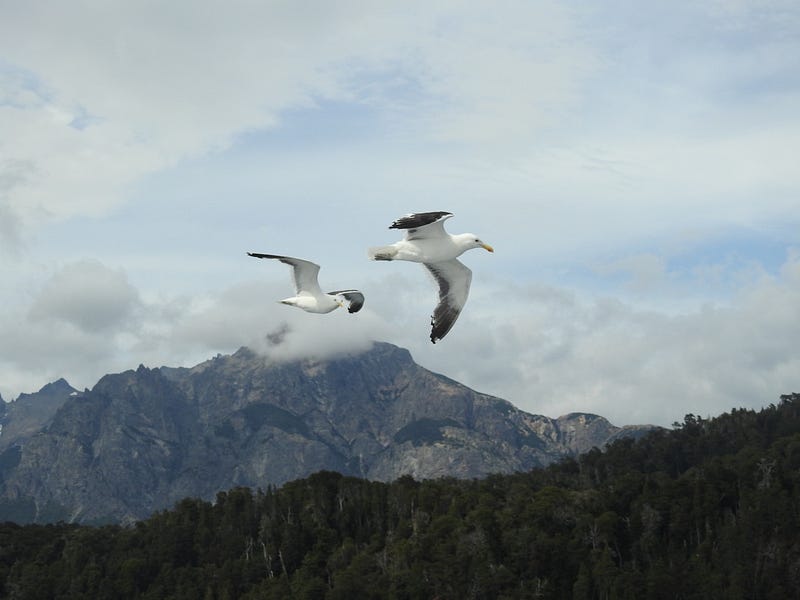
It was with this knowledge that we embarked on the Cruce Andino from Bariloche to Puerto Varas in Chile. The journey would take us along the same route — mas o menos — that a young medical student named Ernesto Che Guevara had taken on his motorcycle in 1951. We set off sailing from Bariloche on the cold waters of the Lago Nahuel Huapi. On the top deck, while taking pictures of yellow billed pintails flying above the gorgeous pine forested islands, we met an American family from Texas that would end up becoming our travel companions and live entertainment for the day. As with many Americans, they were very impressed by my and Maria’s ability to speak multiple languages and shocked by the slight hint of a Minnesotan accent I have maintained. Rick, the patriarch of the family, said his father had grown up in Hibbing, Minnesota — Bob Dylan country. Small world. It seems that wherever we travel we find either Italians or someone with some connection to Minnesota.
Nahuel Huapi got progressively narrower until we squeezed through two pine tree walls and arrived in Puerto Blest — a shack on a lake that would be our first port of call for the day. From there we boarded a bus for ten minutes that took us to Lago Frias for our last sail in Argentina — long enough for Rick to crack a few dad-jokes and for his wife to apologize profusely, saying she had heard them all over forty-one years of marriage.
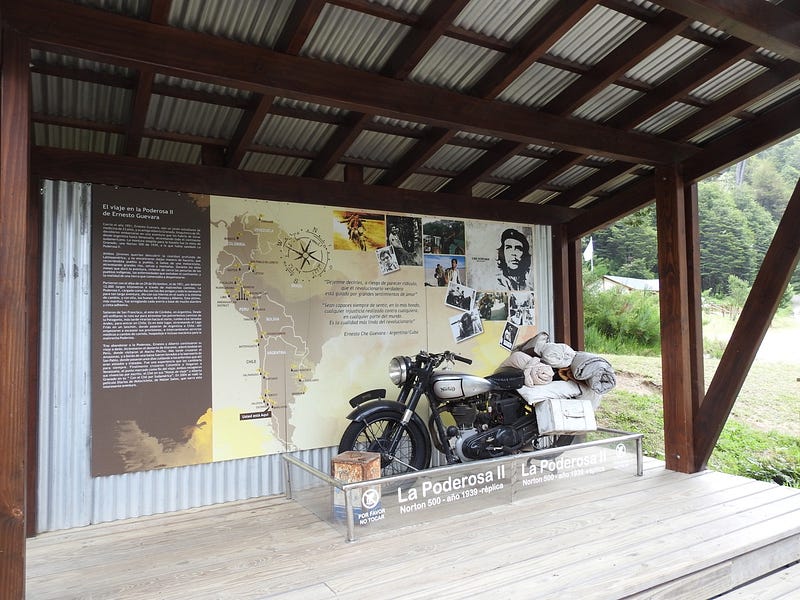
Lago Frias was spectacular with its light green water, colloquially referred to as milky water because it comes purely from glacier fall. After ten minutes there we arrived to another shack in the woods from which we would take a bus ride up through the forest to Chile. Next to the shack was a replica of El Che’s motorbike. Before that, however, more important things awaited us: the Argentine border police.
As we lined up to show our passports well within earshot of the customs patrol, Rick turned to me and with a smug grin on his face said, “Watch this. I’m going to tell him to take me to the American embassy. I heard they actually have to do that if you ask.”
Before I could muster a reply or warning, one of his sons replied called out from the back of the shack, “That’s not true. You can’t just be caught smuggling drugs and demand to be taken to your embassy. They will arrest you.”
My ears perked up. Was the implication that Rick was or had been a smuggler? I gave Maria a glance and prepared for a border showdown.
Then, out of nowhere, apparently inspired by the shenanigans, one of our fellow passengers who we had not heard a peep from all day stared the customs cops down and, in a magnificently punctuated Afrikaans accent calmly but firmly said, “Take me to your leader.”
Fortunately, in this part of Argentina — and for that matter in all of Argentina — the level of general English comprehension is appallingly low. Let alone trying to decipher a Texan drawl or prosaic South African accent. The customs patrolmen looked at each other with raised eyebrows, shrugged and continued paging through the passports. Rest assured, Rick and our Springbok friend were safe. At least for now. We still had eight hours of travel left.
Then it was our turn to have our documents checked. As usual, my wife’s Danish passport got smiles and was passed around amongst the officers whereas my Italian one was looked at like a pile of inflated Argentine pesos since any Argentine with an Italian great-great-great-grandmothers cousin four times removed can lay claim to one. We switched our guide out for a Chilean one and boarded an old bus for a bumpy ride up and over the mountain pass separating the two countries.
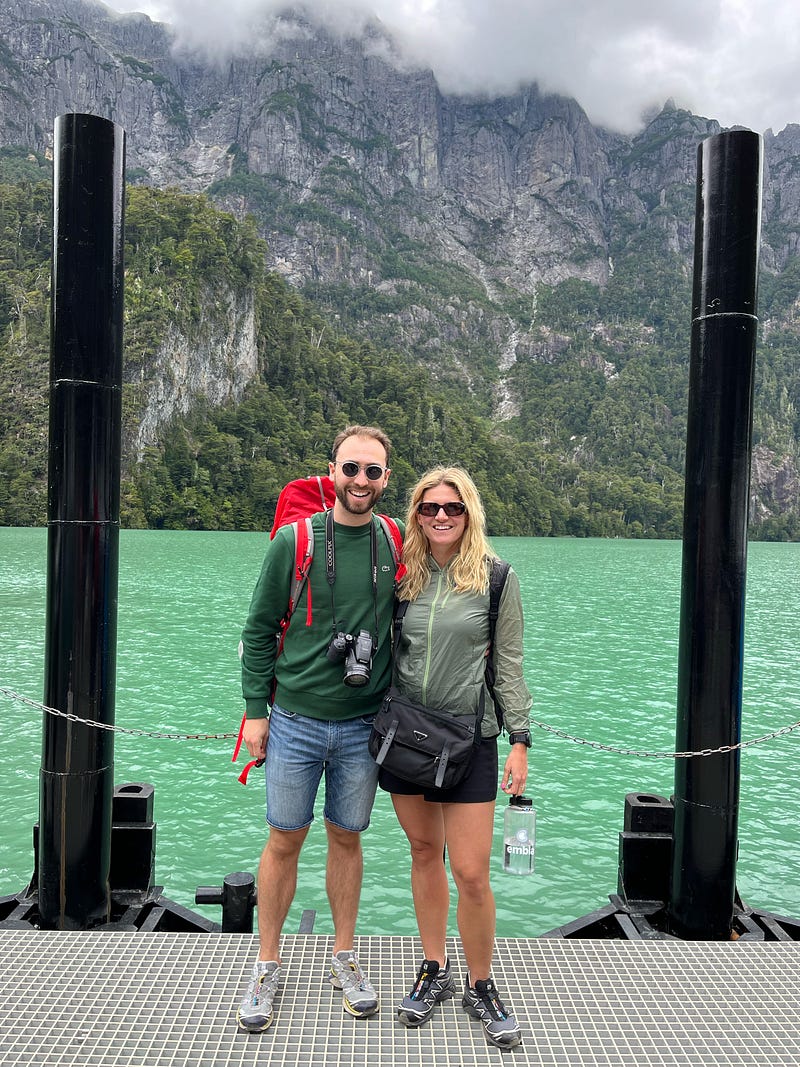
Our Chilean guide welcomed us to “the best country in South America” and explained the program for the rest of the day, emphasizing — with a slight look of disgust — that our Argentine pesos were no longer valid here. He proceeded — with a much harder ll sound than the Argentines who suavely ‘sh’ their ll — to tell us about all the flora and fauna we would encounter. The pumas, he said, were actually very shy and we would be lucky to catch glimpses of any — that did not go down to well with the tourists, but at least expectations were set. We then spotted an Andean condor before learning that certain ones have a three meter wingspan and can fly non-stop for months on end.
After a while — exhausted by the earth science lesson — we officially crossed over into Chile by passing a small house with satellites and a Chilean flag. This prompted discussion from the peanut gallery about the similarity to the Texan flag and which actually came first. Not having any reception whatsoever, everyone’s opinion went un-factchecked.
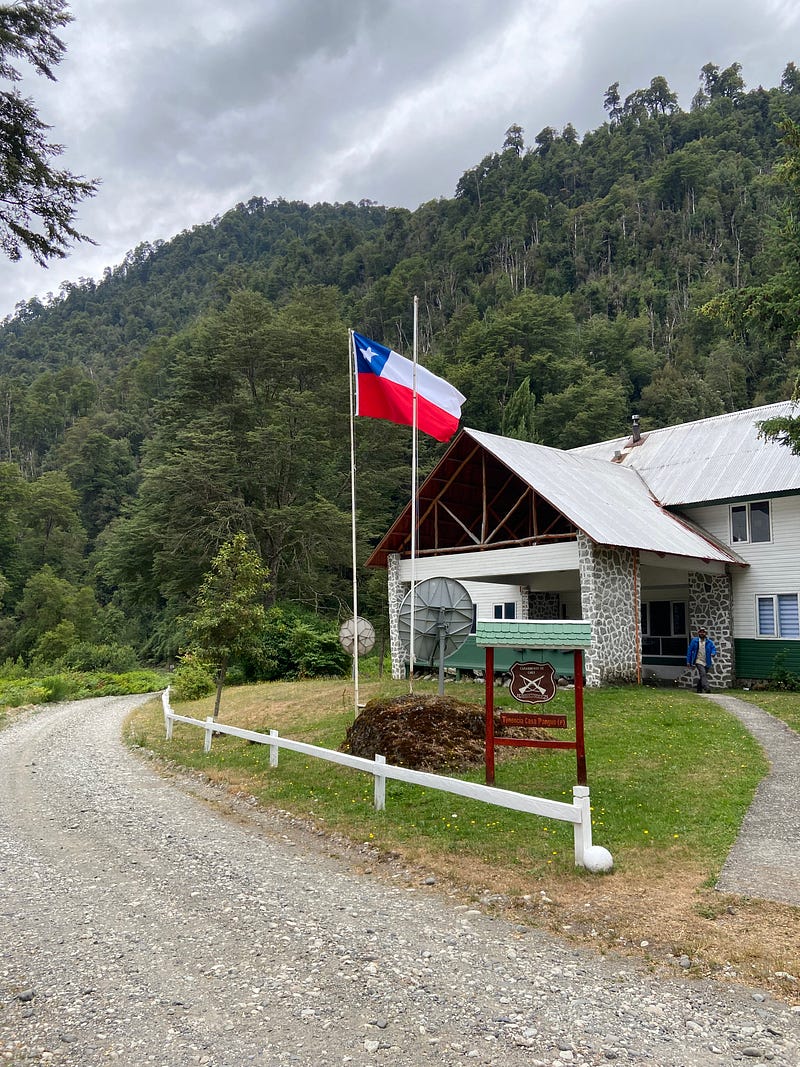
Twenty minutes later we arrived to a red hut where the Chilean customs “agents” proceeded to thoroughly inspect everyone’s suitcase. Maybe the Argentines at Lago Frias understood more than they let on and tipped them off. Fortunately, no contraband was found in Rick’s luggage and no further trips to embassies or leaders were demanded. We then stopped for lunch at the neighboring hotel where I had my most Andean meal yet: chicken with a side of quinoa and potatoes. I scoffed at Maria’s salmon but little did I know that the joke was on me. We later found out that Chile is the second largest producer of salmon in the world, after Norway. They account for twenty-six percent of global salmon exports, mostly to the US where they have a deal for a fresh label and consequential higher price if they deliver within forty-eight hours of the catch. They even export to Japan so they can make sushi with it. Chile seemed to be full of surprises.
Our crossing culminated in a final sail along Lago Todos Los Santos which saw us pass through Chile’s first national park (Vicente Rosales). At its center, along one of the shorelines, sat a rotating house where wildlife enthusiast President Teddy Roosevelt came to visit in 1914. Nowadays Chile has more than forty protected national parks and eco-tourism — finding a balance between the booming tourism trade and conservation — remains a top priority. On the final leg of the drive we passed the towering Vulcano Osorno, Chile’s answer to Mt. Fuji. Chile has more than two-hundred volcanoes, fifty of which remain active. We then arrived to our final destination for the day, Puerto Varas, in time for some fresh mariscos and atún al inglesa.
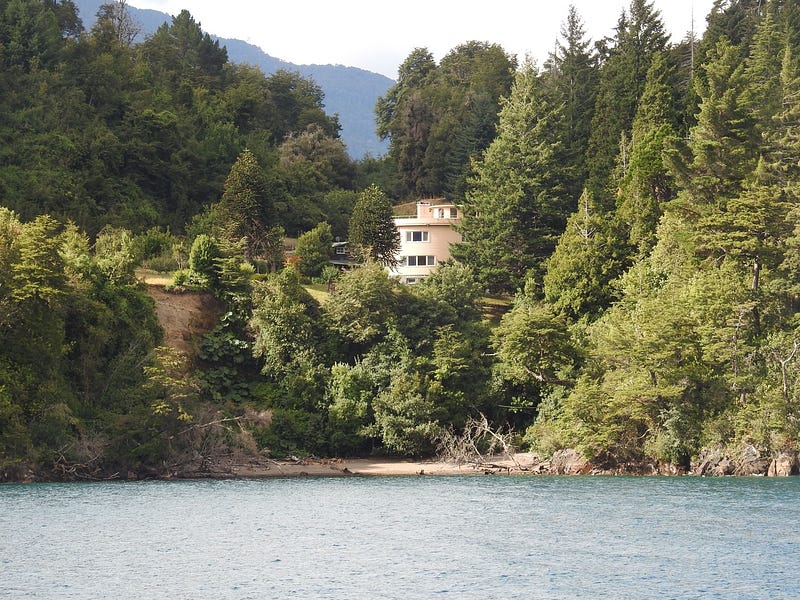
Puerto Varas is a quaint little town influenced by both the native Mapuche and the subsequent waves of German migration. It sits on the shores of Lago Llanquihue (Yankee-way) which local guides boast about being the clearest lake in South America. While walking around there one cannot help feeling like being on the last strip of civilization before the end of the world. The vibes are electric. Backpackers stop here for one or two nights before proceeding further into the wilderness. The main boulevard was packed with locals and tourists listening to live Andean music and admiring the sunset over the Cerro Tronador and Vulcano Osorno. Those vibes prompted impulse purchases at the Patagonia and North Face stores from a family member which, for legal reasons (read marriage), shall remain anonymous. We would have gladly stayed in Puerto Varas for another couple of days, but the end of the earth was calling!
This article is part of a series on my recent travels which will be released in multiple installments over the coming weeks. Stay tuned! I also work as a travel advisor tailoring travel adventures all over the world, more info here: https://www.foratravel.com/guides/3XS5RS/a-patagonian-adventure-nicola-volpi
In the meantime you can find some of my other pieces below: