avatarHive 42

Free AI web copilot to create summaries, insights and extended knowledge, download it at here

3851

Abstract

pendent on one’s wealth.</li><li><b>Diminished Social Mobility:</b> In a NeoFeudal society, the ability for individuals to improve their socio-economic status is significantly hampered. The “ladder of opportunity” becomes harder to climb due to systemic barriers and the monopolization of resources by the elite.</li><li><b>Diluted Democracy:</b> Finally, the concept points to a dilution of democratic principles, where the influence of money in politics means that a few wealthy individuals and corporations can shape policies and decisions that affect millions, often at the expense of the public good.</li></ul><div id="dab8" class="link-block"> <a href="https://readmedium.com/democracy-in-america-a8cacfb83b12"> <div> <div> <h2>Democracy Diluted: The Declining Representation in America</h2> <div><h3>FREE LINK For Non-Members.</h3></div> <div><p>medium.com</p></div> </div> <div> <div style="background-image: url(https://miro.readmedium.com/v2/resize:fit:320/1*8lA7iUKRCwDCJOCvwVqGpQ.png)"></div> </div> </div> </a> </div><h1 id="a6d7">Historical Parallels</h1><p id="bed4">NeoFeudalism reflects the feudal systems of medieval Europe, updated for today’s world. In medieval times, a small nobility held land and power over peasants, who worked the land for protection. Today, this stratification exists with wealth, information, and technology, with corporate elites and billionaires holding power similar to medieval lords.</p><p id="c481">One parallel is the concentration of wealth and power. Just like lords controlled vast estates, today’s billionaires and large companies dominate economies and digital platforms, reminiscent of the monopolistic control seen in feudal times.</p><p id="0aca">The erosion of the middle class today mirrors the diminishing ranks of medieval freemen, who provided a social mobility pathway between wealth and poverty. As wealth consolidates at the top, we see greater economic polarization, reducing mobility and echoing feudal societies.</p><p id="9ac4">The privatization of public resources today is similar to the enclosure movements, where common lands were taken for private use, displacing communities. Modern examples include privatization of water and <a href="https://readmedium.com/from-stitches-to-solutions-my-take-on-americas-frankenstein-healthcare-ee0b0e63f137">healthcare</a>, where access depends on one’s ability to pay.</p><p id="d2ec">Today’s diluted democracy, where money heavily influences politics, reflects the limited political power of common people in feudal times. Just as the ruling elite dictated policies then, corporate interests and wealthy donors heavily influence today’s policy-making, <i>silencing</i> the average citizen’s voice.</p><div id="9f0a" class="link-block"> <a href="https://readmedium.com/the-fading-echo-of-democracy-how-money-in-politics-silences-our-voice-2ffe774ede5"> <div> <div> <h2>The Fading Echo of Democracy: How Money in Politics Silences OUR Voice</h2> <div><h3>Campaign finance laws… I can almost hear the collective yawn, ‘BORING, BORING, BORING’. I know it’s boring, but this…</h3></div> <div><p>medium.com</p></div> </div> <div> <div style="background-image: url(https://miro.readmedium.com/v2/resize:fit:320/1*qKu1aekwYbVC8LYEOLCiAA.png)"></div> </div> </div> </a> </div><h2 id="babb">Reflections</h2><p id="949f">I’m not an economist by any means, but like anyone reading this, we can all observe the pitfalls of today’s economic system. Without the necessary safeguards, capitalism was inevitab

Options

ly going to funnel wealth into the hands of a few.</p><p id="5f47">Even armed with this understanding, the question remains: <b>Now what?</b></p><p id="ec3d">The odds of effecting any real change seem insurmountable, but it’s precisely in these moments that our character is tested. This is when we need to push back even harder.</p><p id="70d9">I’m a bit of an introvert, so for me, attending a public rally or going door-to-door isn’t my thing. I’m not even fond of phones. I get it.</p><p id="2b51">But I can write like I am now.</p><p id="9a79">I can write letters to my local representative, governor, senator, etc.</p><div id="9ff5" class="link-block"> <a href="https://www.myfloridahouse.gov/FindYourRepresentative"> <div> <div> <h2>Find Your Representative</h2> <div><h3>Find Your Representative</h3></div> <div><p> Find Your Representativewww.myfloridahouse.gov</p></div> </div> <div> <div style="background-image: url(https://miro.readmedium.com/v2/resize:fit:320/0*zsbOs6p8J0MWxfzy)"></div> </div> </div> </a> </div><p id="134f">Obviously we can vote. I can remind people to check their registration by deadlines.</p><div id="9d3c" class="link-block"> <a href="https://www.usa.gov/confirm-voter-registration"> <div> <div> <h2>How to confirm your voter registration status | USAGov</h2> <div><h3>Find out how to check your voter registration. Make sure you are still registered to vote and your name, address, and…</h3></div> <div><p>www.usa.gov</p></div> </div> <div> <div style="background-image: url(https://miro.readmedium.com/v2/resize:fit:320/0*6LV9BLFwN8Eou0Gi)"></div> </div> </div> </a> </div><p id="2700">The point is we all can do something.</p><p id="5a27">We outnumber them; it’s time we work together. We all have a part to play in saving democracy. It’s time they felt the burdens we’ve all felt for too long. It’s time for a trickle-up economy.</p><div id="9229" class="link-block"> <a href="https://readmedium.com/voting-equals-freedom-7d24df143ef7"> <div> <div> <h2>Voting Equals Freedom</h2> <div><h3>Exploring changes to Voting in America</h3></div> <div><p>medium.com</p></div> </div> <div> <div style="background-image: url(https://miro.readmedium.com/v2/resize:fit:320/1*4rNB2RKbXhwIgyaIV6F_Gw.png)"></div> </div> </div> </a> </div><p id="99e5"><i>Thank you for reading all the way to the end! Your engagement is what makes this journey worthwhile for me, and I truly value your thoughts and opinions.</i></p><p id="a63a"><i>👉 Let’s Keep the Conversation Going:</i></p><ol><li><i>What was your biggest takeaway from this article?</i></li><li><i>Is there a point you agree or disagree with? I’d love to hear your perspective.</i></li><li><i>Do you have a personal experience that relates to the topic? Your stories make these discussions richer.</i></li><li><i>Are there any questions or topics you’d like me to cover in future posts?</i></li></ol><p id="bd2f"><i>🙏 Your Voice Matters: By taking a moment to comment, you’re helping to elevate this conversation and make these discussions more dynamic and accessible to a broader audience.</i></p><p id="d96e"><i>So, let’s keep the dialogue alive and flowing! Your interaction is not just welcomed — it’s encouraged!</i></p><p id="1f0b"><i>Thank you for being an integral part of this community. I’m eager to hear your thoughts!</i></p></article></body>

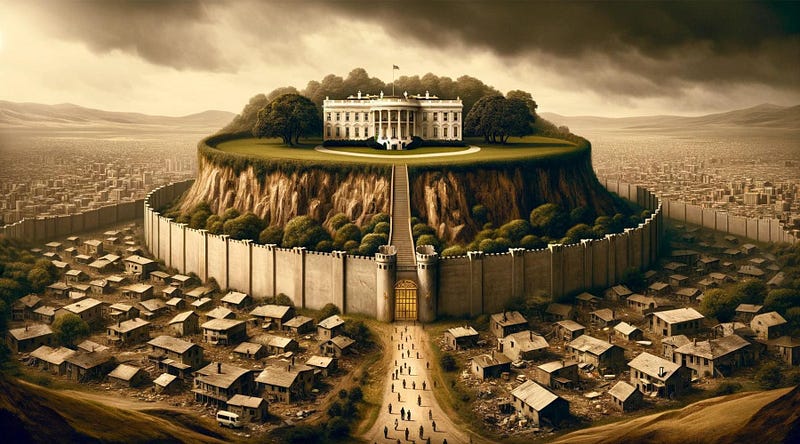
Made by Author via Dall-E

NeoFeudalism: The New Lords

From Lords to Lobbyists: Unveiling the NeoFeudalism Shaping Our World

I recently read a piece by Greg Daneke, Emeritus Prof., that offers a compelling critique of modern economic disparities. It frames today’s socio-economic issues within the context of NeoFeudalism to highlight the growing divide between the wealthy elite and the rest of society.

Note to Readers: We writers don’t get paid unless Medium subscribers engage with the article — be it through 👏 claps, reading for at least 30 seconds, or leaving a comment. Your support helps us continue to create valuable content. Thank you so much! 👍

As good as the piece was, the reason I’m writing this is that the concept of NeoFeudalism was brought up. It’s a word that has eluded me for some time. I remember whispers of it, but it never really entered my ecosystem until today, thanks to Greg’s piece.

I’ve written about what today’s peasants look like, exploring a feudal concept for today’s society, and how democracy has become so diluted to the point a few control the lives of millions. Now that I have a name for this concept, I felt like diving deeper. Deeper we shall go.

What Is NeoFeudalism?

NeoFeudalism is a concept that may sound like it’s been plucked straight from the pages of a medieval history book, yet it’s increasingly relevant in today’s society. It describes a modern version of feudalism, where economic disparities and social structures create a stark divide between the ultra-wealthy elite and the vast majority of the population. This idea isn’t just a relic of the past but a lens through which we can examine contemporary socio-economic trends.

Here’s a Breakdown:

  • Concentration of Wealth and Power: At the heart of NeoFeudalism is the idea that a small group of ultra-wealthy individuals and corporations wield an enormous amount of power and influence, much like the lords and nobles of medieval times. This concentration of wealth leads to significant disparities in income and opportunity.
  • Erosion of the Middle Class: Just as feudal society had a clear divide between the nobility and the peasantry, NeoFeudalism suggests a similar erosion of the middle class, leading to a widening gap between the very rich and the very poor. The middle class, once the backbone of economic stability, is shrinking.
  • Privatization of Public Resources: NeoFeudalism also involves the privatization of resources that were once considered public goods. This includes everything from land and water to information and technology, making access to these essential resources increasingly dependent on one’s wealth.
  • Diminished Social Mobility: In a NeoFeudal society, the ability for individuals to improve their socio-economic status is significantly hampered. The “ladder of opportunity” becomes harder to climb due to systemic barriers and the monopolization of resources by the elite.
  • Diluted Democracy: Finally, the concept points to a dilution of democratic principles, where the influence of money in politics means that a few wealthy individuals and corporations can shape policies and decisions that affect millions, often at the expense of the public good.

Historical Parallels

NeoFeudalism reflects the feudal systems of medieval Europe, updated for today’s world. In medieval times, a small nobility held land and power over peasants, who worked the land for protection. Today, this stratification exists with wealth, information, and technology, with corporate elites and billionaires holding power similar to medieval lords.

One parallel is the concentration of wealth and power. Just like lords controlled vast estates, today’s billionaires and large companies dominate economies and digital platforms, reminiscent of the monopolistic control seen in feudal times.

The erosion of the middle class today mirrors the diminishing ranks of medieval freemen, who provided a social mobility pathway between wealth and poverty. As wealth consolidates at the top, we see greater economic polarization, reducing mobility and echoing feudal societies.

The privatization of public resources today is similar to the enclosure movements, where common lands were taken for private use, displacing communities. Modern examples include privatization of water and healthcare, where access depends on one’s ability to pay.

Today’s diluted democracy, where money heavily influences politics, reflects the limited political power of common people in feudal times. Just as the ruling elite dictated policies then, corporate interests and wealthy donors heavily influence today’s policy-making, silencing the average citizen’s voice.

Reflections

I’m not an economist by any means, but like anyone reading this, we can all observe the pitfalls of today’s economic system. Without the necessary safeguards, capitalism was inevitably going to funnel wealth into the hands of a few.

Even armed with this understanding, the question remains: Now what?

The odds of effecting any real change seem insurmountable, but it’s precisely in these moments that our character is tested. This is when we need to push back even harder.

I’m a bit of an introvert, so for me, attending a public rally or going door-to-door isn’t my thing. I’m not even fond of phones. I get it.

But I can write like I am now.

I can write letters to my local representative, governor, senator, etc.

Obviously we can vote. I can remind people to check their registration by deadlines.

The point is we all can do something.

We outnumber them; it’s time we work together. We all have a part to play in saving democracy. It’s time they felt the burdens we’ve all felt for too long. It’s time for a trickle-up economy.

Thank you for reading all the way to the end! Your engagement is what makes this journey worthwhile for me, and I truly value your thoughts and opinions.

👉 Let’s Keep the Conversation Going:

  1. What was your biggest takeaway from this article?
  2. Is there a point you agree or disagree with? I’d love to hear your perspective.
  3. Do you have a personal experience that relates to the topic? Your stories make these discussions richer.
  4. Are there any questions or topics you’d like me to cover in future posts?

🙏 Your Voice Matters: By taking a moment to comment, you’re helping to elevate this conversation and make these discussions more dynamic and accessible to a broader audience.

So, let’s keep the dialogue alive and flowing! Your interaction is not just welcomed — it’s encouraged!

Thank you for being an integral part of this community. I’m eager to hear your thoughts!

Capitalism
Society
Oligarchy
America
Vote
Recommended from ReadMedium