

Democracy Diluted: The Declining Representation in America
Increasingly, it feels as if democracy is dying. I’m not here to point fingers at individuals but at the mechanisms within our system that allow for its decline. In a recent article titled ‘How Money in Politics Silences OUR Voice’, I discussed how the influence of money in politics has quieted our collective voice, creating a distance between the electorate and those elected.
Today, I’m focused on the dilution of representation in our democratic system. While ‘dilution’ can have various meanings, I’m referring specifically to the number of representatives. We haven’t added a single representative since before 1929. Not one! This stagnation is due to the Reapportionment Act of 1929. As our population grew OUR political voices shrunk.
Note to Readers: We writers don’t get paid unless Medium subscribers engage with the article — be it through 👏 claps, reading for at least 30 seconds, or leaving a comment. Your support helps us continue to create valuable content. Thank you so much! 👍
Historical Perspective
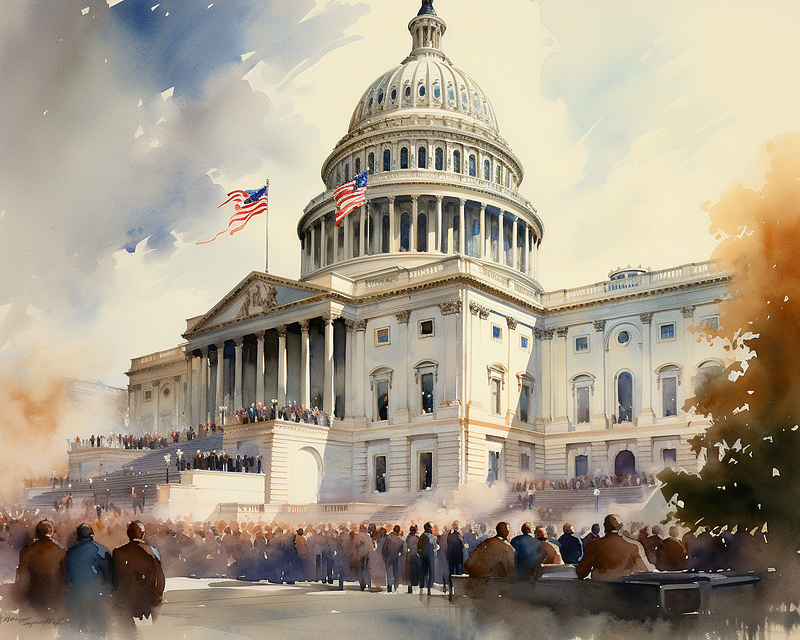
The concept of representation is deeply rooted in the foundation of the United States. When the framers of the Constitution gathered to draft this historic document, they grappled with the challenge of ensuring that every citizen felt seen and heard. Their solution? A guideline suggesting one representative for every 30,000 persons. This was a reflection of their commitment to creating a government “of the people, by the people, for the people.”
In the first session of Congress, this vision was brought to life. With a population hovering around 3.93 million, the House of Representatives consisted of 65 members. This translated to one representative for approximately every 60,615 citizens. While this number didn’t strictly adhere to the original guideline, it was a testament to the framers’ intent of keeping representation intimate and localized.
As the nation expanded, both in terms of territory and population, the number of representatives in the House also grew. However, the growth wasn’t limitless. The turn of the 20th century brought with it urbanization, industrialization, and a host of societal changes. Recognizing the challenges of managing an ever-expanding House, Congress passed the Reapportionment Act of 1929. It capped the number of representatives at 435. There was a brief exception when two additional representatives were temporarily added to account for the inclusion of new states into the Union, but this was short-lived, and the number soon reverted back to the capped 435.
While the act streamlined legislative processes, it also marked the beginning of a shift. As the U.S. population continued its upward trajectory, the number of representatives stayed the same. The voices of millions were now funneled through a static number of representatives, leading to the dilution we see today.
Relative Perspective
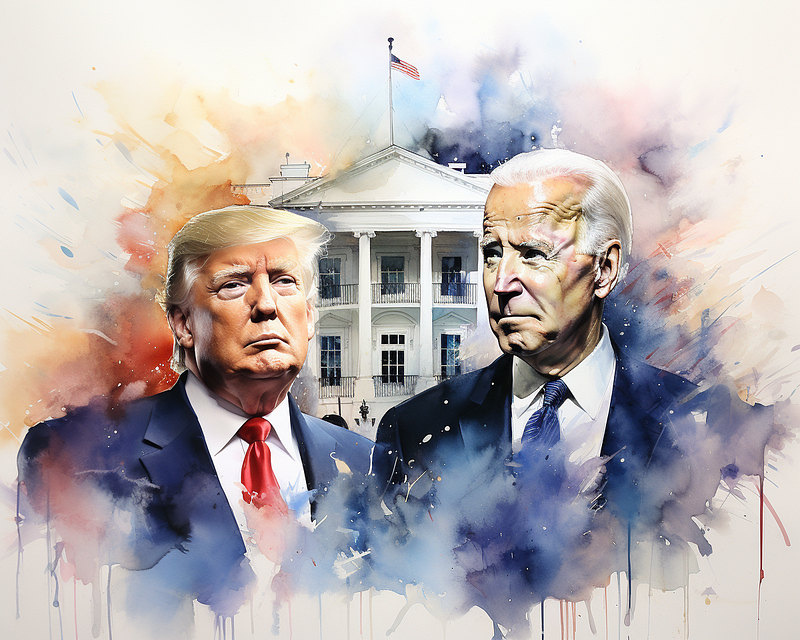
To relate this idea more, I’d like to introduce two people into the equation: Joe Biden and Donald Trump. Love or hate them, we all know who they are. They were born at a time when the population was over half of what it is now and there were only 48 states. Even then, the representatives were still at 435! It wasn’t until they were teenagers that America added Hawaii and Alaska to the Union (1959). This is when, for a brief moment, America added two more representatives.
We’ve all recognized how old Biden and Trump are. In this timeline, so much has happened. Democracy has faded into dark times. We can list all the things like gerrymandering, Citizens United, etc., that are reasons why our voices aren’t heard, but there has to be a reason or source for this erosion. As our representation faded, so has our voice.
Implications of Diluted Representation
When we talk about the foundations of democracy, representation stands tall as one of its core pillars. It’s the bridge between the citizen and the state. That bridge is crumbling beneath us. The gap is widening and it’s becoming hard to hear our voices. Here’s a list of some of my concerns:
Challenges for Representatives: The job of a representative is no small feat. They are tasked with understanding and addressing the diverse needs of their constituents. But as districts have swelled in size, this task has become overwhelmingly challenging. The sheer volume of concerns means that inevitably, some voices get sidelined. It’s not always a matter of neglect, it’s just logistics.
Loss of Localized Representation: Imagine a district that spans both urban skyscrapers and rural farmlands. With the current state of representation, it’s nearly impossible for a single representative to fully grasp the intricacies of both these worlds. The result? A potential bias towards the louder, more influential voices, leaving the quieter ones in the shadows.
Decreased Voter Engagement: There’s a growing sentiment among many Americans: “Does my vote even matter?” When representation is diluted, this sentiment only grows stronger. If people feel like just another face in an ever-growing crowd, their motivation to engage in the democratic process diminishes.
Potential for Increased Polarization: Fewer representatives for a larger populace can lead to heightened polarization. In the race to appeal to the majority, representatives might find themselves sidelining moderate or minority opinions. This isn’t just about political divides; it’s about the very fabric of diverse thought that democracy thrives on.
Criticisms of the Reapportionment Act of 1929: The Reapportionment Act of 1929, while historic, wasn’t without its flaws. Critics argue that it doesn’t account for the urban-rural divide, leading to potential biases in representation. Some even call for its repeal, suggesting a more democratic approach where the number of House seats is determined by state populations. And then there are those who believe the act, now close to a century old, is simply outdated, unable to capture the dynamic demographics of modern America.
In essence, while the U.S. has weathered many storms, the dilution of representation poses a unique challenge. It’s not just about numbers, it’s about the very essence of what democracy stands for.
Today’s Representation
Now that we understand how things have evolved to their current state, let’s examine the present representation. At the inception of America’s Congress, each representative was responsible for roughly 60,000 citizens. Today, that number has surged to 782,000! This means Americans now have only 1/13th the political voice they once did. Such a shift has created choke points in our system, allowing politicians to concentrate their influence more easily. This is why politicians canvas certain areas over others, it’s all a numbers game after all.
The original session of Congress aimed for a ratio of around 1 representative per 30,000 citizens, but in practice, it was closer to 1 per 60,000. Based on these numbers, our current House of Representatives shouldn’t be 435 members. Instead, there should be between 5,667 and 11,333 representatives in Congress representing the American people.
As America has grown in size, strength, and diversity, our representation in the House hasn’t kept pace. This disparity highlights the vast difference between the original intent and our current state of representation, raising questions about the effectiveness of our democratic system.
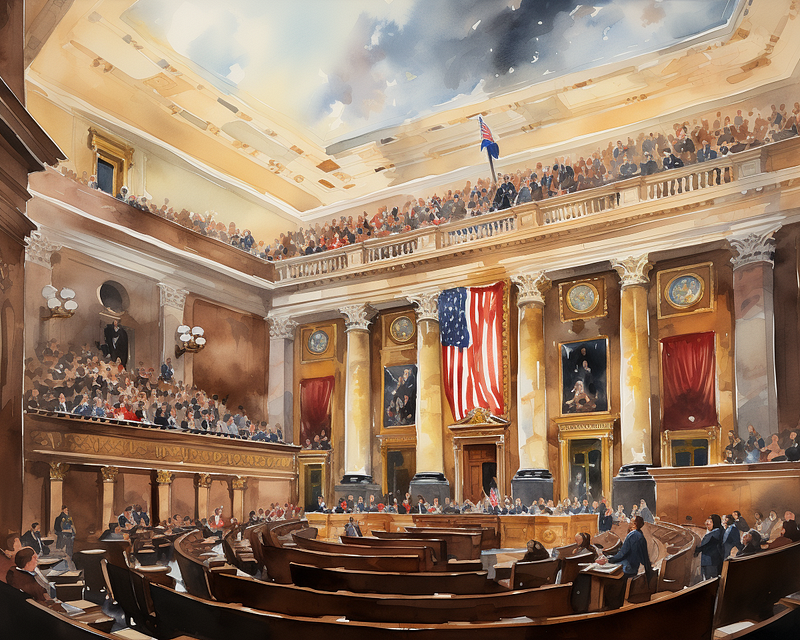
When bringing a problem to the table I also try to offer solutions. While the idea of increasing the House of Representatives to 5–11k might seem overwhelming, any increase would essentially be an increase to democracy. America loves round numbers, like our 100 Senators or 50 states. Starting with a more palatable number, like 1,000 representatives, seems like a practical first step. This isn’t the end of the changes, but just the beginning. Such an increase would pave the way for more democracy and facilitate faster, more significant changes. Future generations would have a stronger foundation, enabling them to demand further changes if needed.
In essence, while the challenges are significant, the solutions are within our grasp. It’s time for America to revisit its foundational principles and ensure that every citizen, regardless of where they live or their background, feels adequately represented in our democratic process.
Thank you for reading all the way to the end! Your engagement is what makes this journey worthwhile for me, and I truly value your thoughts and opinions.
👉 Let’s Keep the Conversation Going:
- What was your biggest takeaway from this article?
- Is there a point you agree or disagree with? I’d love to hear your perspective.
- Do you have a personal experience that relates to the topic? Your stories make these discussions richer.
- Are there any questions or topics you’d like me to cover in future posts?
🙏 Your Voice Matters: By taking a moment to comment, you’re helping to elevate this conversation and make these discussions more dynamic and accessible to a broader audience.
So, let’s keep the dialogue alive and flowing! Your interaction is not just welcomed — it’s encouraged!
Thank you for being an integral part of this community. I’m eager to hear your thoughts!