
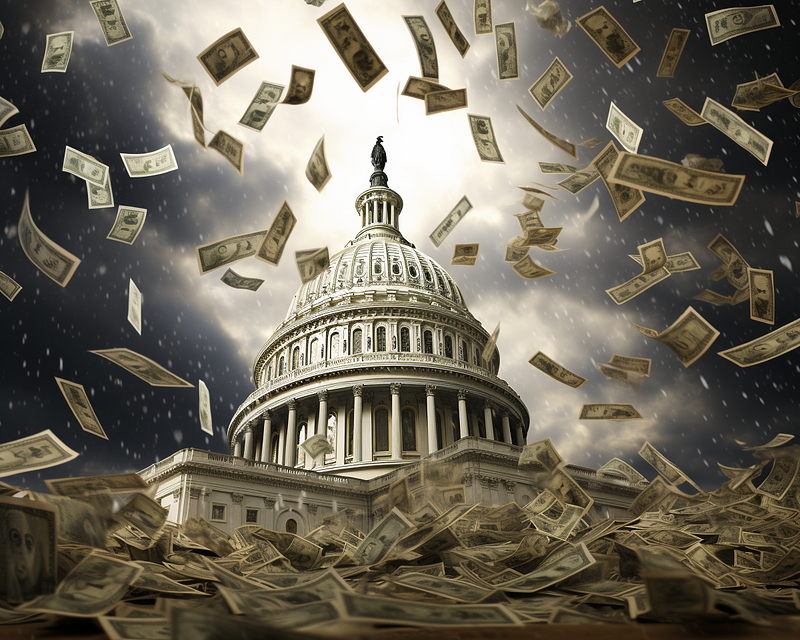
The Fading Echo of Democracy: How Money in Politics Silences OUR Voice
Campaign finance laws… I can almost hear the collective yawn, ‘BORING, BORING, BORING’. I know it’s boring, but this ‘boring’ topic is actually a ticking time bomb at the heart of our political system. From the gradual dismantling of campaign finance regulations to the explosive rise of Mega Donors and Super PACs, our laws have been eroded to such an extent that it feels like our democracy is on the brink of detonation.
In this blog, we’re going to trace the fuse back to its source, starting with the landmark case of Citizens United and working our way back through the legal labyrinth that has shaped our current campaign finance landscape. We’ll also examine the impact of these changes on our democracy and explore potential solutions to defuse this ticking time bomb.
So, does your vote feel like it’s being drowned out by the deafening boom of big money? If so, stick around. We’re about to navigate the minefield of campaign finance together.
The Evolution of Campaign Finance Laws
We’ve all heard the words “Citizens United,” but do you truly understand its implications? It’s more than just a court case; it’s a pivotal moment that dramatically altered the landscape of American politics. But before we dive into its impact, let’s take a step back and understand how we got here.
Campaign finance laws weren’t always this complex. In fact, they were relatively straightforward until the mid-20th century. The Federal Election Campaign Act (FECA) of 1971 was a significant turning point. It introduced comprehensive regulations for campaign fundraising and spending, including disclosure requirements for federal candidates, political parties, and political action committees (PACs).
However, the landscape of campaign finance laws changed dramatically with the Supreme Court case of Buckley v. Valeo in 1976. This landmark ruling equated money with speech, thereby allowing individuals and organizations to spend unlimited amounts on political campaigns, as long as they were not directly coordinating with the candidate. Without this, there's no Citizen United.
The deregulation trend continued with the Bipartisan Campaign Reform Act (BCRA) of 2002, also known as the McCain-Feingold Act. While it was initially intended to curb the influence of money in politics, the stage was set for a ruling that would change everything.
Enter Citizens United v. FEC in 2010. This Supreme Court ruling allowed corporations and unions to spend unlimited amounts on political campaigns, leading to the rise of Super PACs and dark money in politics.
But the story doesn’t end there. The Supreme Court ruling in McCutcheon v. FEC in 2014 further loosened campaign finance restrictions by striking down the aggregate limits on individual contributions to federal candidates and political party committees during a two-year election cycle.
The Impact of Citizens United
So, we return to Citizens United. This case, more than any other, has come to symbolize the dramatic shift in our campaign finance laws. Its implications are far-reaching, leading to an unprecedented influx of money in politics. But what does this mean for you, the average voter? Is your voice still heard amidst the clamor of big money?
Why should you care about such a seemingly dull topic? Because it shapes every aspect of our lives. From the quality of the air we breathe to the safety of the cars we drive, campaign finance influences the laws that govern these areas. It even impacts the education our children receive and the healthcare options available to us.
In the Citizens United v. FEC ruling, the Supreme Court stated:
‘As amended by §203 of the Bipartisan Campaign Reform Act of 2002 (BCRA), federal law prohibits corporations and unions from using their general treasury funds to make independent expenditures for speech that is an electioneering communication or for speech that expressly advocates the election or defeat of a candidate. 2 U. S. C. §441b.’
In layman’s terms, this ruling allows corporations and unions to spend unlimited amounts on political campaigns. This has led to an influx of money in politics, giving these entities a louder voice in the political arena.
But what does this mean for the average citizen? It means that our voice, our vote, is being drowned out by the sound of money. It’s like trying to have a conversation in a crowded room where everyone else has a megaphone.
In the five years prior to the ruling, $750 million in outside spending went towards federal elections. Yet in the five years after Citizens United, outside spending skyrocketed to $1.4 billion, an over 80% increase. This influx of political money has only intensified over the last decade. The 2022 midterm elections saw an unprecedented $2.9 billion in outside spending, with over $1 billion coming just from super PACs. Overall spending hit a new record of $16.7 billion in 2022. “Dark money” from undisclosed donors also continues surging, reaching over $1 billion in the midterms.
Between lobbying groups, super PACs, and opaque non-profits, tremendous sums are being spent to influence elections in the post-Citizens United landscape. The data shows that the Supreme Court decision radically reshaped campaign finance, allowing many more avenues for big money to sway American politics.
These are the questions we need to ask ourselves as we navigate through the post-Citizens United landscape. Are we comfortable with a system where the voices of the many are drowned out by the wallets of the few? And if not, what can we do about it?

The Dark Side of Politics
Dark money, a term that refers to political spending where the source of the money is not disclosed, has been a significant player in American politics, especially since the Citizens United ruling. The influence of dark money is not just about the amount spent, but also about the lack of transparency and accountability.
The term “dark money” is often associated with politically active nonprofits such as 501(c)(4) organizations, which are under no legal obligation to disclose their donors even if they spend to influence elections. When these groups choose not to reveal their sources of funding, they are considered dark money groups.
In the decade since the Citizens United ruling, dark money groups have spent roughly $1 billion, mainly on television and online ads and mailers, to influence elections. This lack of transparency means that citizens who are barraged with political messages paid for with money from undisclosed sources may not be able to consider the credibility and possible motives of the wealthy corporate or individual funders behind those messages.
The influence of dark money extends beyond just the political sphere. It can shape policies and regulations that affect everyday life. From the quality of the air we breathe to the safety of the cars we drive, campaign finance influences the laws that govern these areas. It even impacts the education our children receive and the healthcare options available to us.
The types of organizations that can spend in elections while shielding the sources of their money are diverse. They include different types of 501(c) organizations, super PACs, and even Limited Liability Companies (LLCs) and shell companies that can be used to hide the identity of a donor or source of money spent on behalf of a political candidate.
The evolution of dark money in politics has led to a landscape where the voices of the few can drown out the voices of the many. The lack of transparency and accountability in political spending has created a system where the interests of the wealthy and powerful can overshadow the interests of the average citizen.
As we continue to navigate this landscape, it’s crucial to remember that every voice matters. And while the system may be flawed, it’s not beyond repair. The first step towards change is understanding the problem. And now that you do, the question is, what will you do about it?

Restoring Your Voice: How You Reclaim It
The current state of campaign finance in the U.S. is a complex and challenging issue, but it’s not a lost cause. There are numerous potential solutions that could help to restore balance and fairness to our political system. These solutions aim to reduce the influence of big money in politics, increase transparency, and ensure that every citizen’s voice is heard.
Let’s explore some of these potential solutions:
Public Funding: Implementing a system of public funding for campaigns could help to level the playing field and reduce the influence of big money in politics.
Transparency: Greater transparency in campaign finance would help to hold politicians accountable and allow voters to see who is funding political campaigns.
Overturning Citizens United: Many campaign finance reform advocates argue that the Citizens United decision should be overturned to limit the influence of super PACs and dark money in politics.
Changing the First Amendment: Some legal scholars suggest that the First Amendment could be interpreted or amended to not include political donations, thereby allowing for more comprehensive campaign finance regulations.
Prohibiting Foreign Money: To protect the integrity of our elections, it’s crucial to ensure that foreign money is not influencing our political process.
Tighter Coordination Rules: Prevent super PACs from closely collaborating with the candidates they support.
Restrictions on Lobbyist Donations: Ban or limit campaign contributions from professional lobbyists.
Limit Super PAC Contributions: Cap the amount a single person can give to a super PAC, like the $5,000 limit on donations to regular PACs.
Robust FEC Enforcement: Increase Federal Election Commission staffing and enforcement of existing campaign finance laws.
These are just a few of the many potential solutions to the problems plaguing our campaign finance system. Each one offers a different approach to tackling the influence of money in politics. But the question remains: Are we, as a society, ready to take these steps? Are we willing to make the necessary changes to ensure that our political system truly represents the will of the people?
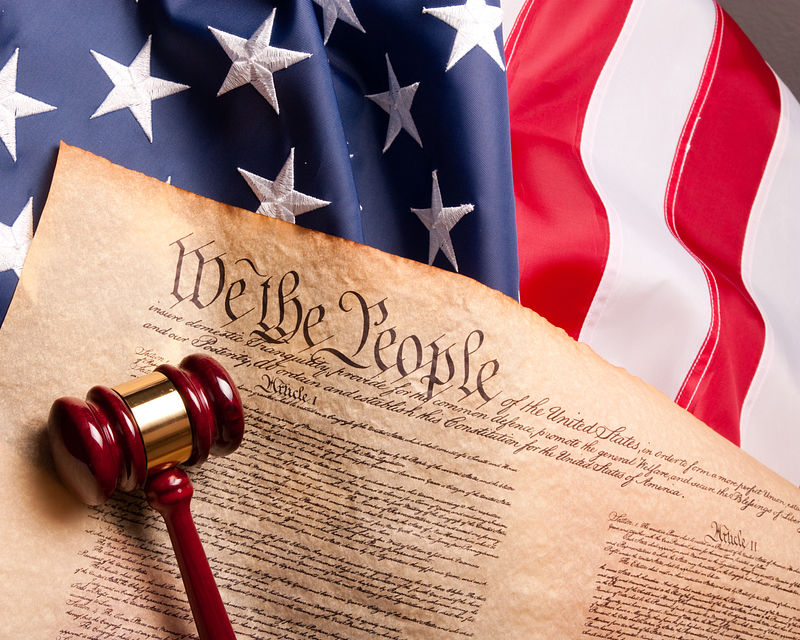
Answering Democracy’s Call: Your Voice, Your Choice
Examining macro trends can be challenging, and one must be careful not to draw connections where they don’t exist. That being said, after studying generational theory , it’s clear to see how and why things have evolved the way they have. Since the Buckley v. Valeo case, we’ve seen compensation for our labor diminish, monopolies reach an all-time high, and media become eroded through deregulation and slow adaptation to new technologies like the internet. Our democracy has been up for sale for decades now, and unless you have money, you have no power.
As I finish up this blog, I find it ironic to use phrases like “reclaiming your voice”. The freedom of speech, enshrined in our Constitution, was manipulated to enact such nefarious decisions. The purposeful misinterpretation of an Amendment gave way to the silencing of our political voices. Choices are being made by the few and powerful, without our voices being heard. We can all scream as one, and perhaps we’ll break through the draconian measures put in place to dilute and silence us. It’s up to us to identify the source of the problem, and it’s up to us to make the change. But we can only do this if we all use our voice together. Will you use your voice?
Thanks for reading! I value your feedback — whether you agree, disagree, or have a unique take. Your insights help me grow and benefit our reader community. Please comment or contact me directly. All feedback is appreciated. Thanks for joining this journey; let’s keep the conversation going!