
Voting Equals Freedom
Exploring changes to Voting in America
I woke up today, reflecting on the fact that in almost a year, America is going to decide the fate of a whole generation. There comes a time in history when a single moment sets off a series of events. These moments aren’t always negative. However, currently, the atmosphere feels apprehensive. Teams are formed and lines are drawn. Tribalism morphs into Otherism. If you’re not on my team, you’re an ‘Other’. This moment shouldn’t be about division; it should focus on what’s good for all people. Algorithms have created echo chambers, reminiscent of Plato’s Allegory of the Cave. Our realities are shaped by shadows. The shadows of bots and dark money run deep while we click away — click…click…click. We can replace all the people in office with others, but when do we address the flaws in the system? Since in one year we’ll decide if we want to continue with democracy, I thought I’d write about Voting. To me, it’s one of the most patriotic acts a person can perform for any country. Every state has its quirky laws, and don’t get me started on primaries. There’s a pressing need to simplify and streamline voting. States have grown too comfortable creating barriers for people to vote. It’s time to update Voting in America.
Note to Readers: We writers don’t get paid unless Medium subscribers engage with the article — be it through 👏 claps, reading for at least 30 seconds, or leaving a comment. Your support helps us continue to create valuable content. Thank you so much! 👍
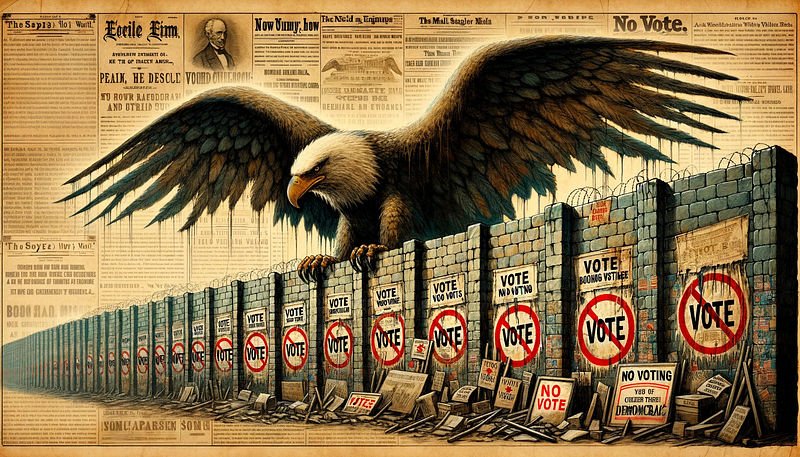
The Changing Landscape of Voting
As we inch closer to another pivotal election, the alterations in voting laws across various states post-2020 election come into sharper focus. These changes, often under the guise of securing electoral integrity, harbor significant implications for voter accessibility and thus, the essence of democracy. For instance, Montana’s new guidelines on acceptable identification for voter registration could potentially deter eligible voters.
The narrowing window for mail-in ballot applications in states like Georgia is another red flag. This alteration could disproportionately affect individuals unable to cast their vote in person on Election Day. Similarly, Texas has set clearer boundaries on who can request an absentee ballot, potentially creating hurdles for absentee voting.
Changes don’t stop here, the number of official ballot drop boxes has been reduced in three states, posing a challenge for those who rely on these facilities. Also, the tightening of signature matching laws in ten states could lead to a higher rejection rate of absentee ballots. These alterations, though seemingly minor, could collectively erect barriers between the electorate and the ballot box.
The adoption of voter ID laws in states like Montana and Arkansas adds another layer to the growing list of voting restrictions (Source: USAFacts ). Even the adjustment of early voting periods in states like Georgia and Iowa could disenfranchise voters who depend on this provision due to scheduling conflicts.
As we gear up for the 2024 elections, the barrage of restrictive laws enacted in at least 14 states this year alone is a cause for concern (Source: Brennan Center for Justice). These legal maneuvers, especially those that restrict voting access, reflect a broader, more divisive national discourse on voting rights versus election integrity.
Voting, a cornerstone of democracy, is now entangled in a web of legislative red tape, challenging the ease and accessibility of exercising this fundamental right. As we click closer to the next election cycle, the necessity for a robust public discourse on preserving the democratic ethos has never been more crucial. It’s high time to address not just the faces in office but the flaws in the system that threaten to undermine the core of American democracy.

A Vision for a More Democratic Voting System
While the current state of America’s voting system may seem daunting, there are practical solutions that can simplify and streamline the process, making it more accessible and democratic for all. Here are 12 changes that could revolutionize the American voting system:
Automatic Voter Registration: This would register eligible voters automatically when they interact with government agencies. This is crucial as it removes barriers to registration, ensuring everyone has the opportunity to vote. Oregon’s implementation of automatic registration in 2016 led to an increase in voter turnout.
Same-Day Registration: This allows voters to register on the same day as the election. This is crucial as it removes barriers to participation, ensuring everyone has the opportunity to have their voice heard. For example, in the 2020 election, states with same-day registration had higher voter turnout rates.
Mail-In Voting for All: This would expand mail-in voting options to all eligible voters. This is important because it guarantees that people can vote even if they can’t physically get to the polls, as was evident in the increased mail-in voting during the COVID-19 pandemic.
Early Voting: This provides voters with the option to cast their ballot before Election Day. This is essential as it offers flexibility for those who may have work or other commitments on Election Day. In the 2020 election, over 100 million people voted early, highlighting its importance.
Holiday on Election Day: This would make Election Day a national holiday. This is crucial as it ensures that everyone has the time and opportunity to vote. Several countries, including South Korea and Israel, have made Election Day a national holiday with positive results.
Unified Primary Day: This would hold all primary elections on the same day. This is crucial as it would eliminate the bias of the first few states having a disproportionate influence on the outcome. The Democratic Party’s Super Tuesday, where multiple states hold their primaries on the same day, is a step in the right direction.
Ranked-Choice Voting: This system allows voters to rank candidates in order of preference. This is important because it ensures that the winner has broad support and can help to eliminate the “spoiler” effect of third-party candidates. Maine’s use of ranked-choice voting in the 2020 election is a prime example of its success.
Non-Partisan Redistricting: This would establish non-partisan commissions to draw electoral districts. This is crucial as it would prevent gerrymandering and ensure that districts are drawn fairly and representatively. California’s Citizens Redistricting Commission is a model for how this can be achieved.
Restore Voting Rights for Felons: This would restore voting rights for people who have completed their felony sentences. This is important because it enfranchises millions of Americans who have paid their debt to society. While Florida’s Amendment 4 in 2020 aimed to restore voting rights to over 1.4 million people, subsequent legislation that tied voting rights to the payment of fines and fees effectively disenfranchised many of these individuals. This serves as a stark example of why federal legislation is necessary to protect the voting rights of all citizens, regardless of their criminal history.
Eliminate Voter ID Laws: This would prevent the disenfranchisement of marginalized communities and ensure equal voting opportunities for all. This is important because strict voter ID laws can disproportionately affect low-income and minority voters. The court’s striking down of North Carolina’s voter ID law in 2016 is an example of the pushback against these restrictive laws.
Voter Education: Investing in voter education programs ensures that voters are informed about the voting process and the candidates. This is essential as it leads to more informed decision-making. Non-profit organizations like Rock the Vote have been instrumental in educating young voters.
Online Voting: This would explore secure online voting options. This is important because it could make it easier for people to vote, especially those who may have difficulty getting to the polls. Estonia’s successful implementation of online voting is a model for how this could work.
By implementing these reforms, we can ensure that every eligible voter has the opportunity to have their voice heard and shape the future of our nation. It’s time to address not just the faces in office but the flaws in the system that threaten the essence of American democracy.
The path to a more democratic and accessible voting system is clear. The solutions outlined above have been successfully implemented in various states and countries, proving that positive change is possible. By adopting these reforms, we can create a voting system that truly represents the will of the people, ensuring that every voice is heard and every vote counts.
As we approach another crucial election, we must not let the flaws in our current system define our future. Instead, let’s seize this opportunity to create a more inclusive, equitable, and democratic voting system that empowers all Americans to shape the direction of our nation. Let’s come together, regardless of our political affiliations, to fight for a system that truly represents the ideals upon which our country was founded. In doing so, we can ensure that America continues to be a beacon of democracy for generations to come.
Voting is too important not to talk about. But let’s shift the conversation. Instead of discussing the people in office, which can create division, let’s focus on the flaws in the system. Discuss any one of these ideas that could work, or all of them. We didn’t create the system we inherited, but it is our responsibility to not sit back and watch democracy implode, one vote at a time.
Thank you for reading all the way to the end! Your engagement is what makes this journey worthwhile for me, and I truly value your thoughts and opinions.
👉 Let’s Keep the Conversation Going:
- What was your biggest takeaway from this article?
- Is there a point you agree or disagree with? I’d love to hear your perspective.
- Do you have a personal experience that relates to the topic? Your stories make these discussions richer.
- Are there any questions or topics you’d like me to cover in future posts?
🙏 Your Voice Matters: By taking a moment to comment, you’re helping to elevate this conversation and make these discussions more dynamic and accessible to a broader audience.
So, let’s keep the dialogue alive and flowing! Your interaction is not just welcomed — it’s encouraged!
Thank you for being an integral part of this community. I’m eager to hear your thoughts!