
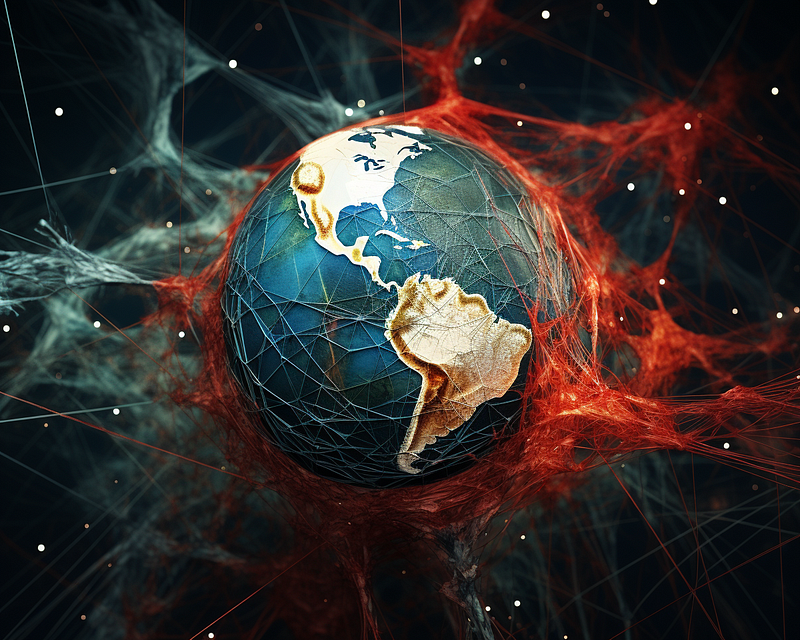
It’s Time We Untangle the Wild Wild West Known as the Web
Picture the Wild West. The scorching sun overhead, the endless expanse of dusty plains, the distant echo of a coyote’s howl. In the heart of a ramshackle town, a gunslinger steps onto the main street, his spurs clinking with each step. There’s no sheriff in sight, no law to keep him in check. It’s survival of the quickest, a world where chaos is the only constant.
This isn’t a scene from a bygone era. It’s a metaphorical landscape that mirrors our current digital reality. The internet, in its vastness and complexity, has become our modern-day Wild West. Anonymity is the gunslinger’s mask, misinformation the quick-draw duel, and data breaches the rampant lawlessness. The sheriff? Absent, for the most part. The need for regulation? More pressing than ever.
As we begin this journey through the digital frontier, we must ask ourselves: How can we bring order to this chaos? How can we ensure that the internet remains a tool for connection, innovation, and progress, rather than a weapon for deception, exploitation, and harm? It’s time we untangle the web we’ve woven. Think to yourself, does this internet feel free, fair and safe?
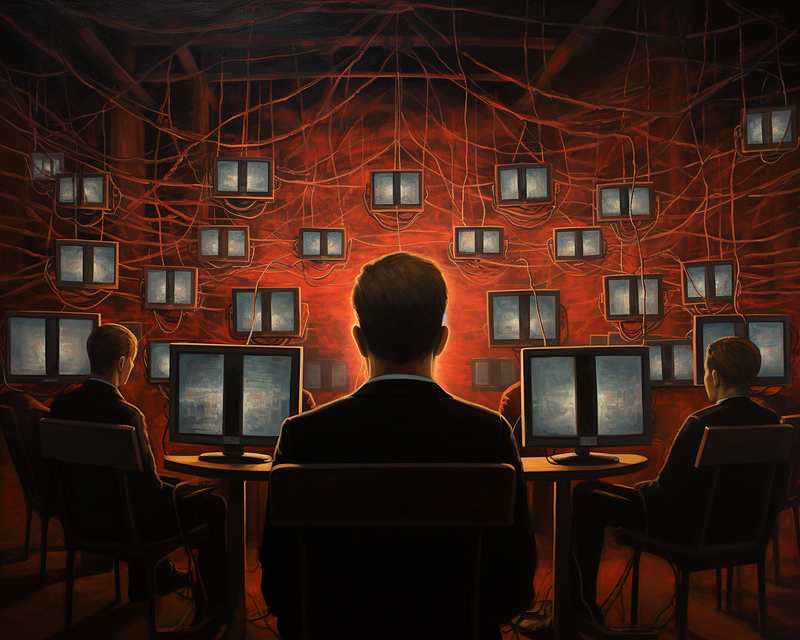
The Unruly Web: A Tangled Mess of Controlled Chaos
In the digital age, our lives have become intertwined with the internet. It’s a space of endless possibilities, where information is at our fingertips, and communication is instantaneous. But beneath this veneer of convenience and connectivity, there’s a darker side. The internet, in its current state, is a realm of controlled chaos, where the individual often bears the brunt of its disorder.
The chaos manifests in various ways. For one, our mental health is at stake. The American Psychological Association has reported a significant rise in mental health issues among young adults and adolescents from 2010 onwards, a period that coincides with the rise of social media. The constant barrage of information, the pressure to keep up with the digital Joneses, and the blurring of public and private spheres have all contributed to a growing mental health crisis.
But who controls this chaos? Look no further than the tech giants who dominate the digital landscape. Companies like Facebook, Google, and Amazon have unprecedented control over what we see, what we buy, and even how we interact with others. This control can lead to issues like the spread of misinformation, privacy breaches, and monopolistic practices. For instance, Facebook’s micro-targeting of political ads has been criticized for enabling the spread of misinformation, with potential impacts on election outcomes.
The anonymity provided by the internet can often lead to an increase in hate speech and harassment. Without proper regulation, these issues can run rampant and cause significant harm to individuals and communities. A recent report by the Anti-Defamation League found that 41% of Americans had experienced online harassment in 2021, up from 28% in 2016.
This controlled chaos is not just a product of big tech companies, but also of nefarious actors who exploit the internet’s lack of regulation for their own gain. A prime example is the Internet Research Agency (IRA), a Russia-based organization known for its role in influencing the 2016 U.S. presidential election. As detailed in the Mueller Report, the IRA conducted an elaborate social media campaign to sow discord and amplify political and social divisions within the United States. Misinformation can spread like wildfire, influencing public opinion and even the outcome of elections. The internet has become a breeding ground for deceit and manipulation, with individuals often caught in the crossfire.
In this tangled web of controlled chaos, it’s clear that the current state of the internet is far from ideal. The question then becomes, how can we untangle this mess? How can we reclaim the internet as a space of genuine connection, information, and empowerment?

The Digital Frontier: Dystopia or Utopia?
As we navigate into the uncharted territories of the digital frontier, two distinct visions of the future come into view. One is a dystopian landscape, where the unchecked and unregulated internet spirals into a vortex of misinformation, privacy breaches, and monopolistic control. The other is a utopian vision, where the internet, tamed and harnessed, empowers individuals, fosters genuine connection, and serves as a beacon of knowledge and innovation.
In the dystopian landscape, the internet has become a tool for manipulation and deceit. Misinformation runs rampant, swaying public opinion and influencing real-world events. Privacy is a relic of the past, as tech giants harvest and exploit personal data for their own gain. The digital divide widens, leaving those without access to technology in the dust. This is a world where the internet, in its chaotic state, exacerbates societal problems rather than alleviating them.
On the other side of the digital frontier, we find the utopian vision. Here, the internet has been tamed and harnessed for the greater good. Misinformation is kept in check through effective content moderation and transparency measures. Data privacy laws protect individuals from exploitation, and antitrust measures ensure a level playing field for businesses. The internet serves as a platform for innovation, knowledge sharing, and genuine connection. A study by the Pew Research Center explores the potential benefits of a well-regulated internet, including increased access to information, improved social connections, and enhanced opportunities for learning.
Some Strategies to Consider:
- Implement stringent content moderation policies
- Enforce robust data privacy laws
- Apply antitrust measures to prevent monopolies
- Promote transparency in data usage and ad targeting
- Establish age restrictions for social media use
- Implement identity verification to reduce anonymous interactions online
- Regulate the use of personal data for political advertising
- Enforce penalties for online harassment and hate speech
- Implement regulations to ensure equal access to the internet
- Establish guidelines for mental health considerations in digital platforms.
Which vision of the future will we strive for? Will we allow the internet to descend into a dystopian nightmare, or will we steer it towards a utopian dream? The choice, dear reader, is ours to make. But one thing is certain: change is needed. The question is, what kind of change will it be?

Navigating the Digital Frontier: The Choice is Ours
The internet, in its current state, is a wild frontier, a world of controlled chaos where the law is often absent and the individual is left to navigate the tumultuous terrain. But it doesn’t have to be this way. We have the power to shape the future of the internet, to steer it away from dystopia and towards utopia.
The choice is ours. We can continue to let the internet run wild, to let misinformation, privacy breaches, and monopolistic practices run rampant. Or we can choose to tame the internet, to implement effective regulations that protect individuals, foster genuine connections, and promote innovation. We can choose to make the internet a tool for empowerment, a platform for knowledge, and a beacon of progress.
The journey into the digital frontier is not without its challenges. It requires us to confront the issues that plague the internet and to take decisive action. It requires us to untangle the web we’ve woven and to create a digital landscape that reflects our values and aspirations.
In the face of these challenges, we must remember that the internet is a reflection of us, of our society. It can be a tool for harm or a tool for good, a dystopian nightmare or a utopian dream. The choice is ours. And it’s a choice we must make, not just for ourselves, but for future generations.
So, let’s make the right choice. Let’s untangle the web. Let’s navigate the digital frontier with purpose and resolve. Let’s make the internet a place where we can connect, learn, and grow. After all, the internet is what we make of it. And it’s time we make it better.
Thanks for reading! I value your feedback — whether you agree, disagree, or have a unique take. Your insights help me grow and benefit our reader community. Please comment or contact me directly. All feedback is appreciated. Thanks for joining this journey; let’s keep the conversation going!


